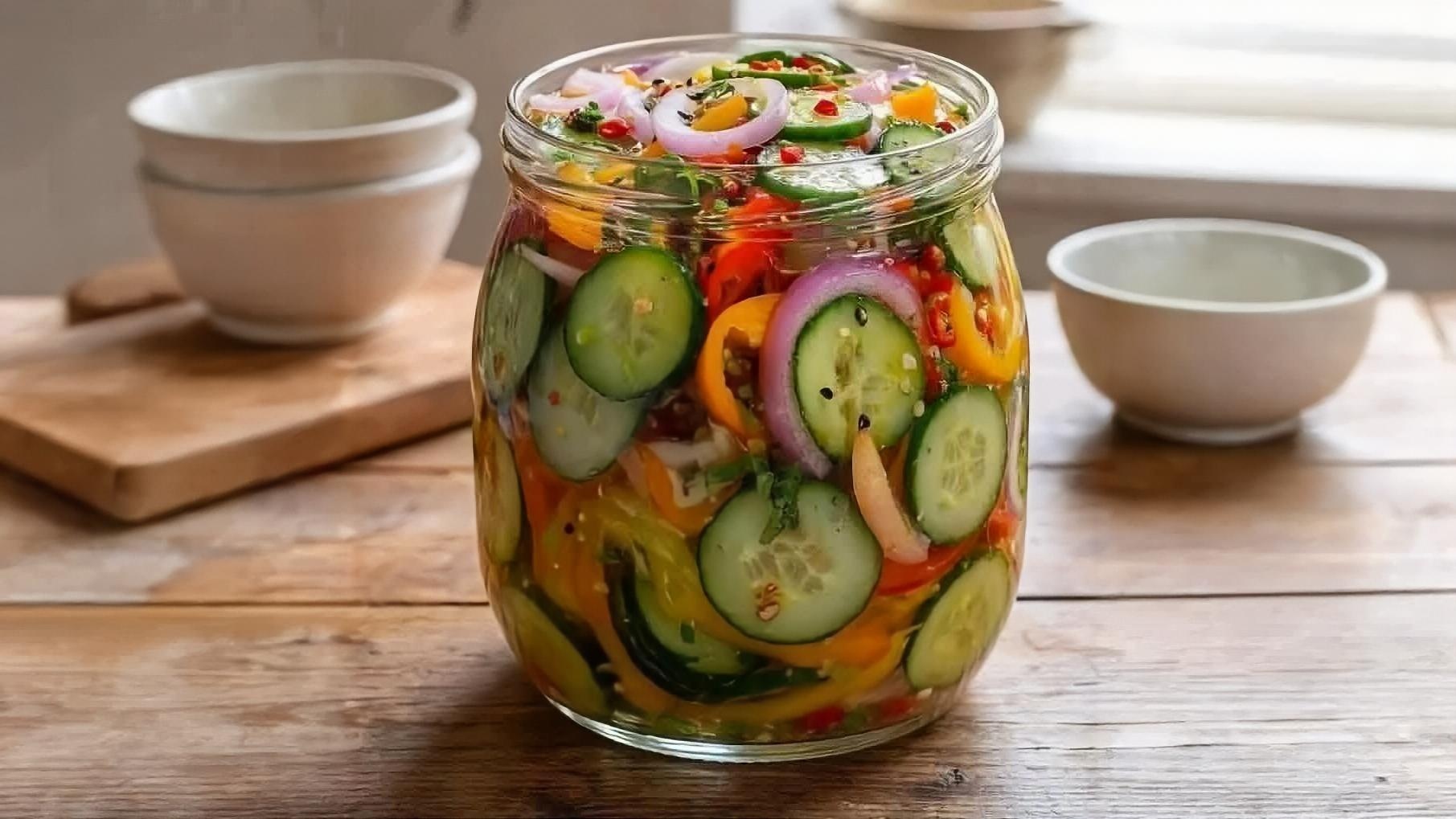
Tangy Refrigerator Pickle Salad: Vibrant Vegetable Crunch
This is the ultimate fast side dish: a vibrant Tangy Refrigerator Pickle Salad that requires zero actual cooking. The brine, featuring apple cider vinegar and earthy turmeric, penetrates crisp vegetables—cucumbers, onions, and peppers—in just minutes, creating an addictive snap. It’s incredibly refreshing, packed with probiotic potential from the vinegar, and serves as the perfect acidic foil to rich main courses like BBQ or slow-cooked meats. It is a cornerstone of healthy American meal prep.
restaurant_menu Ingredients
The Crisp Vegetables
The Quick Pickling Brine
hardware Essential Tools
Large mixing bowl
Small whisk
1.5-Quart glass jar or airtight container (like a Weck jar)
Sharp chef's knife
Cutting board
Measuring cups and spoons
format_list_numbered Preparation
Vegetable Preparation: Achieving Uniformity
Begin by washing and drying all your produce meticulously; excess water will dilute the brine later. Using a mandoline or a very sharp knife, slice your cucumbers into uniform 1/8-inch rounds. Uniformity is key here, as it ensures every piece absorbs the brine at the same rate, resulting in perfectly consistent texture in your Tangy Refrigerator Pickle Salad.Next, slice the red onion thinly into crescent shapes. If the onion flavor is too intense for your preference, place the slices in a separate bowl of cold water for 10 minutes while you prepare the brine; this leeches out some of the sulfoxides responsible for harshness, leaving sweetness behind.
The Alchemy of the Brine
In your small whisking bowl, combine all the brine components: apple cider vinegar, filtered water, olive oil, honey (or maple syrup), turmeric, black pepper, salt, and mustard seeds. Whisk vigorously for a full minute until the salt and honey are completely dissolved—you should not feel any graininess on the bottom of the bowl. This emulsification step is crucial; the oil adds richness and a velvety mouthfeel that balances the sharp acidity of the vinegar, preventing the final Tangy Refrigerator Pickle Salad from tasting thin or watery.
Combining and Infusing
Gently combine the sliced vegetables, minced garlic (if using), and chopped fresh herbs directly into your clean glass jar or airtight container. Pour the prepared brine slowly over the vegetables, ensuring every piece is submerged. Use a rubber spatula to gently press the vegetables down to encourage maximum contact with the liquid. Cover the container tightly; the seal is essential to maintain the environment needed for proper pickling. Allow this beautiful Tangy Refrigerator Pickle Salad to sit at room temperature for at least 30 minutes before tasting, though I highly recommend transferring it to the refrigerator for 1 to 2 hours for the flavors to truly marry.
favorite You Might Also Love
Browse All arrow_forward
Au Gratin Potatoes vs Scalloped Potatoes Recipe (The Ultimate Guide)
KFC Coleslaw Recipe (Creamy & Tangy Copycat)

Cream Cheese Mashed Potatoes Recipe (Velvety Smooth)

Carrot Cornflakes Casserole Recipe (Creamy & Comforting)
Wisconsin North Woods Inn Salad: Creamy Gorgonzola Dream
The Ultimate 3-Ingredient Slow Cooker Sausage Dip Recipe for Game Day
Try These Variations
Citrus Brightness Variation
Replace the 1/4 cup of filtered water in the brine with the juice of one fresh lime. This adds a brighter, more complex acidity than pure vinegar alone, transforming the flavor profile of the Tangy Refrigerator Pickle Salad into something reminiscent of a Latin American curtido. Increase the salt by 1/4 teaspoon to balance the sharper citrus notes, and consider adding a pinch of dried oregano during the brining process for an earthy depth.
Spicy Kick Variation
For those who like heat, incorporate 1/2 teaspoon of red pepper flakes or one finely minced jalapeño (seeds removed for moderate heat, seeds included for intensity) directly into the vegetable mix. The heat permeates beautifully during the refrigeration process. Furthermore, substitute the mustard seeds with toasted sesame seeds added just before serving for a nutty crunch that contrasts the spice.
Root Vegetable Boost
To make this heartier for meal prep, add 1 cup of thinly sliced carrots or daikon radish along with the cucumbers. These denser vegetables require slightly longer brining time—aim for at least 4 hours in the refrigerator—but they absorb the turmeric brine wonderfully, adding texture and beta-carotene to your Tangy Refrigerator Pickle Salad. Always blanch the root vegetables for 30 seconds in boiling water first to slightly soften their structure before pickling.
Chef's Pro Tips
The Role of Sugar in Quick Pickling
That small amount of honey or maple syrup isn’t just for sweetness; it is a crucial balancing agent. Acidity, like that provided by apple cider vinegar, needs a counterpoint to prevent the flavor from being overtly sharp or harsh on the palate. The sugar molecule slightly coats the taste receptors, allowing the complex flavors of the turmeric and pepper to shine through without the vinegar dominating the entire experience of the Tangy Refrigerator Pickle Salad. Never skip this balancing act.
The Turmeric Bloom Technique
To get the most vibrant color and flavor from your turmeric, ‘bloom’ it first. Before adding the turmeric powder to the main brine mixture, briefly sauté it in 1 teaspoon of the olive oil over low heat for about 30 seconds until fragrant. This process, known as blooming, activates the curcuminoids, releasing their full earthy flavor and deep golden hue, ensuring your Tangy Refrigerator Pickle Salad has an intense color payoff.
Salt Measurement Precision
When dealing with pickling, precision matters immensely, especially with salt. I always recommend using fine sea salt or Kosher salt, avoiding standard iodized table salt. Iodized salt can sometimes impart a slightly metallic off-flavor to the brine over time, and its density is harder to measure accurately for brining solutions. Always measure salt by volume (teaspoon) rather than weight unless you are doing large-batch canning.
The Importance of Non-Reactive Vessels
Always use glass or high-quality food-grade plastic for pickling, never aluminum or cast iron. Metal containers can react with the acid in the vinegar, leaching off-flavors and potentially discoloring your vegetables and even degrading the container itself. For this quick Tangy Refrigerator Pickle Salad, a sturdy glass Mason jar is the gold standard for both safety and aesthetics.
Storage Guide
Refrigerator Storage (Optimal Method)
Store your Tangy Refrigerator Pickle Salad in a tightly sealed, non-reactive glass container, ensuring all vegetables remain submerged beneath the brine line. If they float, place a small piece of plastic wrap or a floating lid directly on the surface of the liquid to keep the exposed vegetable tops from drying out or potentially spoiling. Stored correctly, this salad maintains peak crispness for up to 10 days, though the flavor profile evolves beautifully, becoming deeper and slightly milder around the 3-day mark.
Freezing (Not Recommended)
Due to the high water content of these vegetables and the vinegar brine, freezing is strongly discouraged. The freezing process breaks down the cellular structure of the cucumbers and peppers, and upon thawing, the salad will become completely limp, watery, and lose all its signature crunch. This is not a dish meant for long-term preservation; it is designed for immediate enjoyment and short-term refrigeration.
Serving Temperature Control
While this Tangy Refrigerator Pickle Salad is best served cold—straight from the fridge—do not let it sit out on the buffet table for more than two hours, especially during warm weather. The acidity provides some protection, but prolonged exposure to room temperature will accelerate softening and risk food safety. Always return leftovers to the coldest section of your refrigerator promptly.
Avoid These Mistakes
✕ Using old or weak Apple Cider Vinegar
If your ACV has been open in the pantry for over a year, its acetic acid concentration may have diminished, leading to a flat or overly sweet pickle that doesn’t achieve the necessary snap. Always check the ‘best by’ date or, if unsure, taste it—it should have a sharp, immediate bite. A weak brine results in limp, soggy vegetables rather than the crisp Tangy Refrigerator Pickle Salad we aim for, as proper acidity is required for cell wall stiffening.
✕ Not Slicing Uniformly
This is a common error in any quick pickle preparation. If your cucumber slices are 1/8 inch thick and your onion slices are paper-thin, the thin onion will turn mushy while the cucumber remains crunchy and under-pickled. The goal of this Tangy Refrigerator Pickle Salad is textural harmony. Use a mandoline set to a consistent thickness setting for professional results every time.
✕ Over-Salting for Instant Flavor
Many home cooks add too much salt initially, hoping to speed up the pickling process. Salt draws out moisture, yes, but too much salt at the start can cure the exterior too quickly, leaving the vegetable texture tough or rubbery, while the interior remains unflavored. Trust the process; salt the brine correctly, and the flavor will permeate evenly during the chilling time.
✕ Forgetting to Whisk the Brine Thoroughly
If the salt or sugar settles at the bottom, you end up with pockets of intensely salty liquid and pockets of bland vegetables. You must whisk until the solution is homogenous. The olive oil, while delicious, will also separate, which is why a brief, hard whisking is necessary to create a temporary emulsion before pouring over the vegetables in your Tangy Refrigerator Pickle Salad.
nutrition Nutrition Facts
Per serving: About 3/4 cup per serving
This dish is low in calories and high in Vitamin C from the peppers. The apple cider vinegar provides beneficial acetic acid.
flag Conclusion
There you have it—a recipe that proves world-class flavor doesn’t require hours over a hot stove. This Tangy Refrigerator Pickle Salad is the embodiment of fresh, clean eating, delivering an incredible textural experience that satisfies even the most discerning palate. It’s the kind of dish that makes people ask, “What is that incredible crunch?” Keep a jar of this on hand, and you’ll find yourself adding a vibrant, tangy element to everything from sandwiches to grilled salmon. Go ahead, taste the difference precision makes. Happy cooking from the HomeRecipes team!
Frequently Asked Questions
How long until the Tangy Refrigerator Pickle Salad is ready to eat? expand_more
For a very light, fresh flavor with just a hint of tang, you can enjoy this salad after about 30 minutes at room temperature, or after 1 hour of chilling. However, for the true flavor infusion and the best textural transformation, I insist you wait at least 2 hours in the refrigerator. The turmeric and pepper notes need time to permeate the cell walls of the cucumber and onion. If you can manage it, the flavor peaks beautifully around 12 to 24 hours, making this an excellent make-ahead side dish.
Why is my Tangy Refrigerator Pickle Salad not crunchy? expand_more
The loss of crunch usually stems from two primary issues: temperature or vegetable quality. First, ensure your vegetables are ice cold before they hit the brine, as this helps 'shock' them into crispness. Second, if you used older cucumbers or peppers, they may have already lost significant structural integrity. Always use firm, fresh produce. Finally, if you added the brine while it was hot (which we avoid in this recipe), the heat would have immediately started the softening process. Serve this salad straight from the coldest part of the fridge for maximum snap.
Can I substitute the apple cider vinegar with white distilled vinegar? expand_more
While you technically can, I strongly advise against it for this particular recipe. White distilled vinegar is pure acetic acid and lacks the complex, fruity undertones that apple cider vinegar (ACV) brings to the table. ACV provides a depth of flavor that complements the earthy turmeric and the sweetness of the honey perfectly. Using distilled vinegar will result in a much harsher, one-dimensional sourness in your Tangy Refrigerator Pickle Salad. If ACV is unavailable, white wine vinegar is a distant second choice.
What are the best pairings for this versatile pickle salad? expand_more
This salad is designed to cut through richness. It is phenomenal served alongside hearty American comfort foods like slow-cooked pulled chicken or turkey burgers. It also works beautifully as a crunchy topping for baked fish tacos instead of traditional slaw. For a lighter meal, pile it atop a bed of mixed greens with some grilled shrimp. Its bright acidity also makes it an unexpected but delightful addition to a plate of scrambled eggs in the morning—a true all-day side dish.
Why did my brine turn cloudy after refrigeration? expand_more
Cloudiness is completely normal in quick pickling, particularly when using a high-quality, unfiltered apple cider vinegar that contains the 'mother.' As the vinegar interacts with the starches and sugars released by the vegetables, it naturally creates a slight cloudiness, which is often referred to as 'haze.' This is a sign that fermentation activity is beginning, even if it’s very mild. As long as there is no foul odor, mold growth, or unusual discoloration, the cloudiness is a positive indicator of flavor development in your Tangy Refrigerator Pickle Salad.
More Recipes You'll Love
Au Gratin Potatoes vs Scalloped Potatoes Recipe (The Ultimate Guide)
Carrot Cornflakes Casserole Recipe (Creamy & Comforting)

Golden Crusted Creamy Parmesan Oven Baked Potatoes

Southern-Style Green Beans Recipe (Tender & Flavorful)
Southern Hoe Cakes: Crispy & Fluffy Recipe

Community Kitchen