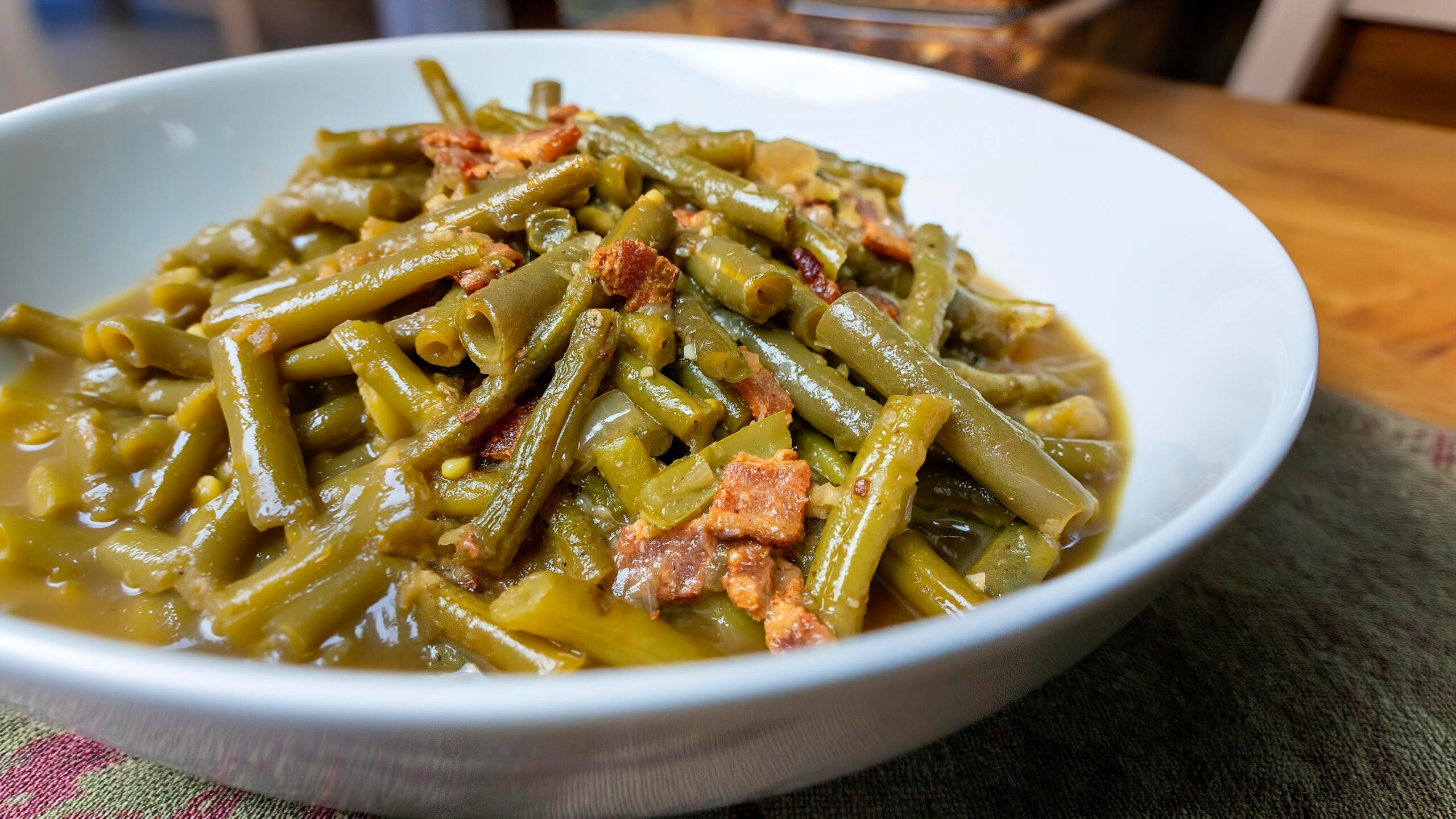
Southern-Style Green Beans Recipe (Tender & Flavorful)
Embark on a culinary journey to the American South with these incredibly tender and deeply flavorful green beans. Slow-simmered with savory beef bacon, sweet onions, pungent garlic, and a whisper of red pepper, each bite is a testament to comfort food at its finest. This recipe transforms humble fresh green beans into a silky, rich side dish that perfectly complements any meal, bringing restaurant-quality taste directly to your table.
restaurant_menu Ingredients
Main Ingredients
hardware Essential Tools
Large heavy-bottomed pot (Dutch oven recommended)
Slotted spoon
Paper towel-lined plate
Cutting board
Sharp knife
Measuring cups and spoons
format_list_numbered Preparation
Cooking Southern Green Beans
In a large heavy-bottomed pot over medium heat, cook the chopped beef bacon or turkey bacon until it is crisp and has rendered its fat, about 8-10 minutes. Remove the crispy bacon to a paper towel-lined plate, reserving the rendered fat in the pot.
Aromatics & Simmering
Add the chopped yellow onion to the pot with the rendered fat and cook, stirring frequently, until softened and translucent, about 4-5 minutes. Stir in the sliced garlic and red pepper flakes and cook for just 1 minute more until fragrant, being careful not to burn the garlic.
Add the trimmed and halved fresh green beans, chicken broth, and a pinch of kosher salt to the pot, stirring to combine. Bring the mixture to a boil over medium-high heat.
Reduce the heat to a low simmer, cover the pot tightly, and cook for 45 minutes to 1 hour, or until the green beans are exceptionally tender; check the liquid level occasionally and add more broth if needed.
Finishing Touches
Remove the pot from the heat and stir in the unsalted butter until it has melted and coated the beans.
Return the reserved crispy bacon bits to the pot and stir to combine. Taste the green beans and adjust seasoning with additional kosher salt and freshly ground black pepper as desired before serving.
favorite You Might Also Love
Browse All arrow_forwardEmerald Crunch: Mastering the Avocado Cucumber Salad

Dill Pickle Pasta Salad Recipe (Creamy & Tangy)

Potato Sweet Potato Bake Recipe (Comforting Side Dish)
Tangy Refrigerator Pickle Salad: Vibrant Vegetable Crunch

KFC Coleslaw Recipe (Creamy & Tangy Copycat)
Retro Cherry Fluff Salad: A Potluck Star
Try These Variations
Smoky Ham Hock Variation
For an even deeper, more traditional Southern smoke flavor, you can simmer a small smoked beef ham hock (about 1/2 to 3/4 pound) with the green beans instead of beef bacon, or in addition to it. Add the ham hock at the beginning with the broth, allowing it to simmer with the beans for the entire cooking time. Once the beans are tender, remove the ham hock, shred the meat, and return it to the pot. This is a classic way for how to cook fresh green beans with incredible depth. The extended cooking time for how long to boil green beans with the ham hock allows for maximum flavor extraction.
Spicy Kick Variation
If you love a bit more heat, increase the red pepper flakes to 1/2 teaspoon or even 3/4 teaspoon, or add a minced serrano or jalapeño pepper along with the garlic. You could also finish the dish with a few dashes of your favorite hot sauce for a brighter, spicier note. This variation really wakes up the palate and adds another dimension to cooking green beans.
Herbaceous Variation
For a fresher, aromatic twist, add a few sprigs of fresh thyme or a bay leaf to the pot during the simmering phase. Remove the sprigs/leaf before serving. A sprinkle of fresh chopped parsley or chives at the end also adds a lovely green color and herbaceous kick, contrasting beautifully with the rich, savory beans. This adds a gourmet touch to how to cook fresh green beans.
Tangy Finish Variation
A common secret in some Southern kitchens is a touch of acidity at the end. After the butter has melted, stir in 1-2 teaspoons of apple cider vinegar. This brightens the flavors, cuts through the richness, and adds a delightful tang that truly elevates the dish, making the flavors pop. It’s a subtle but impactful addition to making Southern green beans.
Chef's Pro Tips
The Right Pot Matters
Using a heavy-bottomed pot, like a Dutch oven, is crucial for this recipe. Its even heat distribution prevents scorching and allows for a consistent, gentle simmer, which is essential for tenderizing the green beans without boiling them dry. This also helps in how long to cook fresh green beans evenly.
Don’t Overcrowd the Pot
While a large pot is key, ensure you’re not overcrowding it with too many green beans. Overcrowding can lower the temperature, leading to uneven cooking and potentially extending the time for how long to boil green beans to tenderness. If making a very large batch, consider splitting it between two pots.
Freshness of Green Beans
Always use the freshest green beans you can find. Older beans tend to be tougher and stringier, requiring significantly longer cooking times to become tender, and may never achieve the desired silky texture. Look for bright, firm beans that snap easily. This is vital for cooking green beans successfully.
The Art of Seasoning
Don’t just season at the end. Add a pinch of salt when you introduce the green beans to the pot, and then adjust at the very end. The salt helps draw out moisture and flavor from the beans during the long simmer, resulting in a more deeply seasoned dish, and ensures that the question of how long to cook fresh green beans results in perfectly seasoned vegetables.
Patience with the Simmer
The long, slow simmer is not a suggestion; it’s a requirement for authentic Southern green beans. Resist the urge to crank up the heat to speed things along. A gentle simmer allows the beans to slowly break down and absorb the rich flavors, resulting in that signature meltingly tender texture that defines this dish. This patience is key to how long to cook fresh green beans for this specific style.
Storage Guide
Refrigerator Storage
Allow the cooked Southern-style green beans to cool completely to room temperature within two hours of cooking. Transfer them to an airtight container. They will keep well in the refrigerator for 3 to 4 days. This method prevents the growth of harmful bacteria and maintains their tender texture and savory flavor. Ensure the container is sealed tightly to prevent any absorption of refrigerator odors.
Freezer Storage
For longer preservation, these green beans freeze beautifully. Once completely cooled, transfer them to freezer-safe airtight containers or heavy-duty freezer bags. Remove as much air as possible from the bags to prevent freezer burn. They can be stored in the freezer for up to 2 to 3 months. Clearly label with the date. Freezing is an excellent way to extend the shelf life of your how to cook fresh green beans efforts.
Reheating from Refrigerator
To reheat, place the green beans in a saucepan over medium-low heat. Add a tablespoon or two of chicken broth or water to prevent drying, and stir gently until warmed through, about 5-7 minutes. Alternatively, microwave in a covered, microwave-safe dish on 50% power, stirring every minute, until hot, usually 3-5 minutes. This gentle reheating helps maintain their tender texture.
Reheating from Freezer
For best results, thaw frozen green beans in the refrigerator overnight. Once thawed, reheat them using the stovetop method described above, adding a bit of extra liquid if needed. Avoid reheating directly from frozen in the microwave, as this can lead to uneven heating and a tougher texture for your cooking green beans.
Avoid These Mistakes
✕ Not Simmering Long Enough
A common mistake is pulling the green beans off the heat too early, resulting in a crisp-tender texture that’s not characteristic of Southern-style green beans. The goal here is ultra-tender, almost falling apart. If they’re not soft enough after an hour, keep simmering, adding a little more broth as needed, until they are truly tender. This directly impacts how long to cook fresh green beans for the desired outcome.
✕ Not Building Flavor Layers
Skipping the step of rendering the beef bacon and sautéing the aromatics in its fat is a significant error. This initial process creates the foundational savory depth that defines the dish. Without it, your green beans will lack complexity and taste flat, regardless of how long to boil green beans. The Maillard reaction from sautéing is crucial for flavor development.
✕ Using Too Much Liquid
While you need enough liquid for the green beans to simmer, adding an excessive amount of broth can dilute the flavors. The goal is for the beans to be mostly submerged, but not swimming in liquid. If you find you have too much liquid at the end, you can uncover the pot for the last 10-15 minutes of simmering to allow some evaporation and concentrate the flavors. This is important for cooking green beans properly.
✕ Over-Salting Early
Bacon and chicken broth both contain sodium, so it’s easy to over-salt if you’re not careful. Add an initial pinch of salt with the green beans, but reserve the main seasoning adjustment for the very end, after the butter has been incorporated. This ensures a perfectly balanced flavor profile, especially when considering how long to cook fresh green beans and the reduction of liquid.
✕ Not Trimming Properly
Failing to trim the tough ends off your fresh green beans can lead to an unpleasant fibrous texture, even after a long simmer. While the stem end is the most important, I also like to snap off the very tip of the other end if it looks tough or discolored. Taking a moment to prepare your green beans properly ensures a better eating experience.
nutrition Nutrition Facts
Per serving: 1 serving (approx. 1 cup)
Nutritional values are approximate and may vary based on specific ingredients and preparation methods. This calculation does not include any potential substitutions.
flag Conclusion
There you have it, a journey into the heart of Southern comfort with these incredibly tender and flavorful green beans. This recipe, perfected through years of culinary experience, isn’t just about how to cook fresh green beans; it’s about creating a dish that speaks of home, warmth, and generosity. The slow simmer, the aromatic base, and that final touch of butter all combine to create a side dish that will undoubtedly become a treasured part of your family’s mealtime traditions. I encourage you to try this recipe, embrace the patience it requires, and savor the rich rewards. Here at HomeRecipes.com, we believe that every home cook can achieve restaurant-quality results, and this dish is a perfect example. Happy cooking!
sell Related Topics
Frequently Asked Questions
How long to cook fresh green beans to get them truly tender, Southern-style? expand_more
The key to achieving that classic, melt-in-your-mouth Southern tenderness for fresh green beans is a long, slow simmer. After sautéing your aromatics and adding the broth, cover the pot and let them gently simmer for a minimum of 45 minutes to 1 hour, or even up to 1.5 hours. Unlike crisp-tender preparations, you want the cell walls to fully break down, allowing the beans to absorb all the savory liquid and become incredibly soft. I always check for doneness by pressing a bean against the side of the pot with a spoon; if it mashes easily, they're ready.
Can I use frozen green beans for this recipe, and does it change how to cook fresh green beans? expand_more
Yes, you can certainly use frozen green beans in a pinch for this recipe, although fresh will always yield the best texture and flavor. If using frozen, you do not need to thaw them beforehand. Simply add them directly to the pot with the chicken broth. The cooking time might be slightly reduced, perhaps 30-45 minutes, as frozen beans are often partially blanched before freezing. Keep an eye on them and cook until they reach that desired tender consistency, ensuring they're not mushy, but soft. The cooking process is similar, but the initial texture of the bean is different.
What makes Southern green beans different from other green bean preparations? expand_more
The primary difference lies in the cooking method and desired texture. Most green bean recipes aim for a bright green, crisp-tender result, often achieved through blanching, steaming, or quick sautéing. Southern green beans, however, are intentionally cooked for an extended period, often with smoked meat (like bacon) and broth, until they are very tender and have absorbed a deep, savory flavor. The color will be a duller green, but the flavor and texture are rich and comforting, a testament to slow cooking and infusing flavor, rather than preserving crispness. It’s all about how long to boil green beans to alter their very structure for maximum flavor absorption.
Can I make these Southern-style green beans vegetarian or vegan? expand_more
Absolutely! To make this recipe vegetarian, simply omit the beef or turkey bacon. Instead, start by sautéing the onions and garlic in 2 tablespoons of olive oil or a plant-based butter substitute. Use a good quality vegetable broth instead of chicken broth. While the smoky depth of the bacon will be missed, you can add a pinch of smoked paprika or a dash of liquid smoke (check ingredients for vegan compliance) to the pot along with the green beans to mimic some of that flavor. The rest of the steps remain the same, ensuring you still achieve wonderfully tender and flavorful green beans.
My green beans are tough after simmering for an hour; what went wrong? expand_more
If your green beans are still tough after simmering for the recommended time, there are a few potential culprits. First, ensure your heat was truly at a low simmer and not too high, which can cause the liquid to evaporate too quickly without fully tenderizing the beans. Second, check that your pot was covered tightly to trap steam and moisture. Third, some varieties of green beans can be tougher than others, or perhaps they were a bit older when purchased. The solution is simply to continue simmering, covered, adding more broth if needed, until they reach your desired tenderness. Don't be afraid to let them go for another 15-30 minutes if necessary; sometimes, they just need a little more time to break down.
More Recipes You'll Love
The Ultimate 3-Ingredient Slow Cooker Sausage Dip Recipe for Game Day

Kentucky Christmas Salad Recipe (Citrus Holiday Fruit)
Southern Brussels Sprouts Recipe (Potluck Favorite)
Carrot Cornflakes Casserole Recipe (Creamy & Comforting)

Wisconsin North Woods Inn Salad: Creamy Gorgonzola Dream

Community Kitchen