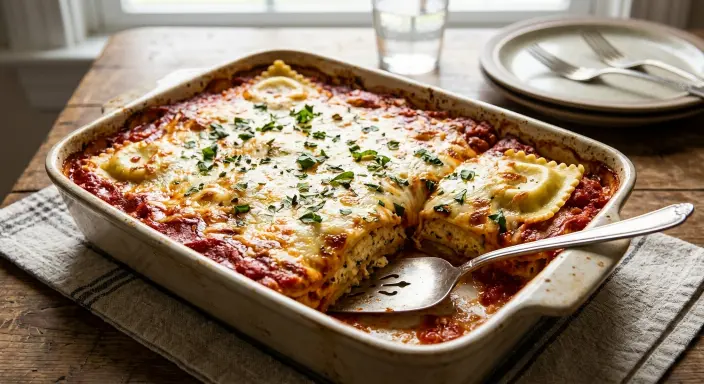
Layered Ravioli Bake: Genius Weeknight Casserole
Forget rolling dough! This streamlined Ravioli Lasagna Recipe is the ultimate weeknight Italian casserole, layering tender frozen ravioli with a vibrant, house-seasoned ricotta blend and rich tomato sauce. It bakes into a molten, cheesy delight, boasting a perfectly blistered, golden-brown crust. It captures the heart of traditional lasagna comfort with unmatched speed and ease, perfect for family dinners or potluck contributions across America.
restaurant_menu Ingredients
Core Casserole Components
Garnish (Optional)
hardware Essential Tools
9x13-inch ceramic or glass baking dish
Large pot for boiling pasta
Medium mixing bowl
Whisk or rubber spatula
Aluminum foil
format_list_numbered Preparation
Initial Setup and Pasta Cooking
Preheat your oven to 375°F (190°F) and lightly grease your 9x13-inch baking dish with oil or cooking spray, ensuring the bottom is coated to prevent sticking.
Bring a large pot of heavily salted water to a vigorous boil. Add the frozen ravioli and cook according to package directions, subtracting exactly 3 minutes from the recommended time; they must be slightly firm (al dente) to survive the bake.
Drain the par-cooked ravioli immediately and set them aside while you prepare the cheese mixture.
Cheese Seasoning and Assembly
In your mixing bowl, thoroughly combine the ricotta cheese, grated Parmesan, dried basil, dried oregano, garlic powder, salt, and pepper until the mixture is homogenous and fragrant. This concentrated seasoning is vital for flavor depth in your Ravioli Lasagna Recipe.
Spread a thin, even layer of your tomato sauce across the bottom of the prepared baking dish. This acts as a steaming agent for the bottom layer of pasta.
Arrange the first layer of ravioli snugly over the sauce. Top this layer with half of the seasoned ricotta mixture, spreading gently with a spatula, followed by 1 cup of the shredded mozzarella.
Final Layers and Baking
Repeat the layering sequence
sauce, the second layer of ravioli, the remaining ricotta mixture, and the final cup of mozzarella cheese spread evenly across the top.
Cover the dish tightly with aluminum foil—this traps steam, ensuring the ravioli finishes cooking without drying out the cheese mixture. Slide it onto the center rack and bake for 25 to 30 minutes.
After this initial covered bake, carefully remove the foil—watch out for the sudden release of steam! Return the dish to the oven, uncovered, for another 10 to 15 minutes. You are looking for the sauce around the edges to be vigorously bubbling, and the top layer of mozzarella to be melted and golden brown.
Remove the Ravioli Lasagna Recipe from the oven and let it rest for at least 10 minutes before slicing and garnishing.
favorite You Might Also Love
Browse All arrow_forward
Restaurant-Quality Parmesan Crusted Chicken Cutlets
Seared Salmon Patties: Minimalist Low Carb Cooking

Hard-Boiled Eggs Recipe (Perfect Every Time)
Effortless 4-Ingredient Amish Ranch Macaroni Bake

Hearty German Cabbage and Dumplings
Ultimate Creamy Crockpot Mac And Cheese Recipe
Try These Variations
For a richer, more complex sauce profile reminiscent of a true slow-cooked lasagna, skip the jarred sauce and instead use 1.5 cups of high-quality crushed San Marzano tomatoes, simmering them first with 1/2 cup of finely minced sautéed onion, two cloves of minced garlic, and a pinch of dried fennel seed for 20 minutes before assembly. This infuses the sauce with deeper roasted flavor notes that stand up beautifully to the cheese.
To create a truly decadent, restaurant-style experience, substitute the ricotta layer entirely with a homemade Béchamel sauce thickened slightly more than usual. Whisk 4 tablespoons of unsalted butter with 4 tablespoons of flour over medium heat until a smooth blonde roux forms; slowly whisk in 2 cups of warmed whole milk until thick, seasoning heavily with salt, white pepper, and a generous grating of fresh nutmeg. Use this Béchamel in place of the ricotta mixture for an incredibly creamy, smooth texture that melts differently than the granular ricotta.
If you want to integrate vegetables into this Ravioli Lasagna Recipe, consider sautéing 1 cup of finely chopped mushrooms (cremini or button) and 1 cup of fresh spinach until all moisture has evaporated. Mix this cooked vegetable mixture directly into the ricotta filling. This adds earthy depth and texture while boosting the nutritional profile without compromising the structural integrity of the layers.
Chef's Pro Tips
When layering the cheese, especially the ricotta mixture, use the back of a spoon or an offset spatula to spread it gently without disturbing the ravioli underneath. If you press too hard, you risk crushing the pasta pillows, which releases starch and moisture prematurely, leading to a soupy final product rather than defined, separate layers. Work slowly and deliberately, like you are painting a delicate fresco.
The quality of your salt matters immensely here. Since this is a layered bake, flavors can sometimes get muted. Use kosher salt in your cheese mixture for even distribution, but finish the top layer with a light sprinkle of flaky sea salt, like Maldon, right before it goes into the oven for the final uncovered bake. These larger flakes melt slower, providing little bursts of clean salinity on the tongue that contrast beautifully with the rich, cooked flavors.
To achieve maximum flavor infusion in the ricotta blend for your Ravioli Lasagna Recipe, use freshly grated Parmesan cheese, not the shelf-stable pre-grated powder. The pre-ground product contains anti-caking agents that prevent it from fully dissolving into the ricotta, resulting in a slightly gritty texture rather than a smooth, savory paste. The fresh version emulsifies beautifully into the cheese base.
Storage Guide
For refrigeration, ensure the Ravioli Lasagna Recipe has cooled down to room temperature—never put piping hot food directly into the fridge, as this can raise the internal temperature of the refrigerator, risking spoilage of other items. Once cooled, cover the baking dish tightly with two layers of plastic wrap, ensuring the wrap touches the surface of the cheese slightly to prevent a skin from forming. Store in the main body of the refrigerator (not the door) for up to 4 days. For reheating, bake covered at 350°F (175°C) for 20 minutes, then uncover for 5 minutes until sizzling hot.
Freezing is excellent for batch cooking. After cooling completely, slice the casserole into individual or double serving portions. Wrap each portion tightly first in plastic wrap, pressing out all air, and then in a layer of heavy-duty aluminum foil to prevent freezer burn. Freeze flat for up to three months. To reheat from frozen, remove the foil, cover with fresh foil, and bake at a lower temperature, around 325°F (160°C), for about 60 to 75 minutes, checking the center temperature before finishing uncovered at 350°F for 10 minutes.
If you only have leftovers and need a quick lunch, microwave reheating works, but moisture management is key. Place a single slice in a microwave-safe dish and cover it loosely with a damp paper towel. This towel releases steam during the heating process, preventing the pasta from drying out and becoming hard or rubbery. Heat in 60-second bursts until the center is steaming hot, usually taking 90 seconds to 2 minutes total.
Avoid These Mistakes
✕ The most significant error home cooks make is overcooking the initial ravioli. Because the pasta is already partially hydrated and will continue absorbing moisture from the sauce and cheese during the 45-minute bake, boiling it until fully tender guarantees a mushy, gluey texture. The pasta should feel slightly bouncy and underdone when you drain it; this ensures that by the time the cheese is perfectly browned, the ravioli inside is tender but intact, providing that wonderful textural contrast central to a successful Ravioli Lasagna Recipe. Always pull it 2-3 minutes early.
✕ Another common issue is insufficient seasoning in the ricotta layer. The tomato sauce provides external moisture and flavor, but the creamy interior must be seasoned assertively on its own merits. If you under-salt the ricotta blend, the final dish tastes flat, even if the sauce is robust. Taste the raw ricotta mixture before spreading it—it should taste slightly too salty on its own, as that saltiness will mellow perfectly once baked alongside the pasta and cheese.
✕ Failing to allow the casserole to rest after baking is a recipe for structural collapse. Removing the dish from the oven signals the end of cooking, but the internal temperature remains high, and the starches are still highly gelatinized. If you cut it immediately, the molten cheese and sauce layers will flow out instantly, creating a puddle. Resting for a minimum of 10 minutes allows the matrix to gently set, ensuring you get clean, beautiful squares when serving your Ravioli Lasagna Recipe.
nutrition Nutrition Facts
Per serving: 1/6th of the dish
Nutritional information is an estimate and will vary significantly based on the specific brand of frozen ravioli and the fat content of the ricotta and mozzarella used.
flag Conclusion
This Ravioli Lasagna Recipe is more than just a meal; it’s a strategic victory in the kitchen. It delivers the deeply satisfying, layered comfort of traditional Italian-American baking without demanding all day on a Sunday. By respecting the par-cooking time and allowing that crucial resting period, you guarantee a structure that holds up beautifully for serving. I encourage you to make this your own—experiment with different fillings, perhaps adding a touch of nutmeg to your ricotta or using a spicy arrabbiata sauce. The foundation is solid, and the possibilities for customization are endless. Enjoy the applause when you bring this bubbling casserole to the table!
sell Related Topics
Frequently Asked Questions
Can I use fresh ravioli instead of frozen for this recipe? expand_more
While you absolutely can use fresh ravioli, you must adjust the cooking time drastically. Fresh pasta cooks much faster and is more delicate. If using fresh, boil them for only 60 to 90 seconds—just until they float and start to swell slightly—and drain immediately. They require even less baking time under the foil, perhaps only 15 to 20 minutes, because they are already very tender. Be extremely gentle when layering, as fresh pasta tears much more easily than its frozen, slightly firmer counterpart in this Ravioli Lasagna Recipe.
What is the best way to ensure my sauce doesn't run thin? expand_more
Sauce thinning usually occurs because the ravioli releases too much water, or the sauce itself is too thin to begin with. To combat this, always reduce the jarred sauce by simmering it gently on the stovetop for about 15 minutes before assembly, allowing some of the water content to evaporate and concentrating the flavor. Furthermore, ensure your ravioli are drained exceptionally well after their brief boil. If you notice the sauce is still watery after baking, it confirms the initial ravioli were overcooked; next time, subtract more time from the boiling stage.
I don't have ricotta cheese. Can I substitute it entirely in this Ravioli Lasagna Recipe? expand_more
Ricotta provides a specific, grainy, creamy moisture barrier that is hard to replicate perfectly, but you have options. The closest substitute in texture and moisture content is cottage cheese, but you must use the small-curd variety. Blend the cottage cheese in a food processor briefly until it achieves a smoother consistency closer to ricotta, then proceed with seasoning it as directed. Alternatively, you could use a mixture of cream cheese softened with a little milk, though this will result in a much smoother, less traditional cheesy layer.
Why is the resting period so important after baking? expand_more
The resting period is essential because it allows the hydrocolloids—the starches in the pasta and the proteins in the cheese—to re-set their structure after being subjected to high heat. When the casserole comes out of the 375°F oven, everything is highly viscous and liquid. If you cut it immediately, the internal pressure forces the liquid components to escape, creating a sloppy presentation. Resting allows the gelatinized starches to firm up just enough to hold their shape when sliced, creating those clean, satisfying squares that define a well-made baked pasta dish.
Can I use a meat sauce instead of plain marinara? expand_more
Yes, using a meat sauce is a fantastic way to make this Ravioli Lasagna Recipe even heartier. If you prefer a meat-filled ravioli, simply use your meat sauce in place of the plain marinara. If you are using cheese ravioli but want meat, you must prepare a separate meat component. Brown 1 pound of ground beef or turkey, drain the fat completely, and mix it with about 1.5 cups of your plain marinara sauce before layering. Ensure the meat is fully cooked before it enters the casserole to guarantee safety and proper texture.
More Recipes You'll Love
Herb-Crusted Prime Rib Recipe (Perfectly Roasted)
Garlic Butter Beef Pasta Recipe (One-Pot Wonder)
Velvety Slow Cooker Imitation Crab Feast
Aunt Betty’s Homestyle Wendy’s Chili Recipe (Hearty & Flavorful)
Dolly Parton’s 5-Ingredient Casserole: Southern Comfort Redefined

Community Kitchen