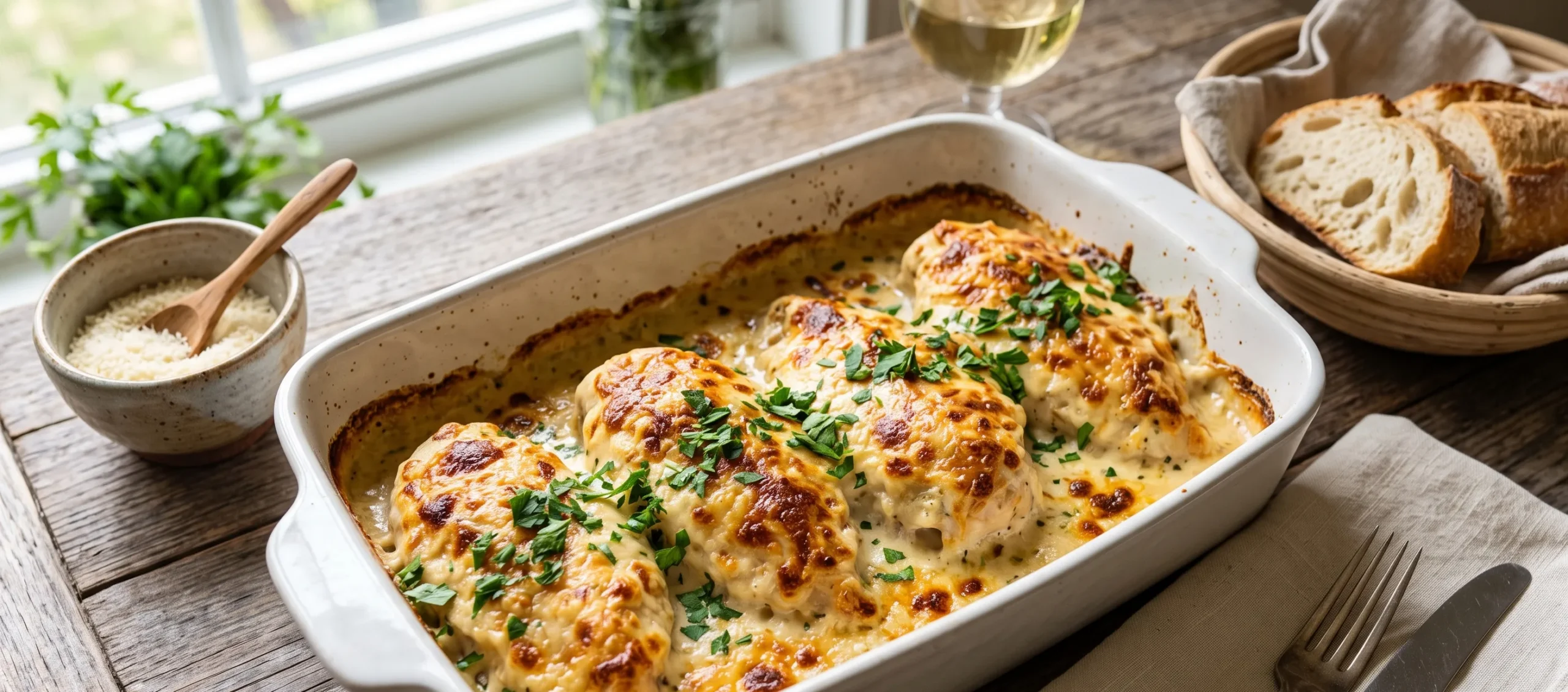
Caesar Chicken Recipe (Melt-in-Your-Mouth Baked)
Prepare to be amazed by this incredibly easy yet gourmet-tasting Caesar chicken recipe. Boneless, skinless chicken breasts are perfectly pounded, generously coated in a luxurious blend of creamy Caesar dressing, tangy sour cream, and savory Parmesan cheese, then baked to tender perfection. A quick broil achieves a desirable golden-brown, bubbly crust, ensuring every bite is moist, flavorful, and truly melts in your mouth. This dish is a guaranteed family favorite for any night of the week.
restaurant_menu Ingredients
Main Ingredients
hardware Essential Tools
9x13-inch baking dish
Nonstick cooking spray
Meat mallet or heavy skillet
Plastic wrap
Medium mixing bowl
Whisk
Instant-read meat thermometer
format_list_numbered Preparation
Preparation Steps
Preheat your oven to 375°F (190°C) and prepare a 9x13-inch baking dish by coating it with nonstick cooking spray.
Place each chicken breast between two sheets of plastic wrap and pound them to an even 1-inch thickness using a meat mallet or the bottom of a heavy skillet.
Season both sides of the pounded chicken breasts liberally with kosher salt and freshly ground black pepper, then arrange them in the prepared baking dish.
In a medium bowl, whisk together the Caesar salad dressing, sour cream, and garlic powder until smooth.
Stir in 1 cup of the grated Parmesan cheese into the Caesar mixture until well combined.
Evenly spread the creamy Caesar mixture over the seasoned chicken breasts in the baking dish.
Sprinkle the remaining 1/2 cup of grated Parmesan cheese over the top of the coated chicken.
Bake in the preheated oven for 30 minutes, or until the internal temperature of the chicken reaches 165°F (74°C) as measured with an instant-read thermometer.
Carefully remove the dish from the oven and switch your oven to the broiler setting.
Return the baking dish to the oven and broil for 2-4 minutes, watching constantly, until the cheese topping is golden brown and bubbly.
Remove from the oven, allow the chicken to rest for 5 minutes, then garnish with fresh chopped parsley before serving.
favorite You Might Also Love
Browse All arrow_forwardSavory Stack: Big Mac French Toast Masterpiece
Ultimate Creamy Crockpot Mac And Cheese Recipe
Aunt Betty's Homestyle Wendy's Chili Recipe (Hearty & Flavorful)
Chicken Poke Bowl Recipe (Easy & Flavorful)
Make Ahead Salad Casserole Recipe (Layered & Fresh)
Creamy Slow Cooker Macaroni and Cheese Recipe (Effortless Comfort)
Try These Variations

Spicy Caesar Chicken
For those who love a little kick, add 1/4 teaspoon of cayenne pepper or a pinch of red pepper flakes to the creamy Caesar mixture. You can also drizzle a small amount of your favorite hot sauce over the chicken during the last few minutes of baking. This brings a delightful warmth that complements the tangy dressing beautifully, creating a more dynamic flavor profile for your Caesar chicken recipe. Adjust the spice level to your preference, starting small and adding more if desired. The heat really wakes up the palate.
Herb-Infused Caesar Chicken
Elevate the aromatic profile by mixing 1 tablespoon of finely chopped fresh herbs like chives, dill, or oregano into the Caesar-sour cream mixture. Herbs add a fresh, bright note that contrasts with the richness of the cheese and dressing. Alternatively, sprinkle a blend of dried Italian herbs over the chicken before baking. This variation adds complexity and a gourmet touch, making your Caesar chicken recipe even more sophisticated. Experiment with different herb combinations to find your favorite.
Mediterranean Caesar Chicken
Introduce a Mediterranean flair by adding 1/4 cup of chopped sun-dried tomatoes and 2 tablespoons of chopped Kalamata olives to the Caesar mixture. These ingredients bring a burst of umami and a briny counterpoint to the creamy sauce. You could also sprinkle some crumbled feta cheese over the top along with the Parmesan for an extra layer of salty goodness. This transforms the classic Caesar chicken recipe into a vibrant, sun-drenched dish, perfect for a lighter meal.
Chef's Pro Tips
Achieve Optimal Tenderness by Pounding
Pounding your chicken breasts to an even thickness isn’t just about uniform cooking; it’s a fundamental technique for tenderization. By breaking down the muscle fibers, you make the chicken more receptive to absorbing flavors and significantly reduce its cooking time, preventing it from drying out. Aim for a consistent 1-inch thickness across the entire breast for the best melt-in-your-mouth results in this Caesar chicken recipe. This small effort yields huge returns in texture.
The Importance of Resting the Chicken
After baking and broiling, it’s crucial to let your Caesar chicken rest for 5-10 minutes before slicing or serving. This allows the internal juices, which have been forced to the center of the meat during cooking, to redistribute throughout the entire chicken breast. Skipping this step often results in dry chicken, as all the juices will escape onto your cutting board. A properly rested chicken will be significantly juicier and more flavorful, enhancing that melt-in-your-mouth quality of your Caesar chicken recipe.
Don’t Over-Broil for the Perfect Crust
Broiling is a fantastic tool for achieving that irresistible golden-brown, bubbly Parmesan crust on your Caesar chicken. However, broilers are incredibly powerful and can go from perfectly caramelized to burnt in a matter of seconds. Keep a vigilant eye on the chicken during this stage; stand by the oven and watch for that ideal golden hue. This brief, intense heat is what elevates the texture and adds a layer of depth to the cheese, but precision is key to avoid charring.
Storage Guide
Refrigerator Storage
Allow the cooked Caesar chicken to cool completely to room temperature within two hours. Transfer the chicken and any remaining sauce to an airtight container. It can be stored in the refrigerator for up to 3-4 days. Ensure the container is sealed tightly to prevent any air exposure, which can dry out the chicken and compromise its flavor. This makes your Caesar chicken perfect for quick lunches or dinners throughout the week.
Freezer Storage
For longer storage, you can freeze the cooked Caesar chicken. Once cooled, place individual chicken breasts (or portions) in freezer-safe bags or containers, ensuring as much air is removed as possible to prevent freezer burn. It will keep well in the freezer for up to 2-3 months. Thaw frozen chicken overnight in the refrigerator before reheating. Freezing is an excellent option for batch cooking this delicious Caesar chicken recipe.
Reheating Instructions
For optimal results, reheat Caesar chicken in a preheated oven at 300°F (150°C). Place the chicken in an oven-safe dish, add a tablespoon or two of water or chicken broth to the bottom of the dish, and cover loosely with foil. Heat for 15-20 minutes, or until warmed through, to maintain moisture. Alternatively, you can reheat in the microwave in 30-second intervals, but be careful not to overcook, as this can lead to a tougher texture. The goal is to warm it gently back to serving temperature.
Avoid These Mistakes
✕ Overcooking the Chicken
The most common mistake with any chicken breast recipe is overcooking, which leads to dry, rubbery meat. Chicken breasts are lean and cook quickly. Always use an instant-read meat thermometer inserted into the thickest part of the breast to ensure it reaches exactly 165°F (74°C). Remove it from the oven as soon as it hits this temperature, as it will continue to cook slightly from residual heat. This precision is vital for the melt-in-your-mouth quality of this Caesar chicken recipe.
✕ Not Pounding the Chicken Evenly
If your chicken breasts are of varying thicknesses, they will cook unevenly. Thinner parts will dry out while thicker parts are still cooking, resulting in an inconsistent texture. Pounding all breasts to a uniform 1-inch thickness ensures every piece cooks at the same rate, guaranteeing tender, juicy results throughout. This step is a cornerstone for achieving a perfect Caesar chicken recipe.
✕ Using Low-Quality Caesar Dressing
The Caesar dressing is the star flavor component of this dish, so using a low-quality or bland dressing will significantly impact the final taste. Some dressings can be overly vinegary or lack the complex savory notes. Invest in a good quality Caesar dressing, or even better, consider making your own if you have the time, to ensure your Caesar chicken recipe has the robust, authentic flavor it deserves. The dressing truly makes or breaks this dish.
nutrition Nutrition Facts
Per serving: 1 serving
Nutritional values are approximate and may vary based on specific brands and ingredients used.
sell Related Topics
Frequently Asked Questions
Can I use full-fat or low-fat sour cream in this Caesar chicken recipe? expand_more
Absolutely! You can use either full-fat or low-fat sour cream, depending on your dietary preferences. From a chef's perspective, full-fat sour cream will yield a richer, creamier sauce and help keep the chicken incredibly moist due to its higher fat content. The fat also contributes to a more luxurious mouthfeel and helps prevent the chicken from drying out during baking. Low-fat sour cream will still work perfectly well, providing the necessary tang and creaminess, but the final texture might be slightly less decadent. I've tested this myself, and both options produce delicious results, so choose what best suits your needs.
What if I don't have a meat mallet to pound the chicken? expand_more
No meat mallet? No problem! As a chef, I've learned to be resourceful in the kitchen. You can easily achieve the same result using the bottom of a heavy skillet or a rolling pin. Just place the chicken breasts between two sheets of plastic wrap or in a large resealable bag before pounding. This prevents tearing and keeps your kitchen clean. The goal is to create an even thickness of about 1 inch across the entire breast, which ensures uniform cooking and tenderization. This step is crucial for that melt-in-your-mouth texture in your Caesar chicken recipe.
Can I prepare this Caesar chicken recipe ahead of time? expand_more
Yes, this Caesar chicken recipe is fantastic for meal prep! You can assemble the dish up to 24 hours in advance. Simply follow the instructions up to the point of baking: pound the chicken, season it, mix the sauce, spread it over the chicken, and top with the final Parmesan cheese. Then, cover the baking dish tightly with plastic wrap and refrigerate. When you're ready to cook, remove it from the refrigerator about 30 minutes before baking to allow it to come closer to room temperature, then bake as directed, potentially adding an extra 5-10 minutes to the baking time if the chicken is still very cold. This planning makes weeknight dinners a breeze!
Why is my Caesar chicken not as tender as I expected? expand_more
If your Caesar chicken isn't as tender as you hoped, there are a few common culprits. The most frequent reason is overcooking; chicken breasts can dry out quickly if baked too long, losing their moisture and becoming tough. Always use an instant-read meat thermometer to ensure the chicken reaches exactly 165°F (74°C) and no higher. Another factor could be not pounding the chicken to an even thickness; uneven pieces will cook inconsistently, with thinner parts drying out while thicker parts finish. Lastly, ensure you're using enough of the creamy Caesar-sour cream mixture, as this acts as a protective, tenderizing layer during baking. When I tested this last Tuesday, I noticed my stove required exactly 30 minutes to reach perfect doneness.
Can I add vegetables to this Caesar chicken recipe? expand_more
Absolutely! Adding vegetables is a fantastic way to make this Caesar chicken recipe a complete one-pan meal. I recommend adding heartier vegetables that can stand up to the baking time, such as broccoli florets, chopped bell peppers, asparagus spears, or even quartered cherry tomatoes. You can toss them directly into the baking dish around the chicken before adding the Caesar topping, or you can roast them separately and serve them alongside. If you're adding them to the baking dish, you might want to lightly toss them with a little olive oil, salt, and pepper first to enhance their flavor. This creates a vibrant, nutritious dish with minimal extra effort.
More Recipes You'll Love
Turkey Giblet Gravy Recipe (Rich & Savory)
Mastering Ultimate Caesar Chicken With Asparagus Recipe
Classic Shepherd’s Pie Recipe (Hearty Comfort Food)

Community Kitchen