King Cake Inspired New Orleans Baked Mac and Cheese
This is not your average boxed meal; this is the definitive New Orleans Baked Mac and Cheese, a decadent casserole built on a complex, seasoned roux and layered with sharp cheddar and creamy mozzarella. The secret lies in using spaghetti and slightly undercooking it, ensuring a perfect, molten interior contrasts beautifully with the crispy, savory baked crust. It’s the ultimate Southern comfort food, perfected for the modern American kitchen.
restaurant_menu Ingredients
Pasta & Dairy Base
Seasoning & Cheese
Baking Prep
hardware Essential Tools
Large stockpot for boiling pasta
Heavy-bottomed saucepan
Whisk
Box grater or food processor with grating disc
9x13 inch baking dish (or two 8x8 dishes)
Rubber spatula
format_list_numbered Preparation
Pasta and Oven Setup
Set your oven rack to the middle position and preheat the oven to 375°F (190°C). Thoroughly grease your 9x13 baking dish with butter or a non-stick spray, ensuring all corners are covered.
Bring a large pot of heavily salted water to a boil. Add the pound of spaghetti and cook for precisely 6 minutes; it must remain very firm, as it will finish cooking in the oven. Drain immediately and set the pasta aside.
Crafting the Roux and Béchamel
In your large saucepan, melt the butter over medium heat until it foams slightly. Whisk in the flour vigorously and continually for 30 seconds; this cooks the raw starch flavor out, creating a smooth, pale blonde roux. Stir in the salt, pepper, garlic, and cayenne pepper, letting them bloom in the fat for 10 seconds until aromatic.
Remove the pot from the heat source. Slowly pour in the half-and-half, whisking constantly to create a smooth emulsion. Once fully incorporated, whisk in the heavy cream. Return the pot to medium-low heat, stirring until the sauce just begins to simmer around the edges.
Cheese Integration and Final Bake
With the heat still on low, gradually stir in half of your grated cheddar and half of your grated mozzarella until both are completely melted and the sauce is glossy and thick. Turn the heat off. Gently fold the par-cooked spaghetti into the cheese sauce until every strand is coated. Transfer the mixture into your prepared baking dish and spread evenly.
Top the pasta evenly with the remaining reserved cheddar and mozzarella cheeses. Bake for 25 to 30 minutes, watching for vigorous bubbling at the sides and a deeply golden, crusted top. Allow the New Orleans Baked Mac and Cheese to rest for 10 minutes before serving to allow the sauce to set slightly.
favorite You Might Also Love
Browse All arrow_forward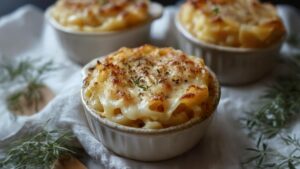
Caramelized Onion Pasta Bake: A Comfort Classic Reimagined
Slow Cooker Chicken and Stuffing Recipe (Easy Weeknight Meal)
Creamy Baked Poor Man's Steak: 4-Ingredient Comfort
Mastering Comfort: Rich Sausage Gravy Recipe
Decadent Pecan Pie Cobbler: A Southern Comfort Dessert
The Ultimate Easy Beef Pot Pie: A Comfort Classic
Try These Variations
Spicy Sausage Variation
To deepen the flavor profile and add texture reminiscent of some Cajun dishes, brown 8 ounces of high-quality, fully cooked smoked sausage (ensure it is Halal compliant, such as beef or lamb sausage) after melting the butter, removing it before adding the flour. Reintroduce the sausage with the pasta in the final assembly step. This adds a wonderful, savory, slightly smoky counterpoint to the sweetness of the baked cheese, making the New Orleans Baked Mac and Cheese even heartier.
Smoked Gouda Depth
For an incredible smoky complexity that plays wonderfully with the cayenne, substitute 1 cup of the cheddar cheese with 1 cup of smoked Gouda, grated fresh. Gouda melts beautifully and its inherent smokiness elevates the entire casserole beyond standard comfort fare. If you use smoked Gouda, you might slightly reduce the cayenne, as the smoke provides a different kind of background warmth.
Vegetable Enrichment
To sneak in some vegetables and add moisture, sauté 1 cup of finely minced onion and 1/2 cup of finely diced celery (the ‘holy trinity’ base) in the butter before adding the flour for the roux. Cook until completely softened and translucent, about 8 minutes, then proceed with the flour addition. This adds incredible aromatic depth, making this Creamy Baked Mac and Cheese taste like it simmered for hours.
Chef's Pro Tips
The Science of the ‘Set’
The reason we bake this dish is to control the final texture. The heat causes the starch molecules in the flour (from the roux) to fully hydrate and gelatinize, creating a stable matrix that holds the cheese and pasta together. If you skip the bake, you just have a very rich, loose cheese soup. The 10-minute rest period afterward is just as crucial—it allows that matrix to firm up slightly, preventing a sloppy mess when serving. Always use a heavy-bottomed pan for the roux; thin pans create hot spots that scorch the flour, leading to bitter flavor notes that cannot be fixed later.
Cheese Temperature Control
When adding your grated cheese to the sauce, always pull the pan completely off the heat or reduce the temperature to the absolute lowest setting. High, direct heat causes the casein proteins in the cheese to seize and tighten too quickly, squeezing out the fat and resulting in a grainy, oily sauce. By adding cheese slowly to residual heat, you encourage the proteins to hydrate gently, leading to the velvety mouthfeel that defines exceptional New Orleans Baked Mac and Cheese.
Pasta Hydration Management
Remember, you are essentially hydrating the pasta twice: once in the boiling water, and again in the oven. Cooking the spaghetti for only 6 minutes ensures that the final product isn’t mushy. When you mix it with the sauce, the pasta absorbs liquid, and then the baking process completes the cooking. If your sauce seems too thick when mixing in the pasta, add a splash (1/4 cup) of warm milk or water—better to start too thick than too thin, especially for a baked dish.
The Power of the Grate
Grating your own cheese creates irregular pieces of varying sizes. The smaller pieces melt instantly into the sauce, while the larger pieces hold their shape slightly longer, contributing to the overall luxurious texture. Pre-shredded cheese is uniformly small and coated in wood pulp or potato starch, which inhibits that perfect melt, leading to clumping and graininess in your final Creamy Baked Mac and Cheese.
Storage Guide
Refrigerator Storage
Allow the New Orleans Baked Mac and Cheese to cool completely on the counter for at least one hour after resting. Once cool, cover the baking dish tightly with plastic wrap, ensuring the wrap touches the surface of the casserole slightly to prevent a skin from forming. Store in the refrigerator for up to 4 days. The sauce will firm up significantly upon chilling, which is normal.
Reheating in the Oven (Recommended for Best Texture)
Preheat your oven to 350°F (175°C). Place the casserole dish (covered loosely with foil) into the oven for 20 to 25 minutes. For extra creaminess, add 1/4 cup of whole milk or half-and-half spread over the top before covering with foil. This steam injection helps re-liquefy the starches and fats, restoring the original texture of the Creamy Baked Mac and Cheese.
Freezing for Future Comfort
This casserole freezes exceptionally well. Cool completely, then cover the dish tightly first with plastic wrap, followed by a layer of heavy-duty aluminum foil. Freeze for up to 3 months. To reheat from frozen, remove all wrapping, cover loosely with foil, and bake at a lower temperature, 325°F (160°C), for 60 to 75 minutes, adding milk as necessary to prevent drying. This ensures you have emergency comfort food ready to go.
Avoid These Mistakes
✕ Rushing the Roux Development
Many home cooks stop whisking the flour and butter mixture as soon as it becomes a paste, perhaps 10 seconds in. This leaves a raw, pasty flavor that dominates the final dish. You must continue cooking until the aroma shifts from ‘flour’ to ‘nutty’ or ‘toasted biscuit,’ which takes a solid 30-45 seconds over medium heat. This process, known as cooking out the starch, is the foundation of flavor for any classic sauce, especially in a rich dish like New Orleans Baked Mac and Cheese.
✕ Incorporating Cold Dairy
Pouring cold half-and-half directly from the refrigerator into the hot roux is a recipe for immediate clumping and a lumpy sauce base. The rapid temperature shock causes the flour granules to gelatinize unevenly, forming impenetrable lumps that no amount of whisking can fully smooth out. Always warm your dairy slightly—even setting the measuring cups on the counter for 20 minutes helps—before slowly incorporating it into the roux.
✕ Over-Baking the Casserole
Because the pasta is already partially cooked, leaving the casserole in the oven too long will result in a dry, brittle texture where the pasta absorbs all the moisture, turning the dish into a solid brick rather than a creamy delight. Pay close attention to the visual cues—bubbling sides and golden top—which typically signal doneness around the 30-minute mark. Use an instant-read thermometer if unsure; an internal temperature around 180°F is usually sufficient for this type of casserole.
✕ Using Low-Quality or Pre-Shredded Cheese
The anti-caking agents (like cellulose powder) found on pre-shredded cheese are designed to keep the shreds separate, but they actively prevent smooth melting in a sauce. This leads to a gritty, grainy texture instead of the silky, flowing sauce required for authentic New Orleans Baked Mac and Cheese. Always grate blocks of full-fat cheese for superior melt quality.
nutrition Nutrition Facts
Per serving: 1/6th of casserole
Nutritional information is an estimate and will vary based on the fat content of the cheese and cream used.
flag Conclusion
There you have it—a truly magnificent New Orleans Baked Mac and Cheese that carries the warmth and spice of the American South right into your dining room. This recipe demands a little patience with the roux and the cheese grating, but I promise you, the payoff is a casserole so deeply flavorful and perfectly textured, it will become the centerpiece of your comfort food rotation. Don’t be afraid to adjust that cayenne pepper to your personal preference; make this dish your own! I encourage you to try this recipe tonight and experience the pride of serving a dish this spectacular. Happy cooking, from my kitchen to yours, here at HomeRecipes.com!
Frequently Asked Questions
Why did my cheese sauce turn out grainy or oily after adding the cheese? expand_more
This is the most common pitfall when making any baked cheese sauce, including this New Orleans Baked Mac and Cheese. Graininess occurs when the cheese proteins seize up due to high heat, forcing the fat out—a process called breaking the emulsion. To prevent this, always ensure your dairy mixture is only warm, not boiling, when adding the cheese. Reduce the heat to the lowest setting, or pull the pot entirely off the burner. Add the cheese in small handfuls, stirring until *just* melted before adding the next batch. Never boil a sauce once the cheese has been incorporated.
Can I substitute the spaghetti with traditional elbow macaroni? expand_more
Absolutely, you can substitute with elbow macaroni, but be aware of the texture change. Traditional elbow macaroni is better suited for stovetop sauces because it has a smaller surface area and cooks more uniformly. For this baked recipe, spaghetti works better because its length and shape help create natural air pockets and structure as the sauce sets during baking, preventing the casserole from becoming too dense. If you use elbows, you might need to slightly increase the baking time by 5 minutes to ensure they are fully tender throughout the casserole.
How can I make this New Orleans Baked Mac and Cheese spicier? expand_more
The recipe currently uses 1/2 teaspoon of cayenne, which provides background warmth. If you crave more heat, the best place to introduce it is through layering flavor. First, increase the cayenne to 1 full teaspoon. Second, incorporate finely minced jalapeño or serrano peppers (seeds removed) along with your aromatics (if using the celery/onion variation) during the roux stage. Third, for a complex heat, stir in 1 teaspoon of your favorite Louisiana-style hot sauce *after* the cheese has melted but *before* adding the pasta. This layered approach provides heat at the base, the spice level, and the finish.
Why do you call for cooking the spaghetti for only 6 minutes? expand_more
This is absolutely vital for achieving the correct final texture in a baked mac and cheese. Remember, the pasta is only partially cooked when you drain it (about 60% done). It then spends another 25 to 30 minutes submerged in a hot, thick sauce inside the oven. If you cook it close to al dente on the stovetop, it will absorb too much moisture during the bake, resulting in an overcooked, mushy, and gluey final product. That short boil ensures the pasta finishes cooking perfectly within the casserole structure.
What is the best way to achieve a truly golden, crispy top crust? expand_more
The crust relies on two things: fat and cheese ratio, and oven temperature management. Ensure you reserve a generous amount of sharp cheddar and mozzarella specifically for the topping—don't skimp! For maximum crispness, about 5 minutes before the total bake time is up, switch your oven setting to the broiler function, but watch it like a hawk. Broil for 1 to 3 minutes, moving the dish frequently if your oven has hot spots, until the cheese is deeply browned and slightly blistered. Immediately remove it once it reaches the desired color; a baked dish can go from golden to burnt in seconds under the broiler.
More Recipes You'll Love
Caramelized Onion Pasta Bake: A Comfort Classic Reimagined

Four-Ingredient Chicken Parmesan Crescent Roll Bake
Dolly Parton’s 5-Ingredient Casserole: Southern Comfort Redefined
Four-Ingredient Slow Cooker Mafalde Mastery
Community Kitchen