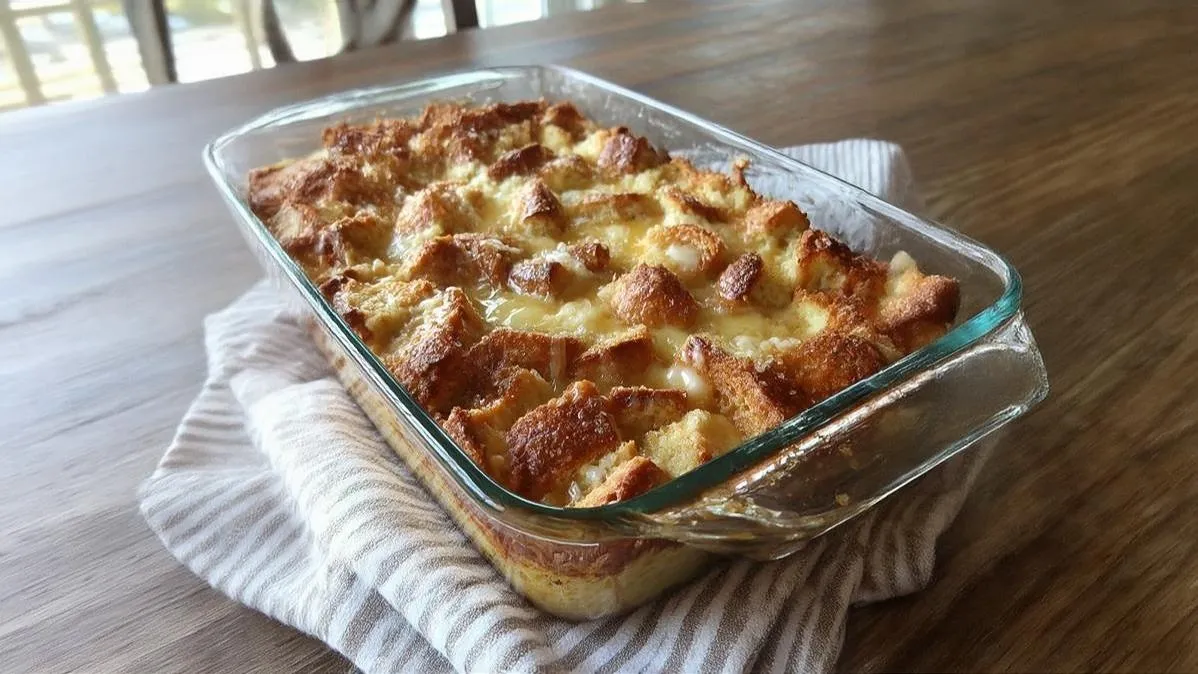
Grandma’s Bread Pudding Recipe (Classic Comfort)
Experience the heartwarming embrace of Grandma's Bread Pudding, a timeless dessert that transforms humble day-old bread into a rich, tender, and beautifully spiced custard. This recipe, steeped in tradition and perfected with chef insights, promises a golden-brown top and a melt-in-your-mouth interior, making it the ultimate comfort food for any occasion. It's a delicious and resourceful way to create culinary magic from simple ingredients, guaranteed to evoke cherished memories with every spoonful.
restaurant_menu Ingredients
Main Ingredients
Optional Additions
hardware Essential Tools
9x13 inch baking dish (or similar 2-quart capacity)
Large mixing bowl
Medium mixing bowl
Whisk
Measuring cups and spoons
Spatula
Wire cooling rack
format_list_numbered Preparation
Getting Started
Preheat your oven to 350°F (175°C) and lightly grease a 9x13 inch baking dish with butter or non-stick spray, ensuring all corners and sides are covered for easy release.
Cut your day-old bread into uniform 1-inch cubes, aiming for consistent size so they absorb the custard evenly, then place them in a large mixing bowl.
In a separate medium bowl, whisk together the whole milk, large eggs, granulated sugar, pure vanilla extract, ground cinnamon, and ground nutmeg until the mixture is well blended and the sugar has dissolved completely.
Soak and Bake
Pour the prepared custard mixture over the bread cubes in the large bowl, gently pressing down to ensure all the bread is submerged and can thoroughly soak.
Allow the bread to soak for a crucial 15-20 minutes (up to 30 minutes for denser breads), giving it ample time to absorb the rich custard and achieve a moist, tender texture.
If using optional mix-ins like raisins, chocolate chips, or nuts, gently fold them into the soaked bread mixture now, being careful not to overmix.
Pour the entire bread and custard mixture evenly into your prepared baking dish and place it into the preheated oven.
Bake for 45-50 minutes, or until the top is beautifully golden-brown and the center is set with a slight jiggle when gently shaken; if the top browns too quickly, loosely tent it with aluminum foil.
Remove the Grandma's Bread Pudding from the oven and let it cool on a wire rack for 10-15 minutes to allow the custard to fully set before serving warm with your favorite toppings.
favorite You Might Also Love
Browse All arrow_forwardFudgy Chocolate Brownie with Condensed Milk
Golden Pineapple Bake Recipe: Tropical Comfort
Effortless Two Ingredient Lemon Bars Mastery
Elevate Tea Time: Decadent Matcha Cake Recipe
Effortless Two-Ingredient Lemon Bars: Sunshine in Every Bite
Effortless Creamy Lemon Dream: The Ultimate No-Bake Dessert
Try These Variations
Caramel Apple Bread Pudding
Stir in 1 cup of finely diced apples (like Granny Smith or Honeycrisp) and 1/4 cup of caramel sauce into the bread mixture before baking. The apples will soften and release their natural sweetness, while the caramel adds an extra layer of rich, buttery flavor. Top with an additional drizzle of warm caramel after baking for a truly decadent treat that evokes fall flavors.
Chocolate Chip Pecan Bread Pudding
For a delightful textural contrast and rich flavor, add 1/2 cup of semi-sweet chocolate chips and 1/2 cup of chopped pecans to the bread and custard mixture. The chocolate chips will melt into gooey pockets, and the pecans will provide a satisfying crunch. Toss the nuts and chips lightly in a tablespoon of flour before adding to prevent them from sinking to the bottom during baking.
Orange Cranberry Bread Pudding
Introduce a bright, festive twist by adding 1/2 cup of dried cranberries and 1 tablespoon of fresh orange zest to the custard mixture. The cranberries will plump up and offer a delightful tartness, perfectly balanced by the fragrant orange zest. This variation is especially wonderful during the holiday season or for a special brunch, offering a refreshing citrus note.
Spiced Pumpkin Bread Pudding
For a seasonal delight, whisk 1/2 cup of pumpkin puree into the custard mixture along with an additional 1/4 teaspoon of pumpkin pie spice blend. This adds a lovely autumnal flavor and a beautiful orange hue to the pudding, making it a perfect dessert for Thanksgiving or fall gatherings. Serve with a dollop of maple whipped cream for an extra special touch.
Chef's Pro Tips
Don’t Be Afraid of the Jiggle
When your Grandma’s Bread Pudding comes out of the oven, it should have a slight jiggle in the center, much like a perfectly set custard or cheesecake. This indicates that it’s cooked through but not overbaked. The residual heat will continue to cook it as it cools (this is called carryover cooking), resulting in a perfectly tender and moist interior. If it’s firm all the way through, it’s likely overbaked and might be dry.
Enhance Vanilla with a Pinch of Salt
A tiny pinch of kosher salt (about 1/8 teaspoon) in your custard mixture, even in sweet dishes like this Grandma’s Bread Pudding, can significantly enhance all the other flavors, especially the vanilla and spices. Salt is a flavor enhancer, not just a seasoning, and it helps to balance sweetness and bring out the aromatic notes of the vanilla and cinnamon, making the pudding taste more vibrant and complex.
Warm Milk for Better Absorption
While not strictly necessary, gently warming the milk before mixing it with the eggs and other ingredients can help the sugar dissolve more quickly and allow the bread to absorb the custard more efficiently. Just warm it until it’s lukewarm, not hot, to avoid scrambling the eggs when you combine them. This ensures a smoother, more homogenous custard and a more evenly saturated Grandma’s Bread Pudding.
The Power of a Water Bath
For an ultra-creamy and consistently cooked Grandma’s Bread Pudding, consider baking it in a water bath (bain-marie). Place your baking dish inside a larger roasting pan and fill the roasting pan with hot water halfway up the sides of the bread pudding dish. This gentle, moist heat prevents the edges from overcooking before the center is set, resulting in an incredibly silky, even texture throughout the entire pudding.
Storage Guide
Room Temperature (Short-Term)
While Grandma’s Bread Pudding is best served warm, if you have leftovers that will be consumed within a few hours, you can keep them loosely covered at room temperature. However, for food safety, especially with egg and milk-based dishes, I generally recommend refrigerating promptly after it has cooled to room temperature, particularly if not being eaten immediately.
Refrigerator (3-4 Days)
Once your Grandma’s Bread Pudding has cooled completely to room temperature, transfer it to an airtight container or cover the baking dish tightly with plastic wrap. Stored this way, it will remain fresh and delicious in the refrigerator for up to 3-4 days. The flavors often meld and deepen overnight, making it a wonderful next-day treat. Reheat individual portions gently in the microwave or oven for best results.
Freezer (2-3 Months)
For longer storage, Grandma’s Bread Pudding freezes exceptionally well. Allow the pudding to cool completely. You can freeze it as a whole piece in the baking dish (if freezer-safe and well-wrapped) or, for convenience, cut it into individual portions. Wrap each portion tightly in plastic wrap, then an additional layer of aluminum foil, or place in freezer-safe containers. Label with the date. It will maintain its quality for 2-3 months. Thaw overnight in the refrigerator before reheating.
Avoid These Mistakes
✕ Using Fresh Bread
A common pitfall is using fresh, soft bread. Fresh bread retains a lot of moisture, and when combined with the custard, it becomes overly saturated and results in a soggy, dense, and unappetizingly gummy bread pudding. Always use day-old (or even two-day-old) bread, or lightly toast fresh bread cubes to dry them out, ensuring they act like sponges to properly absorb the custard for a tender, custardy texture in your Grandma’s Bread Pudding.
✕ Insufficient Soaking Time
Rushing the soaking process means the bread doesn’t have adequate time to fully absorb the custard mixture. This leads to dry, unflavored pockets of bread within the pudding and an uneven texture. Give the bread at least 15-20 minutes, pressing it down occasionally, to ensure every cube is thoroughly saturated, resulting in a uniformly moist and flavorful Grandma’s Bread Pudding.
✕ Overbaking the Pudding
Baking the bread pudding for too long or at too high a temperature can lead to a dry, rubbery, or tough texture. The custard proteins will over-coagulate, squeezing out moisture. You want a set center with a slight jiggle, and a golden-brown top, not a hard, crusty one. Keep an eye on the cooking time and temperature to preserve the delicate, custardy nature of your Grandma’s Bread Pudding.
✕ Not Greasing the Baking Dish Properly
Forgetting to thoroughly grease your baking dish can lead to the bread pudding sticking to the sides and bottom, making it difficult to serve and potentially tearing the delicate structure. Ensure you grease the dish generously, especially in the corners and up the sides, to guarantee an easy release and beautifully presented slices of Grandma’s Bread Pudding.
nutrition Nutrition Facts
Per serving: 1 slice
Nutritional values are approximate and may vary based on specific ingredient brands and portion sizes. This calculation does not include optional toppings like whipped cream or ice cream.
flag Conclusion
There you have it—the ultimate guide to making a Grandma’s Bread Pudding that will earn rave reviews and create lasting memories. This recipe, perfected through generations and refined with a chef’s touch, is more than just a dessert; it’s an experience. I encourage you to gather your ingredients, take your time with each step, and let the comforting aromas fill your kitchen. Here at HomeRecipes.com, we believe that the best meals are made with love and shared with joy. So go ahead, bake this classic, and make it your own family tradition. Happy cooking!
sell Related Topics
Frequently Asked Questions
What kind of bread is best for Grandma's Bread Pudding? expand_more
The best bread for this Grandma's Bread Pudding is a day-old, slightly stale, sturdy white bread. Think French bread, challah, brioche, or even a good quality sandwich bread. The key is that it shouldn't be too fresh, as fresh bread is too moist and will absorb too much custard, leading to a soggy texture rather than a tender, custardy one. Stale bread acts like a sponge, soaking up all the delicious custard without falling apart. Avoid breads with very tough crusts or strong flavors that might compete with the classic vanilla and spice profile.
Can I make Grandma's Bread Pudding ahead of time? expand_more
Absolutely! This Grandma's Bread Pudding is an excellent make-ahead dessert. You can prepare the entire pudding mixture (bread and custard) and let it soak in the baking dish, covered, in the refrigerator for several hours or even overnight before baking. This extended soaking time can actually enhance the flavors and ensure a perfectly moist interior. Just be sure to bring it to room temperature for about 30 minutes before baking, and you might need to add an extra 5-10 minutes to the baking time.
How do I know when my bread pudding is done baking? expand_more
You'll know your Grandma's Bread Pudding is perfectly baked when the top is a beautiful golden brown and the center is set but still has a slight jiggle when you gently shake the dish. A toothpick or knife inserted into the center should come out mostly clean, though a little moisture is fine for a custardy texture. If you have an instant-read thermometer, the internal temperature should register between 175-180°F (79-82°C). Overbaking will result in a dry, rubbery pudding, so keep an eye on it!
What can I add to Grandma's Bread Pudding for extra flavor? expand_more
There are countless ways to customize your Grandma's Bread Pudding! Beyond the classic raisins, nuts (like pecans or walnuts), or chocolate chips, consider adding a tablespoon of orange or lemon zest for a bright citrus note. A pinch of ground cardamom or a dash of allspice can complement the cinnamon and nutmeg beautifully. For a richer flavor, you could swirl in some caramel sauce or a fruit compote before baking. Even a handful of dried cranberries or chopped dried apricots can add a lovely chewiness and tartness. Feel free to experiment!
Why did my bread pudding turn out soggy? expand_more
A soggy Grandma's Bread Pudding is usually due to one of two reasons: either the bread wasn't stale enough, or it wasn't given enough time to properly absorb the custard. Fresh bread retains too much moisture, and when combined with the custard, it can lead to an overly wet consistency. Insufficient soaking time also means the bread hasn't had a chance to fully swell and absorb the liquid, leaving pockets of unabsorbed custard. Ensure your bread is genuinely day-old (or air-dried) and give it the full 15-20 minutes (or more) to soak before baking for the best results.
Community Kitchen