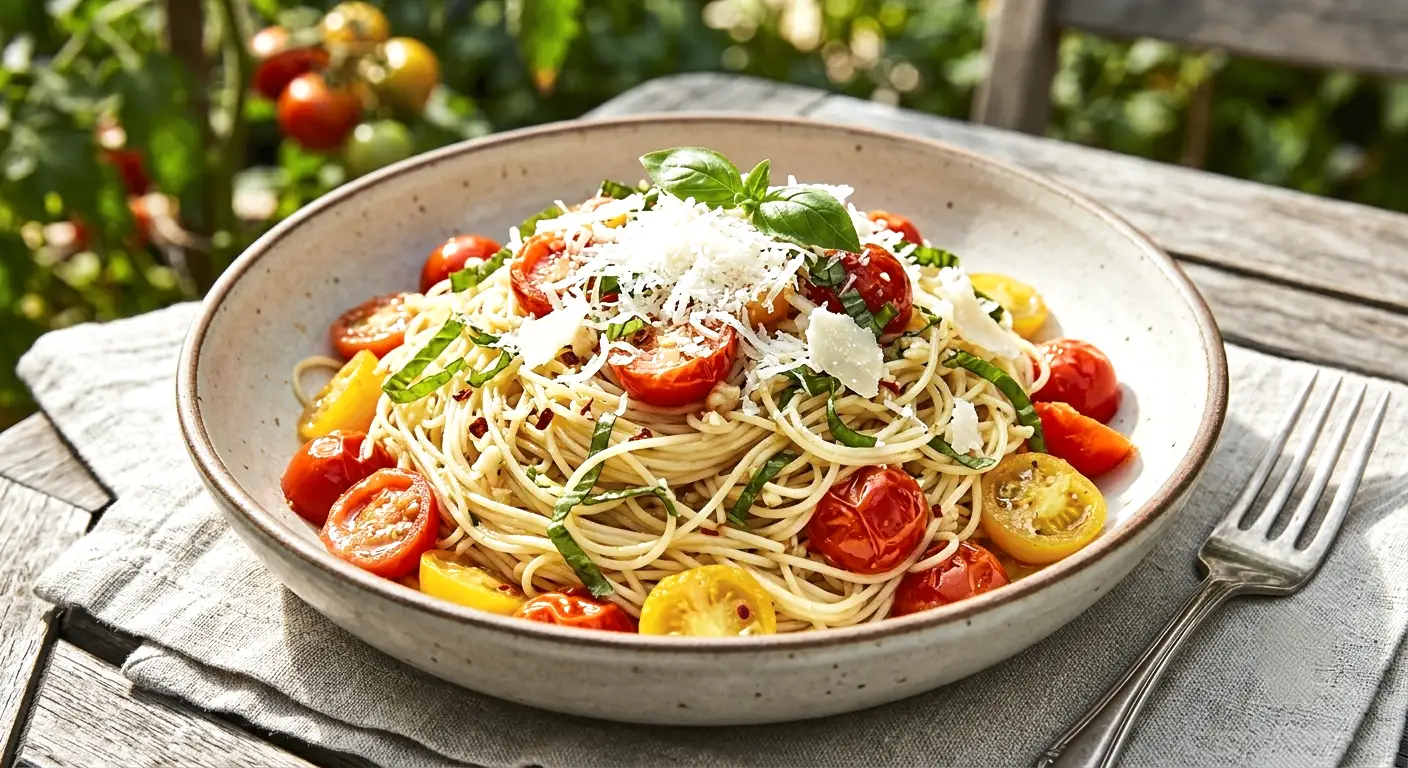
Summer Garden Pasta Recipe (Fresh & Flavorful)
This exquisite summer garden pasta recipe is a celebration of seasonal bounty, featuring sun-ripened cherry tomatoes and fragrant basil macerated in olive oil and garlic, creating a vibrant, no-cook sauce. Tossed with delicate angel hair pasta and finished with freshly grated Parmesan, it's a light, refreshing, and incredibly flavorful dish that captures the essence of summer with every forkful. Perfect for a quick weeknight meal or an elegant summer gathering.
restaurant_menu Ingredients
Fresh Tomato & Basil Mixture
For the Pasta
hardware Essential Tools
Large mixing bowl
Plastic wrap or clean kitchen towel
Large pot
Colander
Sharp knife
Cutting board
format_list_numbered Preparation
Preparing the No-Cook Sauce
In a large mixing bowl, combine the halved cherry tomatoes, 1/2 cup extra virgin olive oil, minced garlic, julienned basil, crushed red pepper flakes, 1 teaspoon kosher salt, and 1/2 teaspoon freshly ground black pepper. Stir everything together until the tomatoes are well coated.
Cover the bowl loosely with plastic wrap or a clean kitchen towel and allow the mixture to rest at room temperature for at least 4 hours. This maceration process is key for developing the deep, fresh flavors of your summer garden pasta.
Cooking the Pasta
Just before you are ready to serve, bring a large pot of heavily salted water to a rolling boil. Add a splash of olive oil to the boiling water to help prevent the pasta from sticking.
Add the 1 pound of angel hair pasta to the boiling water and cook according to package directions, typically 2-4 minutes, until it is perfectly al dente. Do not overcook.
Combining and Finishing
Drain the cooked pasta well, reserving about 1/2 cup of the starchy pasta water. Immediately add the hot pasta to the bowl containing the macerated cherry tomato mixture.
Add 1 1/2 cups of freshly grated Parmesan cheese and a generous handful of additional julienned fresh basil leaves to the pasta and tomato mixture. Toss gently but thoroughly until all ingredients are well combined and the pasta is evenly coated with the fresh sauce. If the sauce seems too thick, add a tablespoon or two of the reserved pasta water to achieve a silkier consistency.
Serve the summer garden pasta immediately, garnished with more freshly grated Parmesan cheese and fresh basil leaves, and enjoy the burst of summer flavor!
favorite You Might Also Love
Browse All arrow_forward
Cheesy Weeknight Fish Stick Casserole Recipe (Family Favorite)
Garlic Butter Shrimp Pasta: A Quick and Delicious Recipe

Velvety Slow Cooker Hashbrown Casserole Mastery
Hearty American Goulash: A Comfort Classic Redefined
Ultimate Rotel Dip Recipe: Creamy, Cheesy Party Appetizer
Ultimate Comfort: Baked Chili Mac Casserole Mastery
Try These Variations
Mediterranean Twist
Add 1/4 cup of pitted, chopped Kalamata olives and 1/4 cup of crumbled feta cheese to the tomato mixture during maceration. The briny olives and tangy feta will introduce a delightful Mediterranean flair to your summer garden pasta, complementing the fresh tomatoes beautifully.
Spicy Seafood Delight
Enhance the heat by doubling the crushed red pepper flakes and adding 1/2 pound of cooked, peeled shrimp or bay scallops to the pasta just before tossing. The seafood brings a wonderful succulence and protein boost, making this summer garden pasta a more substantial main course.
Garden Fresh with Greens
Stir in 2 cups of fresh baby spinach or arugula into the warm pasta mixture at the very end. The heat from the pasta will gently wilt the greens, adding a lovely peppery note and extra nutrients to your summer garden pasta without overcooking them.
Roasted Vegetable Boost
For a deeper flavor, roast a selection of chopped summer vegetables like zucchini, bell peppers, or eggplant with a drizzle of olive oil and herbs at 400°F (200°C) for 20 minutes. Toss these roasted vegetables into the pasta along with the tomato mixture for a heartier, more complex dish.
Chef's Pro Tips
Don’t Skimp on the Olive Oil
Using a high-quality extra virgin olive oil is paramount for this summer garden pasta recipe. It’s not just a cooking medium; it’s a key flavor component that emulsifies with the tomato juices and pasta water, creating a luscious mouthfeel and carrying all the fresh aromas. Think of it as the backbone of your sauce.
Seasoning the Pasta Water
Always season your pasta water generously with salt. The pasta absorbs this seasoning as it cooks, ensuring every strand is flavorful from the inside out. If your pasta water isn’t salty enough, your entire dish will taste bland, no matter how good your sauce is. I always aim for it to taste like the ocean.
The Power of Fresh Basil
While basil is incorporated into the macerating tomatoes, reserving some fresh, julienned basil to add at the very end is a non-negotiable chef’s trick. The heat from the warm pasta will gently release its volatile oils, providing a fresh, vibrant aroma and flavor that would be lost if it were cooked too long.
Utilize Pasta Water for Emulsification
The starchy water left over from cooking pasta is liquid gold. Adding a tablespoon or two when tossing the pasta with the sauce helps to create a light emulsion, binding the sauce to the pasta and giving it a silky, glossy finish. This is how restaurant-quality pasta dishes achieve their perfect texture and coating.
Storage Guide
Refrigerator Storage
Store any leftover summer garden pasta in an airtight container in the refrigerator for up to 2-3 days. While the flavors will continue to meld, the pasta may absorb more of the liquid and soften slightly. Ensure it’s cooled completely before sealing to prevent condensation and bacterial growth.
Reheating Instructions
To reheat, gently warm individual portions in a non-stick skillet over medium-low heat (around 250-275°F or 120-135°C) on the stovetop. Add a splash of water or vegetable broth (1-2 tablespoons per serving) to help loosen the pasta and prevent it from drying out. Stir frequently until just warmed through, about 5-7 minutes. Alternatively, microwave in 30-second intervals, stirring between each, until heated. Avoid aggressive reheating, as this can make the pasta mushy and diminish its fresh flavor. Freezing is not recommended for this delicate dish.
Avoid These Mistakes
✕ Not Macerating Long Enough
A common error in making this summer garden pasta recipe is rushing the maceration process. The 4-hour resting time at room temperature allows the salt to draw out the natural juices from the tomatoes, creating a rich, flavorful liquid that forms the base of your ‘no-cook’ sauce. Skipping this step or shortening it too much results in a less flavorful, drier pasta where the tomatoes haven’t had a chance to fully release their sweetness and aroma.
✕ Overcooking the Pasta
Angel hair pasta cooks incredibly fast, and overcooking it can turn it into a mushy, unappetizing mess that won’t hold the delicate sauce. Always cook it to al dente, meaning it’s tender but still has a slight bite. This texture provides a pleasant contrast to the soft tomatoes and ensures the pasta maintains its structural integrity when tossed.
✕ Using Cold Pasta
Adding cold or lukewarm pasta to the tomato mixture is a mistake. The heat from freshly cooked, hot pasta is essential for gently warming the tomatoes, encouraging them to release more juices, and melting the Parmesan cheese to create a cohesive, silky sauce. If the pasta is cold, the flavors won’t meld as effectively, and the cheese won’t incorporate properly.
✕ Forgetting the Reserved Pasta Water
Many home cooks drain all their pasta water, but reserving a bit is a chef’s secret weapon for this summer garden pasta recipe. If your sauce seems too dry or isn’t coating the pasta well, a splash of the starchy pasta water helps to create a beautiful emulsion, binding the sauce to the pasta and adding a luxurious, silky texture. Without it, the dish can sometimes feel disjointed.
nutrition Nutrition Facts
Per serving: 1 serving
Nutritional values are estimates and may vary based on specific ingredients and portion sizes.
flag Conclusion
This summer garden pasta recipe is more than just a meal; it’s a celebration of simplicity, fresh flavors, and the joy of summer. It’s comforting, vibrant, and utterly delicious – a testament to the fact that the most memorable dishes often come from the freshest ingredients and a little bit of patience. I encourage you to try this in your own kitchen; taste the sunshine in every bite. Here at HomeRecipes, we believe every home cook can create restaurant-quality meals, and this pasta is the perfect place to start. Enjoy!
sell Related Topics
Frequently Asked Questions
How can I make this summer garden pasta recipe more substantial for a main course? expand_more
To make this summer garden pasta recipe a heartier main dish, you have several excellent options. You could add grilled chicken breast, shrimp, or even some pan-seared scallops right before serving. For a vegetarian boost, consider tossing in some cannellini beans or chickpeas, which add protein and fiber without overpowering the fresh flavors. Another great idea is to add some fresh mozzarella balls (bocconcini), which will melt slightly into the warm pasta, adding a creamy texture. These additions transform it into a complete and satisfying meal.
Can I use different types of pasta for this recipe? expand_more
Absolutely! While angel hair pasta is traditional for its delicate texture that pairs well with the light sauce, you can certainly experiment. Thin spaghetti, linguine, or even a smaller shape like farfalle (bow-tie pasta) or orecchiette would work well. The key is to choose a pasta that will effectively capture and hold the fresh tomato sauce. Avoid very thick or heavy pasta shapes, as they might overwhelm the delicate flavors of this summer garden pasta recipe.
What if I don't have 4 hours to let the tomatoes macerate? expand_more
While the 4-hour maceration time is highly recommended for optimal flavor development in this summer garden pasta recipe, you can certainly shorten it if you're in a pinch. Even 30 minutes to an hour will allow some flavors to meld, though the sauce won't be as deeply developed. If time is very short, you can gently warm the tomato mixture in a saucepan over very low heat for about 10-15 minutes, just until the tomatoes soften slightly and release their juices. Be careful not to cook them fully; the goal is just to encourage flavor release, not to make a cooked sauce.
Can I add other vegetables to this summer garden pasta recipe? expand_more
Yes, absolutely! This summer garden pasta recipe is incredibly versatile and welcomes other seasonal vegetables. Thinly sliced zucchini or yellow squash, finely diced bell peppers (red or yellow), or even some fresh spinach or arugula stirred in at the end would be delicious additions. For a touch of brininess, consider adding some chopped Kalamata olives. Just ensure any additions are either finely diced or cooked very lightly so they blend seamlessly with the fresh, light nature of the dish.
Is there a way to make this recipe dairy-free or vegan? expand_more
To make this summer garden pasta recipe dairy-free or vegan, simply omit the Parmesan cheese. You can replace it with a plant-based Parmesan alternative, or for a rich, umami flavor, add a tablespoon or two of nutritional yeast. A sprinkle of toasted pine nuts or chopped walnuts can also add a lovely texture and nutty flavor that complements the dish beautifully. The rest of the ingredients are naturally plant-based, making it an easy adaptation.
More Recipes You'll Love
Cheesy Weeknight Fish Stick Casserole Recipe (Family Favorite)
Decadent Creamy Alfredo Lasagna Soup Masterpiece
Slow Cooker Creamy Tortellini Soup Recipe (Comforting & Easy)

French Onion Pasta Recipe (One-Pot Comfort)
Paccheri alla Vittorio Recipe (Simple Tomato Pasta)
Community Kitchen