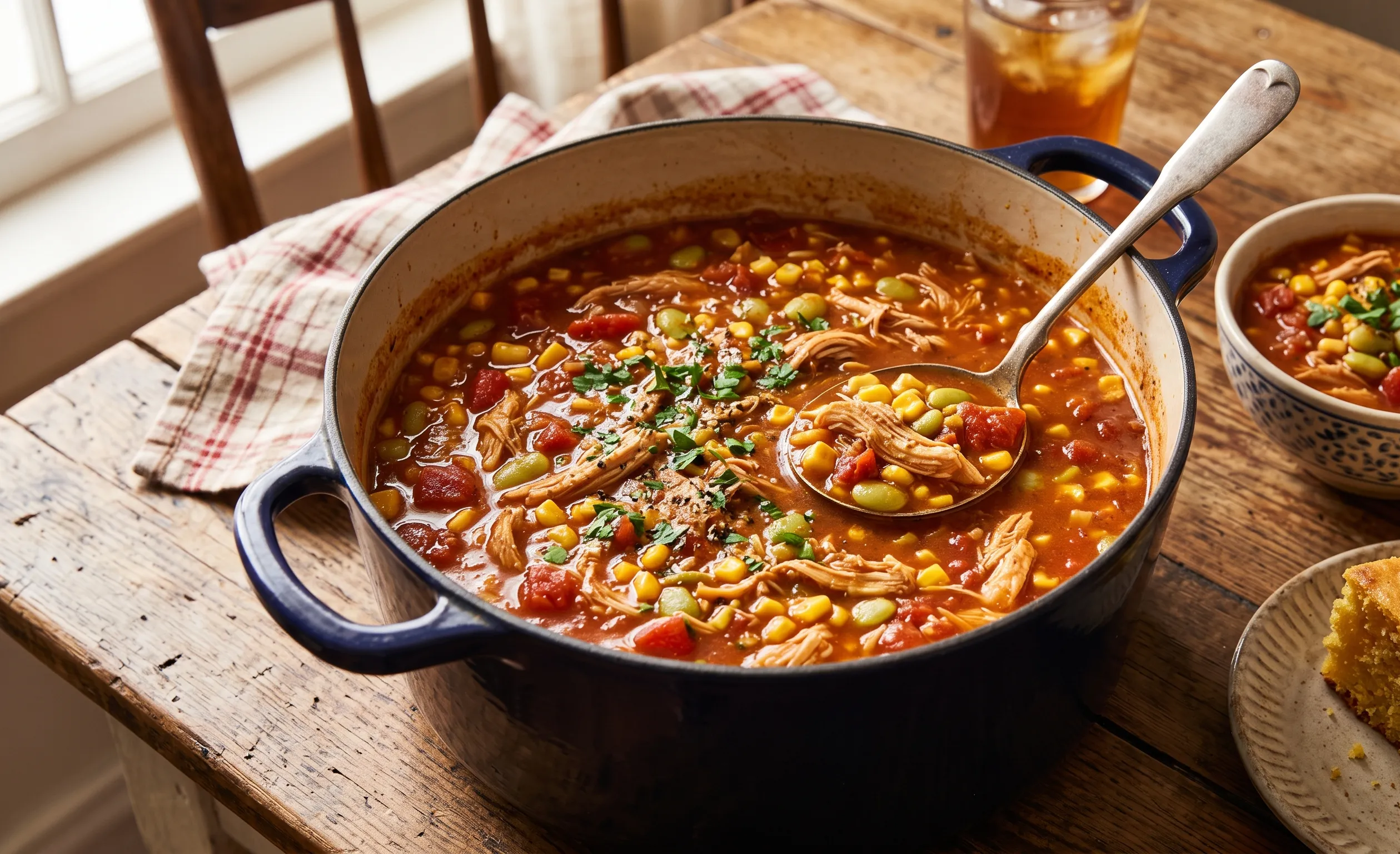
Brunswick Stew Recipe (Classic Southern Comfort)
Dive into the comforting depths of this classic Brunswick Stew recipe, a Southern masterpiece crafted with tender cooked chicken, sweet corn, creamy lima beans, and diced tomatoes, all simmered in a tangy, smoky barbecue-infused broth. This hearty stew is a perfect blend of savory and slightly sweet, delivering a robust flavor profile that warms you from the inside out. It's an ideal one-pot meal for family dinners or feeding a crowd, embodying true American home cooking.
restaurant_menu Ingredients
Stew Ingredients
hardware Essential Tools
Dutch oven or large heavy-bottomed pot
Wooden spoon or spatula
Measuring cups and spoons
Chef's knife
Cutting board
format_list_numbered Preparation
Cooking the Stew
In a Dutch oven or large heavy-bottomed pot, heat the olive oil over medium heat. Add the finely chopped onion and cook, stirring occasionally, until it softens and becomes translucent, about 5 to 7 minutes. Add the minced garlic and cook for 1 minute more, until fragrant, being careful not to burn it.
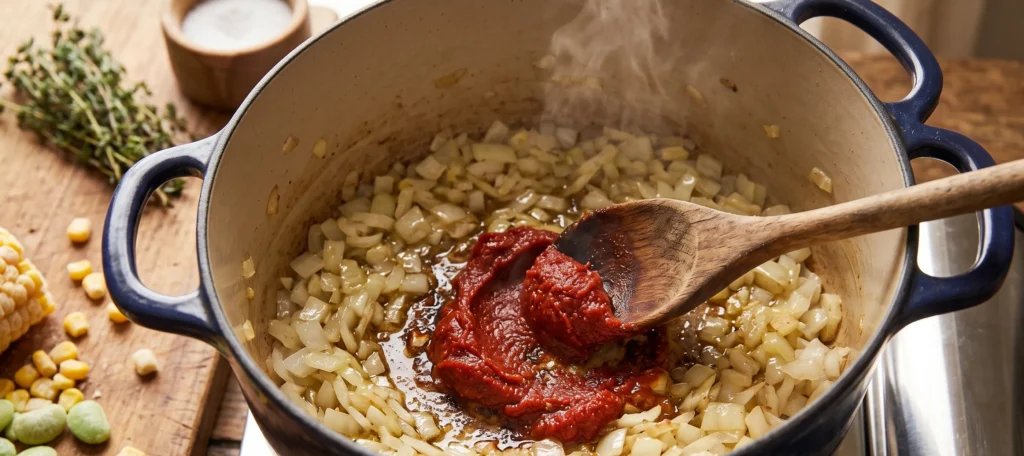
Stir in the tomato paste and cook for 1 to 2 minutes, stirring constantly. This step helps to deepen the flavor and color of the tomato paste by caramelizing its sugars.
Pour in 2 cups of chicken broth, stirring well to scrape up any browned bits from the bottom of the pot. Add the undrained can of diced tomatoes, frozen corn, frozen lima beans, barbecue sauce, and Worcestershire sauce. Season with kosher salt and freshly ground black pepper.
Add the cooked pulled chicken to the pot. Bring the mixture to a gentle boil, then reduce the heat to a low simmer. Cover the pot, leaving the lid slightly ajar, and let it simmer for at least 30 minutes, or longer (up to 2 hours) for deeper flavor development. Stir occasionally to prevent sticking.
If the stew becomes too thick during simmering, add additional chicken broth, about 1/4 cup at a time, until your desired consistency is reached.
Before serving, taste the stew and adjust the seasoning as needed with more salt, pepper, or hot sauce to your preference. Serve hot, optionally drizzled with extra barbecue sauce.
favorite You Might Also Love
Browse All arrow_forward
Vibrant Mexican Shrimp Cocktail: The Ultimate Chilled Appetizer

Hawaiian Chicken Long Rice Soup Recipe (Comforting Noodle)

Garlic Butter Shrimp Pasta: A Quick and Delicious Recipe

Slow Cooker Chicken and Dressing Recipe (Comforting Crock-Pot)
Powerhouse Antioxidant Rich Salads for Immunity

Mastering the Roasted Onion Flower: A Culinary Showstopper
Try These Variations
Smoky Beef Brunswick Stew
For a deeper, richer flavor profile, substitute the cooked pulled chicken with 2 cups of cooked, shredded beef (such as leftover pot roast or slow-cooked brisket). The beef will add a more robust, savory character that pairs wonderfully with the smoky barbecue sauce. Ensure the beef is tender enough to shred easily for the best texture in your Brunswick Stew.
Spicy Brunswick Stew
If you love heat, consider adding a finely minced jalapeño or serrano pepper along with the garlic. You can also increase the amount of hot sauce used or stir in 1/4 to 1/2 teaspoon of cayenne pepper with the tomato paste for an all-over spicy kick. A dash of red pepper flakes can also provide a pleasant, lingering heat.
Vegetable-Rich Brunswick Stew
Boost the vegetable content by adding diced bell peppers (red, green, or yellow), carrots, or even some small diced potatoes. Add bell peppers and carrots with the onion, and potatoes with the broth, ensuring they cook until tender. This variation adds more nutrients and makes the Brunswick Stew even heartier.
Sweet and Tangy Brunswick Stew
Adjust the sweetness and tang by experimenting with different barbecue sauces. Some regional sauces are sweeter, while others are more vinegar-based. You can also add a tablespoon of brown sugar or a splash of apple cider vinegar to fine-tune the balance of sweet and sour notes to your liking in this Brunswick Stew recipe.
Chef's Pro Tips
Don’t Skimp on the Sautéing Time for Onions
Cooking onions until they are truly soft and translucent, not just slightly warmed, is crucial. This process allows their natural sugars to caramelize slightly, releasing a foundational sweetness and depth of flavor that will permeate the entire Brunswick Stew. Rushing this step results in a less complex, sharper onion flavor.
Caramelize Your Tomato Paste
This is a pro move! After sautéing the aromatics, cooking the tomato paste for a minute or two, stirring constantly, allows its concentrated sugars to caramelize. This deepens its color and transforms its flavor from bright and acidic to rich, savory, and slightly sweet, adding significant umami to your Brunswick Stew.
Taste, Taste, Taste, and Adjust Seasoning
Your palate is your most important tool. As the Brunswick Stew simmers and flavors develop, constantly taste it and adjust salt, pepper, and especially hot sauce or barbecue sauce to your liking. What tastes good at the start might need a tweak after an hour of simmering, as flavors can concentrate and mellow.
The Power of Worcestershire Sauce
Don’t underestimate this ingredient. Worcestershire sauce adds a complex layer of savory, umami, and slightly tangy notes that are hard to replicate. It rounds out the overall flavor profile of the Brunswick Stew, providing a depth that makes it truly irresistible. It’s a secret weapon for many chefs.
Storage Guide
Refrigerator Storage
Allow the Brunswick Stew to cool completely at room temperature, ideally within two hours, to prevent bacterial growth. Transfer the cooled stew into an airtight container. It will keep well in the refrigerator for up to 3 to 4 days. This stew often tastes even better the next day as the flavors continue to meld.
Freezer Storage
Brunswick Stew freezes exceptionally well. Once completely cooled, portion the stew into individual freezer-safe containers or heavy-duty freezer bags, leaving about an inch of headspace for expansion. Label with the date. It can be stored in the freezer for up to 3 months. For best quality, thaw overnight in the refrigerator before reheating.
Reheating from Refrigerator
To reheat, transfer the desired amount of stew to a saucepan or pot. Warm gently over medium-low heat on the stovetop, stirring occasionally, until it is heated through and simmering. If the stew has thickened, add a splash of chicken broth or water to reach your preferred consistency. Ensure it reaches an internal temperature of 165°F (74°C).
Reheating from Freezer
Thaw frozen Brunswick Stew in the refrigerator overnight. Once thawed, reheat following the stovetop instructions above. You can also reheat directly from frozen in a pot over very low heat, stirring frequently and adding a bit of broth, though this takes longer and requires more attention to prevent scorching.
Avoid These Mistakes
✕ Not Sautéing Aromatics Long Enough
A common mistake is cooking the onions and garlic for too short a time. If they aren’t fully softened and fragrant, the stew will lack a crucial layer of foundational flavor, tasting sharp rather than well-rounded. Ensure your onions are translucent and the garlic is aromatic but not burned for the best results.
✕ Undercooking the Tomato Paste
Simply adding tomato paste directly with the liquids without cooking it first is a missed opportunity. This prevents the caramelization process that intensifies its flavor. Always cook the tomato paste for 1-2 minutes, stirring constantly, until it darkens slightly and smells richer before adding other liquids.
✕ Not Simmering Long Enough
While 30 minutes is a minimum, Brunswick Stew truly benefits from a longer, slow simmer. Rushing this step means the flavors won’t have adequately melded and deepened, resulting in a less cohesive and less flavorful stew. Aim for at least an hour, or even two, for a truly exceptional Brunswick Stew.
✕ Over-Seasoning at the Start
Adding all your salt and pepper at the beginning can lead to an overly salty stew, especially as the liquid reduces during simmering. It’s best to season moderately at the start and then taste and adjust frequently during the simmering process, adding more as needed to achieve perfect balance.
✕ Ignoring Consistency
A good Brunswick Stew should be thick and hearty, but not paste-like. Forgetting to check the consistency and add more broth if it becomes too thick can result in a stew that’s dry or difficult to eat. Keep an eye on it and have extra chicken broth on hand to thin it out if necessary.
nutrition Nutrition Facts
Per serving: 1.5 cups
Nutritional values are estimates and may vary based on specific ingredient brands and preparation methods.
flag Conclusion
There you have it, my friends – a comprehensive guide to crafting a truly exceptional Brunswick Stew recipe. This dish embodies the spirit of comfort food: rich, flavorful, and deeply satisfying. It’s a wonderful way to bring people together around the table, sharing stories and creating memories over a steaming bowl of Southern goodness. Don’t be afraid to make it your own; adjust the seasonings, add your favorite hot sauce, and savor the process. Trust me, the aroma alone will make your kitchen feel like the coziest place on earth. Head over to HomeRecipes.com for more culinary adventures, and happy cooking!
sell Related Topics
Frequently Asked Questions
What is the traditional meat in Brunswick Stew? expand_more
Traditionally, Brunswick Stew was a way to use up leftover game meats like squirrel, rabbit, or opossum, along with chicken and sometimes beef or pork. Today, the most common meats are chicken and pork (often pulled pork), sometimes with a bit of beef. This Brunswick Stew recipe uses cooked chicken and pulled pork for convenience and classic flavor, making it accessible for any home cook.
Can I make this Brunswick Stew recipe vegetarian or vegan? expand_more
Absolutely! To make this Brunswick Stew vegetarian, simply omit the chicken and pork. You can replace them with hearty vegetables like diced potatoes, sweet potatoes, or even some smoked tofu or plant-based sausage for extra texture and protein. For a vegan version, ensure your chicken broth is vegetable broth and your barbecue sauce is vegan-friendly (many are, but check the labels for honey or other animal products). The flavors of the corn, lima beans, and tomatoes are so robust that it still makes a delicious and satisfying stew.
What's the difference between Brunswick Stew and chili? expand_more
While both are hearty, meat-and-tomato-based stews, the key differences lie in their flavor profiles and typical ingredients. Chili often features a stronger spice blend, including chili powder, cumin, and sometimes beans like kidney or pinto beans, and is generally thicker. Brunswick Stew, on the other hand, is characterized by its smoky, tangy, and slightly sweet notes, largely thanks to the barbecue sauce. It also typically includes corn and lima beans, which are not common in traditional chili recipes. The texture also tends to be a bit looser than a thick chili.
Can I use fresh corn and lima beans instead of frozen? expand_more
Yes, you certainly can! If using fresh corn, cut the kernels directly from 2-3 ears of corn. For fresh lima beans, you'll need to shell about 1 to 1.5 pounds of pods to yield 1 cup of beans. Add them to the stew at the same time as the diced tomatoes. Fresh ingredients will add a vibrant flavor, but frozen are perfectly acceptable and convenient, especially when fresh aren't in season. Just ensure they are fully cooked and tender before serving.
How can I make my Brunswick Stew spicier? expand_more
If you love a good kick, there are several ways to amp up the heat in this Brunswick Stew recipe. You can increase the amount of hot sauce you add at the end, or even stir in a pinch of cayenne pepper with the tomato paste. For a more complex heat, consider adding a finely minced jalapeño or serrano pepper along with the garlic in the initial sauté. If you prefer a smoky heat, a dash of smoked paprika can also enhance the flavor profile. Always taste as you go to avoid making it too spicy for your preference!
More Recipes You'll Love

Community Kitchen