Simple. Tasty. From Our Home to Yours. Browse all recipes

Simple. Tasty. From Our Home to Yours. Browse all recipes
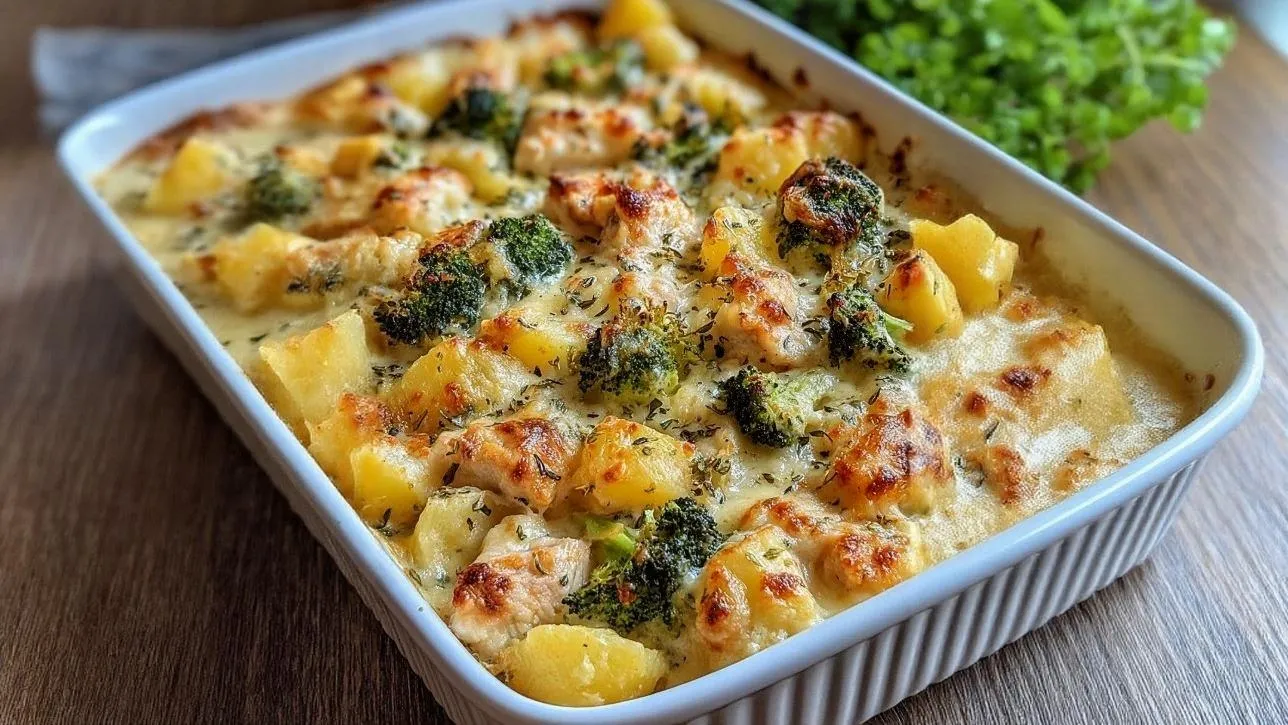
Discover the ultimate comfort food experience with our Baked Potato Chicken and Broccoli Casserole. This homestyle dish brings together tender, seared chicken, fluffy potato slices, and vibrant broccoli florets, all bathed in a rich, creamy sauce infused with savory aromatics and a hint of paprika. Topped with a generous layer of golden, bubbly cheddar cheese, it’s a hearty, satisfying meal that’s perfect for family dinners or entertaining guests. Every spoonful delivers a harmonious blend of textures and deeply comforting flavors, making it an instant classic in any American kitchen.
9x13-inch baking dish
Large skillet
Whisk
Medium bowl
Cutting board
Chef's knife
Measuring cups and spoons
Aluminum foil
Preheat your oven to 375°F (190°C) and lightly grease a 9x13-inch baking dish with 1 tablespoon of olive oil. Prepare all your ingredients: dice chicken, dice onion, mince garlic, slice/cube potatoes, and cut broccoli into florets.
Heat 1 tablespoon of olive oil in a large skillet over medium-high heat. Add the diced onion and sauté for 3-4 minutes until softened. Add the minced garlic and cook for 1 minute until fragrant. Add the chicken pieces, season with a pinch of salt and pepper, and cook for 5-7 minutes, browning on all sides. Remove chicken and aromatics from the skillet and set aside.
In a medium bowl, whisk together the chicken broth, heavy cream, paprika, 1/2 teaspoon salt, and 1/4 teaspoon black pepper. Taste and adjust seasoning as needed.
Arrange half of the potato slices/cubes evenly in the bottom of the greased baking dish. Scatter half of the broccoli florets over the potatoes. Evenly distribute the browned chicken and sautéed aromatics over the broccoli.
Repeat the layering with the remaining half of the potatoes and then the remaining broccoli. Pour the creamy broth mixture evenly over all the layers, ensuring it coats everything.
Generously sprinkle the 2 cups of shredded cheddar cheese over the top of the casserole, ensuring full coverage.
Cover the baking dish tightly with aluminum foil. Bake in the preheated oven for 30 minutes.
Carefully remove the foil. Continue baking uncovered for an additional 15-20 minutes, or until the cheese is golden brown and bubbly, and the potatoes are fork-tender. A knife inserted into a potato should meet no resistance.
Remove the casserole from the oven and let it rest on a wire rack for 10-15 minutes before serving. This allows the sauce to set and flavors to meld.
For those who love a bit of heat, add a pinch of cayenne pepper or a teaspoon of red pepper flakes to the creamy sauce. You could also include a finely diced jalapeño or serrano pepper with the onions and garlic for a fresh, vibrant spice, enhancing the overall flavor profile of your Baked Potato Chicken and Broccoli Casserole.
Introduce fresh herbs like chopped rosemary, thyme, or oregano to the casserole. Stir 1 tablespoon of fresh herbs into the creamy sauce, or sprinkle them over the top during the last 10 minutes of baking. These aromatic additions will brighten the flavor and add a sophisticated touch to the dish.
Add 1 cup of sliced sautéed mushrooms and 1 cup of fresh spinach (wilted and drained) to the casserole layers. Sauté the mushrooms with the onions and garlic until browned, and wilt the spinach just before layering. This variation adds more vegetables and an earthy depth of flavor to your Baked Potato Chicken and Broccoli Casserole.
While cheddar is classic, try a blend of cheeses for a more complex flavor. Combine cheddar with Gruyere for nuttiness, Monterey Jack for extra meltiness, or even a touch of Parmesan for a salty kick. Experiment with a 50/50 mix to find your perfect cheesy topping.
Don’t just cook your chicken; actively brown it. The Maillard reaction, a chemical process between amino acids and reducing sugars, creates hundreds of complex flavor compounds and a beautiful golden crust. Ensure your pan is hot enough and don’t overcrowd the skillet to allow proper searing, building a deep, savory foundation for your Baked Potato Chicken and Broccoli Casserole.
When prepping your potatoes and chicken, strive for uniform sizes. This isn’t just for aesthetics; it ensures everything cooks evenly at the same rate. Unevenly cut potatoes might result in some being crunchy while others are mushy, and irregularly sized chicken pieces can lead to some being dry while others are perfectly cooked, impacting the overall texture of your Baked Potato Chicken and Broccoli Casserole.
After baking, allowing your casserole to rest for 10-15 minutes is crucial. This period allows the starches in the potatoes to finish absorbing liquid, the cheese to set, and the creamy sauce to thicken. Skipping this step often results in a watery, messy casserole that falls apart when served. Patience here yields a beautifully cohesive and flavorful dish.
Professional chefs always season at multiple stages. Season your chicken as it browns, season your aromatics, and critically, taste and adjust the seasoning of your creamy sauce before pouring it over the layers. This layered approach ensures every component of your Baked Potato Chicken and Broccoli Casserole is perfectly flavored, preventing a bland or overly salty final product.
Allow the Baked Potato Chicken and Broccoli Casserole to cool completely to room temperature (within 2 hours) before transferring to an airtight container. Store in the refrigerator for up to 3-4 days. This prevents bacterial growth and maintains freshness. For best quality, press a piece of plastic wrap directly onto the surface of the casserole before sealing the container to prevent a dry top layer from forming.
For longer storage, freeze individual portions or the entire cooled casserole. Wrap tightly in heavy-duty aluminum foil and then place in a freezer-safe bag or container. Label with the date. It will keep well for up to 2-3 months. Freezing in individual portions makes for convenient meal prep, allowing you to thaw and reheat only what you need, preserving the quality of the rest of the casserole.
To reheat, preheat your oven to 300°F (150°C). Place the casserole in an oven-safe dish, cover loosely with foil to retain moisture, and bake for 20-30 minutes, or until heated through and bubbling. For individual portions, microwave on medium power for 2-3 minutes, stirring halfway, until hot. Avoid high power to prevent drying out the chicken and potatoes.
Thaw the frozen casserole overnight in the refrigerator. Once thawed, reheat following the refrigerator instructions. If reheating from frozen (not recommended for best texture, but possible), cover tightly with foil and bake at 325°F (160°C) for 45-60 minutes, then uncover for the last 15 minutes to brown the cheese, ensuring it reaches an internal temperature of 165°F (74°C).
Adding raw, thick-cut potatoes directly to the casserole often results in undercooked, hard potatoes, even after the rest of the dish is done. Potatoes need sufficient time and moisture to become tender. To avoid this, par-cook your potato slices or cubes by boiling or steaming them until they are just tender-crisp before layering them into the casserole. This ensures they finish cooking perfectly in the oven without becoming mushy or staying raw.
Broccoli can quickly turn to an unappealing, mushy texture and lose its vibrant green color if cooked for too long. Since it will continue to cook in the oven, it’s best to add it to the casserole slightly undercooked or even raw if cut small enough. If blanching, do so only for 1-2 minutes until it’s bright green and still has a bite. This retains its texture, color, and nutritional value in your Baked Potato Chicken and Broccoli Casserole.
Simply adding raw chicken to the casserole without browning it first means you miss out on a significant flavor opportunity. The Maillard reaction, which occurs during searing, develops deep, savory, and complex flavors that are impossible to achieve otherwise. Always take the extra 5-7 minutes to brown your chicken pieces in a hot skillet before adding them to the casserole for a richer, more robust taste.
Immediately serving the casserole straight from the oven is a common mistake that leads to a runny, soupy dish. The high temperature keeps the sauce liquid, and the starches haven’t had time to fully absorb and set. Allowing a 10-15 minute rest period after baking is crucial for the sauce to thicken and the flavors to meld, resulting in a perfectly structured and easy-to-serve Baked Potato Chicken and Broccoli Casserole.
Per serving: 1 serving
Nutritional values are estimates and may vary based on specific ingredients and preparation methods.
To lighten up this hearty Baked Potato Chicken and Broccoli Casserole, you can make a few strategic substitutions. Instead of heavy cream, you could use half-and-half or even a blend of low-fat milk thickened with a little cornstarch or flour for a similar consistency. Another excellent option is to replace part of the cream with plain Greek yogurt for a tangy, protein-rich alternative. You can also use less cheese or opt for a lower-fat cheese blend. Using chicken breasts instead of thighs will further reduce fat content, and increasing the amount of broccoli or adding other non-starchy vegetables like bell peppers or spinach can boost nutritional value without adding significant calories.
Absolutely! This Baked Potato Chicken and Broccoli Casserole is a fantastic make-ahead meal, perfect for busy schedules. You can assemble the entire casserole, including layering all the ingredients and pouring the sauce, up to 24 hours in advance. Cover it tightly with plastic wrap or foil and refrigerate. When you're ready to bake, remove it from the refrigerator about 30 minutes before baking to allow it to come closer to room temperature. You may need to add an extra 10-15 minutes to the initial covered baking time to ensure it heats through properly before uncovering to brown the cheese. This prep-ahead strategy ensures a stress-free dinner!
For the best texture in your Baked Potato Chicken and Broccoli Casserole, I highly recommend using starchy potatoes such as Russets (also known as baking potatoes) or Yukon Golds. Russets will yield a wonderfully fluffy and absorbent texture, soaking up all that creamy sauce beautifully. Yukon Golds offer a creamier, naturally buttery flavor and tend to hold their shape a bit better while still becoming tender. Avoid waxy potatoes like red or new potatoes, as they don't break down or absorb flavors as effectively, and might result in a firmer, less integrated texture in your casserole. Ensure your potato pieces are of uniform size for even cooking.
Yes, absolutely! This Baked Potato Chicken and Broccoli Casserole is incredibly versatile when it comes to adding other vegetables. Consider incorporating sliced mushrooms, diced carrots, corn kernels, or even some spinach (wilted first to remove excess moisture). For a touch of color and sweetness, bell peppers of any color would be a great addition. Just make sure to cut any harder vegetables into smaller pieces or par-cook them slightly to ensure they become tender during the baking process. Experiment with what you have on hand or what's in season to make it your own unique creation!
A watery casserole can be disappointing, but it's a common issue with a few potential culprits in a Baked Potato Chicken and Broccoli Casserole. The most frequent reason is excess moisture from the vegetables, especially if you're using frozen broccoli that wasn't properly thawed and drained. Another factor could be not allowing the casserole to rest after baking; this crucial step lets the starches in the potatoes and the sauce thicken and set. Overcrowding the baking dish can also lead to too much steam and not enough evaporation. Finally, if your sauce base was too thin to begin with, it won't thicken sufficiently. Ensure your vegetables are dry, allow for proper resting time, and consider a slightly thicker sauce if you've had issues in the past.
No items yet. Click "Add All" or use + buttons!
Community Kitchen