Simple. Tasty. From Our Home to Yours. Browse all recipes

Simple. Tasty. From Our Home to Yours. Browse all recipes
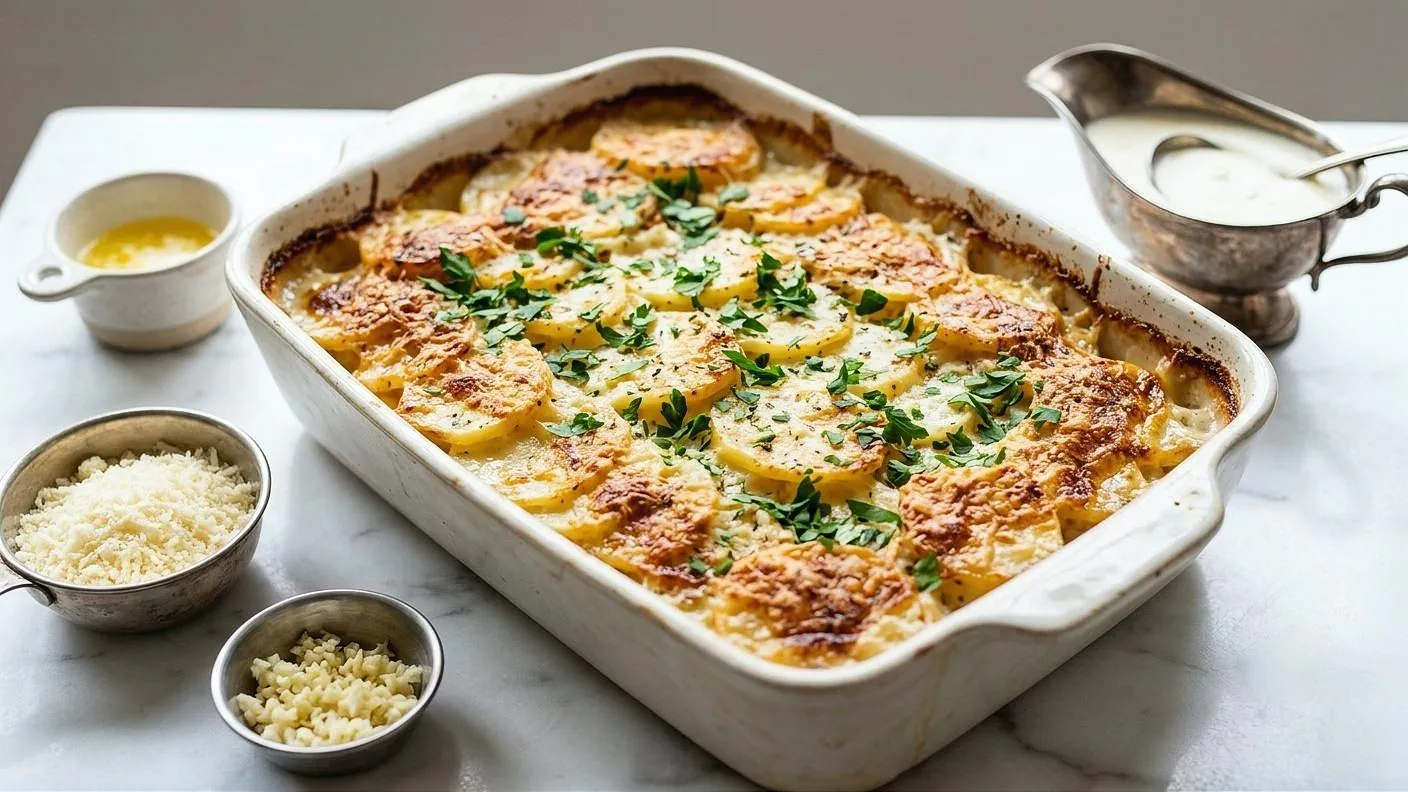
This is not your grandmother’s simple potato side—unless your grandmother was a pastry chef! Our Creamy Parmesan Oven Baked Potatoes achieve an unparalleled textural harmony: a shatteringly crisp, salty Parmesan crust yielding to the most luxuriously smooth, garlic-kissed interior imaginable. It's the definition of elevated comfort food, perfect for anchoring any holiday spread or making a simple weeknight dinner feel like a five-star event. The key is the uniform slicing and the slow, two-stage bake that ensures starch releases perfectly into the cream.
9x13 inch ceramic or glass baking dish
Mandoline slicer or very sharp knife
Large mixing bowl
Whisk
Aluminum foil
Wire cooling rack
Preheat your oven to 375°F (190°C) and ensure your oven rack is centered. Thoroughly grease the entire interior of your 9x13 inch baking dish with softened butter—this prevents the cheese from cementing itself to the glass. Slice your potatoes precisely to 1/8th of an inch thickness; uniformity is the secret to perfect texture in any potato bake.
In your large bowl, whisk together the heavy cream, whole milk, melted butter, minced garlic, salt, pepper, and thyme until well combined. Whisk in 1 cup of the grated Parmesan cheese, stirring until it is mostly dissolved into the liquid. Arrange half of your sliced potatoes in an even, slightly overlapping layer in the prepared dish, then pour half of the cream mixture evenly over the top.
Add the second layer of potatoes, pour the remaining cream mixture over them, and gently press down to ensure all slices are submerged in the liquid. Sprinkle the reserved ½ cup of Parmesan evenly over the top surface. Cover the dish loosely with aluminum foil and bake for 35 minutes to steam the potatoes through; this step is non-negotiable for tenderness.
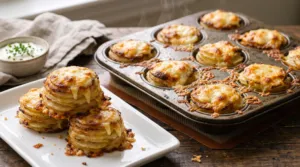
To introduce a brighter, more complex flavor profile, swap the dried thyme for fresh herbs. Use 1 teaspoon of finely minced fresh rosemary and 1 tablespoon of fresh sage, finely chopped, adding these directly into the cream mixture. The rosemary provides a sharp, piney note that cuts through the richness, while the sage offers an earthy warmth, creating a profile reminiscent of Thanksgiving stuffing, but in potato form. Ensure these are added at the same stage as the dried thyme. This variation pairs wonderfully with roasted turkey or chicken.
For a delightful kick, substitute half of the Parmesan cheese (use ½ cup in the sauce and ¼ cup for the topping) with freshly grated Pepper Jack cheese. Furthermore, add ½ teaspoon of red pepper flakes directly to the cream mixture. The Pepper Jack melts beautifully, offering a creamy heat that complements the garlic. Be cautious when broiling this version, as the pepper flakes can burn faster than the cheese itself. This adaptation gives the classic Creamy Parmesan Oven Baked Potatoes a bold Southwestern flair.
Elevate the savory depth by incorporating smoked paprika and shallots. Sauté 2 medium shallots, thinly sliced, in 1 tablespoon of the butter until deeply golden and very soft before adding them to the cream mixture. Then, stir in 1 full teaspoon of high-quality Spanish smoked paprika (Pimentón de la Vera) into the cream. The smokiness adds an incredible umami layer that makes the entire dish taste like it was slow-cooked over an open fire, transforming the simple Creamy Parmesan Oven Baked Potatoes into something truly complex and BBQ-adjacent.
While I strongly advise against altering the fat content for authenticity, if you must lighten the dish significantly, you can substitute the heavy cream with an equal amount of high-quality, full-fat Greek yogurt mixed with an extra ¼ cup of milk. Note that Greek yogurt contains acidity which can sometimes cause the cheese to separate slightly if overheated. To combat this, add the yogurt mixture only after the main baking stage (after the foil comes off) and bake only until heated through, skipping the long uncovered bake time.
When grating your Parmesan, always use the finest side of your box grater or a microplane for the cheese that goes into the cream. The smaller the particle size, the more surface area it has to dissolve and emulsify with the fat and water in the dairy, leading to a smoother, more integrated sauce texture rather than a gritty one. The cheese meant for the topping should be slightly coarser so it melts into that desirable golden crust.
Never neglect the seasoning of the cream mixture itself. Potatoes require significantly more salt than you think because they absorb so much liquid during baking; if your cream tastes perfectly seasoned before baking, it will taste bland afterward. I always taste the cream mixture before pouring it over the potatoes and aim for it to taste slightly saltier than I would prefer for a soup, knowing the potato will balance it out perfectly. This rule applies universally to any heavy baked dish like Baked Garlic Butter Cheese Bombs.
To ensure you don’t burn the top during the final browning stage, position your oven rack one level higher than center before you remove the foil. This brings the cheese closer to the heating element, speeding up the Maillard reaction on the cheese proteins without requiring excessive time that could dry out the tender potatoes underneath. This technique gives you control over that desirable crispness for your Creamy Parmesan Oven Baked Potatoes.
Ensure your potatoes are cold when they go into the warm cream mixture. Introducing cold, dense potato slices into a room-temperature or slightly warmed cream mixture helps regulate the initial cooking temperature, preventing the cream from reaching a boiling point too quickly, which is a primary cause of curdling when cooking dairy-heavy casseroles.
Allow the entire casserole of Creamy Parmesan Oven Baked Potatoes to cool completely on the counter, uncovered, for at least two hours. This cooling process is critical as it allows the starch matrix to firm up, preventing excess moisture release upon refrigeration. Once fully cooled, cover the dish tightly with two layers: first, plastic wrap pressed gently against the surface to minimize air exposure, and second, a layer of aluminum foil. Store in the main compartment of your refrigerator (avoiding the door, where temperatures fluctuate) for up to 4 days. The texture will remain remarkably good due to the high fat content of the cream.
While not my first choice, freezing works for meal prepping. After cooling completely, cut the bake into individual serving portions. Wrap each portion tightly first in plastic wrap, ensuring all air is squeezed out, then wrap again in heavy-duty aluminum foil. Freeze for up to 2 months. Thawing should always occur overnight in the refrigerator. When reheating from thawed, cover with foil and bake at 325°F (160°C) for 30 minutes, then uncover and bake for 10 more minutes to dry the surface slightly.
To restore that coveted crisp crust, always use the oven. Place desired portions in an oven-safe dish and cover loosely with foil—this prevents the top from burning before the interior is hot. Reheat at 325°F (160°C) for 20-25 minutes, or until the internal temperature reaches 165°F. If you need a quick reheat, the microwave is an option, but cover the portion with a damp paper towel to introduce steam, which prevents the edges from becoming tough and dry, although the crisp top will soften significantly.
Per serving: Approximately 1 Cup
Nutritional information is based on 8 servings and may vary depending on the exact type of potato and brand of Parmesan used.
There you have it, home cooks—the blueprint for truly exceptional Creamy Parmesan Oven Baked Potatoes. This dish is more than just a side; it’s a labor of love that rewards your attention to detail with unparalleled richness and texture. Take pride in those perfectly uniform slices and that deeply burnished, salty cap. I encourage you to make this the centerpiece of your next gathering and watch your guests marvel at how something so simple can taste so profoundly luxurious. Remember the secrets we shared—uniformity, fresh cheese, and patience during the rest—and you will create a masterpiece every single time. Visit us back at HomeRecipes.com for more ways to bring professional technique into your everyday cooking!
Absolutely, and I highly recommend it for entertaining! You can assemble the entire casserole—through the point of sprinkling the final Parmesan layer—up to 24 hours in advance. Cover it tightly with plastic wrap and refrigerate. When ready to bake, pull it out of the refrigerator about 45 minutes before baking to allow it to come closer to room temperature; this prevents the baking time from extending excessively. You may need to add an extra 5 to 10 minutes to the initial covered baking time to ensure the center is heated through before you remove the foil for the final browning stage.
A runny sauce almost always points back to one of three issues: insufficient baking time, incorrect slicing, or using low-fat dairy. If the potatoes haven't cooked long enough, the starch hasn't gelatinized sufficiently to bind the liquid. Ensure your fork test is definitive—it should meet zero resistance. Secondly, if your slices were too thick, they won't release enough starch. Finally, if you substituted whole milk for half of the heavy cream, the sauce lacks the necessary fat structure to maintain viscosity when hot. A quick fix post-bake, if it’s only slightly runny, is to return it uncovered to a 400°F (200°C) oven for 10 minutes to evaporate some moisture.
While Russets are acceptable, I insist on Yukon Gold potatoes for the quintessential texture of this Creamy Parmesan Oven Baked Potatoes dish. Yukon Golds possess a lower starch content than Russets but higher moisture and a naturally buttery flavor profile. This composition allows them to absorb the cream beautifully without breaking down into a gluey mass. They maintain a slight, pleasant firmness even when fully tender, providing that necessary counterpoint to the richness of the sauce. For an interesting visual twist, try using Multi Colored Potatoes, provided they are cut to the same thickness; the visual appeal is fantastic!
You certainly can infuse other flavors, though you are moving away from the classic French-style gratin and toward an American casserole. If you wish to add bulk, pre-cook any additions thoroughly. For instance, if you wanted to incorporate thinly sliced, pre-sautéed onions (perhaps trying a variation similar to Roasted Parmesan Creamed Onions), sauté them until deeply caramelized and dry before layering them with the potatoes. If you were considering meat, like bacon or sausage, it must be fully cooked and drained, as raw meat releases moisture that will dilute your delicate cream sauce, potentially leading to that runny texture we just discussed. Remember, any watery ingredient will sabotage the structure of your Creamy Parmesan Oven Baked Potatoes.
While buttering is essential for flavor and preventing sticking, parchment paper offers a non-stick insurance policy, especially when dealing with sugary, caramelized cheese like Parmesan. The butter melts and absorbs into the potato crust, but the cheese can sometimes burn onto the ceramic or glass dish, making cleanup a nightmare and potentially ruining the bottom layer when serving. By lining the bottom and two long sides with parchment paper (leaving the ends exposed so the cheese can bubble freely over the edges), you guarantee a clean lift when you serve the entire bake, ensuring that beautiful, intact bottom crust remains attached to the portion, not the pan.
No items yet. Click "Add All" or use + buttons!
Community Kitchen