Ultimate Sheet Pan Parmesan Chicken Dinner Recipe
This is the definitive weeknight rescue meal: a robust, flavor-packed One Pan Chicken Dinner that rivals restaurant fare. We transform humble chicken breasts into tender masterpieces encased in a savory, salty Parmesan crust, marrying them perfectly with fork-tender potatoes and bright, snappy green beans. The marriage of the rendered chicken fat with the potatoes during the long roast creates a depth of flavor usually reserved for slow-cooked meals. It’s the ultimate expression of easy American home cooking.
restaurant_menu Ingredients
For the One Pan Chicken Dinner Base
The Parmesan Crust & Seasoning
Optional Leaching/Soaking Water
hardware Essential Tools
Large rimmed half-sheet baking pan (approx. 18x13 inches)
Large mixing bowl
Small bowl for crust mixture
Instant-read thermometer
Aluminum foil
Whisk
Tongs
format_list_numbered Preparation
Preparing the Components
If using fresh potatoes, place the quartered potatoes in a large bowl and cover with 4 cups of hot tap water (add baking soda if using). Let them soak for 15 minutes, then drain and dry them absolutely thoroughly on kitchen towels—this step is critical for texture in your One Pan Chicken Dinner.While potatoes soak, prepare the chicken: slice the breasts horizontally to create 6 even cutlets. This ensures even cooking. Pat them completely dry using paper towels; moisture prevents that beautiful crust from forming.In a small bowl, combine the grated Parmesan, Italian dressing mix, minced garlic, oregano, pepper, and salt. Mix thoroughly until it resembles coarse, fragrant sand. Set aside.
Assembling and Roasting
Preheat your oven to a robust 400°F (200°C). Unlike the initial source suggestion of 350°F, 400°F ensures better crisping of the potatoes and better browning of the crust without overcooking the chicken if cut thinly.On the sheet pan lined with parchment paper, toss the dried potatoes with olive oil, half of the melted butter, and half of the Italian dressing powder. Spread them in an even layer, ensuring they are not heavily overlapping.Place the chicken cutlets in the center area of the pan, leaving space between them. Brush the tops and sides lightly with the remaining melted butter. Sprinkle the remaining Italian dressing powder evenly over the chicken.Bake the chicken and potatoes uncovered for 20 minutes. This initial blast helps soften the potatoes and start the chicken cooking process.
Crusting and Finishing
After 20 minutes, remove the pan. Push the potatoes to the edges and nestle the trimmed green beans (if using fresh) around them. If using canned beans, add them now.Generously press the prepared Parmesan crust mixture onto the top surface of each chicken cutlet, ensuring an even, thick layer. Return the pan to the 400°F oven and bake for an additional 12 to 18 minutes, or until the internal temperature of the thickest chicken cutlet reads exactly 165°F on your thermometer.Remove the One Pan Chicken Dinner from the oven. Tent the entire pan loosely with aluminum foil and allow it to rest undisturbed for a full 10 minutes before serving. This resting period is essential for juicy results.
favorite You Might Also Love
Browse All arrow_forward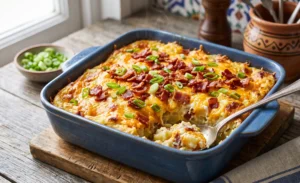
Baked Potato Casserole Recipe (Cheesy & Loaded)
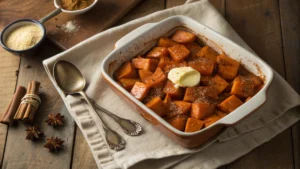
The Best Candied Yams Recipe: A Southern Thanksgiving Classic
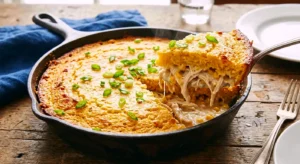
Homestyle Cornbread Chicken Casserole Masterpiece
Chicken Poke Bowl Recipe (Easy & Flavorful)
Ultimate Cornbread Chicken Casserole: Comfort Redefined

Ultimate Ground Beef Tortilla Wraps Mastery
Try These Variations
Tangy Lemon-Herb Crusted Chicken
Substitute the Italian dressing mix entirely with 2 tablespoons of fresh lemon zest, 1 tablespoon of dried thyme, 1 teaspoon of dried rosemary, and increase the olive oil slightly. The acidity of the lemon cuts beautifully through the richness of the Parmesan and melted butter, providing a brighter, fresher take on the One Pan Chicken Dinner. You may also want to toss the potatoes with a teaspoon of dried dill for an extra layer of herbal complexity.
Spicy Buffalo Chicken Variation
Skip the Parmesan crust entirely. Instead, whisk 1/2 cup of your favorite high-quality Frank’s RedHot or similar butter-based hot sauce with 2 tablespoons of melted butter. After the initial 20-minute roast, brush the chicken generously with this Buffalo mixture. Return to the oven until cooked through, then top with blue cheese crumbles (if dairy is permitted) or simply serve with a side of celery sticks for a flavor profile reminiscent of Buffalo Chicken Pinwheels.
Lighter Vegetable Medley
Replace the green beans with 1 pound of broccoli florets and 1 cup of halved cherry tomatoes. The broccoli should be added at the same time as the chicken crust step (the last 12 minutes), as it roasts faster than raw beans. The cherry tomatoes should be added halfway through the final crusting stage (about 8 minutes remaining) as they burst quickly, releasing sweet juices that blend wonderfully with the pan drippings, making this a truly complete One Pan Chicken Dinner experience.
Crusted Parmesan and Chicken Roll-Ups
For a different presentation, butterfly your chicken breasts very thinly, spread them with cream cheese mixed with chives, roll them tightly, and secure with toothpicks before seasoning. This technique requires slightly less cooking time, perhaps only 35-40 minutes total at 400°F, as the thinner cross-section cooks faster. This method is reminiscent of techniques used for dishes like Crescent And Chicken Roll Ups, offering an elegant, contained flavor pocket.
Chef's Pro Tips
When building your crust, ensure your Parmesan is finely grated—either using the smallest holes on a box grater or pulsing it slightly in a food processor. We are aiming for a texture that melts and binds, not one that stays hard and granular. If the mixture seems too dry to adhere to the buttered chicken, add one teaspoon of water or milk at a time until it just holds together when pressed between your fingers. This slight moisture helps activate the binding properties of the cheese proteins.
The temperature contrast between the roasting potatoes and the chicken is vital. Always ensure the potatoes have a head start. If you skip the pre-roast or par-boil, you risk either undercooked, hard potatoes or overcooked, dry chicken. My rule of thumb for any One Pan Chicken Dinner is to calculate the cooking time for the largest vegetable component first, and adjust the protein accordingly. If you choose thicker chicken pieces, you might need to lower the oven temperature to 375°F and extend the cook time slightly to ensure the center hits 165°F without incinerating the crust.
Parchment paper is your best friend, but never let it touch direct heat near the edges of the pan, especially at 400°F, as it can scorch and impart an off-flavor. Ensure the paper is completely flat against the metal and trim any excess that hangs over the edge. For easier cleanup, you can use aluminum foil underneath the parchment paper for an extra barrier against any butter seepage during this rich One Pan Chicken Dinner.
If you are concerned about the chicken drying out, place a small square of foil loosely over the chicken portion only for the first 15 minutes of the initial bake, removing it before you apply the crust. This traps a bit of initial steam, ensuring internal moisture retention, though it sacrifices some initial browning on the sides of the breast.
Storage Guide
To store leftovers of this incredible One Pan Chicken Dinner, allow the components to cool completely on the pan before separating them. Store the chicken in a separate airtight container from the potatoes and beans; moisture migration between components degrades texture rapidly. Kept refrigerated in a quality container (like Pyrex glass with a snap lid), the meal will maintain excellent quality for up to 3 days. Do not leave leftovers at room temperature for more than two hours to prevent bacterial proliferation.
Freezing is possible, though best reserved for the chicken component alone. For optimal texture retention, let the chicken cool completely, then wrap each individual cutlet tightly first in plastic wrap, then in a layer of aluminum foil to prevent freezer burn. Freeze for up to 2 months. The potatoes and beans are not ideal for freezing as their texture becomes grainy and waterlogged upon thawing, though they can be used in soups or casseroles if necessary.
Reheating the chicken requires low, slow heat to re-melt the Parmesan crust without burning it. Preheat your oven to 325°F (160°C). Place the chicken pieces on a small, foil-lined baking sheet and heat for 15-20 minutes, checking the internal temperature to ensure it reaches a safe 165°F. Microwaving is faster but will turn the crust rubbery; if you must use the microwave, cover the chicken loosely with a damp paper towel and heat in 30-second intervals until just warmed through.
Avoid These Mistakes
✕ Applying the Parmesan crust at the beginning of the cooking process
This is the most common error. The cheese, being high in fat and protein, will burn significantly before the chicken reaches a safe internal temperature of 165°F, resulting in a bitter, black, gritty topping instead of the desired golden-brown, savory crust essential for a perfect One Pan Chicken Dinner. You must allow the chicken to cook for at least 20 minutes before applying the topping for the final roast.
✕ Using pre-shredded, shelf-stable Parmesan cheese
The pre-shredded varieties found in plastic tubs often contain anti-caking agents like cellulose, which prevent the cheese from melting smoothly and achieving that beautiful, oily, glossy brown crust we are looking for. Always opt for a wedge of quality Parmesan and grate it yourself immediately before use; the flavor difference alone will elevate this meal significantly, moving it away from a simple ‘dump meal’ toward true culinary execution.
✕ Overcrowding the sheet pan
If you pile the potatoes, beans, and chicken too closely together, you are essentially steaming the food rather than roasting it. Roasting requires hot, dry air circulation around every surface to promote the Maillard reaction and evaporate surface moisture. If the pan is too full, the resulting texture will be soggy, turning your crisp potatoes into mushy ones, completely ruining the intended texture contrast of this One Pan Chicken Dinner. Use two pans if necessary to ensure everything has space to breathe.
✕ Failing to rest the chicken
When meat comes out of the oven, the internal temperature is still rising (carry-over cooking), and the muscle fibers are tightly contracted, holding moisture under pressure. Slicing immediately causes all that flavorful juice to escape onto the pan, leaving you with dry chicken. Resting for 10 minutes allows the fibers to relax and reabsorb the moisture, guaranteeing that your final portion is succulent.
nutrition Nutrition Facts
Per serving: 1 cutlet, 1/4 potatoes, 1/4 beans
This is a moderately high-sodium meal due to the Parmesan and dressing mix; consider using low-sodium Parmesan or making your own seasoning blend to control sodium levels.
flag Conclusion
There you have it—a complete, restaurant-caliber meal achieved with minimal fuss. This One Pan Chicken Dinner proves that home cooking doesn’t have to be complicated to be spectacular. The marriage of that salty Parmesan crunch with the tender, juicy meat and the savory roasted potatoes is pure alchemy. Don’t be afraid to adjust the herbs or lean into the spice if you prefer a kick. Make this recipe your own, serve it with pride, and watch your family ask for it week after week. We at HomeRecipes believe in cooking that brings joy, and this sheet pan wonder certainly delivers!
Frequently Asked Questions
Why did my Parmesan crust burn before the chicken cooked through? expand_more
This almost always points to one of two issues: your oven temperature was too high, or you added the crust too early. If you are roasting at 425°F or higher, the cheese will scorch quickly. For this recipe, we aim for 400°F, and the crust should only go on for the final 12-15 minutes of cooking. You must have the chicken already partially cooked (about 20 minutes in) before applying the topping. Always use an instant-read thermometer; the target for chicken breast is 165°F, not just visual appearance.
Can I use frozen chicken breasts for this One Pan Chicken Dinner? expand_more
While I strongly advise against using frozen items on a sheet pan where precise timing is necessary, you can use thawed chicken. If you must use chicken that is slightly icy in the center, you need to add an extra 10 minutes to the initial bake time before applying the crust, and you must use a thermometer to confirm doneness. Frozen vegetables, however, can be substituted if you add them in the final 15 minutes, as they release a lot of water which will steam the rest of the ingredients.
My potatoes are still hard even after the full cooking time. What went wrong? expand_more
The primary cause is insufficient starch removal or overcrowding. If you skip the soaking/par-boiling step, the raw, dense potato needs significant time to steam internally. If you didn't soak them, they need more time than the chicken allows. Next time, ensure they are softened first. Also, check that the potatoes were spread in a single layer, not piled up. If they are touching too much, they steam instead of roasting, leading to a tough, waxy texture instead of the fluffy, crisp interior we desire in this One Pan Chicken Dinner.
What is the purpose of the baking soda when soaking the potatoes? expand_more
The baking soda (sodium bicarbonate) is a secret technique borrowed from deep-frying science. It raises the pH level of the water slightly, which helps break down the pectin in the potato cell walls more rapidly. This allows the exterior starches to gelatinize faster and more thoroughly during the soak, guaranteeing a fluffier interior and a crispier exterior when roasted, maximizing the textural contrast in your final One Pan Chicken Dinner.
Can I substitute the chicken breasts with thighs or drumsticks? expand_more
Absolutely, and thighs/drumsticks will actually be more forgiving! Dark meat has more fat and connective tissue, making it harder to overcook. If you use bone-in thighs or drumsticks, you must increase the initial roasting time by about 15 minutes since they are denser and bone-in. You can safely apply the crust earlier—perhaps after 30 minutes of initial roasting—and cook until the internal temperature reaches 175°F for optimal tenderness in the dark meat. This variation of the One Pan Chicken Dinner tends to be even juicier.
More Recipes You'll Love
Mastering Comfort: Rich Sausage Gravy Recipe
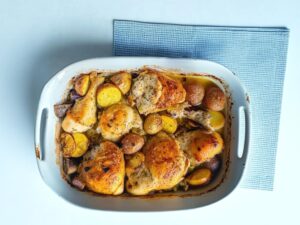
Roasted Lemon Rosemary Chicken Recipe (One-Pan Perfection)
Ultimate Cornbread Chicken Casserole: Comfort Redefined
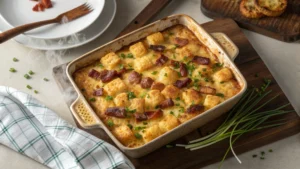
Savory Tater Tot and Bacon Breakfast Casserole Recipe
Community Kitchen