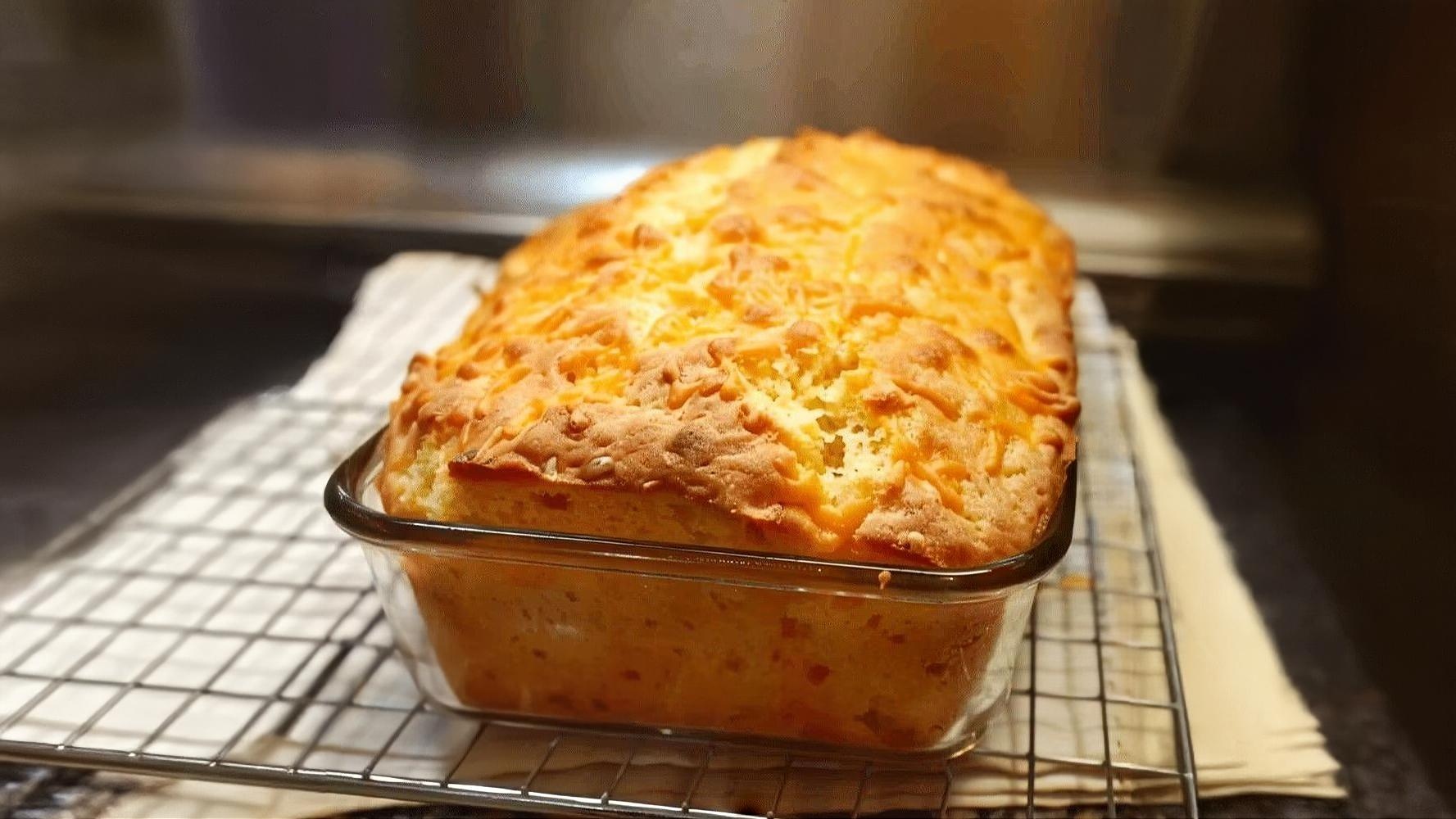
Savory Cheddar Cheese Quick Bread Masterpiece
This is not your average sweet loaf; this is a deeply satisfying, savory Cheddar Cheese Quick Bread designed for maximum flavor and moisture retention. Harnessing the sharpness of aged cheddar and the aromatic depth of garlic powder, this easy bake delivers a tender, fluffy interior encased in a perfectly golden, slightly crisp crust. It’s the ideal accompaniment for soups, stews, or simply enjoyed warm with a smear of butter. Mastering this quick bread is a hallmark of confident home baking.
restaurant_menu Ingredients
Dry Ingredients & Cheese
Wet Ingredients
hardware Essential Tools
9x5 inch metal loaf pan
Large mixing bowl
Medium mixing bowl
Whisk
Rubber spatula
Wire cooling rack
Parchment paper
format_list_numbered Preparation
Mixing and Assembly
Preheat your oven to 350°F (175°C) and prepare your loaf pan by thoroughly greasing it or lining it with a parchment paper sling for easy removal.
In your largest bowl, vigorously whisk together the flour, baking powder, sugar, garlic powder, and salt until fully aerated and combined; then, gently fold in the freshly grated cheddar cheese using a spatula.
In a separate bowl, whisk the cold milk and room-temperature egg until uniform, then slowly whisk in the slightly cooled melted butter until just emulsified.
Pour the entire wet mixture into the dry ingredients and fold gently with the spatula until just combined—stop mixing the moment you see no dry flour streaks remaining, even if the batter looks lumpy.
Baking and Cooling
Scrape the shaggy batter into the prepared loaf pan and gently smooth the top surface without overworking the mixture.
Bake for 45 to 50 minutes, rotating the pan halfway through cooking if your oven has hot spots, until the top is deeply golden brown and a skewer inserted into the center comes out clean.
Allow the Cheddar Cheese Quick Bread to cool in the pan on a wire rack for 10 minutes before using the parchment sling to lift the entire loaf out for final cooling.
favorite You Might Also Love
Browse All arrow_forward
Ultimate Hugo Spritz Recipe: Classic Cocktail & Refreshing Mocktail
The Ultimate Pickle Pizza: A Savory American Favorite

Mastering Homemade Hibachi Vegetables: Restaurant Flavor Now

French Butter Cake Recipe
Homemade Apple Pie Filling Recipe (Sweet & Spicy)
Ultimate No Bake Chocolate Oat Bars Masterclass
Try These Variations
Savory Herb Variation
To introduce layers of herbaceous flavor reminiscent of a Rustic No Knead Rosemary Garlic Bread, incorporate 1 tablespoon of finely chopped fresh rosemary and 1 teaspoon of dried thyme directly into the dry ingredients along with the garlic powder. This adds an earthy, slightly piney note that complements the sharp cheddar beautifully, making it excellent served alongside roasted chicken. Ensure the herbs are finely chopped so they distribute evenly throughout the Cheddar Cheese Quick Bread batter without creating large air pockets.
Spicy Jalapeño Cheddar Twist
For those who like a little heat, substitute 1/2 cup of the grated cheddar with 1/2 cup of pepper jack cheese and fold in 1/4 cup of finely minced, seeded jalapeños. Because fresh peppers introduce additional moisture, reduce the whole milk by 2 tablespoons to maintain the correct batter viscosity. This variation gives the loaf a subtle kick, transforming it into something closer to a spicy Flatbread With Cheddar Cheese experience, perfect for serving with turkey burgers.
Two-Cheese & Onion Loaf
Elevate the complexity by substituting 1/2 cup of the cheddar with Gruyère or Monterey Jack for better melt quality. Additionally, sauté 1/2 cup of finely diced sweet onion in 1 tablespoon of the reserved butter until translucent and fully cooled before folding it into the wet ingredients. This adds a foundational sweetness that balances the sharpness of the cheddar, resulting in a richer, more complex Cheddar Cheese Quick Bread structure that feels very gourmet.
Chef's Pro Tips
When melting butter for quick breads, always allow it to cool slightly before adding it to the egg/milk mixture. If the butter is too hot—above 120°F—it can denature the proteins in the egg, causing them to coagulate unevenly. This results in tiny, tough, rubbery pockets within your otherwise tender Cheddar Cheese Quick Bread, ruining the velvety mouthfeel we are striving for. Cool it until it’s just warm to the touch.
To achieve a truly professional, even bake, I insist on using a light-colored metal loaf pan rather than dark non-stick. Dark pans absorb radiant heat much more efficiently, often leading to the edges and bottom of your quick bread becoming over-baked and dry before the center is fully set. A lighter pan ensures the heat transfers more gently to the batter, allowing the chemical reaction of the baking powder to proceed evenly throughout the 45 to 50-minute bake time.
For optimal flavor penetration, grate your cheddar cheese just before mixing. Pre-shredded cheese is coated in cellulose or potato starch to prevent clumping in the bag. This coating interferes with the cheese’s ability to melt smoothly into the batter, sometimes resulting in a slightly grainy texture or preventing the cheese from fully adhering to the surrounding crumb, which is noticeable in every slice of Cheddar Cheese Quick Bread.
Always place your loaf pan on the middle rack of the oven, centered between the front and back walls. This position ensures the loaf is subjected to even airflow and heat distribution from both the top and bottom elements. If you place it too close to the top, the crust will brown too quickly, potentially signaling doneness before the interior is cooked, leading to a sunken center when removed.
Storage Guide
Room Temperature Storage
Once the Cheddar Cheese Quick Bread is completely cooled to room temperature—ensure there is absolutely no residual heat—wrap the entire loaf tightly in two layers of plastic wrap. This prevents moisture loss from the crumb. Then, place the plastic-wrapped loaf inside a large, heavy-duty zip-top freezer bag, squeezing out all excess air before sealing. Stored in a cool, dark pantry, this method guarantees peak texture and flavor for up to three days, maintaining the integrity of the cheese pockets.
Refrigerator Storage
While refrigeration is possible, it can sometimes accelerate staling due to the cold temperature hardening the starches. If you must refrigerate, wrap the loaf tightly in plastic wrap and aluminum foil together, then place it in an airtight container. This double barrier is necessary to prevent the bread from absorbing refrigerator odors. This method extends freshness to about five days, but always reheat thoroughly before serving to restore softness.
Freezing for Longevity
For the best long-term preservation, slice the cooled bread into individual servings first. Place a small square of parchment paper between each slice—this is vital to prevent the cheesy surfaces from sticking together. Stack the slices, wrap the entire stack tightly in plastic wrap, and then secure it within a layer of aluminum foil. Label and freeze for up to three months; thawing overnight in the refrigerator before reheating is the recommended procedure to maintain the quality of this Cheddar Cheese Quick Bread.
Avoid These Mistakes
✕ The most frequent error in making this Cheddar Cheese Quick Bread is overmixing the batter after combining the wet and dry components. Once liquids hit flour, gluten development begins. Over-stirring creates long, tough gluten strands, which results in a bread that is dense, chewy, and has a tight, heavy crumb, instead of the desired light, tender, cake-like texture. You must stop mixing the second you no longer see visible, dry streaks of flour—a few lumps are your friends here.
✕ Failing to use freshly grated cheese is another common pitfall that directly impacts texture and flavor. Pre-shredded cheese contains anti-caking agents like potato starch or cellulose, which are designed to keep the shreds separate in the bag. These starches absorb moisture meant for the batter and inhibit the cheese from melting into smooth, luxurious pockets within the bread, often leaving behind a slightly gritty mouthfeel in your finished Cheddar Cheese Quick Bread.
✕ Baking at too low a temperature is a rookie mistake that prevents proper leavening. If your oven temperature is below 350°F, the baking powder will release its gases slowly, allowing the batter to set before achieving maximum lift, resulting in a short, squat loaf. Conversely, if the temperature is too high, the outside burns while the inside remains raw. Precision is key; use an oven thermometer to verify your 350°F setting is accurate.
✕ Slicing the bread while it is still hot is a common error that destroys the internal structure. When the bread comes out of the oven, steam is trapped inside, keeping the crumb moist and set. Cutting it immediately causes this steam to escape rapidly, leading to a gummy, collapsed texture, especially around the moist, cheesy areas. Allowing that 10-minute rest in the pan and then cooling fully on a rack is essential for structural integrity.
nutrition Nutrition Facts
Per serving: 1/8th of loaf
Nutrition values are estimated based on sharp cheddar and whole milk.
flag Conclusion
There you have it—the definitive guide to crafting an unforgettable Cheddar Cheese Quick Bread. This recipe proves that spectacular flavor doesn’t require hours of labor or complex techniques. It requires understanding the fundamentals: gentle mixing, quality cheese, and precise temperature control. Bake this loaf, slice it warm, and watch your family marvel at the depth of flavor you’ve achieved right in your own kitchen. Making a phenomenal savory bread like this brings such pride, and I know this Cheddar Cheese Quick Bread will become a staple in your rotation. Head over to HomeRecipes.com for more master-level techniques made simple!
Frequently Asked Questions
Can I substitute the baking powder for baking soda? expand_more
Absolutely not, unless you are drastically changing the other ingredients. Baking powder is double-acting and neutral in pH, which is perfect for this recipe where we use milk (which is only slightly acidic) and no buttermilk or yogurt. Baking soda is a pure base and requires a strong acid (like vinegar or lemon juice) to activate fully. If you substitute baking soda for baking powder here, your Cheddar Cheese Quick Bread will likely rise initially but then collapse into a dense, soapy-tasting mess because the acid isn't strong enough to neutralize the soda.
My bread seems a bit dense; what went wrong? expand_more
The density almost always points back to overmixing the batter. When you combine the wet and dry ingredients, you are activating gluten strands in the flour. The more you stir, the stronger and longer those strands become, leading to a tough, elastic texture rather than a tender, cake-like crumb. Remember the instruction: mix only until the last visible streaks of dry flour have been incorporated. It should look slightly shaggy and uneven when you pour it into the pan. Resist the urge to smooth it out perfectly; that final smoothing will happen in the oven.
What type of cheddar provides the best flavor for this bread? expand_more
For the most impactful flavor in this Cheddar Cheese Quick Bread, you must select an aged, sharp cheddar, ideally aged 12 months or more. Mild cheddar is too creamy and lacks the necessary tang to stand up against the garlic powder and butter. I prefer white sharp cheddar, as it often has a cleaner, more profound flavor profile compared to orange cheddar (which sometimes uses annatto for color). Grate it yourself using the large holes on a box grater or a food processor attachment; this ensures the cheese shreds correctly and melts beautifully without clumping.
Can I add fresh herbs or spices to this recipe? expand_more
Yes, this recipe is a wonderful canvas for creativity! If you wanted to introduce fresh elements, you absolutely can. For instance, you could add 2 tablespoons of finely chopped fresh chives or 1 teaspoon of dried rosemary to the dry ingredients. However, if you introduce fresh ingredients, understand that they add extra moisture. If you add something very wet, like minced jalapeños, you might need to reduce the whole milk by 1 to 2 tablespoons to compensate and ensure the final Cheddar Cheese Quick Bread bakes through properly.
Is this bread suitable for making into rolls or muffins? expand_more
It is perfectly suited, though you must adjust the baking time significantly. If you divide this batter into 12 standard muffin cups (filling them about 3/4 full), they will bake much faster. Start checking them around the 18 to 20-minute mark at 350°F. They will have a beautiful domed top and are fantastic for serving alongside soup or layering into a lunchbox. You can also use this batter to make savory drop biscuits, though you will need to add a bit more milk to thin the batter slightly until it resembles a thick drop-biscuit dough rather than a loaf batter.
More Recipes You'll Love

Luscious Lemon Coconut Cream Pie: A Taste of Sunshine

Greek Orange Cake Recipe (Moist & Aromatic)
Fail-Proof Egg Custard Recipe (Silky Baked)

Taco Spaghetti Bake Recipe
Community Kitchen