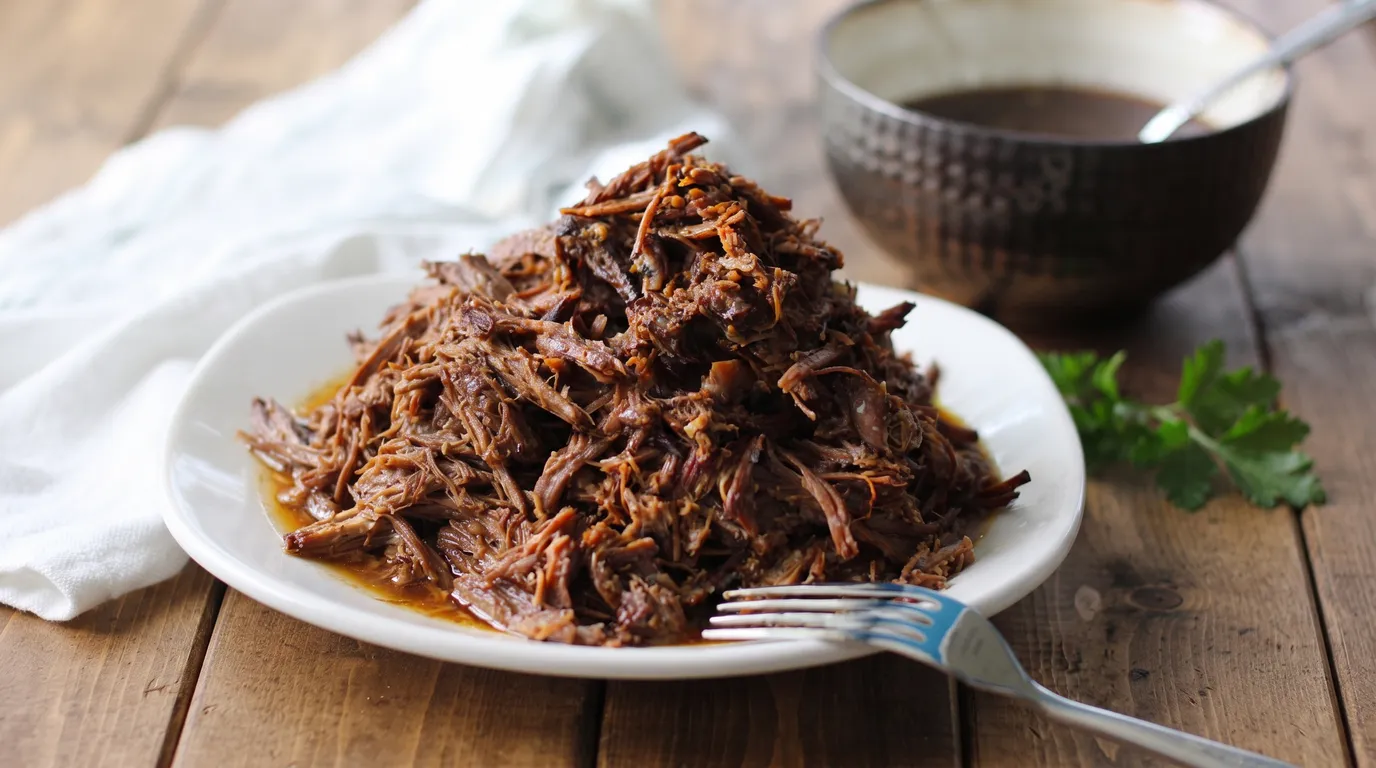
Balsamic Brown Sugar Pot Roast: Restaurant Flavor at Home
This 3 Ingredient Balsamic Brown Sugar Pot Roast is the epitome of elegant simplicity. By relying on the chemical interaction between acidic balsamic vinegar and sweet brown sugar during a long, slow roast, we achieve a stunningly tender beef chuck roast encased in a sticky, complex glaze. It’s the perfect centerpiece for a family meal, offering robust, savory flavor with minimal hands-on effort, living up to its reputation as the ultimate flavorful, easy main dish.
restaurant_menu Ingredients
Core Components for the Pot Roast
Optional Aromatics (Highly Recommended)
For Finishing
hardware Essential Tools
Large, heavy-bottomed Dutch oven (5-7 quart capacity)
Tongs
Instant-read meat thermometer
Small whisk
Cutting board
Foil or tight-fitting lid
format_list_numbered Preparation
Searing and Deglazing
Pat the beef roast completely dry with paper towels and season aggressively on all sides with salt and pepper. Heat the oil in the Dutch oven over high heat until shimmering. Sear the roast for 4-5 minutes per side until a deep, dark brown crust forms, creating the Maillard foundation for your 3 Ingredient Balsamic Brown Sugar Pot Roast. Remove the roast and set aside.
Glaze Creation and Roasting
Reduce heat to medium-low. Pour the balsamic vinegar into the hot pot and use a wooden spoon to aggressively scrape up all the browned bits (fond) from the bottom. Whisk in the brown sugar until fully dissolved. Return the seared roast to the pot, ensuring it is nestled in the liquid. Cover tightly and transfer to an oven preheated to 325°F (165°C) for 3.5 to 4 hours, or until the internal temperature registers 200°F to 205°F.
Resting and Reducing
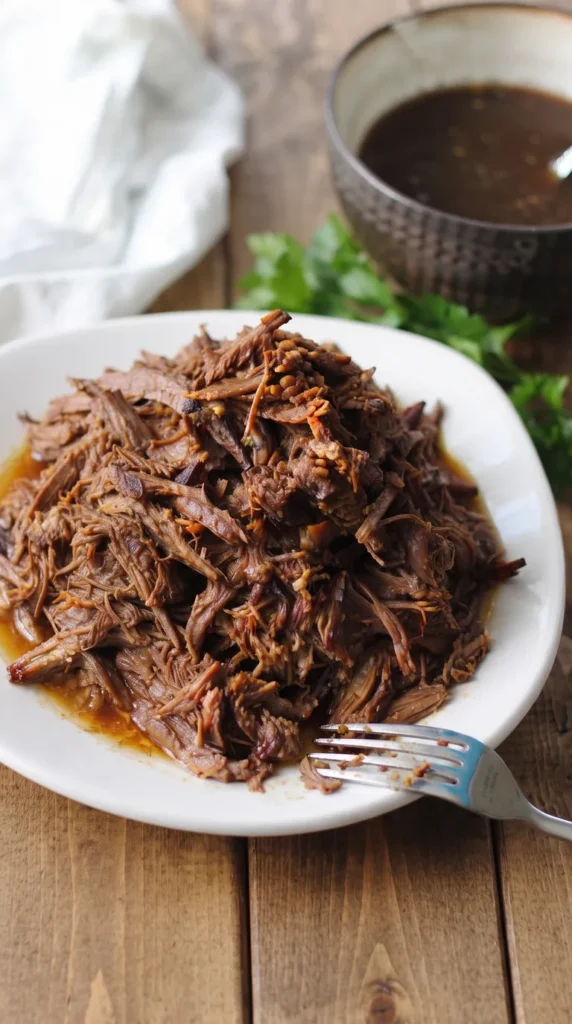
Carefully remove the roast to a cutting board, tent loosely with foil, and allow it to rest for a full 20 minutes. Place the Dutch oven back on the stovetop over medium heat. Bring the remaining glaze liquid to a steady simmer, allowing it to reduce by about one-third until it coats the back of a spoon. Whisk in the optional tablespoon of butter for extra sheen if desired. Shred or slice the meat and spoon the reduced glaze over it generously.
favorite You Might Also Love
Browse All arrow_forwardChicken Poke Bowl Recipe (Easy & Flavorful)
Slow Cooker Beef and Potato Bake Mastery

Texas Steak Rolls Recipe (Grilled & Juicy)
Dolly Parton's 5-Ingredient Casserole: Southern Comfort Redefined
Mastering Comfort: Rich Sausage Gravy Recipe
Ultimate Chicken Cordon Bleu Lasagna Bake
Try These Variations
For a smoky depth reminiscent of BBQ, incorporate a dry rub before searing. Mix 1 tablespoon smoked paprika, 1 teaspoon onion powder, and 1/2 teaspoon cayenne pepper, applying it generously over the salt and pepper. This adds an extra layer of flavor complexity that beautifully supports the sweet-acidic glaze, creating a profile similar to what you might achieve with a Sausage Hashbrown seasoning profile but applied to beef. This elevates the standard 3 Ingredient Balsamic Brown Sugar Pot Roast significantly.
To introduce root vegetables, layer thickly sliced carrots, celery, and small pearl onions around the roast before covering it for the oven phase. These vegetables will steam in the liquid, absorbing the glaze and creating a fantastic, naturally thickened side dish right in the pot—a concept similar to what you might see in a hearty Kielbasa Soup With Potatoes, but focused on roasting. Ensure the vegetables are submerged enough to soften but not completely drown the sear on the meat.
For a brighter, more herbaceous finish, try substituting half of the balsamic vinegar with an equal amount of high-quality sherry vinegar. Sherry vinegar has a slightly nuttier, less intensely sweet profile than balsamic, which pairs exceptionally well if you are serving this roast alongside something like Greek Style Roasted Lemon potatoes, providing a Mediterranean counterpoint to the American comfort base of the 3 Ingredient Balsamic Brown Sugar Pot Roast.
Chef's Pro Tips
The science of a perfect sear hinges on temperature control. When searing, use an oil with a smoke point above 400°F. If the oil smokes, it breaks down into acrid compounds that will taint your final dish. Wait until the oil shimmers and you see the very first hint of wispy smoke—that is the window. Once the crust forms (a deep reddish-brown, not black), do not move the meat until that time has passed; the proteins need time to bond and form that flavor crust, a process called protein denaturation and cross-linking.
When reducing the sauce, never cover the pot. You want maximum surface area exposure to allow the water content to evaporate quickly, concentrating the sugars and acids. If you stir constantly, you can encourage crystallization; instead, let it simmer steadily, stirring only every few minutes. If you notice the sugar beginning to crystallize on the sides of the pan, immediately lower the heat and whisk in a tablespoon of hot water; this dissolves the crystals back into the liquid, preventing a grainy sauce.
When shredding the meat, use two forks, yes, but for the absolute best texture, use your hands once the meat is cool enough to handle. Using your hands allows you to feel the grain and separate the meat along the natural muscle lines, preserving tenderness. If you cut against the grain with a knife, you sever those muscle fibers, which can sometimes lead to a slightly chewier final texture, even if the roast was cooked perfectly to 205°F internally. This tactile approach connects you more deeply to the cooking process of your 3 Ingredient Balsamic Brown Sugar Pot Roast.
If you are worried about the roast drying out during the long cook time, place a piece of parchment paper directly on top of the meat before placing the lid on the Dutch oven. This technique, called an ‘cartouche,’ traps steam directly onto the meat surface while still allowing some moisture to escape the overall vessel, ensuring the top doesn’t dry out while the bottom braises perfectly.
Storage Guide
Refrigerator Storage
Allow the roast and the reserved glaze to cool completely, preferably separated into two airtight containers. Store in the refrigerator for up to 4 days. The fat will solidify on top of the glaze; simply skim this off before reheating, or leave it on if you are aiming for maximum richness, as the fat adds incredible mouthfeel to the reheated 3 Ingredient Balsamic Brown Sugar Pot Roast. Ensure the meat is well-covered to prevent drying out in the cold air.
Freezer Method
If you plan to freeze, store the shredded meat and the sauce separately. Place the meat into a heavy-duty freezer bag, pressing out as much air as possible to prevent freezer burn—vacuum sealing is ideal. The sauce can be frozen in small ice cube trays for easy portioning later. Frozen meat lasts beautifully for up to 3 months. Thaw overnight in the refrigerator before reheating.
Reheating on the Stovetop
This is the preferred method. Combine the meat and a few spoonfuls of the reserved glaze (or a splash of beef broth if the glaze is gone) in a wide skillet or saucepan. Heat over medium-low heat, stirring gently every few minutes, until the meat is heated through, usually about 12–15 minutes. This gentle warming rehydrates the meat without toughening the protein. Avoid high heat, which can cause the sugars in the glaze to burn onto the pan base.
Avoid These Mistakes
✕ The most frequent error made with this 3 Ingredient Balsamic Brown Sugar Pot Roast is skipping the initial high-heat sear. People often think, ‘It’s going into the oven for four hours, why bother?’ The reason is the Maillard reaction—the chemical process between amino acids and reducing sugars that creates hundreds of complex, savory, roasted flavor molecules. If you skip this, the beef will taste merely boiled, and the final glaze will lack the deep, resonant background flavor necessary to balance the sweetness of the sugar.
✕ A related mistake is using a thin-bottomed pot for searing. If your pan cannot retain high, even heat across its base, you will steam the meat instead of searing it, resulting in a gray, flabby exterior. Always use heavy cast iron or stainless steel for searing to ensure immediate, intense heat transfer across the entire surface area of the roast. This direct heat contact is what builds that crucial flavor barrier.
✕ Rushing the resting period is another critical failure point. When meat comes out of the oven at 205°F, the muscle fibers are extremely tight and full of pressurized liquid. If you cut or shred it immediately, all those precious juices—which are now infused with balsamic and brown sugar—will run out onto your cutting board, leaving the meat dry. Resting allows those fibers to relax and reabsorb that flavorful moisture, ensuring every bite of your 3 Ingredient Balsamic Brown Sugar Pot Roast is maximally juicy and flavorful.
✕ Using low-quality, watery balsamic vinegar is a culinary sin in this recipe. Because the vinegar is such a dominant flavor component, cheap vinegar tastes harsh and thin. Look for balsamic vinegar that is thick enough to coat a spoon slightly before heating. A higher-quality product ensures the acidity is complex and fruity, not just sour, leading to a balanced final glaze.
nutrition Nutrition Facts
Per serving: Approx. 1 pound of cooked beef per 2 servings
Nutritional data is an estimate based on using a lean chuck roast and accounts for the sugar absorbed in the glaze.
flag Conclusion
There you have it—a powerhouse main course built on the foundation of just three core ingredients. Mastering the 3 Ingredient Balsamic Brown Sugar Pot Roast is about respecting the process: the sear, the slow conversion of collagen, and the final reduction of the glaze. It’s foolproof flavor that tastes like you spent all day tending to it. Don’t let the simplicity fool you; this dish carries the weight and satisfaction of a truly complex, slow-braised meal. Make this for your next family dinner, and watch how quickly this recipe earns its permanent spot in your rotation here at HomeRecipes.com. Now go, get cooking, and make something magnificent!
sell Related Topics
Frequently Asked Questions
Can I use a leaner cut of beef for this 3 Ingredient Balsamic Brown Sugar Pot Roast? expand_more
While you certainly can use a leaner cut like bottom round, I strongly advise against it for this specific application. The magic of a pot roast relies on the breakdown of connective tissue (collagen) into luscious, savory gelatin, which keeps the final product moist and rich. Chuck roast is heavily marbled with this collagen. Leaner cuts do not have enough internal fat or connective tissue to stand up to the 3.5 to 4 hours of cooking time at 325°F; they will dry out and become stringy rather than meltingly tender. Stick to the chuck roast for the best textural experience.
What temperature should the oven be set to for the most tender results? expand_more
The prescribed temperature of 325°F (165°C) is crucial for achieving the perfect balance between slow cooking and glaze consistency. If you raise the temperature too high, say above 350°F, the exterior glaze will burn and blacken before the internal collagen has enough time to fully hydrolyze into gelatin. The meat needs that long, gentle exposure to heat to reach an internal temperature between 200°F and 205°F, which is the thermal sweet spot for fall-apart tenderness in connective tissue-rich cuts like chuck.
I don't have a Dutch oven; what other cookware can I use for the 3 Ingredient Balsamic Brown Sugar Pot Roast? expand_more
A heavy-bottomed oven-safe pot is required for both the initial high-heat sear and the subsequent long braise. If you do not own a cast-iron Dutch oven, your next best option is a heavy stainless steel stockpot or a quality French oven that has a thick base and a tight-fitting lid. The key requirement is heat retention; thin aluminum pots will scorch the brown sugar glaze during the stovetop searing phase, leading to a bitter flavor profile that cannot be salvaged during the long roast.
How can I make the glaze thicker and glossier without adding cornstarch? expand_more
If you prefer to avoid adding thickening agents like cornstarch, the only way to achieve a thicker, glossier glaze is through evaporation—reduction. After removing the beef to rest, place the liquid back on the stovetop over medium heat. Allow it to simmer uncovered, stirring occasionally, until it visibly coats the back of a spoon. This process concentrates the natural sugars and acids. If you find the glaze is reducing too slowly, increase the heat slightly, but watch carefully; the concentrated sugar can burn quickly once it nears the right consistency. A tiny knob of cold butter whisked in at the very end, off the heat, will also provide a beautiful, professional-grade sheen.
Is there a way to prepare this if I want a side dish similar to Kielbasa Soup With Potatoes? expand_more
While this recipe focuses on beef, you can certainly adapt the side dish component to echo the hearty flavors of a dish like Kielbasa Soup With Potatoes. After removing the roast to rest, sauté 1 cup of diced Yukon Gold potatoes and 1/2 cup of sliced smoked sausage (ensure it is Halal-certified) in the empty Dutch oven until lightly browned. Then, pour in about 1 cup of the reduced balsamic glaze and 1/2 cup of beef broth. Simmer until the potatoes are tender. This creates a rich, savory, slightly sweet potato hash that perfectly complements the savory profile of the beef roast, adding a layer of complexity to your meal presentation.
More Recipes You'll Love
Creamy Garlic Alfredo with Tender Cabbage Recipe (Comforting Weeknight Meal)

Community Kitchen