
Au Gratin Potatoes vs Scalloped Potatoes Recipe (The Ultimate Guide)
Dive into the delicious debate of au gratin potatoes vs scalloped potatoes with this expert guide! Learn the definitive differences between these two classic creamy potato dishes, from their distinct sauces to their signature toppings. Chef HomeRecipes provides professional techniques, ingredient insights, and step-by-step instructions to help you master both versions, ensuring tender, flavorful results every time. Elevate your side dish game with these ultimate comfort food recipes.
restaurant_menu Ingredients
For Scalloped Potatoes
For Au Gratin Potatoes
hardware Essential Tools
Mandoline slicer or sharp knife
9x13-inch baking dish
Medium saucepan
Whisk
Large mixing bowl
Grater
format_list_numbered Preparation
Scalloped Potatoes Preparation
Preheat your oven to 375°F (190°C). Lightly grease a 9x13-inch baking dish with butter. Peel and slice your potatoes uniformly thin, about 1/8-inch thick, using a mandoline for best results.
In a medium saucepan, melt 3 tablespoons of unsalted butter over medium heat. Add the minced onion and cook for 5-7 minutes until softened and translucent, then stir in the minced garlic and cook for another minute until fragrant.
Whisk in 3 tablespoons of all-purpose flour to create a roux, cooking for 1-2 minutes until lightly golden, then slowly whisk in 3 cups of whole milk, a little at a time, until the sauce thickens and gently simmers.
Season the sauce with 1 teaspoon of kosher salt, 1/2 teaspoon of freshly ground black pepper, and a pinch of grated nutmeg, then taste and adjust the seasoning as needed.
Arrange one-third of the sliced potatoes in an even layer in the prepared baking dish, then pour one-third of the cream sauce over them, distributing evenly.
Repeat the layering process two more times, ending with a final layer of sauce, then cover the baking dish tightly with aluminum foil.
Bake for 45 minutes to 1 hour, or until the potatoes are tender when pierced with a fork, then remove the foil and bake for another 15-20 minutes until the top is golden brown and bubbly.
Let the scalloped potatoes rest for 10-15 minutes before serving to allow the sauce to set properly.
Au Gratin Potatoes Preparation
Preheat your oven to 400°F (200°C) and generously butter a 9x13-inch baking dish. Peel and slice your potatoes into uniform 1/8-inch thick rounds using a mandoline.
In a large bowl, combine 2 cups of heavy cream, 1 cup of whole milk, 2 minced cloves of garlic, 1 teaspoon of kosher salt, 1/2 teaspoon of freshly ground black pepper, and a pinch of freshly grated nutmeg, whisking well to combine.
Arrange one-third of the sliced potatoes in a single, slightly overlapping layer in the prepared baking dish, then sprinkle evenly with one-third of the mixed Gruyère and Parmesan cheese.
Repeat this layering process two more times, ending with a generous layer of cheese on top, then pour the seasoned cream mixture evenly over the potatoes and cheese.
Cover the dish tightly with aluminum foil and bake for 45-50 minutes, or until the potatoes are tender when pierced.
Remove the foil and bake for an additional 20-30 minutes, or until the top is beautifully golden brown and bubbly.
Let the au gratin potatoes rest for at least 15 minutes before serving to allow the cheese and cream to set properly for clean slices.
favorite You Might Also Love
Browse All arrow_forward
Wisconsin North Woods Inn Salad: Creamy Gorgonzola Dream
Creamy Celery Salad Recipe (Refreshing Side Dish)
Cheesy Mixed Vegetable Bake Recipe (Creamy & Comforting)
Irish Colcannon Recipe (Creamy & Hearty)
Kentucky Crockpot Potatoes Recipe (Comforting Slow Cooker Side)
Heirloom Flavor: Grandmas Baked Canned Tomatoes Reimagined
Try These Variations
Herbed Infusion
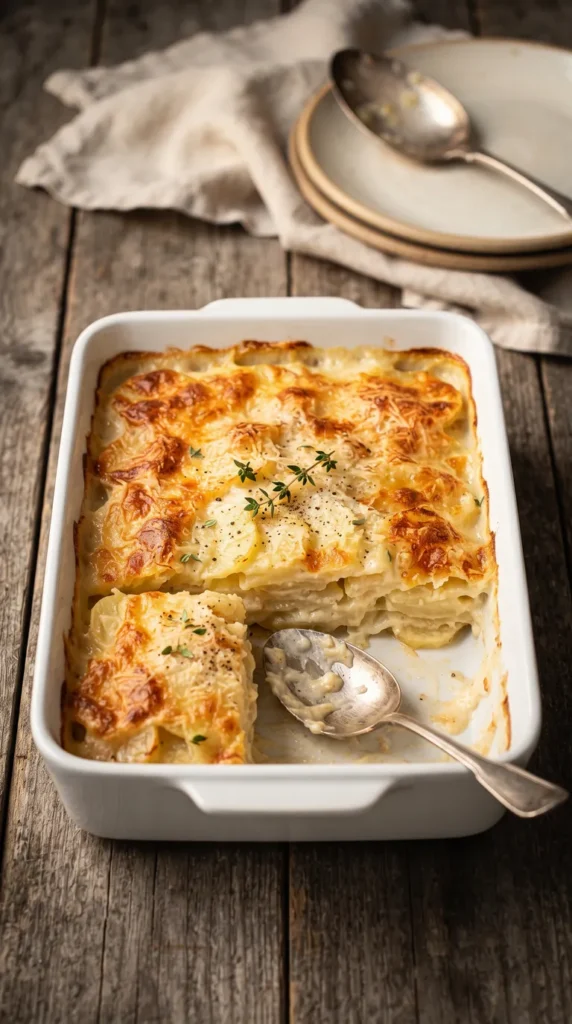
For a fragrant twist on au gratin potatoes vs scalloped potatoes, infuse your dairy with fresh herbs like rosemary or thyme. Gently warm the milk/cream with a few sprigs of herbs, let it steep for 15-20 minutes, then strain before proceeding with the recipe. This subtle infusion adds a sophisticated aromatic layer without overpowering the potato flavor. Ensure not to boil the dairy, just a gentle simmer to extract the herb essence.
Spicy Kick
Introduce a touch of heat by adding a pinch of cayenne pepper or a small amount of finely diced jalapeño to your cream sauce. For the au gratin version, you could also use a pepper jack cheese in combination with Gruyère. This provides a subtle warmth that complements the richness and can be adjusted to your preferred spice level, making it a dynamic twist on the classic.
Smoked Paprika Depth
For a deeper, smoky flavor profile, whisk in 1 teaspoon of smoked paprika into your cream sauce. This works beautifully with both scalloped and au gratin potatoes, adding a complex, savory note that pairs exceptionally well with roasted meats. The paprika also lends a beautiful reddish hue to the sauce, enhancing visual appeal.
Chef's Pro Tips
Achieve Uniform Slices
The key to even cooking and a beautiful presentation in both au gratin potatoes and scalloped potatoes is uniform potato slices. A mandoline slicer is a worthwhile investment for this task, ensuring every slice is precisely 1/8-inch thick. Inconsistent slices will lead to some potatoes being undercooked and hard, while others become mushy, disrupting the desired texture.
Don’t Skimp on Resting Time
After baking, it’s crucial to let your au gratin potatoes or scalloped potatoes rest for at least 10-15 minutes before serving. This allows the hot, bubbling sauce to settle and thicken further, preventing it from running all over the plate when you serve. The starches in the potatoes continue to absorb liquid, resulting in a more cohesive and perfectly textured dish.
Freshly Grated Cheese is Best
For au gratin potatoes, always opt for freshly grated cheese from a block. Pre-shredded cheeses often contain anti-caking agents like cellulose, which can prevent them from melting smoothly and result in a grainy or clumpy texture. Freshly grated cheese melts into a wonderfully smooth, bubbly, and golden crust that is the hallmark of a great au gratin.
Storage Guide
Refrigerator
Allow the baked au gratin potatoes or scalloped potatoes to cool completely to room temperature. Transfer leftovers to an airtight container or cover the baking dish tightly with plastic wrap or foil. Store in the refrigerator for up to 3-4 days. Cooling completely before storing prevents condensation that can make the dish watery and helps inhibit bacterial growth.
Freezer
While freezing is possible, the texture of cream-based potato dishes can sometimes suffer upon thawing, becoming a bit mealy or grainy. If you do freeze, allow the dish to cool, then portion into freezer-safe containers or wrap tightly in plastic wrap and then foil. Freeze for up to 2-3 months. Thaw overnight in the refrigerator before reheating. Note that the creamy sauce may separate slightly, but a gentle stir when reheating can often help.
Reheating
For best results, reheat in a preheated oven at 300-325°F (150-160°C). Place the potatoes in an oven-safe dish, cover loosely with foil, and bake for 20-30 minutes, or until warmed through. If desired, remove the foil for the last 5-10 minutes to re-crisp the top of au gratin potatoes. Avoid high heat for reheating, as it can dry out the potatoes or cause the sauce to separate. Microwaving individual portions is quicker but may alter the texture.
Avoid These Mistakes
✕ Potatoes are Undercooked or Hard
This is often due to inconsistent slicing or insufficient baking time. If your potato slices vary greatly in thickness, the thicker ones won’t cook through. Always use a mandoline for even 1/8-inch slices. Also, ensure the dish is covered tightly with foil for the initial bake to steam the potatoes, and extend baking time if they’re still firm when pierced with a fork. Inadequate heat penetration means the starch isn’t fully gelatinized, leaving the potatoes firm.
✕ Sauce is Too Thin or Watery
If your sauce isn’t thick enough, it can be due to not allowing the roux to cook long enough in scalloped potatoes, or rinsing the potatoes too much, removing their natural starches. The starches released from the potatoes during baking help thicken the sauce. Another culprit can be using low-fat dairy, which lacks the fat content to create a rich, stable emulsion. A watery sauce can also indicate the dish didn’t rest long enough, preventing the starches from fully absorbing the liquid.
✕ Sauce is Curdled or Grainy
Curdling often occurs when cold dairy is added too quickly to a hot roux or when the sauce is brought to a rapid boil with high-fat dairy. Ensure your milk or cream is at room temperature before adding, and whisk constantly over medium-low heat, bringing it to a gentle simmer rather than a rolling boil. Overcooking cheese can also cause it to become stringy or separate, leading to a grainy texture in au gratin potatoes. The proteins in cheese can seize up if exposed to too much heat for too long.
nutrition Nutrition Facts
Per serving: 1 serving
Nutritional values are approximate and may vary based on specific ingredient brands and preparation methods.
flag Conclusion
There you have it, home cooks! The definitive guide to understanding and mastering the delightful differences between au gratin potatoes vs scalloped potatoes. Whether you opt for the cheesy indulgence of au gratin or the creamy simplicity of scalloped, you’re now equipped with the chef’s knowledge to create a truly memorable side dish. These recipes are more than just food; they’re an invitation to gather, share, and savor. So, roll up your sleeves, grab your mandoline, and bring restaurant-quality comfort to your own kitchen. I can’t wait to hear about your culinary triumphs! Share your experiences and photos with us at HomeRecipes.com – we love seeing what you create.
sell Related Topics
Frequently Asked Questions
What is the fundamental difference between au gratin potatoes vs scalloped potatoes? expand_more
The core distinction lies in the cheese and the sauce. Traditionally, scalloped potatoes feature thinly sliced potatoes baked in a creamy, often flour-thickened milk or cream sauce, with no cheese. Au gratin potatoes, on the other hand, are characterized by a rich cream or milk sauce combined with cheese, and most notably, a crispy, often cheesy topping. While modern recipes sometimes blur these lines by adding cheese to scalloped potatoes, the authentic au gratin will always boast that signature baked cheese crust.
Which type of potato is best for these dishes, and why? expand_more
For both au gratin potatoes and scalloped potatoes, I highly recommend using waxy or medium-starch potatoes such as Yukon Golds or red potatoes. These varieties have a lower starch content and a firmer flesh, which allows them to hold their shape exceptionally well during the long baking process. This prevents them from turning into an unappetizing mush, ensuring each slice remains distinct yet tender. While Russet potatoes can be used, their higher starch content makes them more prone to falling apart, which can result in a less desirable texture in the final dish.
Can I prepare these dishes ahead of time for a party? expand_more
Absolutely! Both dishes are excellent make-ahead options, which makes them perfect for holiday entertaining or busy weeknights. You can assemble either the au gratin potatoes or scalloped potatoes up to a day in advance. After layering, cover the baking dish tightly with plastic wrap and refrigerate. When you're ready to bake, allow the dish to sit at room temperature for about 30 minutes before placing it in the preheated oven. You may need to add an extra 10-15 minutes to the initial covered baking time since you're starting with a cold dish, but the convenience is well worth it.
How do I prevent the potatoes from turning out undercooked or too hard? expand_more
The key to perfectly cooked potatoes in these dishes lies in uniform slicing and proper baking time. First, ensure all your potato slices are the same thickness, ideally around 1/8-inch, which is best achieved with a mandoline. Second, ensure your oven temperature is accurate and the dish is covered with foil for the initial baking period. The foil traps steam, which helps to cook the potatoes thoroughly and gently. Removing the foil later allows the top to brown and crisp. If your potatoes are still hard, it likely means they simply need more time in the oven, so don't hesitate to extend the baking until they are fork-tender.
Is it necessary to peel the potatoes for au gratin or scalloped potatoes? expand_more
While traditional recipes for au gratin potatoes and scalloped potatoes often call for peeled potatoes, whether or not to peel is largely a matter of personal preference. For thin-skinned varieties like Yukon Golds or red potatoes, leaving the skin on can add a rustic charm and a bit of extra texture and nutrients. If you choose to leave the skin on, ensure you scrub the potatoes thoroughly under running water to remove any dirt or debris. However, for thicker-skinned potatoes like Russets, I generally recommend peeling to avoid a tougher, more noticeable skin texture in your creamy dish.
More Recipes You'll Love
Roasted Red Potatoes Recipe (Crispy & Flavorful Side)

KFC Coleslaw Recipe (Creamy & Tangy Copycat)

Crunchy Avocado Cucumber Salad Recipe (Fresh & Vibrant)
Kentucky Crockpot Potatoes Recipe (Comforting Slow Cooker Side)

Five-Ingredient Bacon Potato Casserole Magic
Community Kitchen