
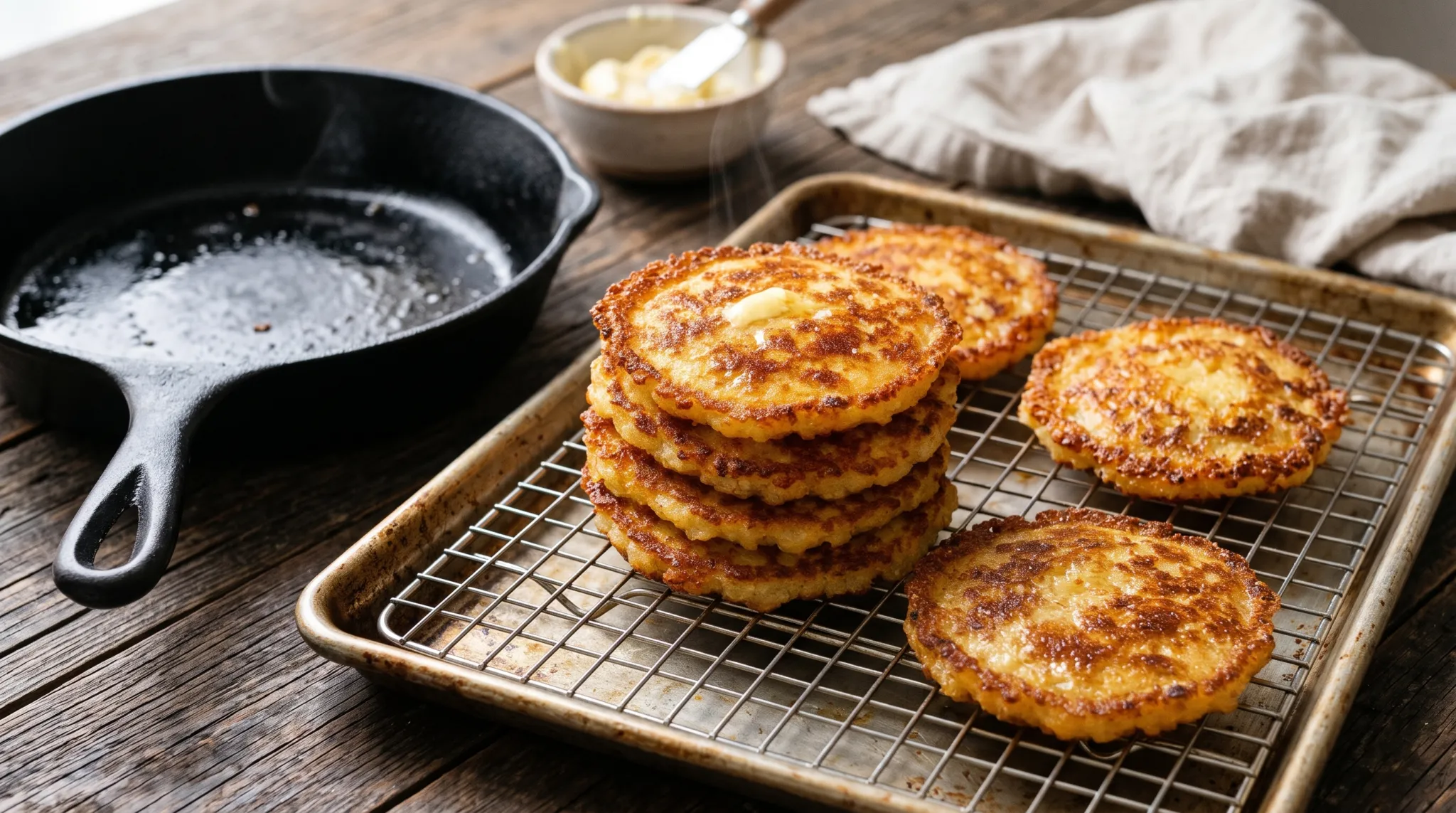
Letting the batter rest for 5 minutes before it hits the pan is what keeps crispy fried cornbread from turning gritty or greasy. The cornmeal drinks up the buttermilk, the batter thickens and the pieces hold together in the oil. The whole thing takes about 35 minutes, from whisking to the last batch coming out, and it’s an easy recipe that needs only a bowl and a skillet.
You spoon the batter into hot oil and flatten each portion slightly, so you get lacy golden edges and a soft, steamy middle in every piece. This isn’t baked skillet cornbread with a tender crumb all the way through. It’s closer to a fritter, best eaten warm, and it makes about 12 pieces, which serves 4 people alongside beans, greens or chili. The recipe is pork-free from start to finish.
Planning the Batter, the Rest and the Batches
Mix the batter first, then use the rest to heat the skillet and set up a wire rack over a baking sheet. After 5 minutes the batter should look thick and spoonable, like a loose porridge, and hold a ridge when you drag a spoon through it. If it’s stiff enough to stand up on its own, stir in a tablespoon of buttermilk.
Heat the oil over medium heat until a pinch of batter sizzles right away and floats. It takes about 2 to 3 minutes. The surface of the oil shimmers, and it smells clean, not smoky. Spoon in the batter, about 3 tablespoons each, and press each portion flat to about 1/2 inch (1.3 cm).
You’ll hear a steady sizzle. After 2 to 3 minutes the edges turn deep gold and the bubbles around them slow down. That’s your cue to flip. If the edges brown in under a minute, lower the heat. If nothing browns after 3 minutes, the oil was too cool and the pieces will soak it up, so raise the heat and give them a minute more.
Fry in 3 batches and keep finished pieces on the rack, not paper towels, so the bottoms stay crisp.
Why a Hot Skillet and a Rested Batter Matter
Cornmeal is gritty until it hydrates. Resting the batter lets the buttermilk soften the starch, so the pieces fry up tender rather than sandy, and the thicker batter holds its shape in the oil instead of spreading thin.
Frying is about heat transfer. When batter hits oil around 350°F (175°C), the surface water flashes to steam and the outside dries into a crust. The crust is also where browning happens, because the proteins and sugars from the egg and buttermilk react to heat. If the oil is too cool, the water doesn’t leave fast enough, and the crust takes up oil instead of crisping.
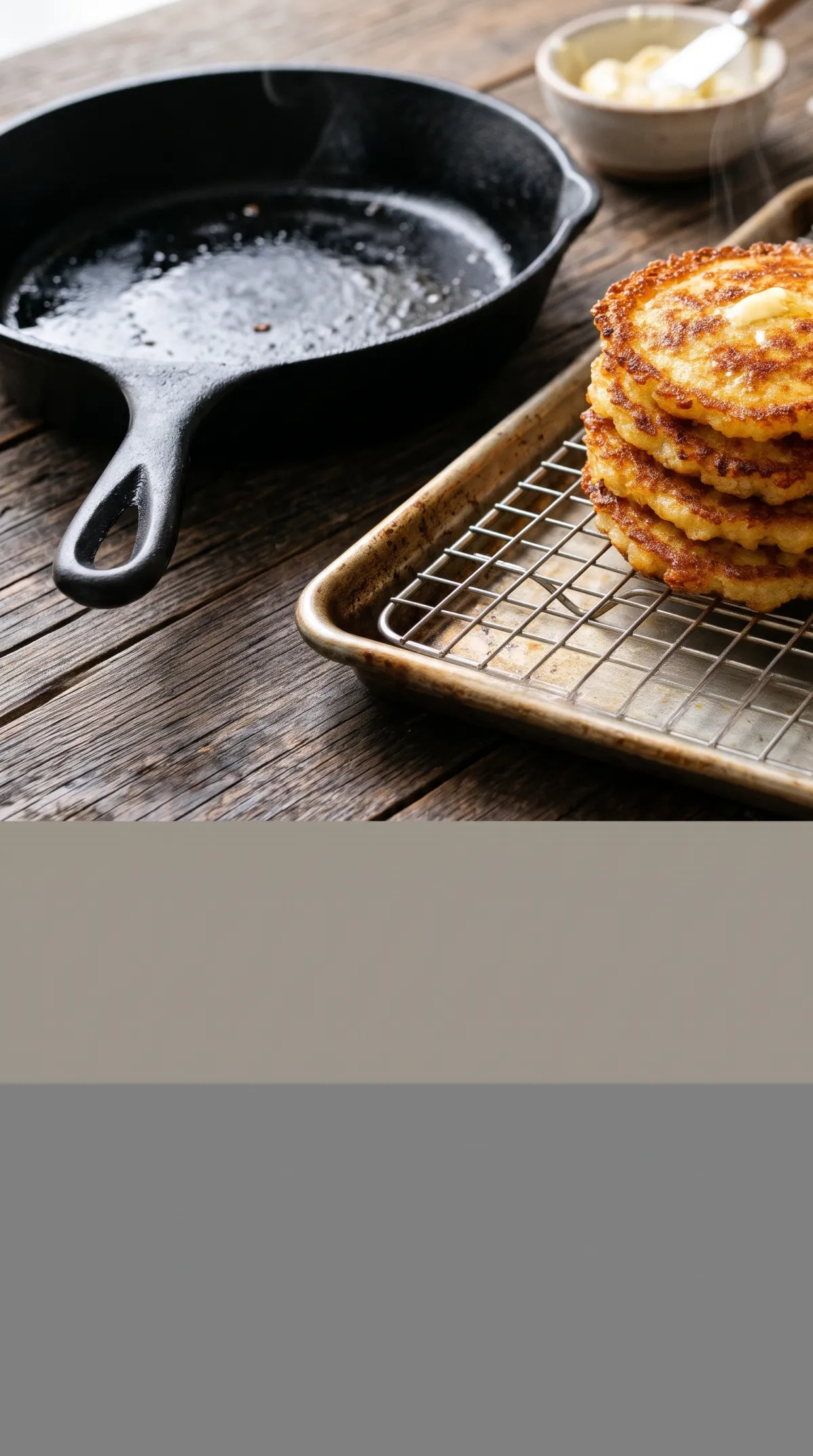
Flattening the portions gives the crust more surface area and cuts the cooking time, so the center sets before the outside burns. Cast iron holds heat well, and that keeps the oil temperature steady when cold batter goes in. A thin pan swings in temperature and gives uneven color.
Buttermilk, Cornmeal and Fat Swaps
Medium-grind yellow cornmeal gives the best texture. Fine cornmeal makes a smoother, cakier piece, and stone-ground has more flavor but needs a slightly longer rest.
| Ingredient | Swap | What changes |
|---|---|---|
| Buttermilk (dairy) | Milk plus 1 tbsp lemon juice, rested 5 minutes | Similar tang and tenderness |
| Buttermilk (dairy) | Unsweetened plant milk plus 1 tbsp lemon juice | Dairy-free if the butter is swapped too, milder flavor |
| Egg | 1/4 cup (60 g) unsweetened applesauce | More tender, a bit less browning, no egg |
| Butter | Vegetable oil, same amount | More neutral flavor, no dairy |
| Vegetable oil (frying) | Peanut or canola oil | Same crispness, high smoke point |
| All-purpose flour (gluten) | Extra 1/2 cup (70 g) cornmeal | More crumbly, so flatten gently |
Corn is naturally gluten-free, but many cornmeals are processed near wheat, so check the label if you need a gluten-free result. For a savory, smoky note without pork, add 1/2 tsp smoked paprika to the batter.
Five Ways to Change It Up
Add any of these to the finished batter and fry as usual.
- Cheddar: fold in 1/2 cup (50 g) shredded sharp cheddar. It melts inside and browns where it touches the pan.
- Jalapeño: add 1 finely diced jalapeño, with some seeds for more heat.
- Corn and green onion: stir in 1/2 cup (80 g) corn kernels and 2 tbsp sliced green onions.
- Sweet: add 2 to 3 tbsp sugar for a sweeter version that goes well with chili.
- Garlic and herb: add 1/2 tsp garlic powder and 1 tsp dried thyme.
For a baked corn side instead, try the corn pudding casserole.
Can You Make It Ahead or Reheat It?
The batter can be mixed and refrigerated for up to 2 hours, but the baking soda and powder start working right away, so the pieces rise a little less. For the crispest results, mix and fry the same hour.
Let leftovers cool completely, then refrigerate them in an airtight container for 3 to 4 days. Don’t stack warm pieces, because trapped steam softens the crust.
Reheat on a baking sheet at 375°F (190°C) for 5 to 10 minutes, or in an air fryer at 350°F (175°C) for 3 to 5 minutes, until hot and crisp again. The microwave softens the crust, so avoid it.
To freeze, cool the pieces, separate layers with parchment and freeze in a bag for up to 3 months. Reheat straight from frozen in the oven for 12 to 15 minutes. See the USDA Food Safety and Inspection Service for general guidance on keeping leftovers safe.
Greasy, Raw Inside or Falling Apart
Most problems come from oil temperature or batter thickness.
- The pieces are greasy because the oil was too cool or the pan was crowded, so heat the oil until a drop sizzles and fry in batches.
- The outside burns and the center is raw when the heat is too high or the pieces are too thick, so lower the heat and flatten them to 1/2 inch.
- They fall apart if the batter is too thin or the pieces were flipped early, so rest the batter and wait for a firm golden crust before turning.
- They taste flat or gritty when the batter wasn’t rested or the salt was left out, so give it the full 5 minutes and check the salt.
- The crust goes soft after frying if the pieces sit on paper towels, so drain them on a wire rack.
What to Serve with Fried Cornbread
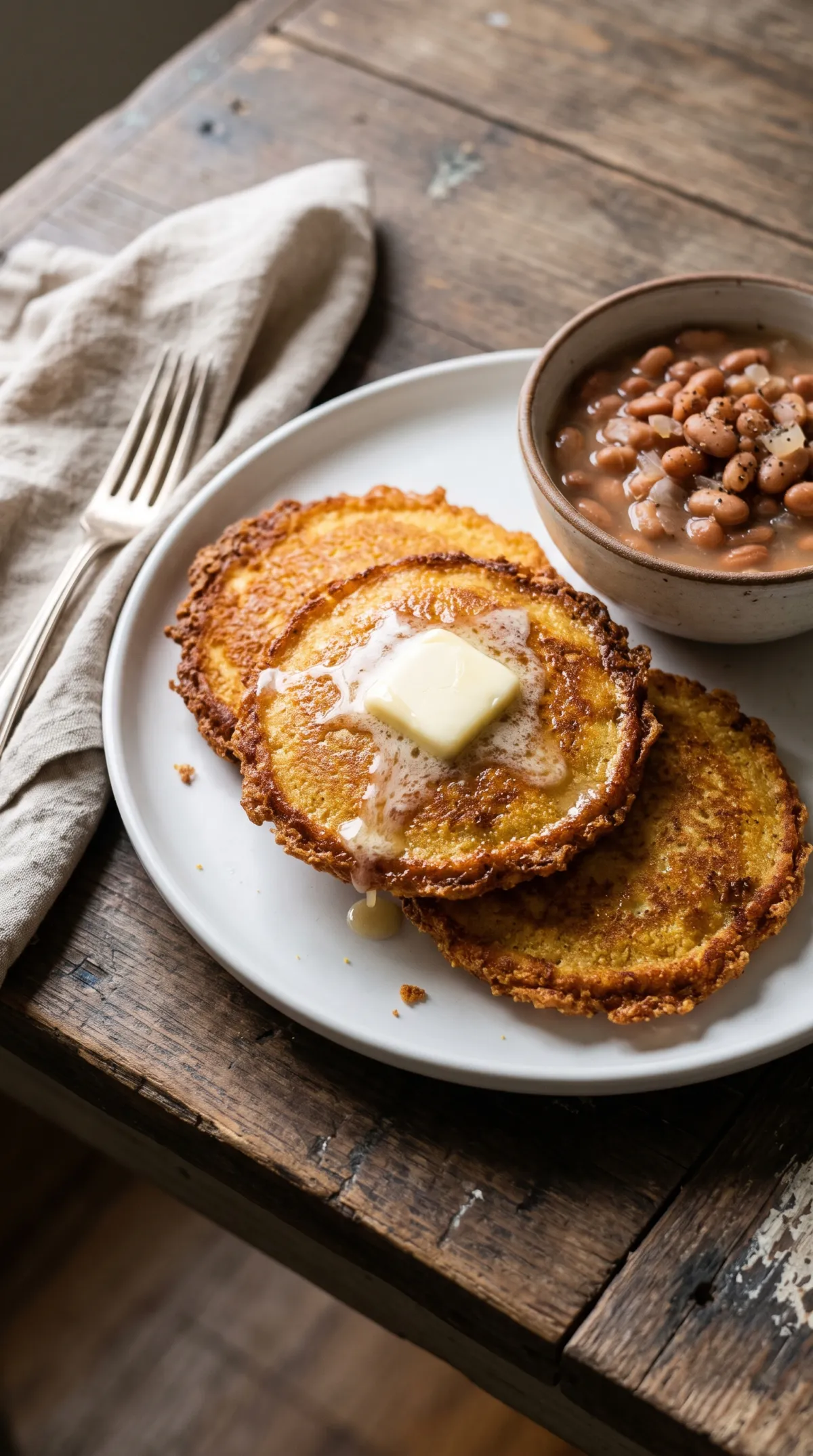
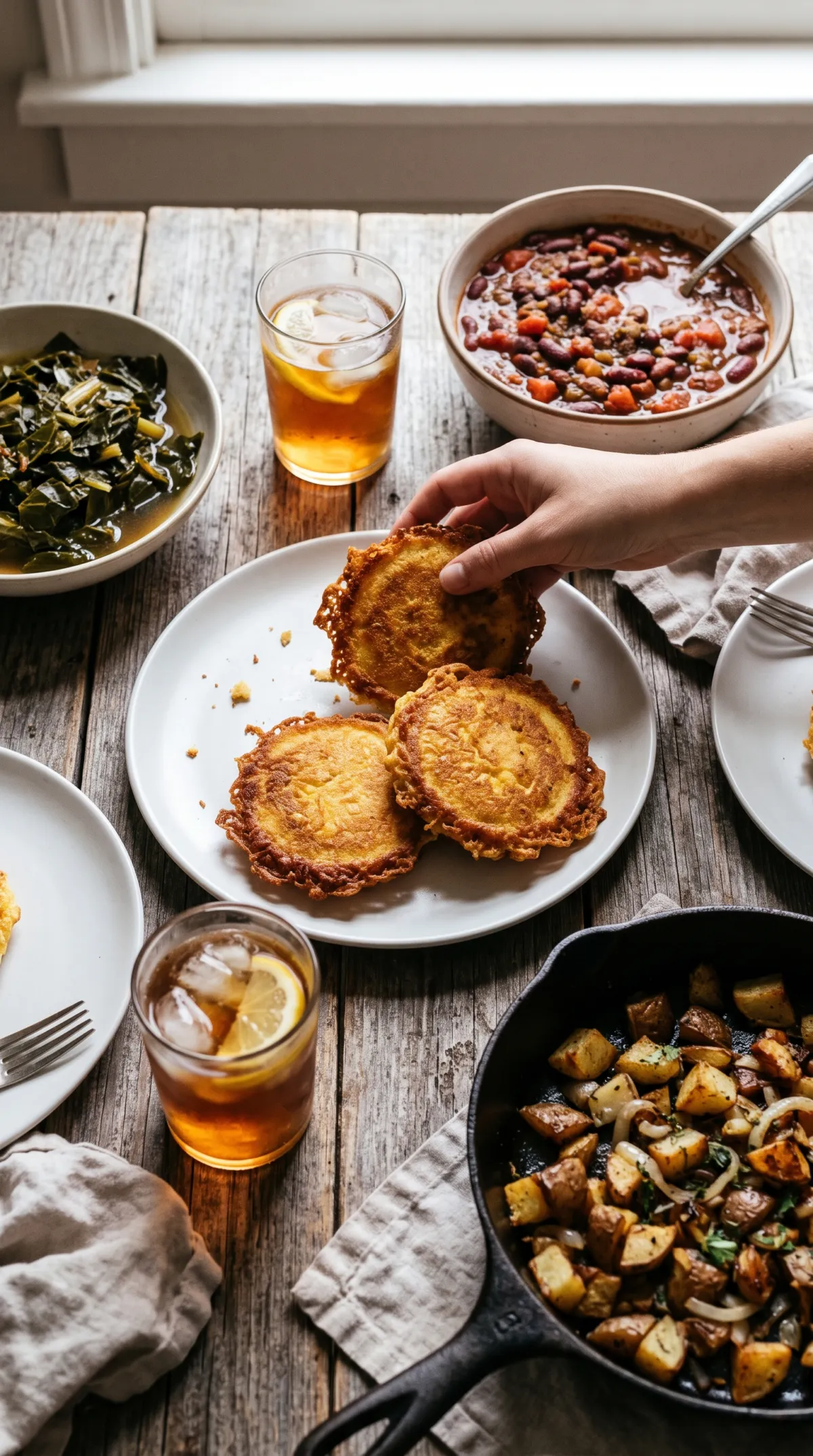
It’s made for soaking up broth and gravy, so serve it with beans, collard greens cooked in vegetable or chicken broth, or a bowl of chili. For a heartier plate, add Southern succotash or Southern fried potatoes, both of which work as sides next to the cornbread. Check the labels on canned beans and broths, since some contain pork.
FAQ
Is fried cornbread the same as regular cornbread?
Not quite. Regular cornbread is baked as one pan and has a soft, even crumb. Fried cornbread is cooked in individual portions in hot oil, which gives each piece a crisp, lacy crust and a softer middle. It tastes similar, but the texture is closer to a fritter.
Can I make it without flour?
Yes, with all cornmeal, using 2 cups (280 g) in place of the cornmeal and flour. The pieces will be more crumbly and a little grittier, so rest the batter a full 10 minutes and flatten them gently. The flavor is more corn-forward, and the crust browns just as well.
Can I use milk instead of buttermilk?
Yes. Stir 1 tablespoon of lemon juice or white vinegar into 1 1/4 cups (300 ml) of milk and let it stand 5 minutes. Plain milk works too, but the pieces will taste less tangy and be slightly less tender, since the baking soda needs an acid to work fully.
What can I use instead of bacon grease?
Use vegetable, canola or peanut oil for frying, and melted butter in the batter. They give a clean, crisp result. For a savory, smoky note, add 1/2 tsp smoked paprika to the batter. If you want extra richness, use half butter and half oil in the pan, and lower the heat if it browns too fast.
Why is my fried cornbread greasy?
The oil was probably too cool, or the pan was too crowded. Cool oil lets the batter soak up fat before a crust forms. Wait until a drop of batter sizzles right away, fry in batches and drain the pieces on a wire rack rather than paper towels.
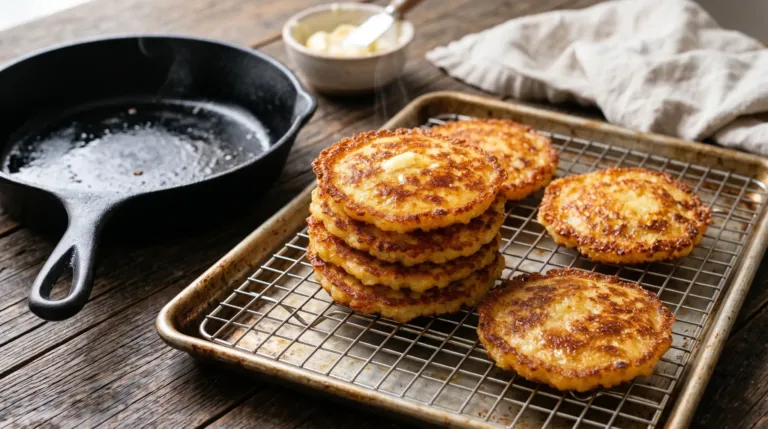
Crispy Fried Cornbread with Tender Centers, Pan-Fried in a Skillet
- Prep 10 min
- Cook 20 min
- Total 30 min
Cook mode: your screen stays on and the current step is shown larger.
Ingredients
Steps
- Step 1 of 10
Whisk the cornmeal, flour, baking powder, baking soda and salt in a large bowl until evenly mixed.
- Step 2 of 10
Whisk the egg and buttermilk in a second bowl until smooth.
- Step 3 of 10
Pour the wet mixture into the dry and stir gently until just combined, with a few small lumps remaining.
- Step 4 of 10
Stir in the melted butter and let the batter rest 5 minutes, until thick and spoonable.
- Step 5 of 10
Set a wire rack over a baking sheet and heat the frying oil in a heavy 10 to 12 inch (25 to 30 cm) skillet over medium heat for 2 to 3 minutes, until a drop of batter sizzles immediately.
- Step 6 of 10
Spoon in about 3 tablespoons of batter per piece, leaving 1 inch (2.5 cm) between them, and press each one flat to about 1/2 inch (1.3 cm).
- Step 7 of 10
Fry 2 to 4 minutes, until the edges are deep golden and the underside is crisp, then flip.
- Step 8 of 10
Fry 2 to 3 minutes more, until the second side is golden and the center feels springy.
- Step 9 of 10
Move the pieces to the rack to drain for 1 to 2 minutes, and add a little oil to the pan before each new batch.
- Step 10 of 10
Serve warm.
Nutrition
- Calories
- 495 kcal
- Protein
- 11 g
- Fat
- 24 g
- Carbohydrates
- 59 g
- Sugar
- 6 g
- Fiber
- 4 g
- Salt
- 1.5 g
Approximate values per serving.
How did it turn out?
Related searches