
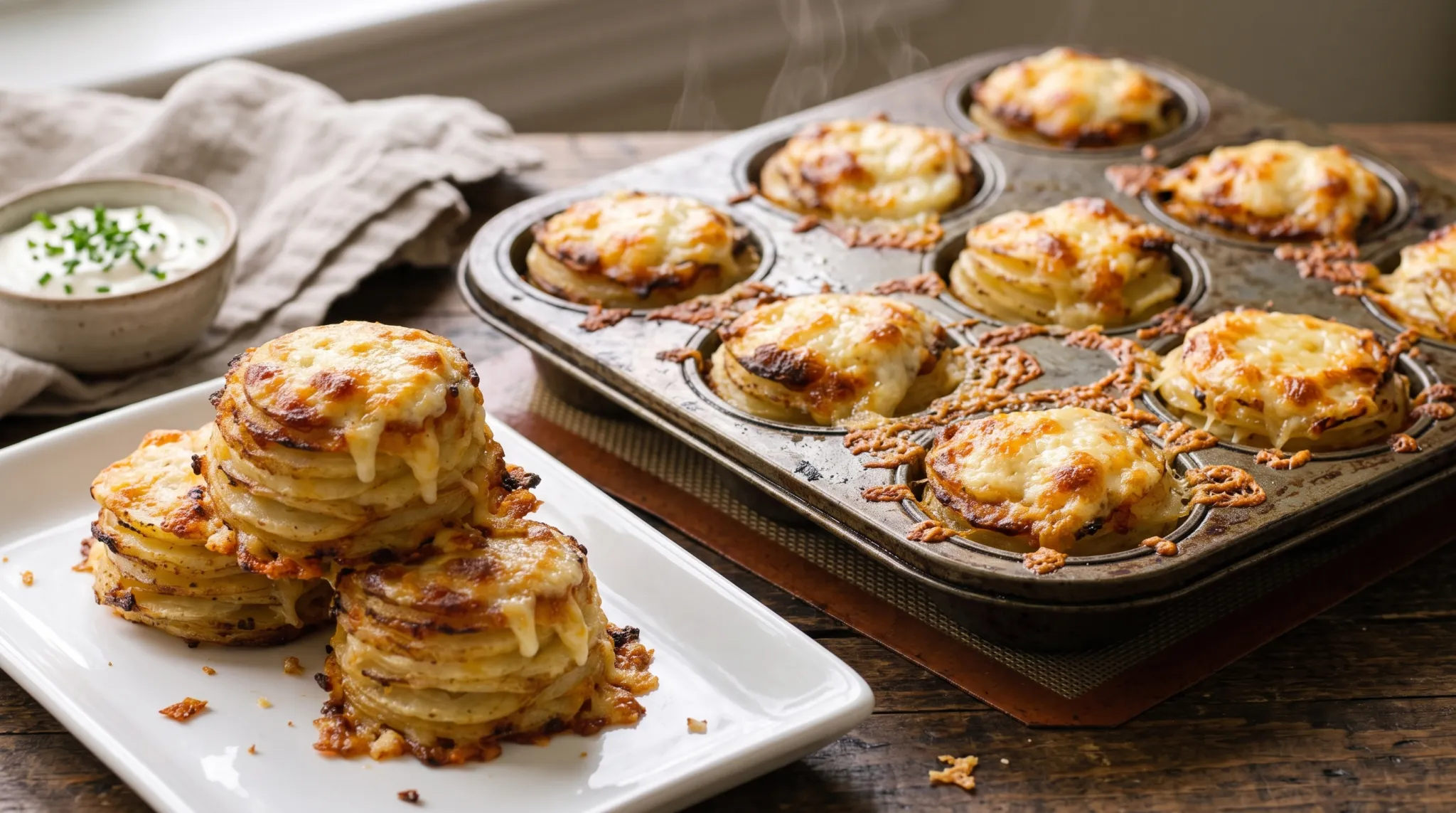
Cheesy potato stacks take 25 minutes of slicing and stacking, then 45 minutes in a 400°F (200°C) oven. They make 12 stacks in a standard muffin tin, enough for 4 people at three each. The work is easy but repetitive, and a mandoline turns the slicing into a five-minute job. Without one, you’ll need a sharp knife and some patience.
Each stack is a tight tower of paper-thin Yukon Gold slices, tossed in butter and Parmesan, layered with sharp cheddar and baked until the edges turn lacy and deep gold. They’re crisp outside and tender in the middle. This isn’t a creamy potato casserole. It’s a handheld side with a crunchy rim, so expect to eat it with your fingers or a fork.
What the Muffin Tin Should Look Like at Each Stage
Raw slices tell you how the stacks will behave. At 1/16 inch (2 mm) they bend without snapping and you can nearly see light through them. Thicker slices stay stiff, leave gaps and bake unevenly. Don’t rinse them, because the surface starch is what glues the layers together.
After tossing, every slice should glisten with butter and look lightly dusted with Parmesan, with no dry patches. Pack each cup until it stands about 1/2 inch above the rim. The stacks shrink by a third as the potatoes release water, so a loosely filled cup bakes into a sad little puck.
At 30 minutes the edges are golden and the tops are starting to curl and crisp. The kitchen smells like browned butter and toasted cheese. Add the last of the cheddar now. When the stacks are done, the cheese is bubbling, the rim is a deep amber and a paring knife slips through the center with no resistance. If the middle still pushes back, give it 5 more minutes and tent the tops with foil if they darken.
Why Thin Slices Fuse into Stacks
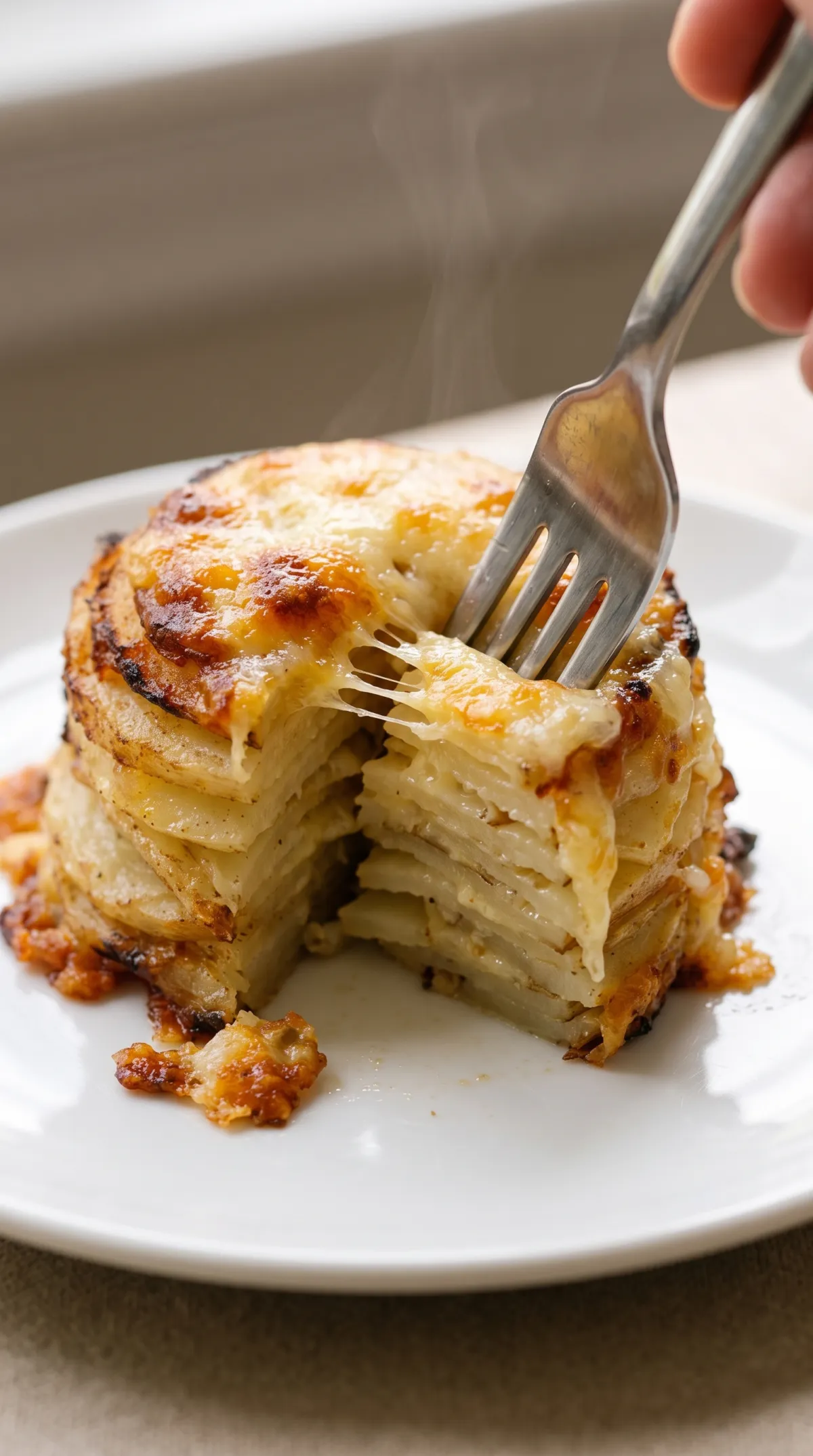
Potato starch does the gluing. When you slice a potato thin, you open thousands of cells that leak starch onto the surface. Coated in butter and pressed together, that starch gels in the oven’s heat and fuses neighboring slices into one tower that holds its shape when you lift it out. Rinsing washes it away, which is why the slices go straight from the mandoline into the bowl.
The butter does a second job. Fat carries heat to the surface much faster than air, so the slices touching the metal wall of the tin fry as much as they bake. That’s where the lacy, deep golden rim comes from. A muffin tin also keeps the stacks upright and puts their sides against hot metal, which a baking dish wouldn’t.
Cheese adds its own browning. Parmesan is low in moisture, so it crisps rather than melts, while cheddar melts and bubbles. Tossing the slices in Parmesan spreads crunch through the whole stack, and keeping the cheddar between layers makes them cheesy without letting them slide apart.
Stacks That Collapse, Steam or Burn
Most failures come from slice thickness, moisture or overfilled cups.
- The stacks fall apart because the slices were too thick or rinsed, so there wasn’t enough starch to bind them. Slice to 1/16 inch and skip the rinse.
- The centers stay firm when the slices are thick or the oven runs cool. Check it with an oven thermometer and bake 5 to 10 minutes longer under foil.
- The bottoms are soggy and the rims pale if the potatoes sat after slicing and leaked water, or the tin wasn’t greased. Toss and stack right away.
- The cheese burns when all of it goes on at the start. Save the last of the cheddar for the final 8 to 12 minutes.
- The stacks stick to the tin because they came out too soon or the cups were under-buttered. Rest them 5 minutes and run a thin knife around each cup.
Four Ways to Change the Stacks
The method stays the same, and only the seasoning or cheese changes.
- Jalapeño popper: swap the cheddar for pepper jack and tuck 2 tbsp of minced pickled jalapeños and 2 slices of crumbled cooked bacon between the layers.
- Garlic and herb: add 1 tsp dried thyme and another 1/2 tsp garlic powder to the butter.
- Half sweet potato: replace 1 lb of the potatoes with sweet potato. They brown faster, so start checking at 35 minutes.
- Dairy-free: use olive oil for the butter and skip the cheeses. They’ll be crisp and savory, but they won’t be cheesy.
If you want something creamier under a cheddar crust, the potato au gratin cups are the closer match.
Potatoes, Cheese and Swaps
Yukon Golds are the right call here. They’re medium in starch, so they bind but still hold their shape, and the thin skin is fine left on. Russets have more starch and crisp harder, but they turn crumbly when sliced this thin. You can read more about how potato varieties differ in starch and texture.
Buy a block of sharp cheddar and shred it yourself. Pre-shredded cheese is coated to stop clumping, which can leave the cheese greasy rather than smooth.
| Ingredient | Swap | What changes |
|---|---|---|
| Yukon Gold | Russet | Crisper edges, a more fragile stack |
| Butter (dairy) | Olive oil, same amount | Fruitier flavor, slightly less browning |
| Sharp cheddar (dairy) | Gruyère or pepper jack | Nuttier or spicier, same melt |
| Parmesan (dairy) | Pecorino Romano | Saltier, so cut the salt to 1/2 tsp |
| Garlic powder | Onion powder or smoked paprika | Different savory note |
Making Ahead and Storing Leftovers
These are best baked fresh, because sliced potatoes darken and weep within minutes. If you must prep early, hold the slices in cold water for up to 2 hours, then dry them very well before tossing. Expect a bit less binding, since some starch rinses off.
Cool leftovers within 2 hours, then refrigerate them in an airtight container for 3 to 4 days. Reheat on a rack set over a baking sheet at 375°F (190°C) for 10 to 12 minutes, until the stacks are hot and crisp again, with the center at 165°F (74°C). The microwave turns them soft, so skip it.
I wouldn’t freeze them. Thawed potatoes go grainy and waterlogged, and the crisp rim never comes back. For general guidance on keeping leftovers safe, see the USDA Food Safety and Inspection Service.
Serving Stacks with a Main
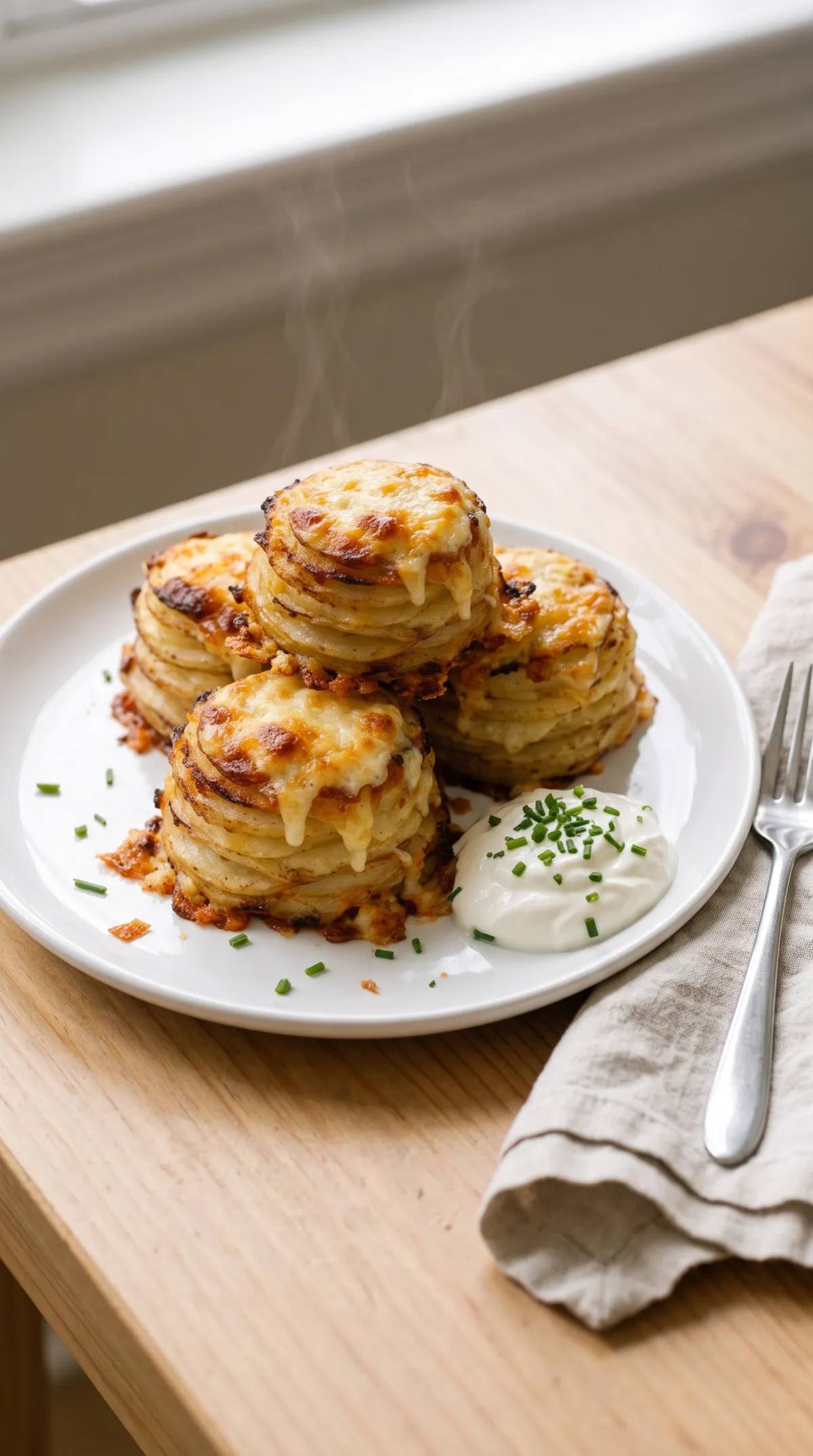
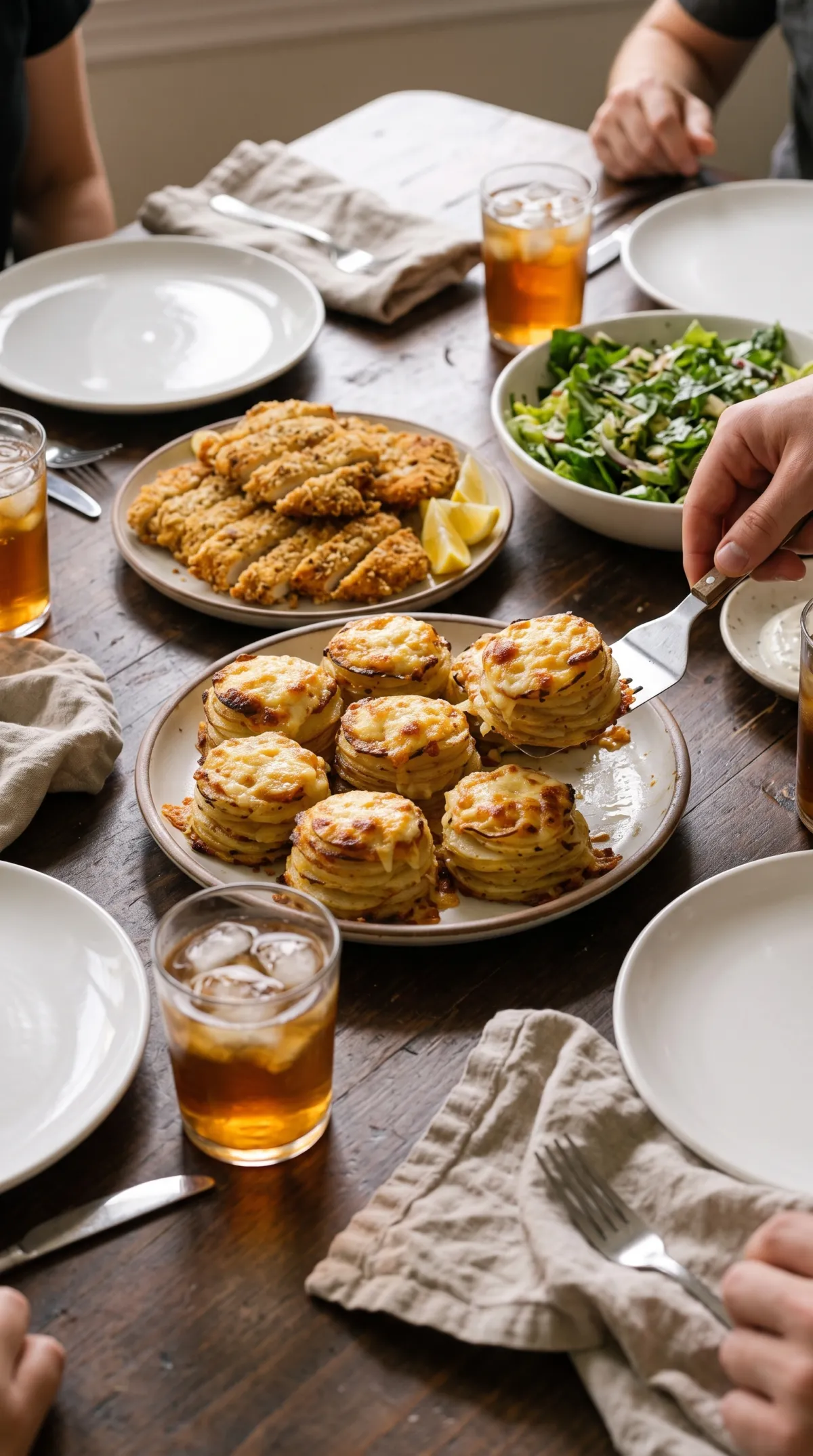
Serve the stacks hot from the tin with sour cream and chopped chives. They suit a plain, savory main that doesn’t compete with the cheese. A crisp cutlet such as the restaurant-style Parmesan crusted chicken echoes the Parmesan crunch.
With a steak, they take the place of a baked potato. Our steak temperature guide will help you time the meat so both are ready at once. Add a simple green salad or steamed green beans to cut the richness.
FAQ
Do I need a mandoline to make potato stacks?
No, but it helps a lot. A mandoline gives even 1/16-inch slices in minutes. With a sharp chef’s knife, slice slowly and aim for slices you can bend. Uneven slices bake at different speeds, so some of the stack can stay firm while other layers brown. Use the hand guard, because those blades are sharp.
Can I use russet potatoes for cheesy potato stacks?
Yes, though the results differ. Russets have more starch, so they crisp harder, but thin russet slices crumble and the stacks are more fragile when you lift them out. Yukon Golds hold together better. If you use russets, keep them unpeeled for extra structure and let the stacks rest the full 5 minutes.
Can I use a mini muffin tin?
Yes. A 24-cup mini tin makes smaller, crispier stacks. Use the same slices and stack them to the same height, then start checking at about 20 minutes. They bake faster because they’re smaller, so watch the rims. Add the last of the cheese for the final 6 to 8 minutes.
Do I have to peel the potatoes?
No. Yukon Gold skin is thin and goes crisp and golden in the oven, and it adds some structure to the thin slices. Just scrub the potatoes well and pat them completely dry before slicing, since wet potatoes bake up soggy. Peel them only if the skin looks thick, green or damaged.
How is this different from a creamy cheesy potato bake?
A creamy bake cooks sliced potatoes in sauce, so it stays soft and saucy. These stacks have no liquid. The butter and cheese brown the potatoes instead, which gives you crisp edges and a tender middle. If you want the creamy kind, the potato au gratin cups on this site are closer to it.
How many stacks should I make per person?
Three stacks per person is a good side portion, so one 12-cup tin serves 4. As a snack or appetizer, count two each. To double the recipe, use two tins on separate racks and swap their positions halfway through, since the oven’s heat is rarely even. Add 5 to 10 minutes if the oven is crowded.
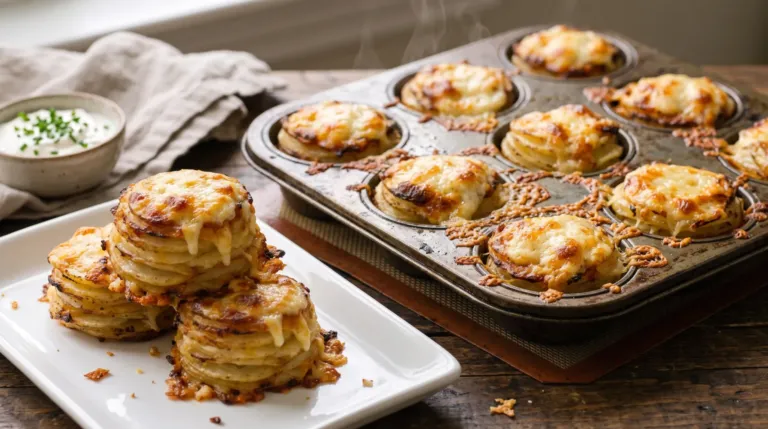
Cheesy Potato Stacks in a Muffin Tin
- Prep 25 min
- Cook 45 min
- Total 1 hr 10 min
Cook mode: your screen stays on and the current step is shown larger.
Ingredients
Steps
- Step 1 of 8
Heat the oven to 400°F (200°C) with a rack in the middle, then brush the 12 cups of a standard muffin tin with 1 tbsp of the melted butter.
- Step 2 of 8
Slice the unpeeled potatoes 1/16 inch (2 mm) thick on a mandoline, without rinsing them, until you have a bowl of even rounds.
- Step 3 of 8
Toss the slices with the remaining 5 tbsp butter, the salt, pepper and garlic powder until every slice glistens.
- Step 4 of 8
Add the Parmesan and toss again until the slices are lightly coated, with no dry patches.
- Step 5 of 8
Stack the slices into the cups, sprinkling about 2/3 cup of the cheddar between the layers, until each stack stands about 1/2 inch (1 cm) above the rim, then press down gently.
- Step 6 of 8
Bake 30 minutes, until the edges are golden and the tops start to curl and crisp.
- Step 7 of 8
Sprinkle the remaining cheddar over the stacks and bake 8 to 12 minutes more, until the cheese bubbles, the rims are deep amber and a paring knife slides through the center with no resistance.
- Step 8 of 8
Cool in the pan 5 minutes, run a thin knife around each cup and lift the stacks out gently with a spoon or small spatula.
Nutrition
- Calories
- 480 kcal
- Protein
- 15 g
- Fat
- 29 g
- Carbohydrates
- 39 g
- Sugar
- 2 g
- Fiber
- 4 g
- Salt
- 2.1 g
Approximate values per serving.
How did it turn out?
Related searches