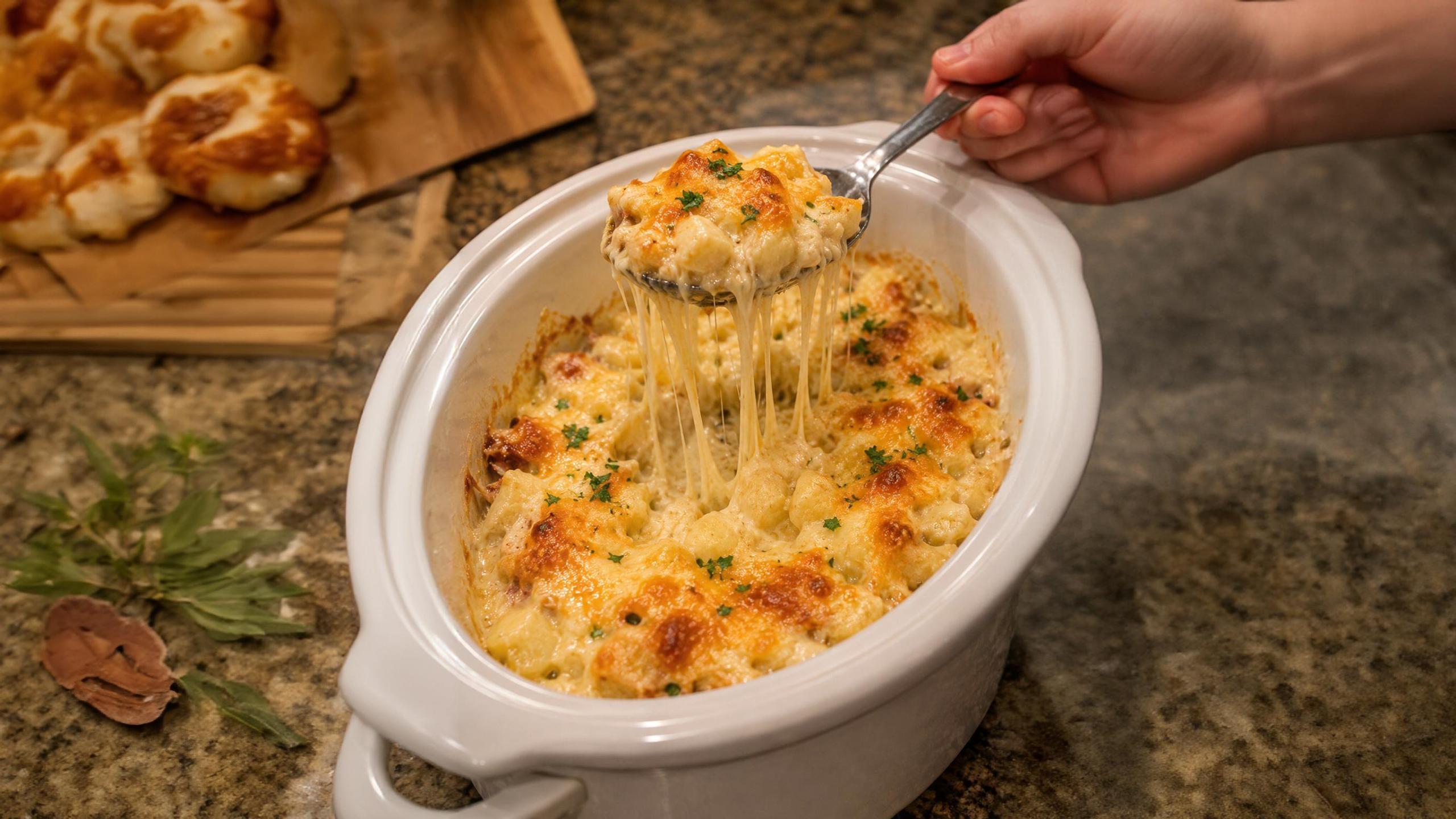
Velvety Slow Cooker Hashbrown Casserole Mastery
This legendary Crockpot Hashbrown Casserole redefines easy entertaining. Forget peeling potatoes; we use frozen diced hashbrowns to absorb an incredibly luxurious sauce made from sharp cheddar, tangy sour cream, and umami-rich cream of chicken soup. Slow-cooked to perfection, it achieves a velvety texture that rivals any heavy cream-based side dish, making it the ultimate savory, comforting centerpiece for any American table. It’s pure, hands-off indulgence.
restaurant_menu Ingredients
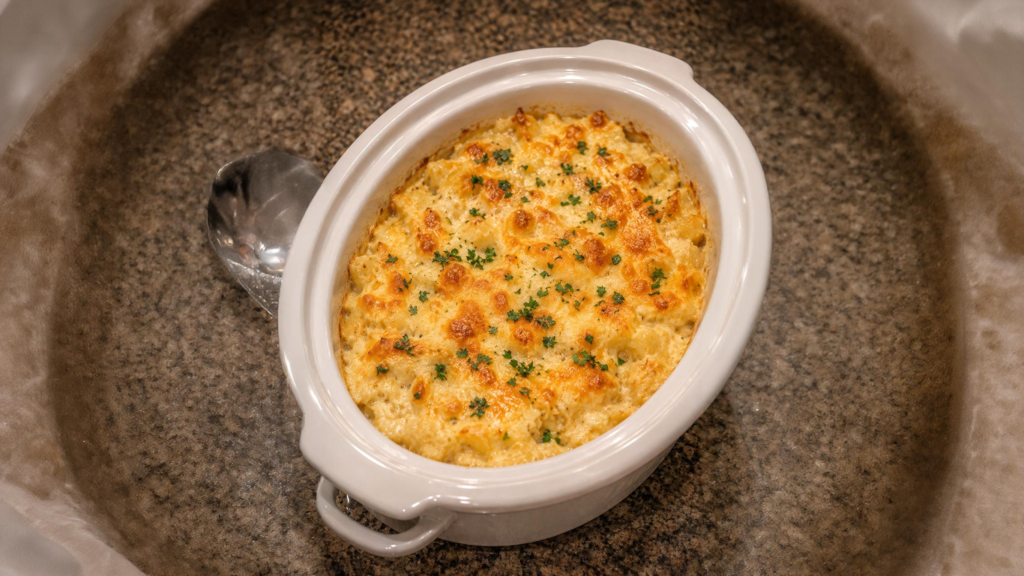
Core Ingredients for Crockpot Hashbrown Casserole
Optional Flavor Boosters
hardware Essential Tools
6-quart or larger oval slow cooker (Crockpot brand recommended)
Large rubber spatula or wooden spoon
Measuring cups and spoons
Fork for testing doneness
format_list_numbered Preparation
Initial Assembly and Prep
Begin by ensuring the inside ceramic insert of your slow cooker is thoroughly coated with a light, even layer of non-stick cooking spray, paying special attention to the lower corners where the cheese tends to fuse permanently. This barrier is non-negotiable for easy cleanup of your Crockpot Hashbrown Casserole.In a very large bowl, combine the 32 ounces of frozen diced potatoes (still frozen—this is key!), the 2 cups of sour cream, the entire can of cream of chicken soup, the 2 cups of shredded cheddar cheese, and all the dry seasonings: onion powder, garlic powder, salt, and pepper. Do not add the parsley yet.Using a sturdy rubber spatula, fold these ingredients together gently but thoroughly. You are aiming to coat every single frozen potato chunk evenly in the thick, creamy base. Stop mixing the moment everything looks homogenous; overmixing can bruise the potatoes.
Slow Cooking Phase
Carefully transfer the entire mixture from the bowl into the prepared slow cooker insert, spreading it into an even layer without pressing down too firmly. Do not layer or create peaks; an even surface promotes even cooking.Secure the lid tightly and set your slow cooker to the LOW setting. Allow the Crockpot Hashbrown Casserole to cook undisturbed for 3 to 4 hours. Resist the urge to lift the lid prematurely, as this releases vital trapped steam and drastically increases the cooking time.After 3 hours, test a few potato pieces with a fork. They should yield easily with no resistance. If they are still firm, replace the lid and continue cooking for another 30 to 60 minutes, checking every 15 minutes until perfectly tender.
Finishing and Serving
Once the potatoes are fork-tender, carefully remove the lid. The sauce will look slightly looser than you expect—this is normal. Use your large spatula to vigorously stir the entire casserole from the bottom up. This action re-emulsifies the rendered fats back into the starch matrix, creating that signature velvety thickness.Allow the casserole to rest, uncovered, for about 10 minutes. This brief rest allows the sauce to set up perfectly as it cools slightly. Taste and adjust salt if necessary.Transfer the finished Crockpot Hashbrown Casserole to a serving dish or serve directly from the crock, sprinkling generously with the 1/4 cup of fresh minced parsley just before presenting it to your guests.
favorite You Might Also Love
Browse All arrow_forward
Cheesy Weeknight Fish Stick Casserole Recipe (Family Favorite)

Slow Cooker Chicken and Dressing Recipe (Comforting Crock-Pot)
Rich Garlic Butter Beef Pasta Mastery

Ultimate Rotel Dip Recipe: Creamy, Cheesy Party Appetizer
Four-Ingredient Slow Cooker Sausage and Potatoes
Ultimate Foil Packet Garlic Steak and Potato Dinner
Try These Variations
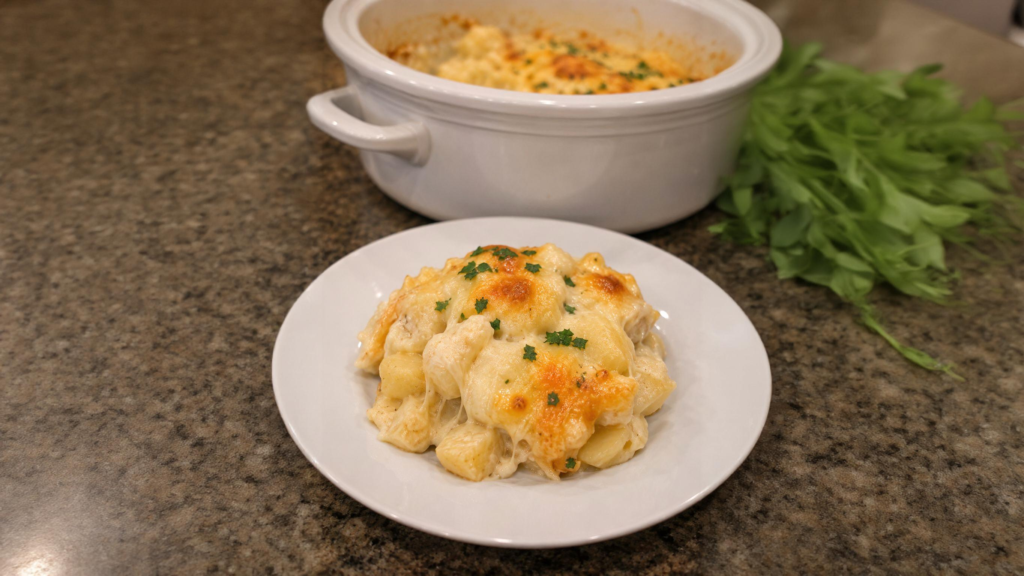
Protein Powerhouse Addition
To transform this side into a substantial main course, fold in 1 pound of fully cooked, crumbled breakfast sausage or diced, pan-seared beef pastrami (ensuring it is Halal certified) along with the initial ingredients. The meat integrates beautifully during the slow cooking process, adding texture and richness, making this a complete, hearty meal perfect for a weekend breakfast-for-dinner night.
Smoked Paprika and Gruyère Twist
For a more complex, European-inspired flavor profile, substitute the sharp cheddar with 1 cup of Gruyère cheese and 1 cup of smoked Gouda. Add 1 teaspoon of smoked paprika and 1/2 teaspoon of dried thyme to the seasoning mix. The nutty, smoky notes pair exceptionally well with the tang of the sour cream, elevating the simple Crockpot Hashbrown Casserole to gourmet status.
Vegetarian Cream of Celery Swap
If chicken soup is not suitable, replace the 10.5 oz can of cream of chicken soup with an equal volume of high-quality cream of celery soup or cream of mushroom soup. To compensate for the slight difference in sodium and umami, add 1 teaspoon of vegetarian Worcestershire sauce or a dash of mushroom powder to the mix. This ensures the depth of flavor remains, keeping the casserole vegetarian-friendly while maintaining the required binding structure.
Spicy Southwestern Kick
Introduce heat and brightness by swapping the standard cheddar for 1.5 cups of Pepper Jack cheese and 1 cup of Monterey Jack. Stir in one 4-ounce can of diced green chiles (drained) and 1/2 teaspoon of ground cumin during the initial mixing phase. This variation leans into the American Southwest flavor profile beautifully, offering a spicy counterpoint to the creamy base of the Crockpot Hashbrown Casserole.
Chef's Pro Tips
The Cheese Shredding Dictate
Never, under any circumstances, rely on pre-shredded cheese from a bag for a dish where texture is paramount, like this Crockpot Hashbrown Casserole. Those bags are dusted heavily with cellulose or potato starch to prevent clumping. While excellent for tossing on a salad, this anti-caking agent prevents the casein proteins in the cheese from melting smoothly in a slow, moist heat environment, leading directly to that grainy, separated sauce you dread. Always buy a block of sharp cheddar and shred it yourself immediately before use; the difference in melt quality is astronomical.
Understanding Low vs. High Setting
While the temptation is strong to use the HIGH setting to save an hour, I strongly advise against it for this recipe. The HIGH setting on most slow cookers will eventually reach boiling temperatures (212°F), which is too aggressive for the dairy proteins in the sour cream and soup, causing them to curdle and separate. The LOW setting maintains a gentle, consistent heat, typically around 190°F to 200°F, which is perfect for starch gelatinization without protein denaturation. This is the foundational secret to a truly smooth Crockpot Hashbrown Casserole.
The Importance of the Final Stir
When you open the lid after the cooking cycle, you will likely see a thin layer of oil or butterfat that has separated and risen to the top edge of the crock. This is a natural result of the emulsification breaking down slightly under prolonged heat. Do not be alarmed! Before plating or serving, use a large spatula to aggressively stir this fat back into the main body of the casserole. This mechanical action forces the fat globules to re-disperse evenly throughout the thickened starch matrix, restoring that desired, cohesive, velvety mouthfeel.
Enhancing Aromatics with Bloom
Before adding your dry spices (onion powder, garlic powder) to the cold ingredients, take a moment to ‘bloom’ them. Place the measured spices in a small, dry skillet over medium-low heat for about 30 seconds, stirring constantly until they become intensely fragrant. This gentle toasting process releases fat-soluble flavor compounds, intensifying their savory impact tenfold. When you mix them into the cold base, you are introducing a depth of flavor that simple stirring cannot achieve, significantly boosting the overall profile of your Crockpot Hashbrown Casserole.
Storage Guide
Refrigerator Storage (Recommended Method)
Allow the remaining Crockpot Hashbrown Casserole to cool down on the counter for no more than one hour after serving. Transfer the cooled portion into a high-quality, airtight glass container (Pyrex works well) to prevent flavor absorption from other fridge items. Store on a main shelf, not in the door, for consistent cold temperatures. This dish maintains excellent texture and flavor for up to 4 days when stored correctly.
Freezer Storage (Use Caution)
If you must freeze, cool the casserole completely first, then portion it into single-serving, freezer-safe containers, leaving about a half-inch of headspace for expansion. While it can last up to two months, be warned: the high moisture content in the sour cream and cheese sauce often leads to some texture degradation upon thawing, resulting in a slightly grainier sauce that will require significant stirring and perhaps a splash of milk upon reheating to improve consistency.
Reheating in the Oven (Best Texture)
For the best result that mimics the original texture, preheat your oven to 350°F. Transfer the desired amount of casserole into a small, oven-safe baking dish, cover it tightly with aluminum foil to trap steam, and bake for 20 to 25 minutes, or until the center is hot throughout (reaching 165°F internal temperature). The foil prevents the top from drying out while the heat restores the creamy body.
Microwave Reheating (Quickest Method)
For single servings, place the portion in a microwave-safe dish. Heat on 50% power for 1 minute, stir well, and continue heating in short 30-second bursts on medium power until heated through. Using lower power prevents the dairy components from overheating too quickly, which can cause localized seizing and graininess.
Avoid These Mistakes
✕ Using Pre-Shredded Cheese
This is the most frequent downfall of creamy baked dishes. Pre-bagged cheese contains anti-caking agents like cellulose, which prevent the cheese from melting smoothly in the moist, low-heat environment of the slow cooker. Instead of forming a rich, cohesive sauce, the cheese often resists integration, resulting in a gritty, clumpy texture where the cheese particles feel distinct rather than melted into the sauce. Always shred your cheese from a block to ensure the smoothest, silkiest finish for your Crockpot Hashbrown Casserole.
✕ Overcooking Past Tenderness
While slow cooking is forgiving, it is not foolproof against disintegration. Once the frozen diced potatoes are tender—test them with a fork—they should be removed from the heat immediately. If you continue cooking for another hour or two, the potato cell walls, already softened, will completely collapse under the prolonged heat, releasing too much starch and turning your perfectly creamy casserole into a heavy, gluey, starchy paste that has lost all structural integrity. Check tenderness diligently around the 3-hour mark.
✕ Forgetting the Initial Stir/Re-Emulsification
Many cooks assume that because the ingredients are mixed, they are fully combined. However, the initial mix is cold, and the fats separate during the long cooking process. If you serve the casserole straight from the crock without that final, vigorous bottom-to-top stir, the texture will be greasy on top and dry at the bottom. That final stir is a critical step in re-emulsifying the sauce, binding the fat back into the starch and dairy base for a uniform, luxurious texture throughout the entire dish.
✕ Using Low-Fat Dairy Products
This is comfort food, and comfort food requires fat for texture and flavor carry. Substituting low-fat sour cream or using skim milk instead of full-fat sour cream will result in a watery, thin sauce. Fat molecules are essential for creating a stable emulsion with water-based liquids like soup; reducing the fat content severely compromises the sauce’s ability to thicken and hold its structure during the long cooking time, leading to a thin, soupy Crockpot Hashbrown Casserole.
nutrition Nutrition Facts
Per serving: 1 cup serving
Sodium content varies significantly based on the brand of condensed soup used. Using low-sodium soup can reduce this figure by up to 200mg per serving.
flag Conclusion
There you have it—the blueprint for the most effortless, crowd-pleasing side dish in your arsenal. This Crockpot Hashbrown Casserole proves that culinary excellence doesn’t require constant attention; sometimes, the best results come from trusting the process and letting time and low heat do the heavy lifting. I encourage you, my fellow home cooks, to make this your signature dish for the next gathering. Feel free to personalize the seasonings, but never compromise on shredding that cheese fresh! Happy cooking, and I look forward to seeing how you incorporate this creamy favorite into your family’s traditions here at HomeRecipes.com.
sell Related Topics
Frequently Asked Questions
Why do I have to use frozen diced potatoes instead of fresh, peeled potatoes for this Crockpot Hashbrown Casserole? expand_more
This is a crucial point rooted in ingredient preparation science. Commercially frozen diced potatoes are flash-blanched or par-cooked briefly before freezing. This process partially gelatinizes the surface starches, which is exactly what we want for a slow cooker application. If you use raw, peeled, fresh potatoes, their outer cell walls are intact and dense. They require a much longer cooking time to fully tenderize, and they release their starch much more slowly and unevenly, often leading to a mix of hard and mushy pieces in the final Crockpot Hashbrown Casserole. The frozen product is engineered for this exact application, ensuring uniform tenderness and proper starch release.
My casserole sauce separated and looks greasy after cooking. What went wrong? expand_more
Greasy separation, known as 'breaking' the emulsion, typically happens for one of two reasons in this recipe. First, if you used the HIGH setting on your slow cooker, the temperature likely spiked above 205°F, causing the proteins in the sour cream and soup to contract too rapidly and squeeze out the stable fat molecules. Second, if you used pre-shredded cheese, the anti-caking agents can interfere with the emulsion structure. To prevent this next time, strictly use the LOW setting, and ensure you are stirring vigorously at the end to re-incorporate any fat that rose to the top. This final stir is essential for reforming the creamy texture of your Crockpot Hashbrown Casserole.
What is the best non-alcoholic beverage to pair with this rich, cheesy side dish? expand_more
Because the Crockpot Hashbrown Casserole is so rich, heavy, and savory, you need a beverage with bright acidity or cleansing effervescence to cut through the fat. My top recommendation is a homemade Arnold Palmer—half freshly brewed black iced tea and half tart, freshly squeezed lemonade. The tannins in the tea and the sharp citric acid in the lemon provide a perfect palate cleanser between bites. Alternatively, a very cold sparkling water infused with cucumber and mint offers crisp refreshment without adding excessive sweetness to the meal.
Can I prepare all the ingredients the night before and cook it in the morning? expand_more
Yes, this recipe is excellent for overnight preparation, which is a huge benefit for busy mornings! Assemble everything—potatoes, soup, sour cream, seasonings, and cheese—in the slow cooker insert, cover it, and place the entire insert into the refrigerator overnight (up to 12 hours). Crucially, when you set it to cook in the morning, you must increase the cooking time by approximately 1 to 1.5 hours, or ensure it cooks for a full 4 hours on LOW, as the ingredients start much colder than room temperature. This ensures the frozen potatoes have enough time to fully tenderize.
I only have shredded hashbrowns (the long, thin kind) instead of diced potatoes. Can I use those in my Crockpot Hashbrown Casserole? expand_more
You absolutely can, but be prepared for a textural shift. Diced potatoes provide distinct, tender chunks that hold their shape reasonably well, giving you that classic casserole mouthfeel. Shredded hashbrowns, however, have much more surface area and will release starch more rapidly. They will cook faster and result in a denser, more cohesive final product—almost like a very creamy, cheesy potato cake rather than distinct potato cubes. If using shredded, reduce the cooking time by about 30 minutes, and be sure to stir very thoroughly at the end to prevent a gummy bottom layer.
More Recipes You'll Love
Creamy Smoked Sausage & Potato Chowder

French Onion Pasta Recipe (One-Pot Comfort)

Vibrant Mexican Shrimp Cocktail: The Ultimate Chilled Appetizer
Powerhouse Antioxidant Rich Salads for Immunity
Velvety Smoked Kielbasa and Potato Chowder
Community Kitchen