Retro Swedish Nut Cake Recipe
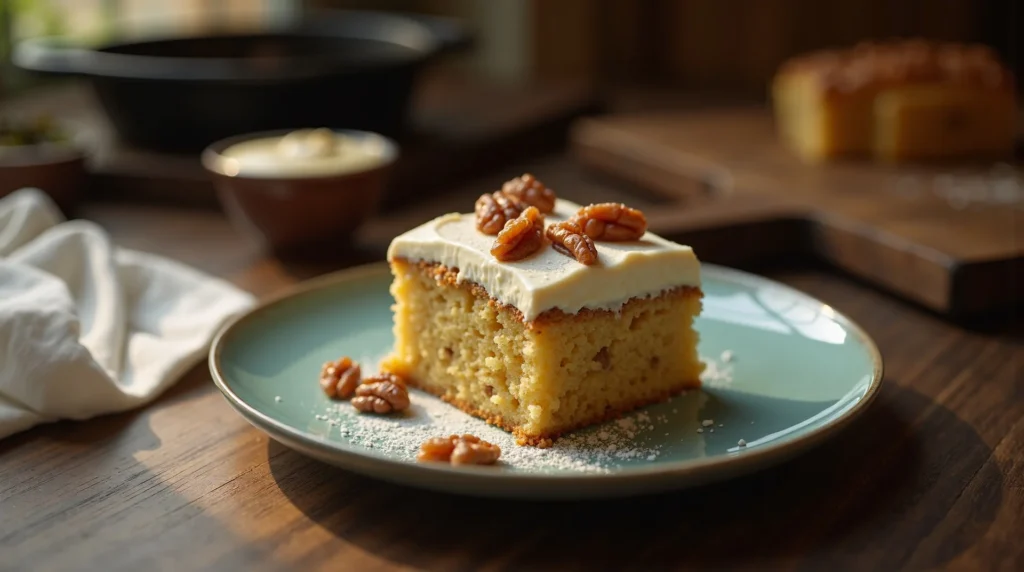
This Swedish Nut Cake is the definition of retro American comfort baking—a moist, one-bowl pineapple cake topped with the creamiest, tangiest cream cheese frosting you've ever tasted.
restaurant_menu Ingredients
For the Moist Nut Cake
For the Cream Cheese Frosting
For Garnish
hardware Essential Tools
9x13 inch baking dish
Large mixing bowl
Electric mixer (hand or stand)
Whisk
Rubber spatula
Wire cooling rack
Parchment paper
format_list_numbered Preparation
Mixing and Baking the Cake
Preheat your oven to 350°F (175°C) and position the rack in the center position
Grease and line a 9x13-inch baking dish with parchment paper for easy removal
In a large bowl, whisk together the flour, granulated sugar, and baking soda until thoroughly combined
Add the eggs, 1 teaspoon of vanilla, and the softened butter to the dry mixture, beating until just smooth, about 2 minutes
Gently fold in the slightly drained crushed pineapple and the 2/3 cup of chopped nuts using a rubber spatula, mixing only until no dry streaks remain
Pour the loose batter evenly into the prepared baking dish
Bake for 30 to 35 minutes, testing for doneness with a wooden skewer inserted in the center—it should come out clean
Allow the nut cake to cool completely in the pan on a wire rack before proceeding to the frosting stage
Preparing the Frosting and Assembly
In a separate bowl, using an electric mixer, beat the softened cream cheese and softened butter together until the mixture is light, fluffy, and completely smooth
Gradually add the sifted powdered sugar, one cup at a time, mixing on low speed until incorporated
Beat in the remaining 2 teaspoons of vanilla extract, then increase speed to medium-high and whip for a full 2 minutes until the frosting is visibly aerated
Once the cake is entirely cool, spread the cream cheese frosting evenly over the top surface
Sprinkle the remaining 2/3 cup of toasted, chopped nuts over the frosting layer for texture and garnish
favorite You Might Also Love
Browse All arrow_forwardHomemade Sour Patch Kids Recipe (Chewy Gummy Candy)
Chocolate Strawberry Cake Recipe (Easy Poke Cake)
The Ultimate Halal Pinto Bean Pie Recipe
Effortless Custard Cream Almond Cake Ready Fast
The Ultimate Pig Pickin Cake: A Southern Dessert Legend
Cinnamon Raisin Bread Pudding Recipe (Classic Comfort)
Try These Variations
Spice Addition
Add 1 teaspoon of ground cinnamon and 1/4 teaspoon of ground nutmeg to the dry ingredients for a warmer, autumn-inspired nut cake.
Citrus Brightness
Add the zest of one large orange along with the vanilla extract in the cake batter.
Coconut Crunch
Substitute half of the chopped nuts with unsweetened shredded coconut, both in the batter and sprinkled on top of the frosting.
Brown Sugar Swap
Replace half the granulated sugar in the cake batter with packed light brown sugar for a deeper molasses note and slightly chewier crumb in your nut cake.
Frosting Flavor Change
Stir 2 tablespoons of finely grated lemon zest into the cream cheese frosting for a vibrant, tangy counterpoint to the sweet cake.
Chef's Pro Tips
Always bring your eggs to room temperature before baking — cold eggs can cause the batter to curdle
For extra moisture, add 2 tablespoons of sour cream or Greek yogurt to the batter
Rotate your cake pan halfway through baking for even browning
Invest in an oven thermometer — most home ovens are off by 15-25°F
Toast your nuts lightly in a dry skillet over medium-low heat before chopping to unlock their full aromatic potential
Storage Guide
Room Temperature
Store in an airtight container for up to 24 hours only due to the dairy frosting.
Refrigerator
Wrap tightly in plastic wrap and refrigerate for up to 5 days.
Freezer
Wrap individual slices tightly in plastic wrap and foil; freeze for up to 3 months. Thaw overnight in the refrigerator before serving.
Avoid These Mistakes
✕ Using melted butter or cream cheese for the frosting, resulting in a thin, oily topping that slides right off the cake instead of holding its shape.
✕ Overmixing the cake batter once the flour has been added, which develops excess gluten and creates a tough, rubbery texture instead of the desired tender crumb for this nut cake.
✕ Not draining the crushed pineapple adequately, leading to a very wet, gummy center layer that refuses to set properly during baking.
✕ Forgetting to toast the nuts; raw nuts simply do not provide the deep, earthy flavor necessary to balance the sweetness of this nostalgic nut cake.
✕ Frosting the cake while it is still warm, causing the butter and cream cheese to melt and soak into the cake rather than sitting beautifully on top.
nutrition Nutrition Facts
Per serving: 1 slice
Nutritional information is an estimate based on 12 servings and may vary based on specific ingredient brands used.
flag Conclusion
There is something incredibly satisfying about mastering a classic like the Swedish Nut Cake. It requires minimal fuss, utilizes ingredients you likely already have stocked in your pantry, and delivers an unparalleled level of moist, flavorful satisfaction. This recipe is a testament to the fact that truly great American baking doesn’t have to be complicated; it just needs heart and precision. Take this recipe, make it your own, and share the joy of this retro delight with your family tonight. Happy baking, and welcome to the HomeRecipes family!
sell Related Topics
Frequently Asked Questions
Can I use fresh pineapple instead of canned for this nut cake? expand_more
That is a fantastic question that gets right to the heart of recipe adaptation! While fresh pineapple is certainly delicious, it contains significantly more water and varying levels of acidity depending on its ripeness. If you choose to substitute, you must drain the fresh, diced pineapple very thoroughly—I recommend pulsing it in a food processor and then squeezing it dry in cheesecloth. You may also need to slightly increase the baking soda by 1/4 teaspoon to compensate for the change in acidity. For reliability, however, especially for a classic recipe like this nut cake, the canned version provides the consistent texture and moisture level we are aiming for.
What type of nuts are best for a Swedish Nut Cake? expand_more
The traditional and most successful nuts for this recipe are walnuts or pecans. Both offer a robust, slightly earthy flavor that pairs exceptionally well with the sweetness of the cake and the tang of the cream cheese. Pecans tend to be slightly richer and sweeter, while walnuts offer a bit more bite. Whichever you choose, remember my earlier advice: toast them lightly in a dry pan over medium heat until fragrant before chopping and adding them to the batter or using them as a garnish for your nut cake. This simple step is a hallmark of professional baking.
My cake batter seems very thin after adding the pineapple. Is this normal for a nut cake? expand_more
Yes, it absolutely is! This is one of the key differentiating factors of this specific nut cake recipe. Unlike standard butter cakes where the batter is thick enough to hold peaks, the addition of crushed pineapple and its juice results in a batter that is quite loose, almost like a thick pancake batter. This is what guarantees that characteristic tenderness and moisture. Do not be tempted to add extra flour! Trust the process, pour it evenly into the pan, and allow the oven’s heat to set the structure. The final baked nut cake will be moist and dense, not crumbly or dry.
How can I make this nut cake dairy-free? expand_more
Making this specific nut cake entirely dairy-free presents a significant challenge because two core components—the butter in the cake and the cream cheese in the frosting—are dairy-based. For the cake, you could substitute the butter with a high-quality vegan butter stick (like Miyoko’s or Earth Balance sticks) and use a plant-based milk substitute like soy or almond milk if needed, though the pineapple might provide enough moisture. The frosting, however, is harder. You would need a specialized vegan cream cheese alternative and vegan butter. While possible, the texture of the frosting will likely change significantly. For a truly successful, naturally dairy-free alternative, I would suggest looking at our tropical fruit loaf recipes instead, as altering this particular nut cake structure so drastically might compromise the result.
Can I bake this nut cake in a round pan instead of a 9x13? expand_more
You certainly can, but you must adjust your baking time and monitor closely. Baking this recipe in a 9x13 pan yields a relatively thin cake that bakes quickly. If you switch to two 9-inch round cake pans, the batter will be thicker, meaning it will require more time—likely 35 to 40 minutes. If you use a single 10-inch Bundt pan, it could take 50 to 60 minutes. Always check with a skewer inserted into the deepest part of the cake. Remember, the thicker the layer of nut cake, the longer the center needs to bake, even if the edges look done.
More Recipes You'll Love
Wisconsin Fairy Food Recipe (Sweet Puffed Candy)
Velvety Banana Pudding Dream Cake
Copycat Olive Garden Chocolate Lasagna

Community Kitchen