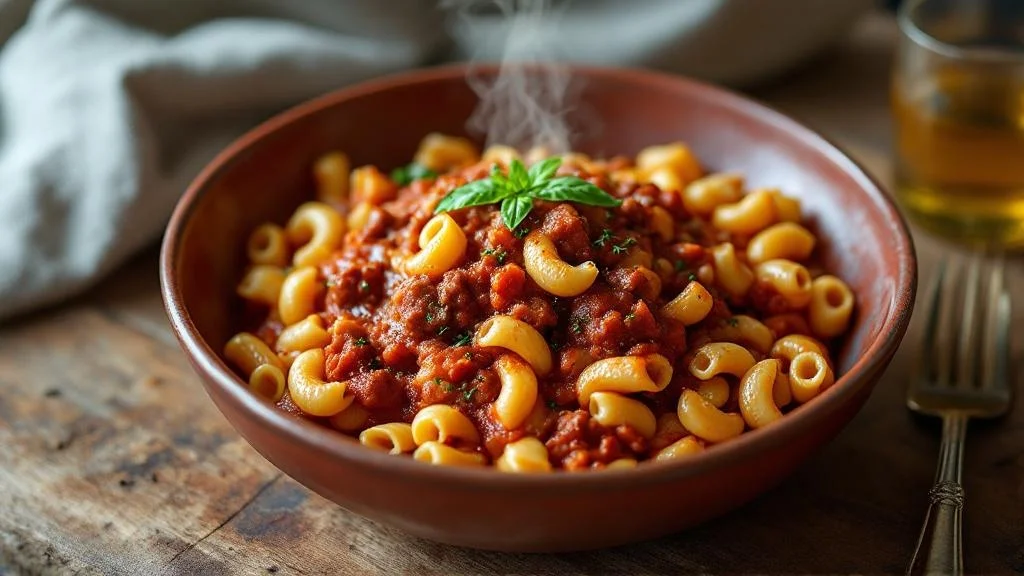
Hearty American Goulash: A Comfort Classic Redefined
This is the definitive, deeply savory American Goulash recipe, taking the humble comfort dish to professional heights. We perfectly brown 2 pounds of ground beef, bloom dried herbs for maximum aroma, and undercook the macaroni so it finishes absorbing the rich, tangy tomato sauce. It’s a one-pot wonder that delivers unparalleled homestyle satisfaction, making it the star of any casual American dinner table.
restaurant_menu Ingredients
The Core Components
Seasoning & Finish
hardware Essential Tools
Large, heavy-bottomed Dutch oven or deep skillet
Wooden spoon or heat-proof spatula
Colander or fine-mesh sieve
Large stockpot (for boiling pasta)
Measuring cups and spoons
Tongs or slotted spoon (for removing bay leaf)
format_list_numbered Preparation
Building the Flavor Base
In a large Dutch oven over medium-high heat, brown the ground beef in batches if necessary, ensuring deep browning (Maillard reaction) occurs on the bottom of the pan, then drain off all but 1 tablespoon of fat.
Add the diced onion and minced garlic to the residual fat; sauté until the onions are soft and translucent, about 5 to 7 minutes, scraping up any browned bits from the bottom of the pot.
Reduce heat slightly, add the dried oregano and basil, and toast them gently for 30 seconds until intensely fragrant before introducing any liquid to maximize their essential oils.
Simmering and Finishing
Stir in the tomato sauce, diced tomatoes (with their juices), and water; add the bay leaf and bring the mixture to a gentle simmer, allowing the sauce to concentrate for 10 minutes.
Add the pre-cooked, slightly underdone elbow macaroni to the sauce, stir thoroughly to coat, and continue simmering gently for 6 to 8 minutes until the pasta is tender and the sauce has thickened considerably.
Remove the pot from the heat, discard the bay leaf, stir in the optional heavy cream for silkiness, and season aggressively with salt and pepper until the flavor pops.
favorite You Might Also Love
Browse All arrow_forward
Authentic Minced Meat Pasties: A Chef's Guide
Chicken Vesuvio Recipe (Hearty One-Pan)
Mongolian Ground Beef Noodles Recipe (Quick Weeknight Meal)
German Fries Recipe (Crispy Golden Potatoes)
Creamy Chicken and Noodles in the Crockpot Recipe (Ultimate Comfort)
Church Supper Chicken Spaghetti Recipe (Creamy Baked)
Try These Variations
For a richer, deeper tomato profile, introduce 1 tablespoon of tomato paste along with the dried herbs; allow it to cook down and slightly caramelize for one minute before adding any liquid. This deepens the umami base significantly, moving the flavor profile closer to a slow-simmered ragu while keeping the structure of the American Goulash intact. If you enjoy a slight tang, substitute 1/4 cup of the water with apple cider vinegar—added right before the simmering stage—to brighten the overall taste profile without making it overtly sour. This small acid adjustment is a trick I learned in Paris to balance heavy meat sauces.
To give this classic recipe a smoky, slightly spicy kick, use smoked paprika instead of the dried basil, increasing the amount to 1 tablespoon, and add 1/2 teaspoon of crushed red pepper flakes along with the oregano. This variation leans into a more Southwestern American profile, reminiscent of chili mac but retaining the goulash structure. Cook the smoked paprika gently to avoid bitterness, as smoked spices can turn acrid if overheated. This smoky American Goulash is fantastic served with a dollop of sour cream or Greek yogurt on top.
For a vegetable-forward, hearty texture, incorporate finely diced carrots and celery (a classic mirepoix) along with the onion, sautéing them until very soft before adding the garlic. Furthermore, stir in one 15-ounce can of rinsed and drained kidney beans during the final 5 minutes of simmering. This adds texture and fiber, making the dish more substantial for those looking to stretch the meat further, though purists might argue this veers too far from the core American Goulash identity.
Chef's Pro Tips
When browning ground beef for any casserole or pasta dish like this American Goulash, resist the urge to stir constantly. You want the meat to sit against the hot metal surface long enough to form a dark brown crust—this is the Maillard reaction, creating hundreds of new flavor compounds that cannot be achieved by simply steaming the meat. Cook in smaller batches if your pot is large enough to hold everything comfortably, ensuring every piece gets direct heat contact. If you skip this step, your final dish will taste flat and thin, no matter how much seasoning you add later.
Always incorporate dried herbs by ‘blooming’ them in fat just before adding liquid. Heat causes the volatile oils in herbs like oregano and basil to release rapidly, intensifying their flavor profile dramatically compared to just dumping them into cold liquid. Perform this step for only 30 seconds—just until you can smell them intensely—as over-toasting can turn them bitter. This technique ensures the herbaceous notes are fully integrated into the beef and tomato base of your American Goulash, rather than floating vaguely on the surface.
The secret to that perfect, clinging sauce texture is controlling the hydration of your pasta. By intentionally undercooking the macaroni by two minutes, we force it to finish its cooking process by absorbing the flavorful, starchy liquid in the pot. This osmotic process prevents the pasta from breaking down into mush while simultaneously thickening the sauce naturally due to the starch released during this secondary cooking phase. If you cook the pasta fully beforehand, it will absorb the sauce too quickly and become unpleasantly soft during reheating or final simmering.
Storage Guide
For optimal flavor retention, allow the American Goulash to cool completely on the counter for about 30 minutes before transferring it to airtight, shallow containers. Storing it warm encourages condensation, which can dilute the sauce upon refrigeration. Stored this way, it maintains excellent quality in the refrigerator (at or below 40°F) for up to 4 days, as the starches and acids act as mild preservatives. The texture will thicken considerably upon chilling, which is normal.
Freezing is ideal for bulk preparation. Use heavy-duty, freezer-safe zip-top bags or rigid plastic containers, ensuring you leave about one inch of headspace if using rigid containers to allow for expansion. Lay bags flat until frozen solid to save space. When reheating from frozen, transfer the portion to a saucepan, add a tablespoon or two of water or beef broth, and cover. Heat very gently over medium-low heat for 15–20 minutes, stirring frequently, until heated through to 165°F, allowing the liquid to reincorporate smoothly into the sauce.
Reheating leftovers on the stovetop is highly recommended over the microwave, as the gentle, even heat prevents the pasta from becoming rubbery or breaking down unevenly. Use a non-stick skillet or saucepan over medium-low heat. Because the sauce will be very thick after refrigeration, always add a small splash (about 1 tablespoon per serving) of water or low-sodium beef broth before heating. Stir constantly until the sauce loosens and the entire dish reaches a pleasant, steaming temperature, ensuring the beef reabsorbs moisture without drying out.
Avoid These Mistakes
✕ The most frequent mistake I see home cooks make with American Goulash is failing to properly brown the ground beef, often resulting in a pale, grayish meat suspended in a thin, watery sauce. This happens when the pan is overcrowded, causing the temperature to drop, which results in steaming rather than searing. To correct this, use a very large pan, work in two separate batches if necessary, and allow the meat to sit undisturbed for several minutes until a dark, flavorful crust forms on the bottom before stirring. That dark crust, the fond, is where the depth of flavor originates.
✕ Another common pitfall is adding the dried pasta too early or cooking it for too long in the sauce. If the pasta simmers for more than 8 minutes fully submerged, it will absorb too much liquid and leech too much starch, leading to a gluey, overly soft final product. Always ensure your pasta is 2 minutes shy of al dente when you add it, and monitor the simmer time closely; the goal is for the liquid to reduce slightly as the pasta reaches perfect tenderness, resulting in a thick, clinging sauce characteristic of excellent American Goulash.
✕ Many cooks overlook the critical step of removing the bay leaf before serving. While it imparts a subtle, earthy background note during the simmer, if left in the dish, its flavor can become overwhelmingly pungent and almost medicinal, dominating the delicate balance between the beef, onion, and tomato. Always fish out that bay leaf before the final seasoning adjustment; it has done its job and must be removed to allow the true flavor of the American Goulash to shine through.
nutrition Nutrition Facts
Per serving: Approx. 1.5 cups
Nutritional values are estimates based on using 85% lean beef and excluding the optional heavy cream.
flag Conclusion
This journey into the deep, savory heart of American Goulash proves that the greatest dishes are often the simplest ones, executed with care. We’ve built layers of robust beef flavor, balanced the acidity of the tomatoes, and achieved that perfect, toothsome pasta texture. This isn’t just a meal; it’s a tradition you can now own and perfect in your own kitchen. Embrace the warmth, savor the simplicity, and know that you’ve created something truly special tonight. Happy cooking from my kitchen to yours!
sell Related Topics
Frequently Asked Questions
Is this recipe truly an 'American Goulash,' or is it closer to chili mac? expand_more
That is an excellent question that gets to the heart of American culinary nomenclature! While both chili mac and American Goulash feature ground beef and pasta, true American Goulash, as we are making it here, relies heavily on tomato sauce, Italian herbs (oregano/basil), and often omits beans or heavy chili powder. Chili mac leans much harder into Tex-Mex flavors with beans, cumin, and chili powder. Our recipe adheres strictly to the Midwestern/Eastern Seaboard tradition of American Goulash, focusing on a savory, slightly sweet tomato base.
I don't have elbow macaroni; what other pasta shapes work best? expand_more
While the elbow is classic, you have flexibility! The key is using a short, sturdy pasta shape that can trap the thick sauce. Penne, rotini (corkscrews), or even small shells are fantastic substitutes. If you use a larger shape like penne, you might need to increase the simmering time by 1-2 minutes, ensuring the sauce is thick enough to coat the larger surface area. Avoid delicate pastas like angel hair, as they will dissolve into mush during the final simmer phase of your American Goulash.
Why does my sauce end up too watery or too thick after simmering? expand_more
Wateriness usually stems from two common errors: either not cooking the initial beef long enough to render fat, or adding too much liquid initially. If it's too thick, that’s an easy fix—simply incorporate a splash of water or broth while reheating or during the final simmer. If it’s too watery at the end, it means the pasta hasn't absorbed enough starch and liquid. To fix this mid-cook, raise the heat slightly to medium-low and let it simmer uncovered for another 3-5 minutes, stirring often, until the sauce visibly thickens and clings to the back of a spoon. A properly finished American Goulash should not be soupy.
Can I make this dish ahead of time or use a slow cooker? expand_more
Absolutely, this American Goulash is a fantastic make-ahead candidate. You can prepare the entire sauce base (steps 1 through 4, minus the pasta) a day ahead and store it. When ready to eat, cook the pasta separately, then combine and simmer as directed. While a traditional slow cooker is possible, I advise against it for the pasta component, as it tends to overcook the macaroni, leading to mushiness. If you must use a slow cooker, add the cooked macaroni only during the last 30 minutes on the HIGH setting.
What is the purpose of adding heavy cream if it’s optional? expand_more
The heavy cream is purely for luxury and textural enhancement—it’s a chef’s indulgence for this American Goulash. Adding a touch of fat at the end emulsifies with the tomato acids, creating a richer, smoother, and more luxurious mouthfeel, taking the sauce from rustic to deeply velvety. It mellows the sharpness of the tomatoes slightly. If you skip it, your dish will still be fantastic, but the cream adds that restaurant-quality finish.
More Recipes You'll Love
No-Cook Camping Meals Recipe (Effortless Outdoors)

Baked Potato Chicken and Broccoli Casserole Recipe (Creamy & Hearty)
Velvet Slow Cooker Potato Broccoli Cheddar Soup
Steakhouse Flavor: Philly Cheesesteak Stuffed Peppers
Velvety Smoked Kielbasa and Potato Chowder
Community Kitchen