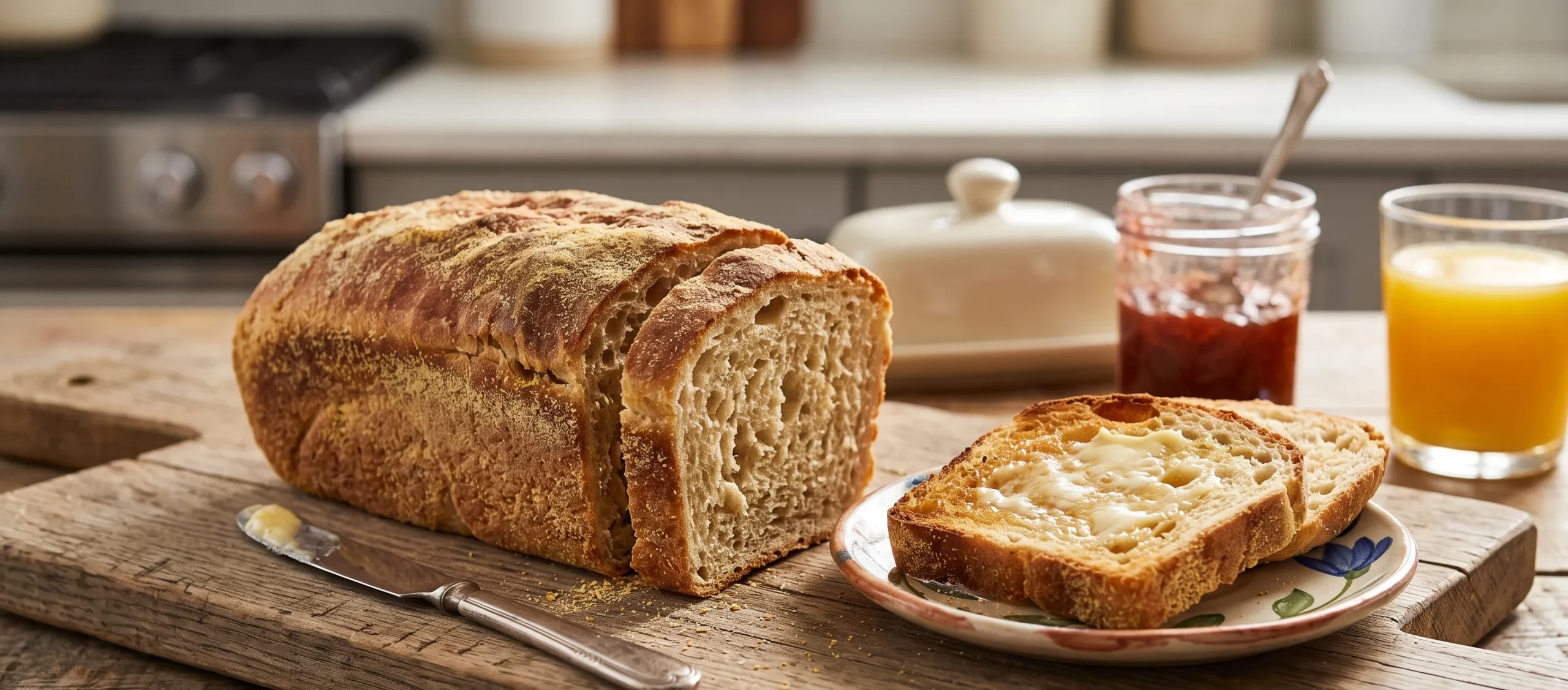
English Muffin Bread Recipe (Easy No-Knead)
Experience the joy of homemade English Muffin Bread, a surprisingly simple recipe that delivers all the iconic flavor and texture of classic English muffins in a convenient, sliceable loaf. This no-knead wonder is perfect for quick breakfasts, leisurely brunches, or a comforting snack, offering a delightful chew and those beloved nooks and crannies that perfectly hold butter and jam. It's a true chef's secret for effortless gourmet toast at home.
restaurant_menu Ingredients
Main Ingredients
For the Pan
hardware Essential Tools
8 1/2 x 4 1/2 inch loaf pan
Large mixing bowl
Whisk
Microwave-safe bowl or small saucepan
Instant-read thermometer
Electric mixer (handheld or stand mixer)
Rubber spatula
Damp clean kitchen towel or plastic wrap
Wire cooling rack
format_list_numbered Preparation
Baking Preparation
Preheat your oven to 400°F (200°C) and generously grease an 8 1/2 x 4 1/2 inch loaf pan with butter or nonstick spray, then dust the bottom and sides thoroughly with cornmeal, tapping out any excess.
Dough Mixing and Rising
In a large bowl, whisk together the all-purpose flour, granulated sugar, salt, baking soda, and instant yeast until well combined.
In a separate microwave-safe bowl, combine the milk, water, and vegetable oil, then heat this mixture until its temperature is between 120°F and 130°F (49-54°C).
Pour the warm liquid mixture into the dry ingredients and beat with an electric mixer on high speed for 1 minute until the dough is smooth and soft.
Transfer the soft dough into the prepared loaf pan, spreading it evenly, then cover the pan with a damp clean towel or plastic wrap and let it rise in a warm, draft-free place for 45 minutes to 1 hour, or until it has risen just barely over the rim (about 1/4-inch above the top).
Baking and Cooling
Remove the cover and bake the English muffin bread in the preheated oven for 22-27 minutes, or until it's golden brown and sounds hollow when tapped.
Let the bread cool in the loaf pan for 5 minutes, then carefully remove it and transfer to a wire rack to cool completely before slicing.
favorite You Might Also Love
Browse All arrow_forward
Golden German Potato Pancakes: A Family Recipe
Seasoning a Cast Iron Skillet Recipe (The Chef's Guide)
Southern Potluck Broccoli Cheddar Soup Recipe (Creamy & Comforting)

Chef's Recipe for Irresistible Bacon Rolls

Mississippi Dip Recipe (Creamy Party Favorite)

The Ultimate Guide to Vanilla Extract Substitute Options
Try These Variations
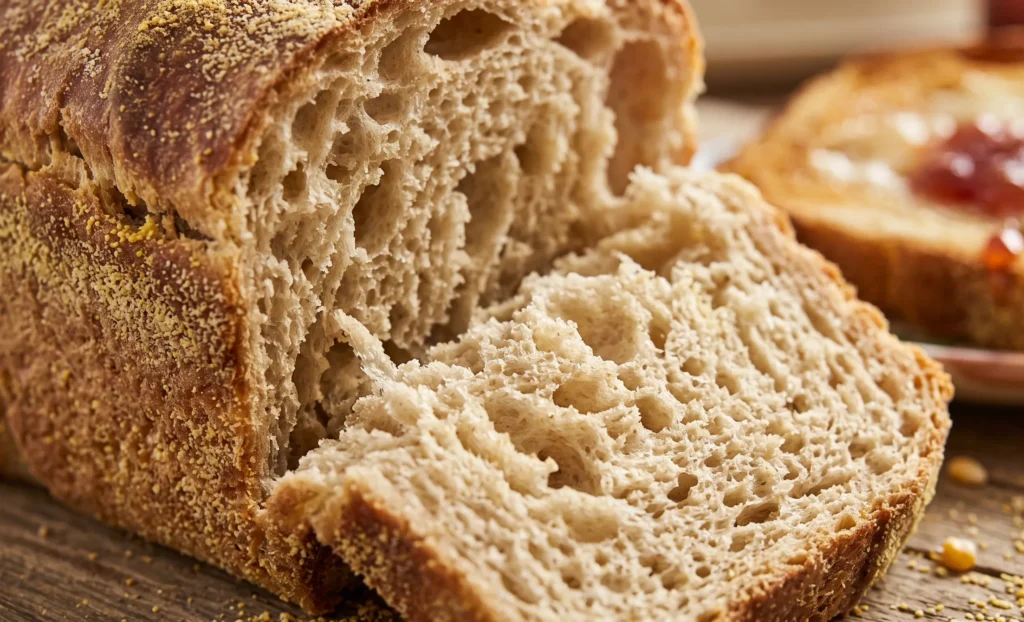
Honey Wheat English Muffin Bread
Replace 1 cup of all-purpose flour with whole wheat flour and add 2 tablespoons of honey to the liquid mixture. This will yield a slightly denser loaf with a nutty flavor and added nutritional fiber, perfect for a heartier breakfast. Adjust the liquid slightly if the dough feels too stiff, as whole wheat flour absorbs more moisture. This variation still retains the classic English muffin bread texture and toastability.
Cinnamon Raisin English Muffin Bread
Incorporate 1/2 cup of plump raisins and 1 teaspoon of ground cinnamon into the dry ingredients. The raisins will add bursts of sweetness and chewiness, while the cinnamon provides a warm, comforting spice. This variation is particularly delightful when toasted and served with cream cheese, making it a wonderful treat for brunch or a cozy morning. Ensure raisins are evenly distributed for consistent flavor.
Savory Herb English Muffin Bread
For a savory twist, mix in 1 tablespoon of dried Italian herbs (like oregano, basil, and thyme) and 1/4 cup of grated Parmesan cheese with the dry ingredients. This version makes a fantastic base for savory breakfast sandwiches or can be served alongside soups and salads. The herbs infuse a fragrant aroma and taste, while the Parmesan adds a salty, umami depth, elevating your English muffin bread experience.
Chef's Pro Tips
Achieving the Signature Nooks and Crannies
The magic of English Muffin Bread lies in its unique open crumb. This is primarily due to the slightly looser dough consistency and the combined leavening power of both yeast and baking soda. To maximize these desirable air pockets, ensure your yeast is fresh and active, and allow the dough its full, unhurried second rise. The cornmeal dusting also contributes to this by creating a crust that supports the internal structure without becoming too dense, giving those iconic English muffin bread characteristics. Don’t overwork the dough; a gentle hand helps maintain the delicate structure.
The Importance of a Warm, Draft-Free Rise
Yeast thrives in a warm, consistent environment. A drafty kitchen can cause the dough to cool down, slowing or even stopping the yeast activity, which results in a dense, poorly risen English muffin bread. I often place my bowl or pan in a slightly warm (but not hot) oven that’s turned off, or near a sunny window, ensuring the dough maintains a steady temperature for optimal proofing. This consistent warmth encourages the yeast to produce ample carbon dioxide, creating a light and airy loaf.
Perfect Toasting for Maximum Flavor
While this English Muffin Bread is delicious fresh, it truly shines when toasted. The high heat of a toaster or broiler crisps the cornmeal-dusted exterior and caramelizes the sugars in the crust, while the interior becomes soft and chewy, enhancing its unique texture. I recommend slicing it about 1/2-inch thick and toasting until deeply golden brown for the best experience. This brings out all the nuanced flavors and creates that satisfying crunch, making it superior to untoasted slices.
Storage Guide
Room Temperature Storage
Once your English Muffin Bread has completely cooled, store the entire loaf or individual slices in an airtight container or a large resealable plastic bag. This method helps prevent the bread from drying out and keeps it fresh for up to 3-4 days on your countertop. For optimal freshness, ensure the container is truly airtight to maintain the bread’s soft texture and prevent staleness. If storing slices, you can place a piece of parchment paper between them to prevent sticking.
Refrigerator Storage
While not typically recommended for bread as it can accelerate staling, if you live in a very humid climate or need to extend the shelf life slightly beyond room temperature, you can store English Muffin Bread in an airtight container in the refrigerator for up to 5-7 days. Be aware that refrigerated bread tends to become firmer, so it’s best reheated or toasted before serving to restore its texture. Always ensure it’s fully cooled before refrigerating to prevent condensation.
Freezer Storage
Freezing is an excellent option for long-term preservation of English Muffin Bread. After the loaf is completely cool, slice it into your desired thickness. For best results, flash freeze the slices by arranging them in a single layer on a baking sheet until firm (about 1-2 hours). Then, transfer the frozen slices to a heavy-duty freezer bag or an airtight freezer-safe container, removing as much air as possible to prevent freezer burn. The bread will maintain its quality for up to 2-3 months. To enjoy, simply remove slices as needed and toast directly from frozen, or thaw at room temperature.
Avoid These Mistakes
✕ Using Water That’s Too Hot or Too Cold for Yeast
A common pitfall is not heating the liquid to the precise temperature. If the milk and water mixture is too cold (below 120°F / 49°C), the yeast will not activate properly, leading to a flat, dense English muffin bread. Conversely, if it’s too hot (above 130°F / 54°C), you risk killing the yeast entirely, resulting in no rise at all. Always use an instant-read thermometer to ensure your liquid is within the optimal 120-130°F range for active yeast and a successful rise.
✕ Overworking the Dough
Unlike traditional kneaded breads where gluten development is key, this English Muffin Bread benefits from a softer, less developed gluten structure. Overmixing the dough, especially with an electric mixer, can lead to excessive gluten formation, resulting in a tougher, chewier texture rather than the desired soft, airy crumb with distinct nooks and crannies. Mix only until the ingredients are just combined and smooth, about 1 minute on high speed as specified, to maintain that delicate balance.
✕ Not Cooling the Bread Completely
It’s incredibly tempting to slice into a warm, fragrant loaf of English Muffin Bread straight from the oven. However, slicing it while still hot can lead to a gummy texture because the starches haven’t had a chance to fully set and solidify. Additionally, warm bread is more prone to tearing and uneven slicing. Patience is a virtue here; allow the loaf to cool completely on a wire rack for at least 1-2 hours before slicing to achieve the best texture and clean cuts.
✕ Skipping the Cornmeal Dusting
The cornmeal dusting isn’t just for aesthetics; it’s crucial for both texture and preventing sticking. Without it, your English muffin bread might stick to the pan, and you’ll miss out on that characteristic slightly gritty, toasted exterior that makes English muffins so distinct. Ensure you generously coat the greased pan with cornmeal, allowing it to adhere well to all surfaces before adding the dough. This creates a barrier and contributes significantly to the authentic English muffin bread experience.
nutrition Nutrition Facts
Per serving: 1 slice
Nutritional values are approximate and may vary based on specific ingredients and preparation methods.
sell Related Topics
Frequently Asked Questions
Can I make English Muffin Bread without an electric mixer? expand_more
Absolutely! While an electric mixer makes the job quicker and ensures a smooth batter, you can certainly mix this English Muffin Bread by hand. Use a sturdy whisk or a wooden spoon and a good amount of arm strength. You'll need to mix vigorously for about 2-3 minutes to achieve the desired smooth, soft dough consistency. The goal is to fully hydrate the flour and activate the gluten just enough for structure, so keep stirring until there are no dry streaks and the batter is uniform.
What if my English Muffin Bread doesn't rise? expand_more
If your English Muffin Bread isn't rising, the most common culprit is inactive yeast or incorrect liquid temperature. Ensure your instant yeast is fresh; old yeast loses its potency. Also, double-check that your milk and water mixture is between 120°F and 130°F (49-54°C). If it's too cold, the yeast won't activate; if it's too hot, it will kill the yeast. A drafty environment during the rise can also hinder it, so find a warm, calm spot in your kitchen.
Can I add other ingredients to this English Muffin Bread recipe? expand_more
Yes, you can absolutely customize your English Muffin Bread! For a touch of sweetness, consider adding 1/4 cup of dried cranberries or raisins to the dry ingredients. For a more savory profile, a tablespoon of dried herbs like rosemary or chives, or even a 1/4 cup of shredded sharp cheddar cheese, can be folded in just before transferring the dough to the loaf pan. Just be mindful not to overcrowd the dough, which could affect its rise and texture.
How do I get those perfect nooks and crannies in my English Muffin Bread? expand_more
The characteristic nooks and crannies in English Muffin Bread come primarily from the combination of yeast and baking soda, along with the relatively loose, batter-like dough. Ensuring your yeast is active and your rising conditions are optimal will promote a good, airy structure. The cornmeal dusting also plays a role in creating a crust that allows for those signature holes when you slice and toast it. Don't press down on the dough too much during handling; keep it light and airy.
Is English Muffin Bread suitable for freezing? expand_more
English Muffin Bread freezes beautifully, making it an excellent option for meal prep. Once the loaf has completely cooled, slice it into your desired thickness. Place the slices in a single layer on a baking sheet and freeze for about an hour until solid. This prevents them from sticking together. Then, transfer the frozen slices to a heavy-duty freezer bag or an airtight freezer-safe container. They will keep well for up to 2-3 months. When you're ready to enjoy, simply remove slices as needed and toast directly from frozen, or thaw at room temperature.
More Recipes You'll Love

The Ultimate Creamy Chicken Salad with Mandarin Oranges

Irresistible 4-Ingredient Sharp Cheddar Potato Stacks: Crispy Edges Guaranteed

Company Chicken Casserole Recipe (Creamy Baked)

Crock Pot Chicken Enchiladas Perfection

Easy 3-Ingredient Sausage Cream Cheese Casserole: A Delicious Brunch Recipe

Community Kitchen