
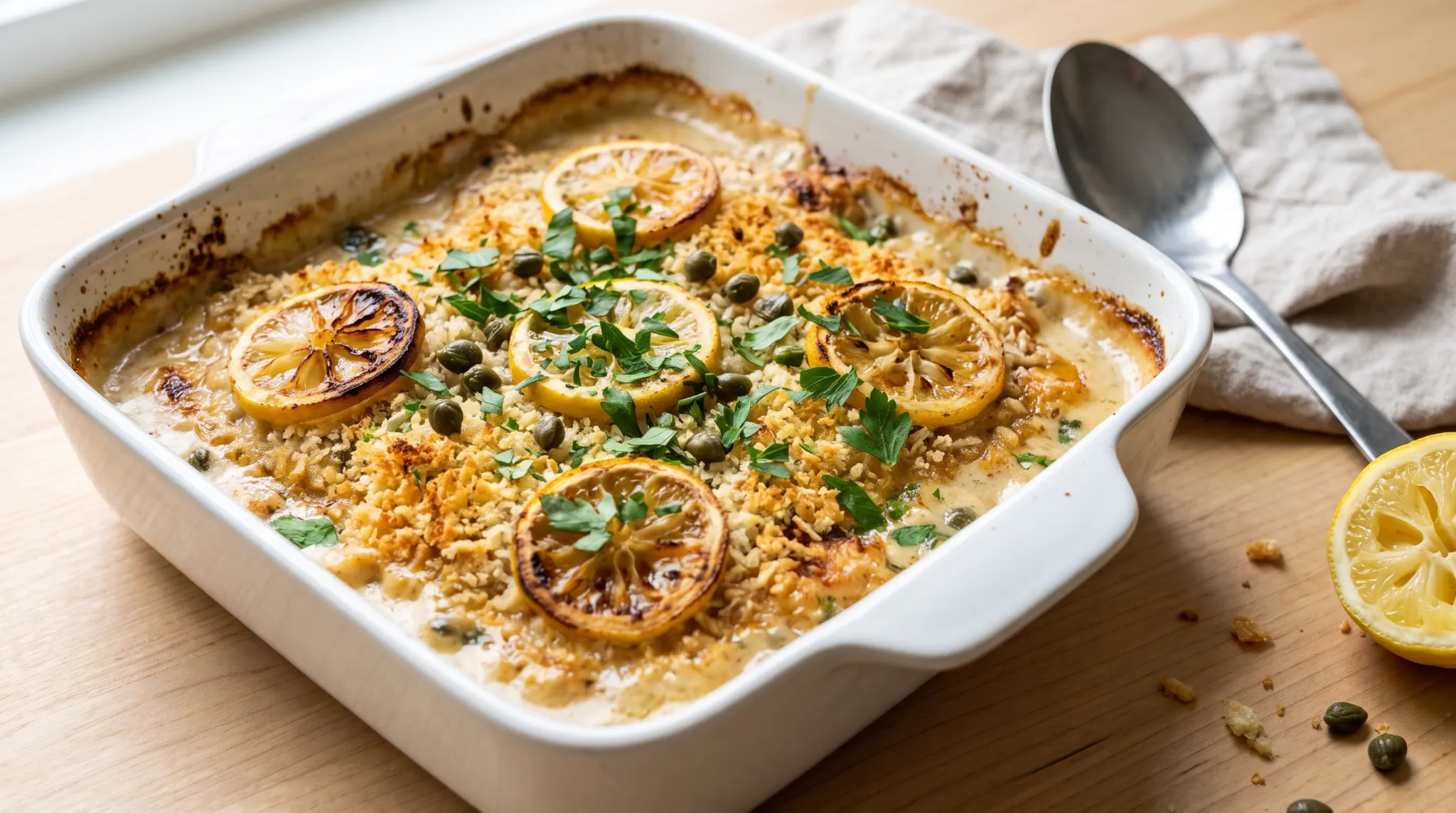
A dump-and-bake chicken piccata casserole suits the evenings when you want the oven to do the work, whether that’s a weeknight after a long day or a cold Sunday when something hot and creamy sounds better than a skillet. Assembly takes about 10 minutes, the bake runs 45, and the dish feeds 4 as a full dinner with the pasta already built in.
Nothing gets browned, boiled or whisked on the stove. You stir a can of cream of chicken soup with broth, lemon juice and capers, pour it over dry orzo, lay thin chicken cutlets on top and finish with Parmesan, panko and butter. The only skills involved are slicing the cutlets to an even thickness and checking the chicken with a thermometer. The result is lemony, briny and creamy, closer to a cheesy chicken and rice bake than to the pan-sauce original.
Planning the Hour Around the Oven
Switch the oven on to 375°F (190°C) before you touch the chicken, since slicing the breasts takes about as long as the oven needs to heat. Lay each breast flat, rest your palm on top and cut horizontally into 2 or 3 cutlets about 1/2 inch (1.3 cm) thick. Pieces of one thickness finish together, and none lags behind the orzo.
Stir the sauce until no lumps of soup are left, then press any orzo grains poking out of the liquid back under it. Grains left dry on top come out hard and chalky. Once the foil is on, nothing needs you for 30 minutes, which is the time to wash a green vegetable or toss a salad.
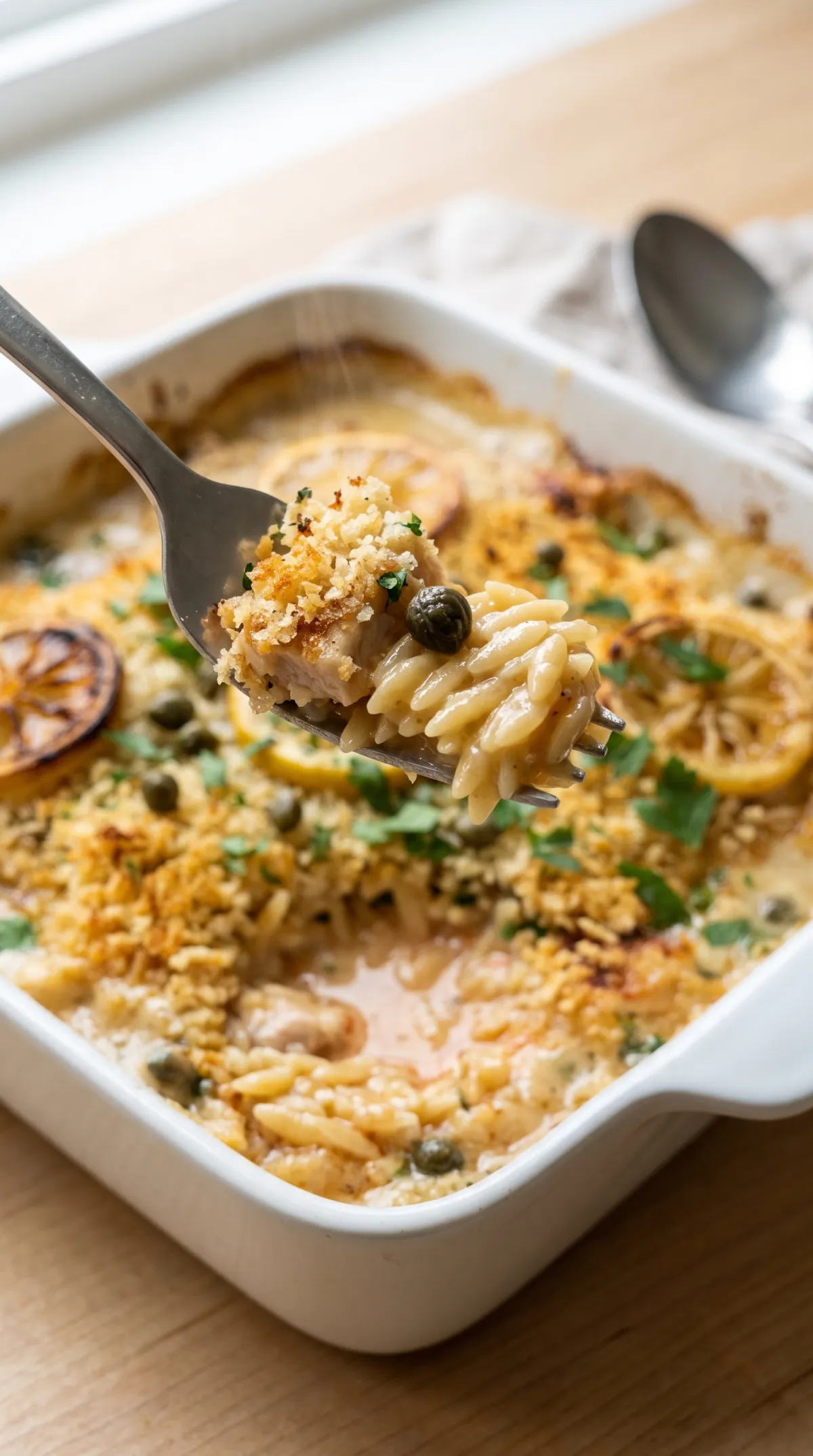
At the 30-minute mark, lift a corner of the foil. You want bubbling at the edges, a loose, wet surface and orzo that has swelled but still has a slight bite. If the edges are only steaming and not bubbling, the oven is running cool, so give it 5 more minutes before uncovering. After 12 to 15 uncovered minutes the panko turns golden, the lemon slices darken at the rim and the kitchen smells of toasted butter and lemon. Slide a thermometer into the thickest cutlet at the 12-minute mark, then let the dish stand for 5 minutes so the sauce tightens.
Hard Orzo, Dry Chicken and Pale Panko
- The orzo is hard or chalky in the middle. Grains sat above the liquid, the foil was loose or the oven runs cool. Push the grains under the liquid before covering and crimp the foil tightly around the rim. If it still crunches at the end, cover the dish again and bake 5 to 10 minutes more with a splash of warm broth.
- The sauce is soupy. Too much liquid went in, often from extra vegetables, or the dish was cut too soon. Let it stand 5 to 10 minutes, since the orzo keeps absorbing, and measure the broth exactly next time.
- The chicken is dry. The cutlets were sliced thinner than 1/2 inch (1.3 cm) or stayed in the oven too long. Start checking 10 minutes after the foil comes off and pull the dish when the thickest piece reads 165°F (74°C).
- The chicken is pink or rubbery at the thick end. The slices were uneven. Return the dish to the oven, covered, until the thickest piece reaches 165°F (74°C), and cut more evenly next time.
- The topping is pale. Steam stayed trapped, or the crumbs were buried under the lemon slices. Bake uncovered for the full 15 minutes, then run the dish under the broiler for 1 to 2 minutes, watching it the whole time.
- It tastes too salty. The soup, capers, broth and Parmesan all carry salt. Use low-sodium broth, drain the capers well and skip extra salt. A squeeze of fresh lemon over the finished plate balances it.
Steam First, Then Brown
Think of this as two bakes in one dish. For the first 30 minutes the foil traps steam, and that steam does the job of a pot of boiling water. The dry orzo absorbs the sauce and swells, and the starch that leaves each grain thickens the liquid into a creamy coating with no flour at all. The cutlets cook in the same steam, so they stay moist instead of drying out in the oven’s air.
Removing the foil for the last 12 to 15 minutes changes the job. Moisture evaporates from the surface, the sauce tightens and the Parmesan, panko and butter brown, which can only happen once the top is dry. That’s also why the cutlets are sliced thin. A whole breast over 1 inch (2.5 cm) thick would still be underdone in the center when the orzo is ready.
The flavors come from piccata, a way of cooking thin cutlets and finishing them with lemon, butter and capers in a pan sauce. This casserole keeps the lemon and capers but swaps the pan sauce for cream soup, so it’s creamier and softer than the skillet original and isn’t trying to replace it. For a glossy, sharp pan sauce, cook the cutlets in a skillet instead.
Choosing Soup, Chicken and Orzo
Use a standard 10.5-ounce (298 g) can of condensed cream of chicken soup and add it straight from the can, because the broth in the recipe already accounts for the thinning. Drain the capers well, since the brine adds salt the sauce doesn’t need. Grate the Parmesan from a wedge if you can, because pre-grated cheese is drier and melts into the topping less evenly. Bottled lemon juice is fine here, as the bake dulls the difference from fresh, though fresh slices on top look better.
| Ingredient | Swap | What changes |
|---|---|---|
| Cream of chicken soup | Cream of mushroom or cream of celery, same can size | A slightly earthier flavor, same thickness |
| Chicken breast | Boneless, skinless thighs, trimmed and sliced to 1/2 inch (1.3 cm) | Juicier meat, same timing, same 165°F (74°C) target |
| Orzo | Ditalini or another small pasta | Similar liquid, but check for tenderness 5 minutes early |
| Panko | Plain dry bread crumbs | Finer and denser, so the topping browns faster and crisps less |
The dish contains wheat and milk, and some soups also list soy, so read the soup label. A gluten-free version needs gluten-free soup, pasta and crumbs, and gluten-free small pasta absorbs liquid differently, so expect to adjust the broth and the time. Dairy-free is harder, since the soup, Parmesan and butter all carry milk, and a dairy-free soup with plant butter and no cheese gives a noticeably different dish.
Assembling Ahead and Reheating Leftovers
The parts keep well, so you can split the work. Mix the sauce and slice the cutlets up to a day ahead, and keep them covered in the refrigerator in separate containers. Assemble the dish within an hour of baking. A fully assembled dish can wait in the refrigerator for up to 8 hours, say from morning until dinner, but the orzo swells in the cold liquid and the bake may need 5 to 10 extra minutes. Judge doneness by the thermometer, not the clock.
Get leftovers into the refrigerator within 2 hours of leaving the oven, in a shallow covered container, where they keep 3 to 4 days. The USDA Food Safety and Inspection Service publishes the general rules for leftovers and safe temperatures. The orzo keeps absorbing sauce, so the casserole is firmer the next day. Reheat single portions in the microwave with a splash of broth, or the whole dish covered at 350°F (175°C) for 15 to 25 minutes, until the center reads 165°F (74°C).
Freezing works with a trade-off. Cool the casserole completely, wrap it airtight and freeze for up to 3 months, then thaw it overnight in the refrigerator. The orzo softens and the panko loses its crunch, so finish the reheated dish under the broiler for a minute or two to crisp the top.
Cheesy, Stuffing-Topped and Vegetable Versions
- Cheesier. Scatter 1/2 cup (55 g) shredded mozzarella or provolone over the Parmesan once the foil comes off. It needs only the last 10 minutes to melt and spot with brown, and the sauce underneath stays creamy.
- Stuffing-topped. Replace the panko with 3/4 cup (45 g) crushed dry stuffing mix tossed with 2 tablespoons of melted butter instead of the cubed butter. The topping turns herby and crunchy, and since stuffing mix is already salty, leave out the added salt. The orzo still makes up the base, so this is the closest the dish gets to a chicken and stuffing casserole.
- With vegetables. Stir 1 cup of thawed, drained frozen peas or 2 cups of chopped baby spinach into the orzo and sauce before the chicken goes on. Cut the broth to 6 tablespoons (90 ml) when using spinach, because it releases water as it wilts.
- With heat. Add 1/4 teaspoon of red pepper flakes to the sauce. The cream and Parmesan soften it, so it reads as a gentle warmth rather than spice.
For a different cream-based chicken bake without the lemon and orzo, the poppy seed chicken casserole is the closest neighbor on the site.
Bread and Greens on the Side
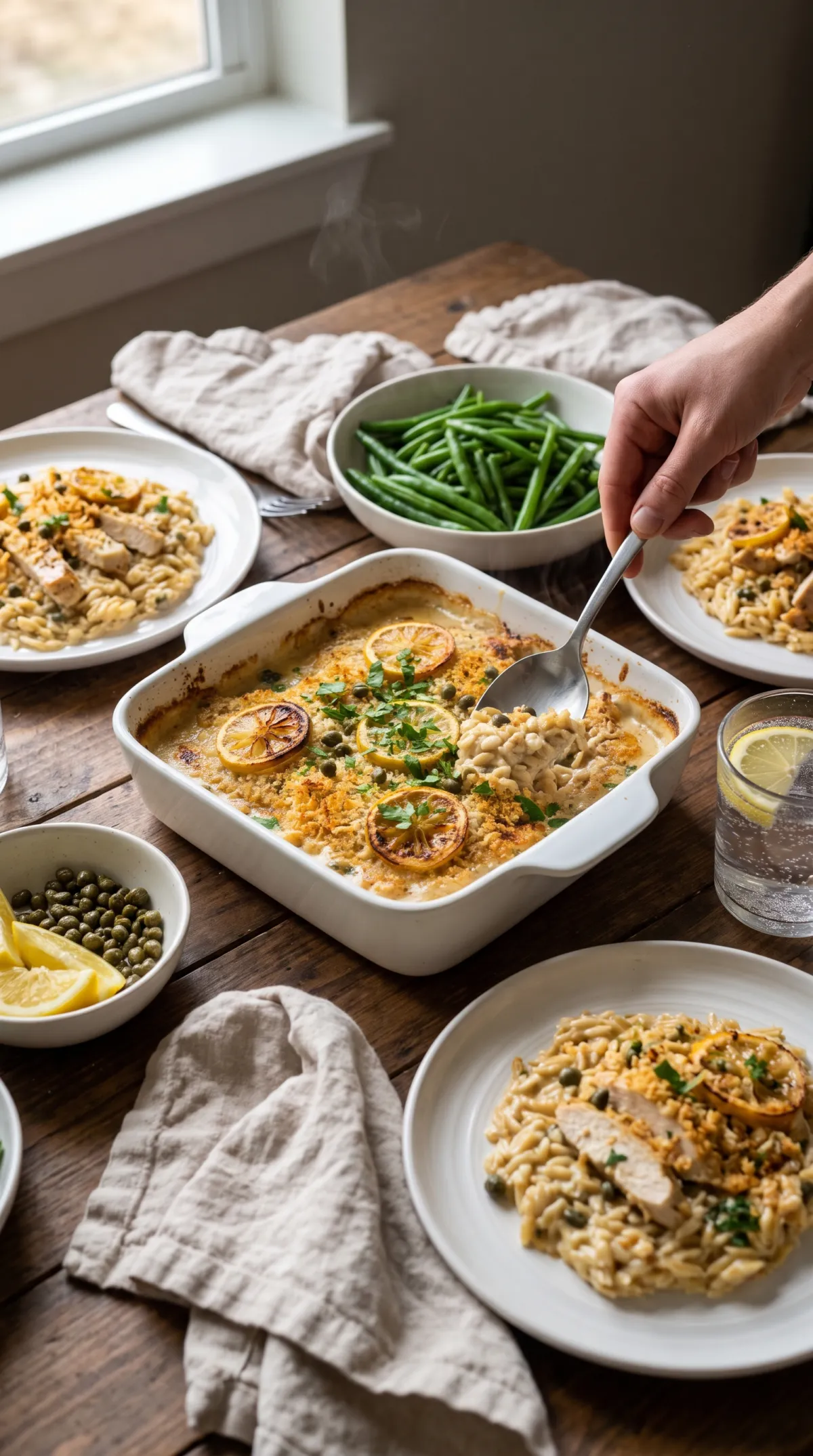
The casserole already has starch and sauce on the plate, so pair it with something green. Steamed green beans and roasted asparagus both work, and the asparagus roasts in 12 to 15 minutes at the same 375°F (190°C), so it can share the oven once the foil comes off. A salad of arugula tossed with olive oil and a little lemon juice also keeps the plate from feeling heavy.
For something to mop up the sauce, a slice of homemade butter bread does the job. If you want dessert, the velvet lemon dream picks up the lemon from dinner and needs no oven, which is handy while the casserole is baking.
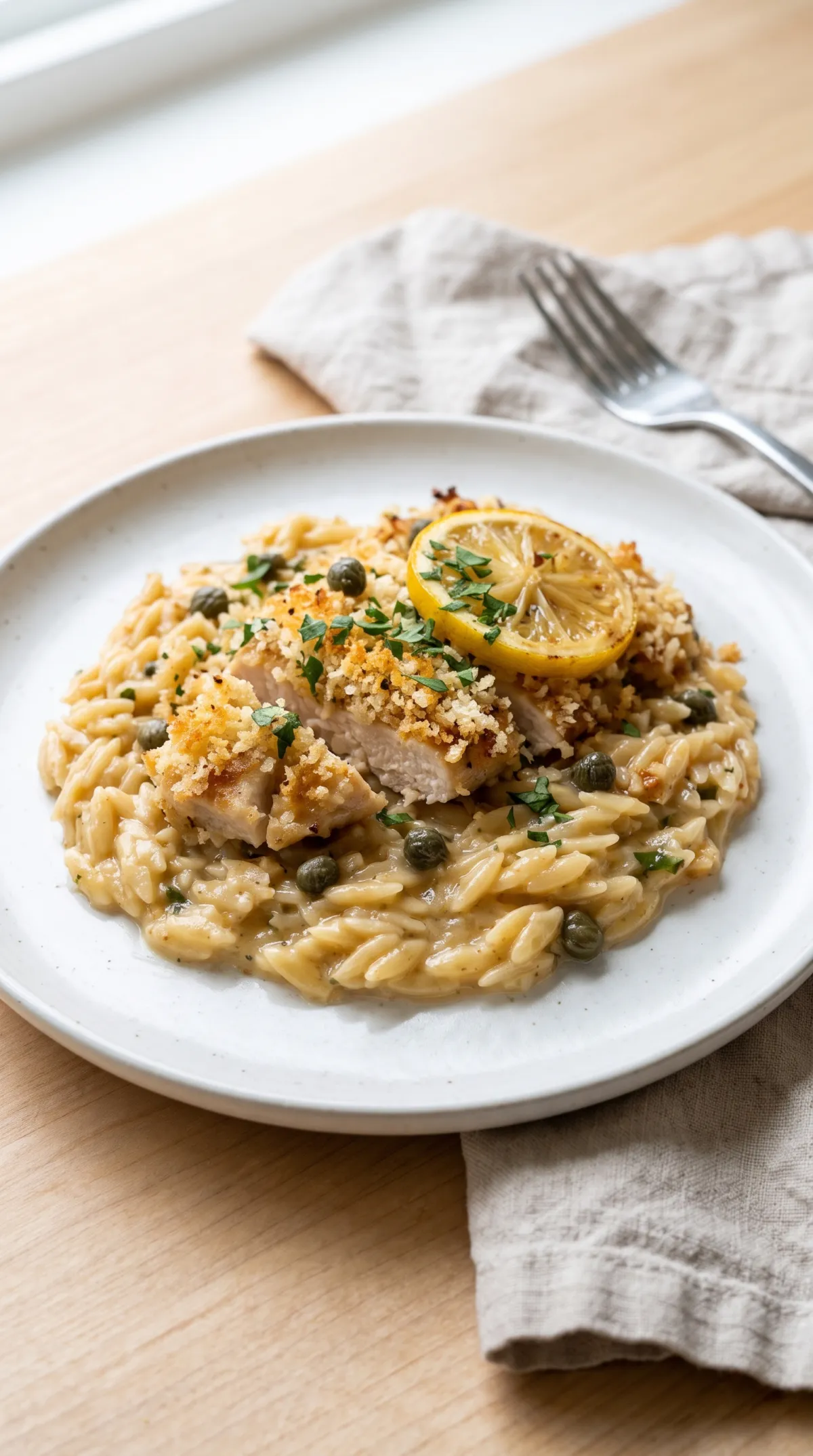
Let the dish stand for 5 minutes before serving so the sauce doesn’t run across the plate. Cut it into squares with a spatula that reaches the bottom, so each portion gets orzo and chicken together. Set the parsley and the remaining lemon slices on top, and put a few wedges on the table for anyone who wants more brightness.
FAQ
Do I have to cook the orzo first?
No. The orzo goes into the dish dry and cooks in the sauce under the foil, which is why the liquid is measured as it is. Boiling it first would leave too much sauce and overcooked grains by the end. Stir it so every grain sits under the liquid before you cover the dish.
Can I use frozen chicken breasts?
Thaw them completely in the refrigerator first, then pat them dry before slicing. Frozen chicken releases extra water and cooks unevenly in this time frame, so the center can stay under 165°F (74°C) while the orzo is already done. A thermometer reading in the thickest piece is the only reliable check.
Is this a chicken and stuffing casserole?
No. The starch is orzo and the crunch comes from panko. If you’re after a stuffing-style bake, crushed stuffing mix can replace the panko, as the variations describe, but the orzo still makes up the base. A true stuffing casserole is built on bread and is a different dish.
Can I bake it in a different size dish?
A 9-inch (23 cm) square or 11×7-inch (28×18 cm) dish gives the right depth for four servings. For eight servings, double everything, use a 9×13-inch dish and add 5 to 10 minutes covered. An 8-inch square is too small, because the orzo swells and the sauce can bubble over.
Can I make it in a slow cooker?
Not as written, because orzo turns gummy after hours in liquid. As a workaround, cook the sauce and chicken on low for 3 to 4 hours until the chicken reaches 165°F (74°C), then stir in the orzo and cook on high until tender. You lose the browned panko top.
Can I leave out the capers?
Yes. They supply the briny, salty note that stands in for the classic piccata flavor, so without them the dish tastes more like creamy lemon chicken. About 2 tablespoons of chopped green olives give a similar brine, or simply leave them out and taste for seasoning at the end.
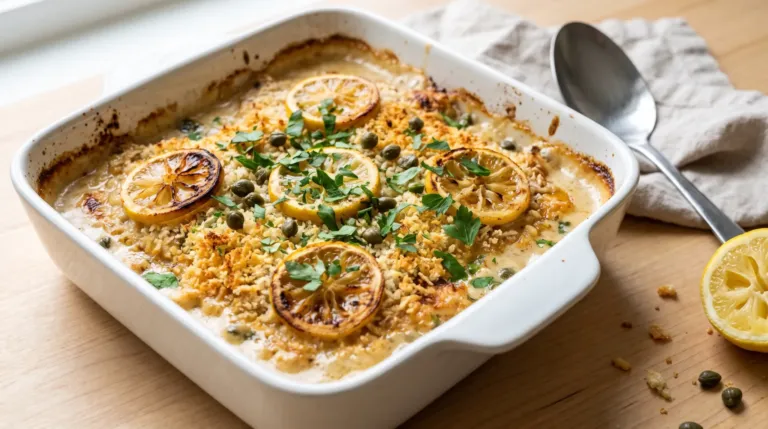
Dump-and-Bake Chicken Piccata Casserole with Lemon Orzo
- Prep 10 min
- Cook 45 min
- Total 55 min
Cook mode: your screen stays on and the current step is shown larger.
Ingredients
Steps
- Step 1 of 8
Heat the oven to 375°F (190°C) with a rack in the middle.
- Step 2 of 8
Whisk the cream of chicken soup, broth, lemon juice and drained capers in a bowl for about 1 minute, until no lumps of soup remain.
- Step 3 of 8
Spread the dry orzo in a 9-inch (23 cm) square baking dish. Pour the sauce over it and stir gently, then press any grains poking above the liquid back under it.
- Step 4 of 8
Slice each chicken breast horizontally into 2 or 3 cutlets about 1/2 inch (1.3 cm) thick and pat them dry. Arrange them in a single layer on the orzo, then season with the garlic powder, salt and pepper.
- Step 5 of 8
Sprinkle the Parmesan and panko over the chicken, dot with the cubed butter and lay half of the lemon slices on top. Cover the dish tightly with foil.
- Step 6 of 8
Bake covered for 30 minutes, until the liquid bubbles at the edges and the orzo has swelled.
- Step 7 of 8
Remove the foil and bake for 12 to 15 minutes more, until the panko is golden brown, the sauce is bubbling and a thermometer in the thickest cutlet reads 165°F (74°C).
- Step 8 of 8
Let the dish stand for 5 minutes so the sauce tightens. Garnish with the parsley and the remaining lemon slices.
Nutrition
- Calories
- 540 kcal
- Protein
- 47 g
- Fat
- 18 g
- Carbohydrates
- 45 g
- Sugar
- 3 g
- Fiber
- 2 g
- Salt
- 3.1 g
Approximate values per serving.
How did it turn out?
Related searches
- this dump-and-bake chicken piccata casserole
- Chicken orzo casserole
- Cheesy chicken orzo casserole
- Simple chicken orzo casserole
- Dump and bake chicken orzo casserole
- Easy dump and bake chicken dinner
- Chicken piccata make ahead recipe
- Dolly’s chicken and stuffing casserole recipe easy
- Dump-and bake lemon chicken
- chicken piccata orzo casserole
- lemon chicken orzo bake
- chicken and orzo casserole
- caper lemon chicken casserole
- one dish chicken dinner
- chicken piccata casserole
- chicken piccata casserole recipe
- food and wine chicken piccata pasta
- chicken pasta piccata recipe
- nyt chicken piccata pasta
- chicken picatta casserole
- creamy chicken piccata recipes
- food and wine chicken piccata pasta recipe
- pasta piccata recipe
- piccata pasta recipe
- chicken picata pasta
- recipe for chicken piccata with capers and pasta
- chicken picatta with pasta
- chicken piccata and linguine
- chicken piccata angel hair pasta
- chicken piccata noodles
- chicken piccata pasta near me
- chicken piccata pasta nyt
- chicken piccata pasta salad
- chicken piccata pasta sauce
- chicken piccata rice
- chicken piccatta pasta
- creamy piccata sauce recipe
- recipe chicken piccata pasta
- recipe for chicken piccata pasta
- best creamy chicken piccata recipe
- calories in chicken piccata no pasta
- chicken piccata creamy
- chicken piccata lasagna