
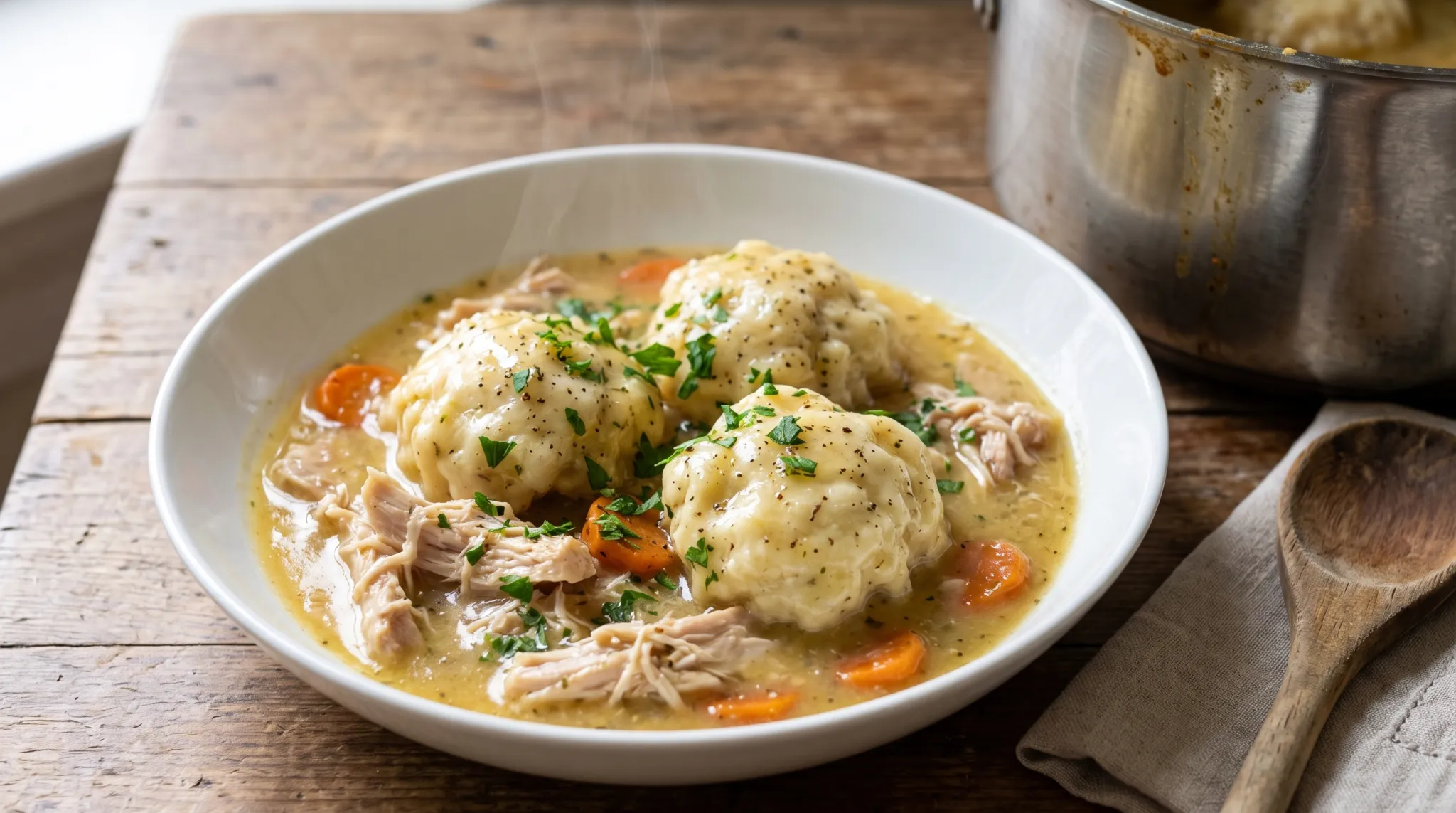
Bone-in chicken pieces are what this old-fashioned chicken and dumplings is built on, so buy seven pounds of breasts and thighs with the skin and bones left on. Look for firm, pale pink meat with no strong smell, and ask the butcher to split the biggest breasts if they won’t sit comfortably in your pot. Everything simmers together with stock, onions, and celery, and the dumplings steam right on top.
Plan on one hour from start to finish, with 15 minutes of prep and 45 on the stove. The recipe makes 20 servings, which suits a large family table or a gathering far better than a quiet weeknight. It’s an easy dish with only two moments that need your attention: the steaming and the gravy, and both are covered below. Use the biggest pot you own, because seven pounds of chicken takes up more room than you’d think.
The Ten Minutes Under the Lid
Everything in this recipe hinges on the moment the dumplings go in. By then the chicken should be tender and the stock at a gentle simmer, with small bubbles breaking around the edges and a thin curl of steam rising. A hard rolling boil tears the dough apart, and a pot that is barely warm leaves the middles gummy. Drop the dough in six large spoonfuls, spaced apart, so each mound rests on the chicken rather than sinking into the liquid. It will look shaggy and sticky, speckled with butter and parsley. That is how it should look, so resist the urge to smooth it.
Put the lid on and leave it alone. You’ll hear a quiet, steady bubbling and see the lid fog over. Every peek lets steam escape, and steam is what cooks the tops. After 10 minutes the dumplings should have puffed up noticeably, look matte and dry on top instead of wet and shiny, and spring back when you press one lightly. A skewer pushed into the center should come out clean.
If the tops still look wet or the dumplings feel heavy, the pot has probably been simmering too weakly. Raise the heat slightly until the bubbling picks up again, replace the lid and give them a few more minutes before you move them.
Chicken Pieces, Stock and Swaps
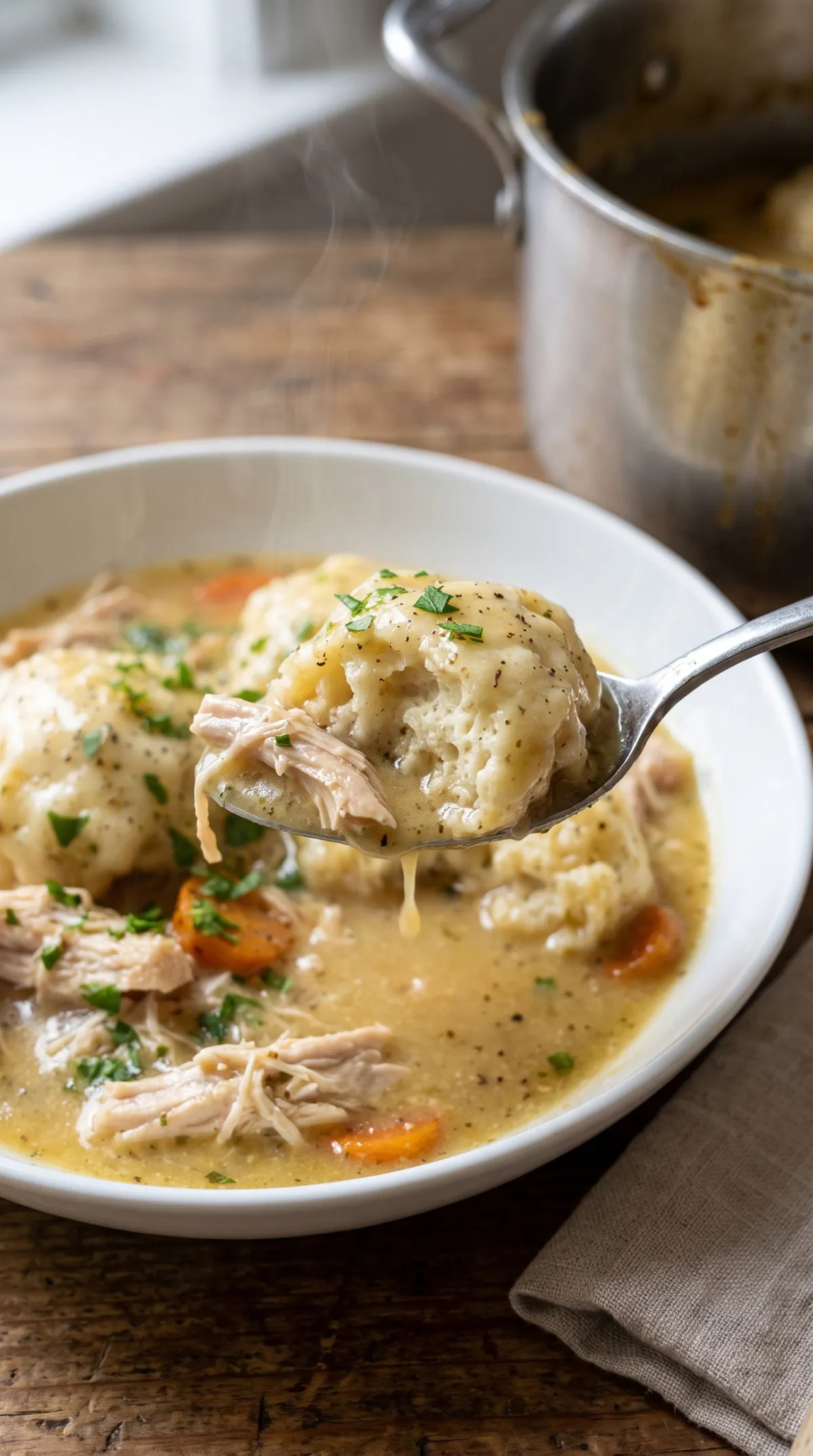
Breasts and thighs are the easiest pieces to handle, since the meat is thick enough to shred cleanly once it’s tender. Keep the skin on while it simmers, because it adds flavor to the stock, and pull it off with the bones if you don’t like its soft texture. Chicken and dumplings turn up in many kitchen traditions, and this one uses dumplings dropped from a spoon onto the simmering pot.
Store-bought or homemade stock both work. Taste a spoonful before you commit to the full amount of salt, because stocks vary widely in saltiness and a low-sodium one gives you more control.
| Ingredient | Swap | What changes |
|---|---|---|
| Breasts and thighs | Drumsticks or a mix of pieces | Darker, richer stock, check each piece for 165°F |
| Chicken stock | Homemade stock | Fuller flavor, salt level is yours to set |
| Milk | Unsweetened soy or oat milk | Dairy free, slightly less rich dough |
| Cold butter | Cold plant-based butter | Dairy free, check the label |
| All-purpose flour | Gluten-free all-purpose blend | Denser dumplings, so expect a different texture |
The dish contains egg, milk, butter, and wheat. Prepared stock can also hide allergens, so read its label before you start.
Why the Lid Stays On
Baking powder dumplings puff in two stages. The powder starts releasing gas as soon as it meets the wet ingredients and again when it gets hot, and the dough has to set while it’s still inflated. Trapped steam does that. Under a closed lid, the tops cook in steam and the bottoms in the heat of the chicken and stock, so the dumpling rises instead of sinking and going heavy. Lifting the lid cools the pot and lets the steam out just as the structure is forming.
The butter works the same way. Grating it cold gives you small flecks that stay solid while you stir. In the heat, they melt and leave tiny pockets and a tender crumb, with no pastry cutter needed. Stir the dough only until it comes together, since overmixing builds gluten and makes the dumplings tough.
The gravy relies on starch. Flour whisked with water spreads into a smooth slurry, and when you stir it into hot stock and bring it to a boil, the starch granules swell and thicken the liquid. It needs that full boil to reach its thickness, and constant stirring to stay free of clumps. Pressing the strained vegetables squeezes more of their flavor into the pot before the gravy goes on.
Thin Gravy and Dense Dumplings
- The gravy is thin. It hasn’t boiled long enough. Keep stirring at a boil until it coats the back of a wooden spoon, then run a finger through the coating to check that the line holds.
- The gravy is lumpy. The flour and water weren’t smooth when they went into the stock. Pour the gravy through a sieve, and next time whisk until no streaks remain.
- The dumplings are dense. The dough was probably overmixed, or the lid came off during steaming. Stir only until combined and keep the lid on for the full 10 minutes.
- The dumplings are raw in the middle. The spoonfuls may be too big, or the pot wasn’t simmering. Bring the liquid back to a steady simmer, cover, and steam a few minutes longer.
- The chicken is tough or not done. It needs more time, and the clock alone can’t tell you. Poultry is only safe at 165°F (74°C) in the thickest part, so the method asks for a thermometer check alongside the usual 15 to 20 minutes.
- The broth tastes flat. Season the finished gravy to taste before the chicken goes back in, then adjust with a pinch of salt or pepper.
- The pot is too full. Seven pounds of chicken needs a very large pot with room for the dumplings on top. If they touch the lid, move to a bigger pot.
Leftovers, Freezing and Reheating
Chop the onions and celery a day ahead and keep them covered in the refrigerator. Leave the dumpling dough until the chicken is nearly ready, because baking powder starts working once it’s wet and the dough loses lift as it sits.
Refrigerate leftovers within 2 hours of cooking, in shallow containers so the stew cools quickly. They keep for 3 to 4 days, the window federal food safety guidance gives for cooked leftovers, which is shorter than the 5 days some recipes quote.
To freeze, ladle cooled leftovers into freezer-safe containers or zip-top freezer bags, leaving about an inch of space at the top because the liquid expands. Squeeze out the extra air and freeze for up to 3 months. Thaw overnight in the refrigerator rather than on the counter.
Reheat on the stove over medium-low heat or in the microwave until it steams and reaches 165°F (74°C) all the way through. The gravy tightens as it cools, so stir in a splash of water or stock to loosen it. Expect the dumplings to be softer than on day one, because they soak up liquid as they sit.
Turkey Carcass and Seared Chicken
These are ideas home cooks use, not part of the recipe card, so expect to adjust the timing as you go.
- Leftover turkey. Simmer a leftover turkey carcass in the stock, pick the meat from the bones, checking for small bones as you go, and use it in place of the chicken. Stir in frozen peas and carrots with the meat so they heat through before serving.
- Seared chicken. Brown the pieces in the pot before adding the stock and vegetables, or bake them instead of simmering, for deeper color. Add rosemary and thyme if you like for a more herbal pot, and check that every piece reaches 165°F (74°C), since the timing changes.
- Homemade stock. Build the stock while the chicken cooks by simmering it with onion, carrots, celery seed, garlic powder, salt, and pepper, then strain it for the gravy as usual. This also means you control the salt from the start.
- Slow cooker. The site’s crock pot chicken and dumplings takes a hands-off route, and the old-fashioned master recipe is worth comparing with this one.
What to Serve Alongside
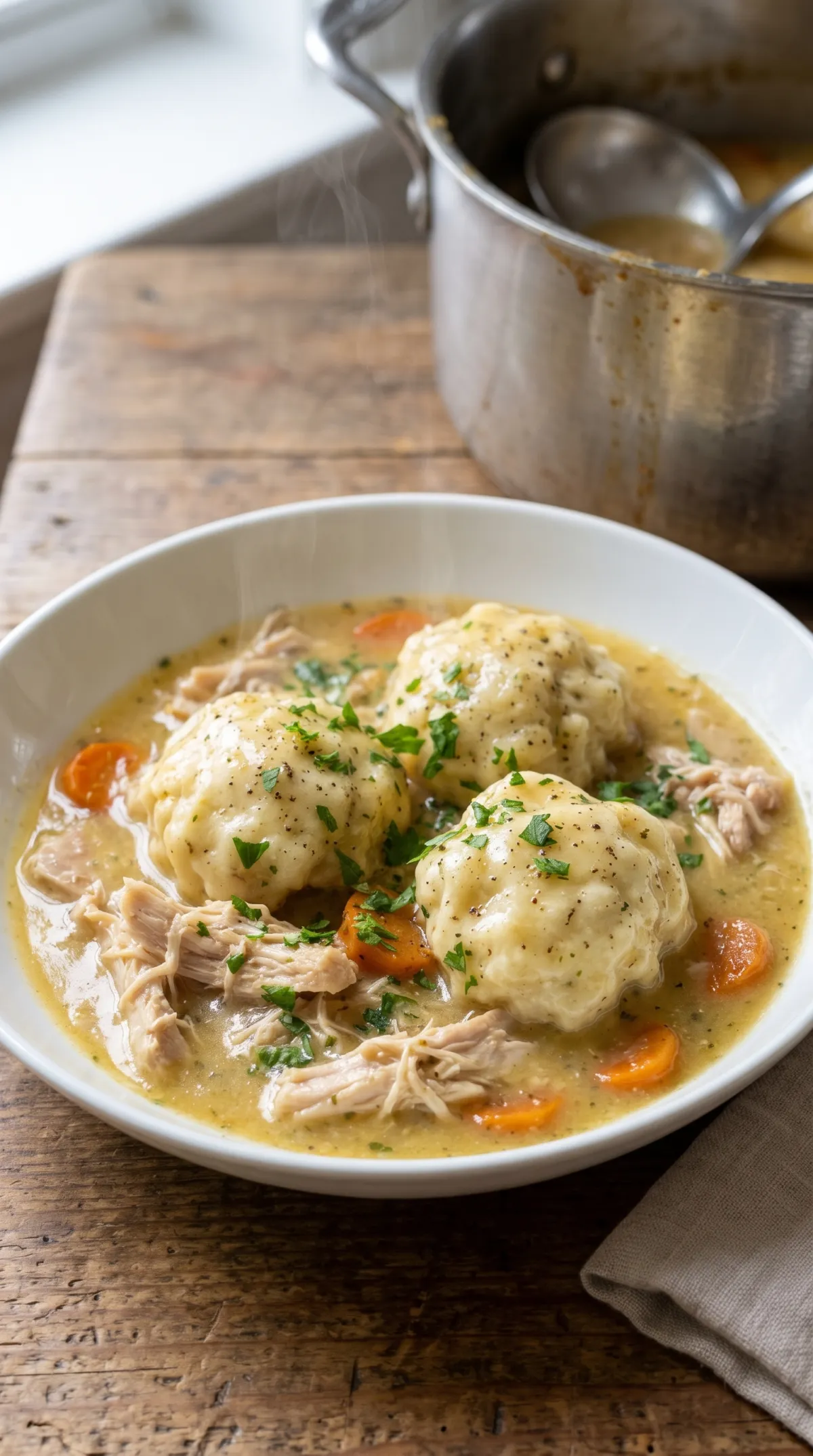
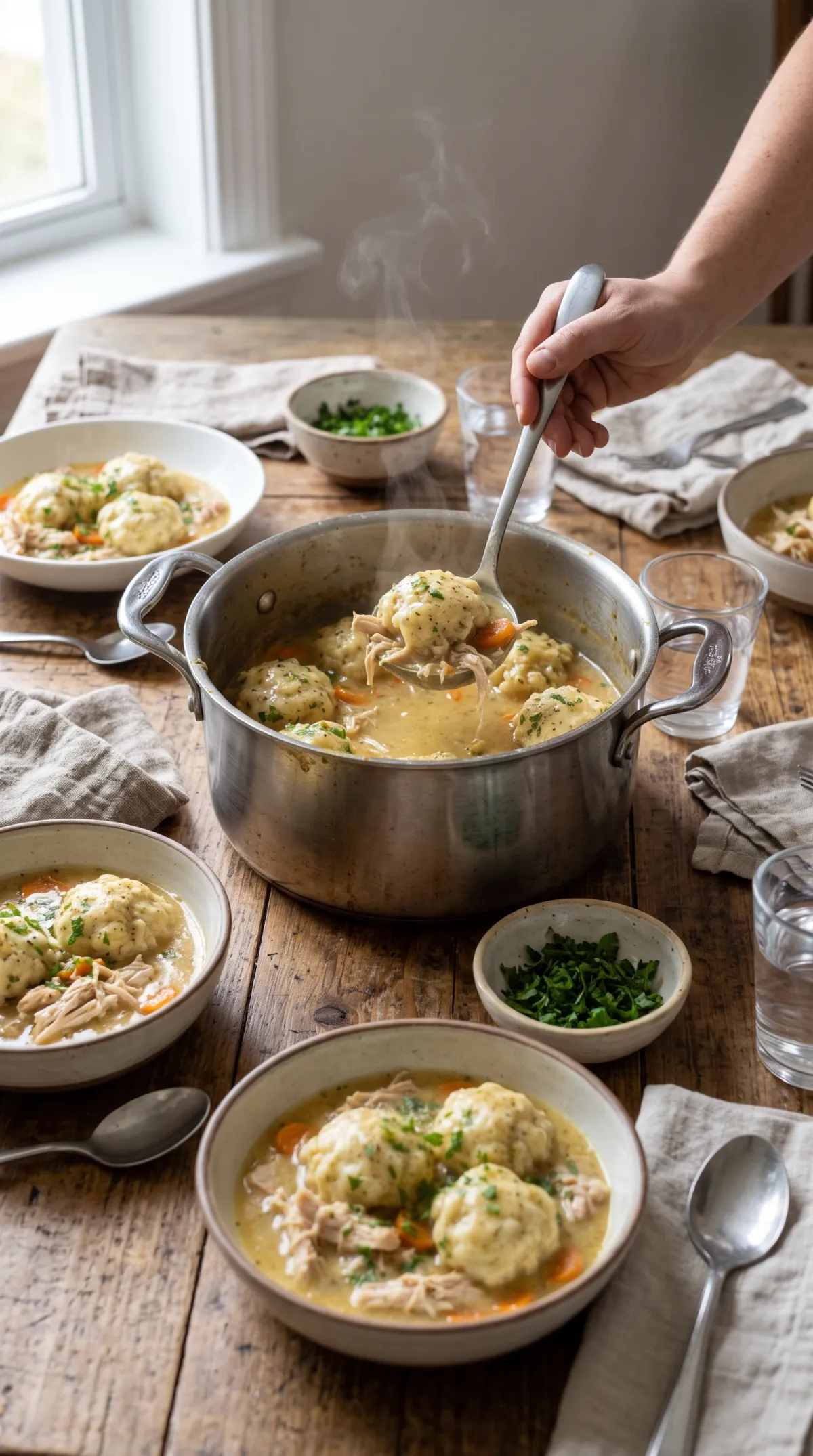
Ladle the chicken, gravy, and dumplings into wide bowls so each person gets a bit of everything, then scatter the remaining tablespoon of parsley over the top for color and a fresh edge. Warm the bowls first if you can, because this stew cools fast and the gravy tightens in the bowl. A big spoon works better than a fork here, since there is plenty of gravy to catch.
The dish is rich, so something crisp and plain balances it. A simple green salad with a sharp dressing works, and so does crispy fried cornbread, which is sturdy enough to mop up the gravy. Water or unsweetened iced tea keeps the meal from feeling heavy.
Because the pot holds 20 servings, a gathering is the natural fit. If it will sit out, keep it covered over low heat so it stays above 140°F (60°C), and hand out the dumplings last so they don’t sit in liquid and go soft. Stir the gravy now and then, since a skin can form on top, and loosen it with a splash of hot water if it thickens while it waits.
FAQ
Can I use boneless chicken?
You can, but the recipe is written for bone-in pieces, which give the stock more body. Boneless breasts and thighs cook faster, so check them with a thermometer for 165°F (74°C) early and stop simmering once they reach it. Skip discarding the bones, and expect a lighter stock and gravy.
What size pot do I need?
Choose a pot of at least 8 quarts, such as a large stockpot or a wide Dutch oven. It has to hold seven pounds of chicken and four cups of stock with six dumplings sitting on top without touching the lid. A wider pot gives the dumplings room to puff and steam properly.
Will six dumplings feed 20 people?
Not one each. Six large dumplings stretch to 20 bowls only if you tear or cut each into pieces, which works because the chicken and gravy make up most of every serving. For a full dumpling per person, mix more dough and steam a second batch over a second pot of simmering stock.
How big is a large spoonful of dough?
Think of a heaping serving spoon, roughly 1/4 cup of dough or about the size of an egg. Six of them use up the whole bowl of dough. Space the mounds apart on top of the chicken so they can puff without fusing into one big slab.
Do I need to remove the chicken skin?
The recipe doesn’t require it. The skin stays on during simmering and adds flavor to the stock, but it turns soft rather than crisp. Pull it off with the bones before shredding if you prefer, or shred a little of it in for extra richness. Either way, discard the bones completely.
Can I make half a batch?
Yes. Halve every ingredient, use a smaller pot, and drop three spoonfuls of dough instead of six, keeping the 10 minutes of steaming. Beat the egg first and use half. Check the chicken for 165°F (74°C) before the dough goes in, and reheat leftovers to the same temperature.
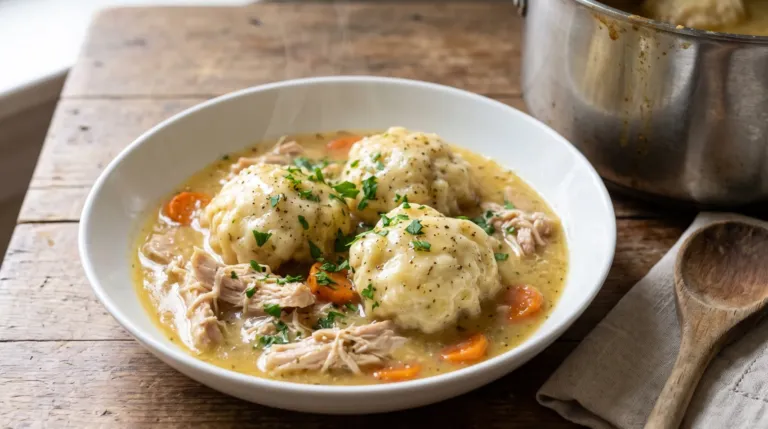
Old-Fashioned Chicken and Dumplings in a Thick Stock Gravy
- Prep 15 min
- Cook 45 min
- Total 1 hr
Cook mode: your screen stays on and the current step is shown larger.
Ingredients
Steps
- Step 1 of 10
Place the chicken pieces in a large pot (at least 8 quarts) with the stock, onions, celery and 2 teaspoons of salt, then bring to a boil over medium-low heat.
- Step 2 of 10
Simmer, partially covered, until the chicken is tender and a thermometer reads 165°F (74°C) in the thickest part, about 15 to 20 minutes.
- Step 3 of 10
Meanwhile, beat the egg and milk together in a large mixing bowl, then mix in 1 cup of the flour, the baking powder and 1 teaspoon of salt until a sticky dough forms.
- Step 4 of 10
Grate the cold butter into the dough using a box grater, then stir in 1 tablespoon of the parsley.
- Step 5 of 10
Dollop 6 large spoonfuls of dough onto the simmering chicken, cover the pot and steam until the dumplings are puffed and fluffy, 10 minutes.
- Step 6 of 10
Move the dumplings and chicken to a large dish, shred the chicken, discard the bones, then cover and keep warm.
- Step 7 of 10
Strain the stock left in the pot, pressing on the vegetables to release more flavor, and return the stock to the pot.
- Step 8 of 10
Whisk the water with the remaining 1/2 cup of flour until smooth, stir it into the strained stock and season with the pepper.
- Step 9 of 10
Bring to a boil over medium heat, stirring constantly, until the gravy coats the back of a wooden spoon.
- Step 10 of 10
Stir in the shredded chicken, top with the dumplings and serve with the remaining tablespoon of parsley.
Nutrition
- Calories
- 400 kcal
- Protein
- 31 g
- Fat
- 26 g
- Carbohydrates
- 9 g
- Sugar
- 2 g
- Fiber
- 1 g
- Salt
- 1.7 g
Approximate values per serving.
How did it turn out?
Related searches