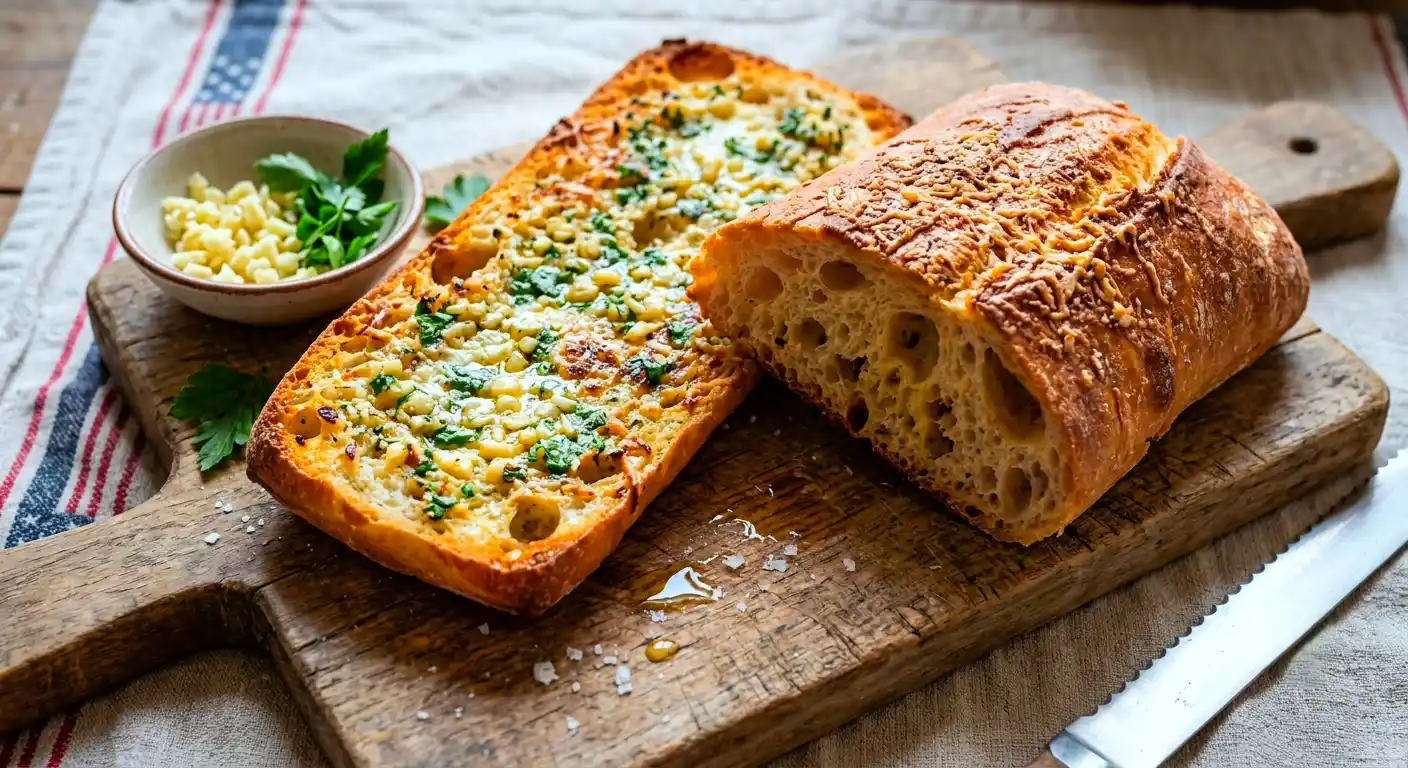
Ciabatta Garlic Bread Recipe (Crispy & Chewy)
Indulge in the ultimate ciabatta garlic bread experience, where a perfectly golden-brown, crispy crust gives way to a soft, airy, and chewy interior. Each bite is infused with a rich, aromatic garlic-herb butter and topped with savory, slightly crisped Parmesan cheese, making it an irresistible accompaniment to any meal or a delightful appetizer on its own. This recipe captures the essence of authentic Italian flavors with a satisfying American twist.
restaurant_menu Ingredients
Main Ingredients
hardware Essential Tools
Large baking sheet
Parchment paper or aluminum foil
Small mixing bowl
Fork or small spatula
Sharp serrated knife
Measuring cups and spoons
format_list_numbered Preparation
Preparation
Preheat your oven to 400°F (200°C) and line a large baking sheet with parchment paper or aluminum foil.
Slice the ciabatta loaf lengthwise, creating two equal halves.
In a small mixing bowl, combine the softened unsalted butter, minced fresh garlic, finely chopped fresh parsley, and kosher salt; mix thoroughly until well combined.
Generously spread the garlic butter mixture evenly over the cut sides of both ciabatta halves.
Drizzle each buttered half with 1 tablespoon of olive oil.
Sprinkle 1/2 cup of grated Parmesan cheese evenly over the buttered and oiled ciabatta halves.
Place the ciabatta halves, cut-side up, on your prepared baking sheet and cover loosely with aluminum foil.
Bake for 10-12 minutes, allowing the butter to melt and infuse into the bread.
Remove the foil and return the ciabatta garlic bread to the oven.
Continue baking for another 5-8 minutes, or until the edges are golden brown and the cheese is bubbly and slightly crispy.
Remove the ciabatta garlic bread from the oven and let it cool on the baking sheet for 5 minutes.
Slice the halves into individual serving pieces, about 1-inch thick, and serve warm.
favorite You Might Also Love
Browse All arrow_forwardFour-Ingredient Slow Cooker Beef and Potato Bake Mastery
Dolly Parton Casserole Recipe (Easy 5 Ingredient Meal)
Crockpot Kitchen Sink Casserole Recipe (Hearty & Versatile)
Crispy Black Bean Tacos Recipe (Flavorful & Easy Weeknight)
One-Pan Chicken and Rice Recipe (Comforting Baked)
Chicken Tamale Pie Recipe (Hearty Southwestern Comfort)
Try These Variations
Spicy Garlic Bread
For those who love a kick, add 1/2 teaspoon of red pepper flakes or 1-2 finely minced small jalapeños to your garlic butter mixture. The heat will infuse into the butter, creating a vibrant, spicy ciabatta garlic bread that pairs wonderfully with robust pasta dishes or chili. Adjust the amount of pepper to your preferred spice level, always tasting as you go.
Herbed Garlic Bread
Experiment with different fresh herbs. In addition to parsley, try adding 1 tablespoon of finely chopped fresh basil, oregano, or chives to the garlic butter. A mix of Mediterranean herbs can transform the flavor profile, making it a perfect accompaniment for various cuisines. Ensure your herbs are fresh for the best aromatic impact.
Cheesy Garlic Bread Deluxe
Elevate the cheese factor by adding a layer of shredded mozzarella or a blend of Italian cheeses (like provolone and fontina) over the Parmesan during the last 5 minutes of baking. This will create a gooey, stretchy, and incredibly satisfying cheesy ciabatta garlic bread, perfect for dipping into marinara sauce. The melted cheese adds another dimension of richness.
Roasted Garlic Ciabatta Bread
Instead of fresh minced garlic, roast a head of garlic until soft and caramelized. Squeeze out the roasted cloves and mash them into your softened butter. This technique yields a sweeter, milder, and more complex garlic flavor, perfect for a more sophisticated ciabatta garlic bread. It’s a bit more effort, but the depth of flavor is truly remarkable.
Chef's Pro Tips
Soften Your Butter Properly
For the most luxurious garlic butter, ensure your unsalted butter is genuinely at room temperature – soft enough to easily mix but not melted. This allows for a smooth, homogenous blend with the garlic and herbs, ensuring even flavor distribution across your ciabatta garlic bread. Cold butter will clump, and melted butter will separate, both leading to an uneven application.
Don’t Burn the Garlic
Garlic burns quickly, especially when exposed to high heat. The initial covered bake is crucial for infusing the flavor without scorching the minced garlic. Keep an eye on it during the uncovered bake; if you see the garlic browning too rapidly, you can lightly tent it with foil again while the bread continues to crisp. This prevents bitter flavors in your ciabatta garlic bread.
Use a Serrated Knife for Ciabatta
Ciabatta’s crusty exterior and airy interior make it challenging to slice cleanly with a regular chef’s knife. A sharp serrated knife will cut through the crust without crushing the delicate crumb, ensuring a beautiful presentation and even slices for your ciabatta garlic bread. This also prevents tearing the bread, which can lead to dry spots.
Resting is Key
After baking, resist the urge to slice and serve immediately. Allowing the ciabatta garlic bread to rest for 5 minutes on the baking sheet allows the internal steam to redistribute, resulting in a more stable structure and a better texture. It also firms up the crust slightly, making it easier to slice without crumbling, and helps retain its delicious crispness.
Storage Guide
Room Temperature
Allow the ciabatta garlic bread to cool completely. Wrap any leftover slices tightly in aluminum foil or place them in an airtight container. Store at room temperature for up to 2 days. This method helps maintain a decent texture, though the bread will lose some of its initial crispness. For best results, re-crisp in the oven before serving.
Refrigerator
Cooled ciabatta garlic bread can be wrapped tightly in plastic wrap, then an additional layer of aluminum foil, and stored in the refrigerator for up to 3-4 days. While refrigeration can slightly alter the texture of bread, this method extends its shelf life. Reheat in a preheated oven at 350°F (175°C) for 10-15 minutes, or until warmed through and re-crisped.
Freezer
For longer storage, wrap individual slices or halves of cooled ciabatta garlic bread tightly in plastic wrap, then place them in a freezer-safe bag or airtight container. It can be frozen for up to 1 month. To reheat from frozen, place the foil-wrapped bread directly into a preheated oven at 350°F (175°C) for 15-20 minutes, or until thoroughly heated and crispy. Avoid thawing at room temperature as this can lead to sogginess.
Avoid These Mistakes
✕ Using cold butter
Trying to mix cold, hard butter with garlic and herbs results in an uneven distribution of flavor and a lumpy spread. The butter needs to be softened to room temperature so it can be easily creamed with the other ingredients, ensuring every bite of your ciabatta garlic bread is equally delicious and infused with garlic flavor. This also helps the butter melt and absorb properly into the bread without just sitting on top.
✕ Over-mincing garlic in a food processor
While convenient, over-processing garlic can turn it into a paste, which can burn easily and create an overly aggressive, raw garlic flavor. Hand-mincing or using a garlic press yields a better texture and prevents the garlic from becoming too pungent or bitter when baked into the ciabatta garlic bread. You want distinct, small pieces, not a purée.
✕ Not covering during initial bake
Skipping the initial covered bake step often leads to dry, hard ciabatta garlic bread or burnt garlic. The foil traps steam, allowing the butter to melt slowly and deeply penetrate the bread’s crumb, keeping it moist and tender. It also protects the garlic from direct high heat, preventing it from scorching before the bread is fully infused and warmed through.
✕ Overcrowding the baking sheet
Placing too many pieces of ciabatta garlic bread too close together on the baking sheet can inhibit proper air circulation. This results in uneven baking and a less crispy crust because the steam released from the bread gets trapped, making it soggy instead of crunchy. Always ensure there’s enough space around each piece for even heat distribution and optimal crisping.
nutrition Nutrition Facts
Per serving: 1 slice
Nutritional values are approximate and may vary based on specific ingredient brands and preparation methods.
flag Conclusion
There you have it, home cooks: the secrets to creating an absolutely irresistible ciabatta garlic bread that will rival anything you’ve tasted in a restaurant. This recipe, with its blend of crispy crust, chewy interior, and aromatic garlic butter, is more than just a side dish; it’s a testament to the simple joys of homemade food. I encourage you to try this recipe and experience the satisfaction of pulling a golden, fragrant loaf of ciabatta garlic bread from your own oven. Share it with your loved ones, and watch their faces light up. Here at HomeRecipes.com, our goal is to empower you to create these memorable culinary moments, one delicious dish at a time. Happy cooking!
sell Related Topics
Frequently Asked Questions
Can I make ciabatta garlic bread ahead of time? expand_more
Absolutely! You can prepare the garlic butter mixture up to 3 days in advance and store it in an airtight container in the refrigerator. When you're ready to bake, simply let the butter soften slightly, spread it on your ciabatta, and proceed with the recipe. You can also assemble the entire ciabatta garlic bread (butter, oil, and cheese) and wrap it tightly in plastic wrap, then foil, and refrigerate for up to 24 hours before baking. This makes it a fantastic option for entertaining, allowing you to do most of the prep work in advance and simply pop it in the oven when your guests arrive, ensuring fresh, hot ciabatta garlic bread every time.
What if I don't have fresh parsley? expand_more
While fresh parsley offers the best flavor and color for ciabatta garlic bread, you can certainly use dried parsley in a pinch. Remember that dried herbs are more concentrated in flavor, so use about half the amount. For this recipe, if using dried parsley, I would recommend about 1 1/2 to 2 tablespoons. Alternatively, you could experiment with other fresh herbs like chives or even a touch of fresh oregano for a slightly different, but equally delicious, flavor profile. The key is to add that fresh, aromatic element to balance the richness of the butter and garlic.
My ciabatta garlic bread came out soggy, what did I do wrong? expand_more
Soggy ciabatta garlic bread often happens when too much butter is applied without proper baking, or if the bread isn't baked long enough uncovered. The initial covered bake is important for infusing flavor, but the final uncovered bake is crucial for drying out the bread slightly and crisping the crust. Ensure your oven is fully preheated to the correct temperature. Also, make sure your ciabatta loaf has a good, open crumb structure that can absorb the butter without collapsing. If your bread still seems too moist, try baking it uncovered for a few extra minutes, watching carefully to prevent burning. Sometimes, the quality of the ciabatta itself can also be a factor; a denser loaf might struggle with too much butter.
Can I use different types of cheese? expand_more
Yes, absolutely! While Parmesan is a classic choice for ciabatta garlic bread, feel free to experiment with other hard, grating cheeses. Pecorino Romano offers a sharper, saltier flavor, which can be delightful. A blend of mozzarella and provolone could give you a gooier, meltier texture, though it might not crisp up quite as much as Parmesan. Even a touch of sharp cheddar could work for a different twist. Just remember to use a cheese that complements the garlic and herbs, and grate it fresh for the best flavor and melting quality. Avoid pre-shredded cheeses that often contain anti-caking agents, as these can affect melting and texture.
How can I make this ciabatta garlic bread spicier? expand_more
To add a kick to your ciabatta garlic bread, there are a few excellent options. You can finely mince a small fresh jalapeño or serrano pepper and mix it into the garlic butter for a fresh, spicy heat. Alternatively, for a more subtle warmth, add 1/2 to 1 teaspoon of red pepper flakes to your garlic butter mixture. If you prefer a smoky heat, a pinch of smoked paprika or a dash of your favorite hot sauce (mixed into the butter or drizzled on top before the final bake) would also work wonderfully. Start with a small amount and adjust to your preferred spice level, as you can always add more but can't take it away!
Community Kitchen