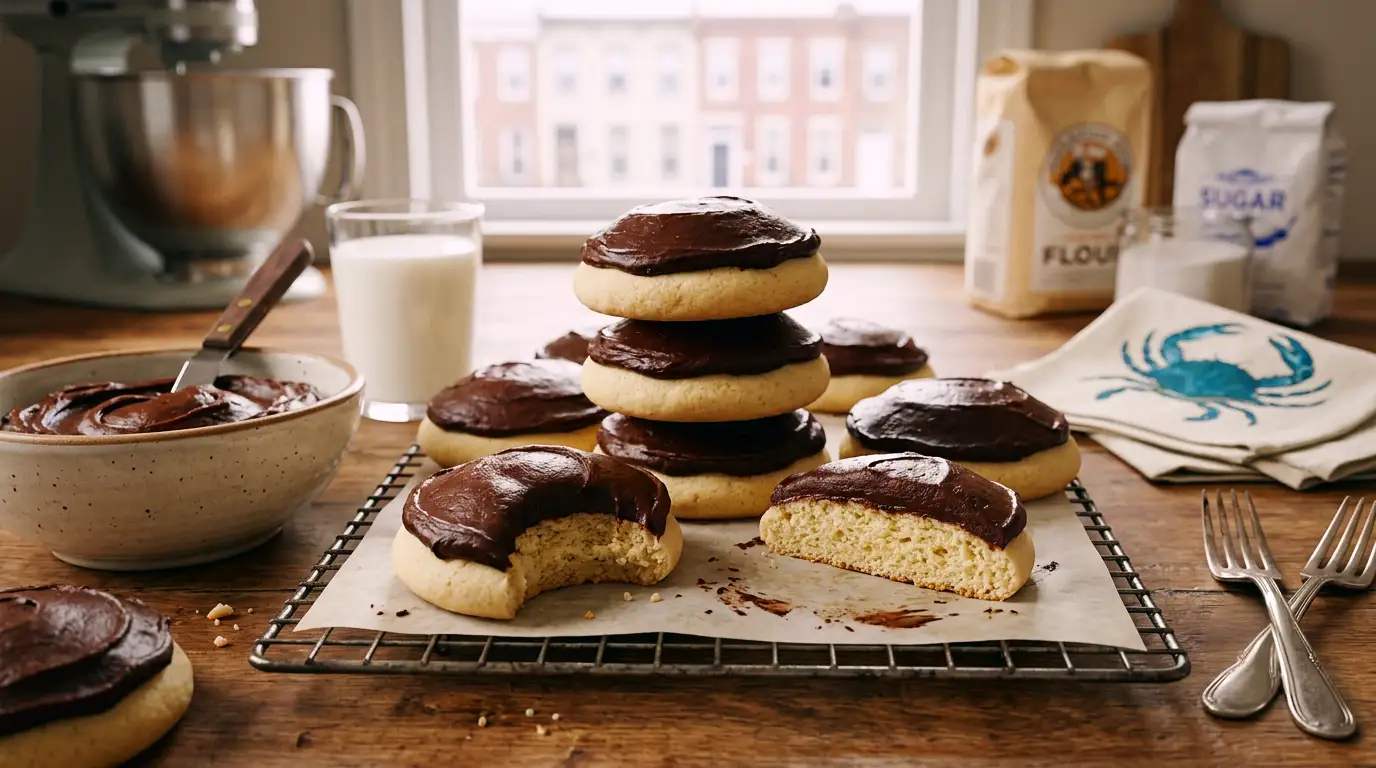
Berger Cookies Recipe (Classic Baltimore)
Indulge in the iconic Baltimore Berger Cookies, a regional American classic featuring a tender, cake-like vanilla cookie base crowned with an unbelievably rich, dark, fudge-like chocolate frosting. This recipe delivers the perfect balance of sweet and intensely chocolatey, a nostalgic treat that has captivated palates for generations and is now perfected for your home kitchen. Prepare to fall in love with this East Coast gem!
restaurant_menu Ingredients
For the Cookies
For the Fudge Frosting
hardware Essential Tools
Large mixing bowls
Electric stand mixer or hand mixer
Medium bowl
Whisk
Plastic wrap
Baking sheets
Parchment paper
Measuring spoons and cups
Flat-bottomed mug or measuring cup
Wire cooling rack
Heatproof bowl (for double boiler)
Small saucepan
Offset spatula or butter knife
format_list_numbered Preparation
Prepare the Cookie Dough
In a large mixing bowl, cream together the softened unsalted butter, 1/2 teaspoon of salt, 1 1/2 teaspoons of vanilla extract, and granulated sugar using an electric mixer until light and fluffy, about 2-3 minutes.
Beat in the large egg until fully incorporated and the mixture is smooth.
In a separate medium bowl, whisk together the all-purpose flour and baking powder.
Gradually add the dry flour mixture to the wet ingredients, mixing on low speed until mostly combined.
Slowly pour in the 1/3 cup of whole milk, continuing to mix on low speed just until the dough comes together; be careful not to overmix.
Cover the dough with plastic wrap and refrigerate for at least 30 minutes to firm up.
Bake the Cookies
Preheat your oven to 400°F (200°C) and line a baking sheet with parchment paper.
Drop rounded tablespoons of the chilled dough onto the prepared baking sheet, spacing them about 2 inches apart.
Gently flatten each cookie mound with the bottom of a flat-bottomed mug or measuring cup to about 1 1/2 inches in diameter.
Bake for 9-11 minutes, or until the bottoms are lightly golden and the tops remain pale and soft.
Transfer the baked cookies to a wire rack and allow them to cool completely before frosting.
Make and Apply the Fudge Frosting
Place the semisweet chocolate chips in a heatproof bowl set over a small saucepan of simmering water (double boiler), stirring until completely melted and smooth.
Remove the melted chocolate from heat and transfer it to a clean mixing bowl.
Add the sifted Dutch cocoa powder, 1 teaspoon of vanilla extract, 1/3 cup of heavy cream, and 1/8 teaspoon of salt to the melted chocolate, beating with an electric mixer until combined.
Gradually add the confectioners' sugar, beating until the frosting is thick, smooth, and fudgy; adjust consistency with more sifted confectioners' sugar for thickness or heavy cream (1 teaspoon at a time) for thinning.
Once cookies are completely cool, generously frost the flat side of each cookie using an offset spatula or butter knife.
Allow the frosted cookies to set at room temperature for about 30 minutes, or refrigerate for 10-15 minutes, before serving or storing.
favorite You Might Also Love
Browse All arrow_forwardCinnamon Roll Frosting Recipe (Creamy & Classic)
The Easiest 4 Ingredient Lemon Cream Cheese Dump Cake Recipe

Fail-Proof Egg Custard Recipe (Silky Baked)
Artisan No-Churn Strawberry Ice Cream: Make Your Own At Home
Apple Earthquake Cake Recipe (Easy Fall Dessert)

Slow Cooker Blueberry Butter Recipe (Sweet & Spiced)
Try These Variations
Mint Chocolate Berger Cookies
Introduce a refreshing twist by adding 1/2 teaspoon of pure peppermint extract to the chocolate fudge frosting along with the vanilla. This creates a delightful cool kick that pairs beautifully with the rich chocolate. For an extra touch, you could sprinkle a few crushed peppermints or mini chocolate chips on top of the still-wet frosting. This variation is particularly popular during the winter holidays and offers a festive twist on the classic.
Espresso Berger Cookies
For coffee lovers, dissolve 1 teaspoon of instant espresso powder into the 1/3 cup of heavy cream before adding it to the frosting mixture. This will deepen the chocolate flavor and add a subtle, sophisticated coffee note that perfectly complements the richness of the fudge. The espresso intensifies the chocolate without making the frosting taste overtly like coffee, creating a more complex flavor profile.
White Chocolate Drizzle
After the dark fudge frosting has set, melt 1/4 cup of good quality white chocolate chips and drizzle it artfully over the frosted side of the cookies. This adds another layer of visual appeal and a contrasting sweetness that balances the intensity of the dark chocolate. Ensure the white chocolate is melted smoothly and drizzled thinly for the best aesthetic and flavor.
Nutty Berger Cookies
While not traditional, for those who enjoy nuts, you can gently fold 1/4 cup of finely chopped toasted pecans or walnuts into the cookie dough before chilling. This adds a lovely crunch and nutty flavor that complements the soft cookie and rich chocolate. Be sure the nuts are finely chopped so they don’t interfere with the cookie’s signature soft texture.
Chef's Pro Tips
Room Temperature Ingredients are Key
Just like with many baking recipes, having your butter, egg, and milk at room temperature ensures a smooth, emulsified dough that incorporates air effectively. Cold ingredients can lead to a lumpy batter and a denser cookie. I always pull these items out of the fridge at least an hour before I plan to start baking, a simple step that yields professional results.
Sift Your Dry Ingredients and Confectioners’ Sugar
Sifting the flour and baking powder together before adding them to the wet ingredients ensures there are no lumps and that the leavening is evenly distributed, leading to a consistent texture. Similarly, sifting confectioners’ sugar for the frosting prevents any gritty lumps, guaranteeing a perfectly smooth, velvety fudge. This small step significantly impacts the final product’s texture.
Use a Double Boiler for Melted Chocolate
When melting chocolate chips for the frosting, a double boiler (a heatproof bowl set over simmering water) is far superior to a microwave. It provides gentle, even heat, preventing the chocolate from scorching or seizing, which can happen easily in a microwave. This method ensures a perfectly smooth, glossy melted chocolate base for your rich fudge frosting.
Don’t Be Afraid to Adjust Frosting Consistency
The perfect fudgy frosting consistency can vary based on humidity and even the brand of ingredients. Don’t rigidly stick to the exact measurements for confectioners’ sugar or cream in the frosting; instead, use them as a guide. Always have a little extra of both on hand to adjust until you reach that ideal thick yet spreadable texture. Trust your instincts and the feel of the frosting against your spatula.
Cool Completely Before Frosting
This tip might seem obvious, but it’s critical. If the cookies are even slightly warm, the rich chocolate frosting will melt and slide right off, creating a messy situation and compromising the iconic look of the Berger Cookie. Patience is a virtue in baking, and allowing for full cooling time ensures a clean, set frosting layer.
Storage Guide
Room Temperature
Once the frosting has fully set, store your Berger Cookies in an airtight container at room temperature for up to 3 days. To prevent the frosting from sticking, you can place a sheet of parchment paper between layers of cookies. Ensure the container is truly airtight to maintain their softness and prevent them from drying out, which can happen quickly with cake-like cookies.
Refrigerator
For extended freshness, Berger Cookies can be stored in an airtight container in the refrigerator for up to 1 week. Again, use parchment paper between layers to protect the frosting. When ready to serve, allow the cookies to come back to room temperature for about 15-20 minutes. This ensures the cookie base softens and the fudge frosting regains its creamy, luxurious texture, as cold frosting can be quite firm.
Freezer
These cookies freeze exceptionally well! To freeze, arrange the fully frosted cookies in a single layer on a baking sheet and freeze until solid, about 1-2 hours. Once firm, transfer them to a freezer-safe airtight container or heavy-duty freezer bags, placing parchment paper between layers. They will keep beautifully for up to 2 months. To enjoy, simply thaw them at room temperature for several hours. This method is perfect for making them ahead for special occasions or for having a delicious treat on hand.
Avoid These Mistakes
✕ Overmixing the Cookie Dough
A common mistake is to overmix the dough after adding the flour. This develops the gluten in the flour, resulting in a tough, chewy cookie rather than the desired soft, cake-like texture. Mix only until the ingredients are just combined and no dry streaks of flour remain, then stop immediately. A gentle hand is crucial here to ensure a tender crumb.
✕ Not Chilling the Dough Enough
Skipping or shortening the chilling time for the cookie dough is a frequent error. Chilling allows the butter to firm up, preventing the cookies from spreading excessively in the oven, and gives the flour time to hydrate, which contributes to a better texture. Insufficiently chilled dough will lead to flat, thin cookies that lack the characteristic soft chew of a Berger cookie. Aim for at least 30 minutes, or even an hour.
✕ Overbaking the Cookies
Berger Cookies are meant to have pale tops and lightly golden bottoms. Overbaking, even by a minute or two, can lead to dry, hard cookies with browned tops, losing their signature soft texture and appearance. Watch them carefully and remove them from the oven as soon as the edges are just set and the bottoms are golden, leaving the tops still soft and light. Every oven is different, so know yours!
✕ Using the Wrong Type of Cocoa Powder
Substituting natural unsweetened cocoa powder for Dutch-processed cocoa powder in the frosting is a mistake that will alter the flavor and color significantly. Natural cocoa is more acidic and lighter in color, yielding a sharper taste and a less intense black-brown frosting. Dutch cocoa is alkaline, creating that deep, dark color and mellow, rich chocolate flavor that is essential for authentic Berger Cookies.
✕ Improper Frosting Consistency
The frosting for Berger Cookies should be thick and fudgy, not thin and runny like a glaze. A frosting that is too loose will drip off the cookies and fail to provide that generous, iconic layer. Conversely, if it’s too stiff, it will be difficult to spread smoothly. Always adjust the consistency with small additions of confectioners’ sugar or heavy cream until it’s spreadable yet substantial, clinging perfectly to the cookie.
nutrition Nutrition Facts
Per serving: 1 cookie
Nutritional information is an estimate and may vary based on specific ingredient brands and preparation methods.
sell Related Topics
Frequently Asked Questions
Why are my Berger Cookies spreading too much in the oven? expand_more
There are a few common culprits when Berger Cookies spread more than desired. First, ensure your butter isn't too soft; if it's overly warm, it will melt too quickly in the oven. Second, chilling the dough is absolutely critical. This firms up the butter and allows the flour to fully hydrate, which creates a more stable dough structure. If you skip this step or don't chill long enough, the cookies will spread. Lastly, check your oven temperature. An oven that is not hot enough can cause cookies to spread before the structure has a chance to set. A good oven thermometer can help verify accuracy.
Can I use milk chocolate chips instead of semisweet for the frosting? expand_more
While you certainly can use milk chocolate chips, it will significantly alter the classic flavor profile of Berger Cookies. The traditional Berger cookie frosting is known for its deep, dark, intense chocolate flavor, which comes from the combination of semisweet chocolate and Dutch cocoa powder. Using milk chocolate will result in a much sweeter and milder frosting, losing that iconic rich, fudgy depth. If you prefer a less intense chocolate, a mix of half milk chocolate and half semisweet might be a good compromise, but for an authentic taste, stick to semisweet.
My frosting is too thin or too thick, how can I fix it? expand_more
The consistency of the frosting is key to a perfect Berger Cookie. If your frosting is too thin, gradually beat in more sifted confectioners' sugar, a tablespoon at a time, until it reaches a thick, spreadable, fudgy consistency. If it's too thick and difficult to spread, add heavy cream, one teaspoon at a time, beating well after each addition until it loosens up. Remember, it should be thick enough to hold its shape but smooth enough to glide onto the cookie with an offset spatula. Patience and small additions are your friends here.
What is Dutch cocoa powder and can I substitute it? expand_more
Dutch cocoa powder is cocoa that has been treated with an alkali to neutralize its acidity. This process results in a darker color, a smoother, less bitter flavor, and a less reactive powder. For the iconic dark color and rich, mellow chocolate flavor of Berger Cookies frosting, Dutch cocoa is highly recommended. While you can substitute with natural unsweetened cocoa powder, the frosting will be lighter in color, slightly more acidic (which might taste a bit sharper), and the overall flavor profile will be different from the classic. For best results, seek out Dutch-processed cocoa.
How far in advance can I make these cookies? expand_more
You can prepare the cookie dough for Berger Cookies up to 2-3 days in advance and store it, tightly wrapped, in the refrigerator. This can be a great time-saver for busy bakers. Once baked and frosted, the cookies are best enjoyed within 3-4 days when stored in an airtight container at room temperature. For longer storage, as mentioned, they freeze beautifully for up to 2 months. Preparing components ahead of time allows you to enjoy fresh-tasting cookies without all the work on one day, perfect for entertaining or holiday baking.
More Recipes You'll Love
Homemade Vanilla Bean Ice Cream Recipe (Creamy & Rich)
The Ultimate Butterfinger Puppy Chow: A Crunchy Masterpiece
French Silk Pie Recipe (Rich & Creamy)
Baked Strawberry Dessert Recipe (Easy 4-Ingredient)

Easy Homemade Cream Puffs Recipe
Community Kitchen