
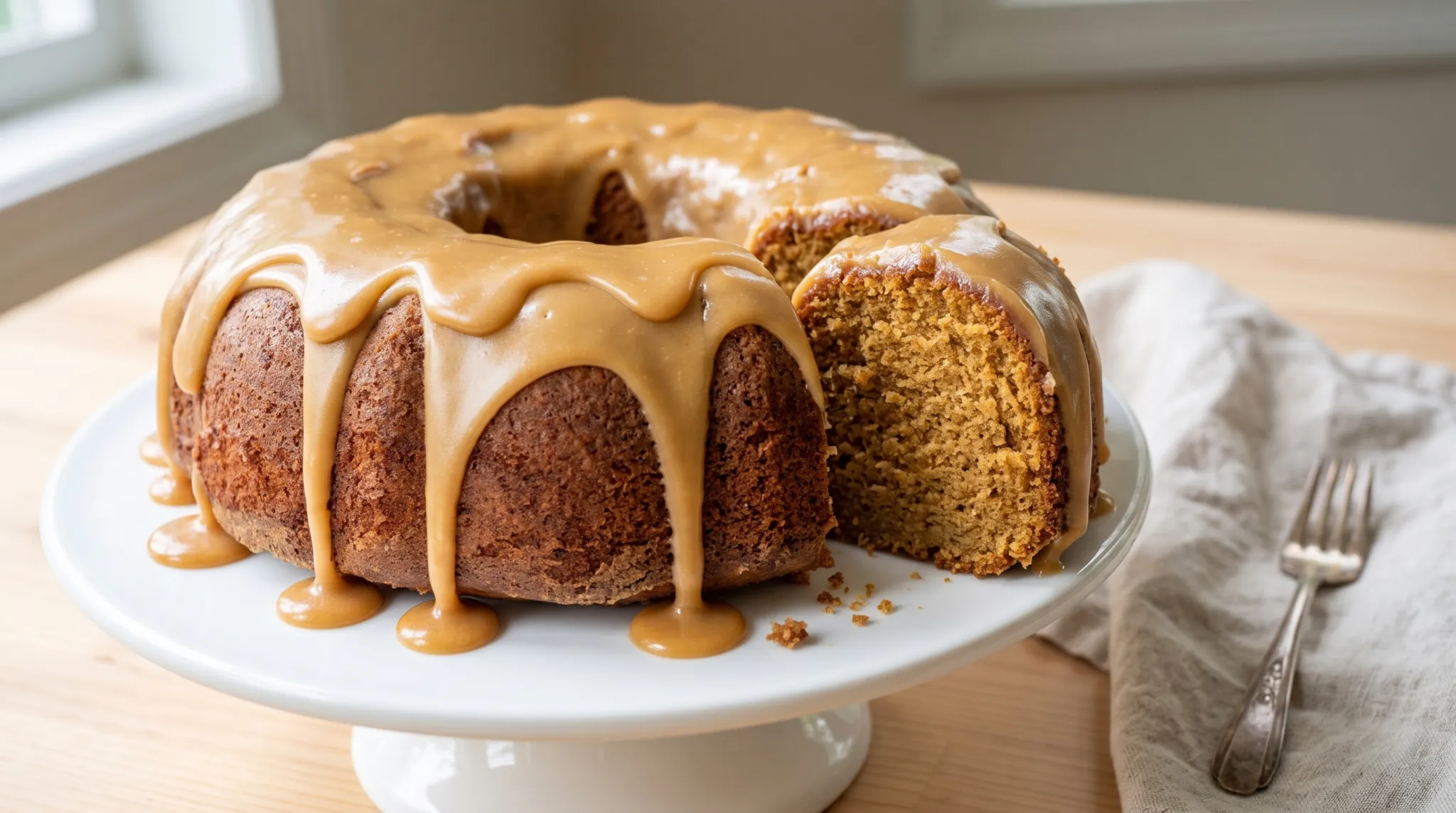
Plan on about 20 minutes of hands-on work, a 50-minute bake and a little over an hour of cooling and glazing for this brown sugar pound cake. You need a mixer, a 3-cup mini loaf pan and a small saucepan, and the method is plain creaming and folding, so it suits a beginner who is willing to be patient. It’s the classic bundt cut down to a quarter, which gives you 4 generous slices instead of a cake for twelve.
The crumb is fine and tender, with a deep molasses flavor from the brown sugar, and evaporated milk keeps it soft for days. The glaze is a quick butterscotch made with butter, brown sugar and powdered sugar (which is the same thing as confectioners sugar), and it sets into a thin, shiny shell over the warm cake. If you want the full bundt instead, the variations below give the quantities and the baking time.
Timing the Bake Around the Cooling
Take the butter, egg and evaporated milk out of the refrigerator about an hour before you start. The butter is ready when your finger leaves a clean dent without sliding through, at roughly 65°F (18°C). While the oven heats, grease the pan well and measure everything, glaze ingredients included, because the glaze goes on while the cake is still just warm.
Cream the butter and sugars for a full 2 to 3 minutes. They should turn from a gritty tan paste into a pale, fluffy cream that holds a soft peak on the beaters. Once the flour goes in, stop as soon as the last dry streak disappears. The batter is thick and a little sticky, and it shouldn’t be beaten smooth. Skip tasting it, since it contains raw egg and raw flour.
Leave the oven shut for the first 35 minutes. You’ll smell caramel first, then see a deep golden top with a crack running down the length, which is normal. If the top is already dark brown at 30 minutes, tent it loosely with foil. Push a toothpick deep into the center, and if it comes out wet, give the cake 5 more minutes and test again. Start the glaze while the cake cools.
How Long Should You Cream the Butter and Sugars?
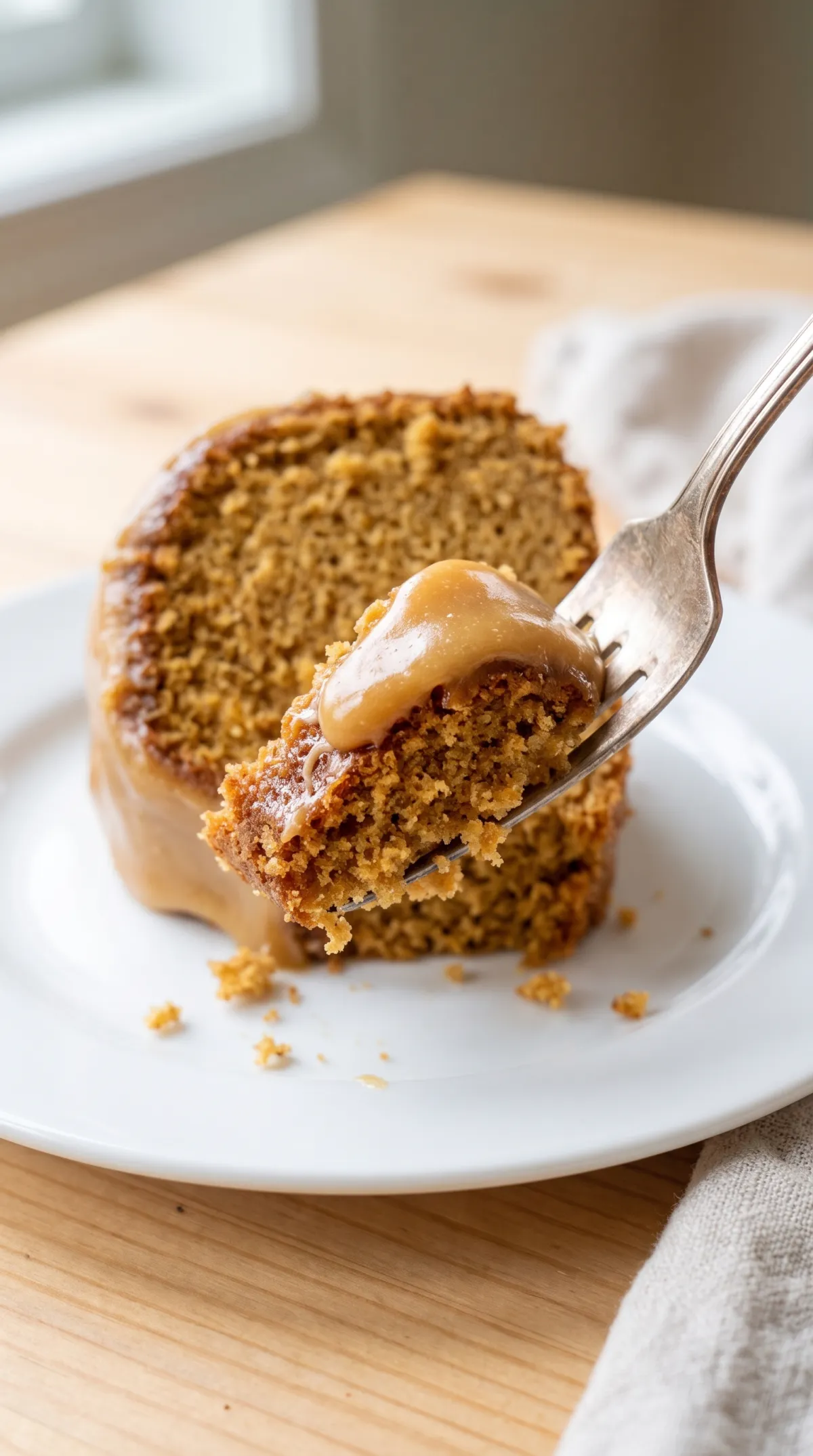
Two to three minutes of creaming feels long, but it’s where the texture of a pound cake is decided. There’s very little baking powder in this batter, so nearly all the rise comes from air beaten into the butter. Sugar crystals cut tiny pockets into the fat as you beat, and the heat of the oven then expands them. Brown sugar is damp and a little sticky, so it takes longer to cream than white sugar. That’s why the recipe pairs it with some granulated sugar, which gives the butter something sharper to aerate against and keeps the crumb fine.
Adding the egg and the yolk one at a time follows the same logic. Fat and water don’t mix easily, and a whole egg tipped in at once can break the emulsion and leave the batter looking curdled. A little separation is fine, because the flour pulls it back together.
Evaporated milk is milk with roughly 60 percent of its water cooked off, so it brings richness and concentrated milk sugars that brown a bit more in the oven. Add it in two portions between three of flour. That keeps the batter smooth and stops the gluten from overdeveloping, and overmixing is what turns this cake tough.
What Makes Pound Cake Dry, Heavy or Stuck?
- The cake stuck in the pan. The grease missed a corner, or the cake sat in the pan so long that the sugar glued itself to the metal. Use soft butter or a baking spray that contains flour, and turn the cake out at 10 minutes. If a piece tears off, press it back and cover the spot with glaze.
- The crumb is dry. Scooped flour is the usual cause, because it packs in extra. Spoon it into the cup and level it, or weigh 90 grams, and start testing 5 minutes early.
- The middle sank. The oven door was opened too soon, the oven runs cool or the batter was overmixed. An oven thermometer shows whether 325°F is really 325°F.
- The cake is heavy. The butter was underbeaten or the egg was cold. If you forgot to take the egg out, set it in a bowl of warm tap water for 5 minutes.
- The top darkens before the center sets. Brown sugar caramelizes faster than white. Tent with foil, and check earlier in a dark metal pan.
- The glaze is grainy. The sugar hadn’t dissolved. Let the butter, brown sugar and milk boil for a full minute before the powdered sugar goes in.
- The glaze slid off or sat in a thick layer. A hot cake thins it and a cold cake leaves it heavy, so pour onto a cake that’s just warm to the touch. Add a tablespoon of powdered sugar to thicken it or a teaspoon of evaporated milk to loosen it.
Can You Bake It as a Bundt or Spice Cake?
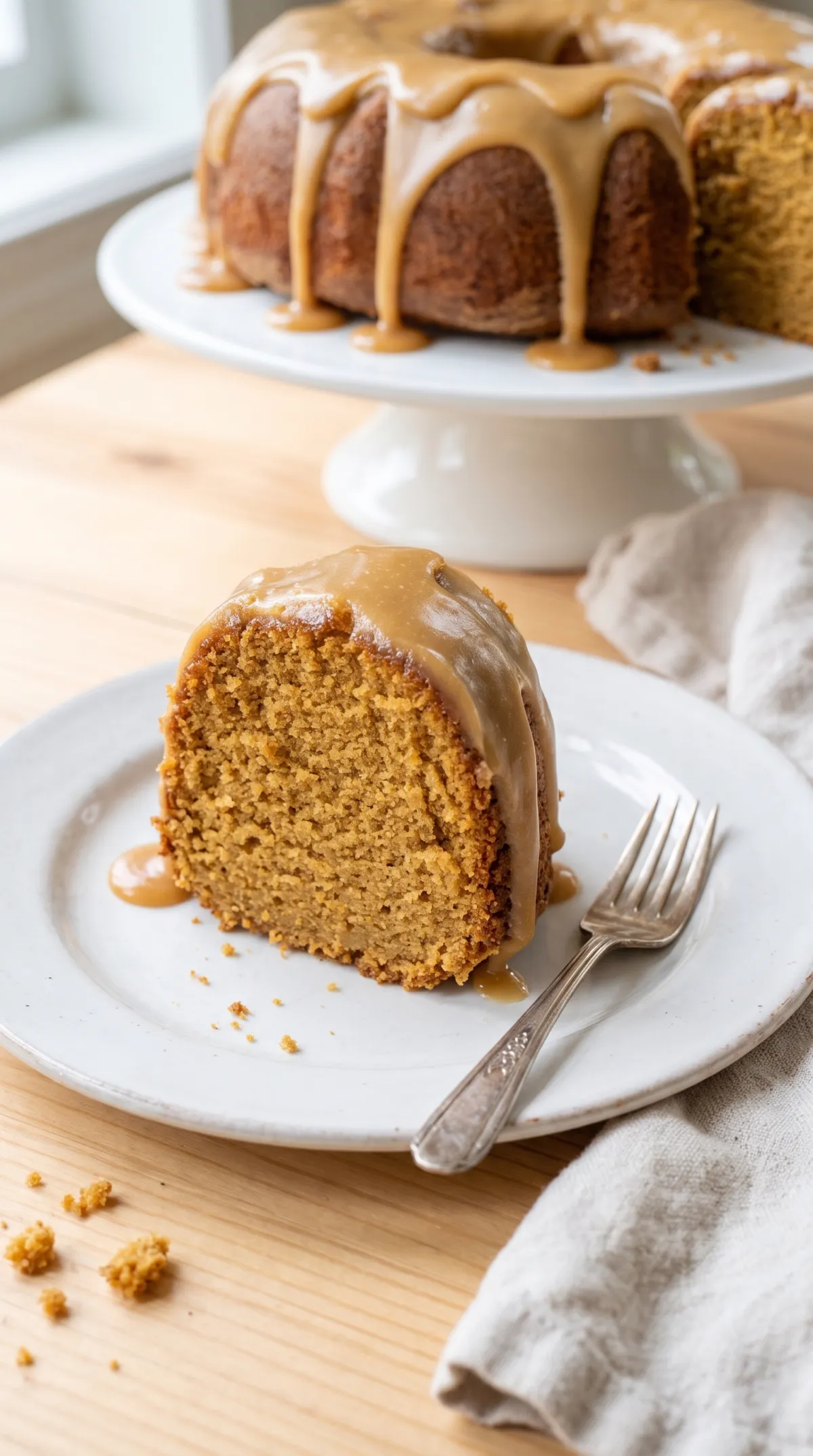
The base recipe is a plain brown sugar cake, and it takes changes well.
- Full bundt. Multiply every ingredient by 4 and use 5 whole large eggs in the cake. Bake in a well greased 12-cup bundt pan at 325°F (165°C) for 75 to 80 minutes, rest it 15 minutes before turning it out, and make the glaze with 2 to 3 cups of powdered sugar.
- Spice pound cake. Whisk 1/4 teaspoon of ground cinnamon and a pinch of nutmeg into the flour for this size. A little ground ginger works too, and the baking time stays the same.
- Brown butter version. Weigh 85 grams of butter, then cook it over medium heat until the foam settles and the milk solids turn amber and smell nutty, 5 to 7 minutes. Stir in 1 tablespoon of water to replace what cooked off, and chill the butter until it’s soft but not liquid, about 30 minutes, before creaming. For a brown butter glaze, brown only the glaze butter for 2 to 3 minutes before adding the sugar and milk.
- Salted finish. Sprinkle a few flakes of sea salt over the wet glaze for a salted caramel effect.
If you’re after another Southern butter cake, the heirloom sweet potato butter cake is worth a look.
Which Swaps Work for Evaporated Milk, Butter and Flour?
Use unsalted butter so you control the salt. If you only have salted, leave the 1/8 teaspoon of salt out of the cake. Powdered sugar and confectioners sugar are the same product, so use whichever your store sells.
| Ingredient | Swap | What changes |
|---|---|---|
| Evaporated milk | Whole milk, same amount | Slightly less rich, a touch paler |
| Evaporated milk | 3 tablespoons sour cream plus 1 tablespoon whole milk | Tangier, with a denser, moister crumb |
| Evaporated milk | Full fat canned coconut milk, same amount | Dairy free, with a faint coconut flavor |
| Unsalted butter | Plant based butter sticks | Dairy free, with less buttery flavor |
| All purpose flour | Cup for cup gluten free blend with xanthan gum | Slightly denser and more crumbly |
Don’t swap sweetened condensed milk for evaporated milk. It’s a different product and the cake would turn out far too sweet. Pound cake leans on eggs for structure, so there’s no reliable egg free swap. The cake contains eggs, milk and wheat, so check the labels on your vanilla and baking powder if you’re baking for someone with allergies.
Does It Keep, and Can You Freeze It?
Bake the cake a day ahead and glaze it on the day you serve it, since the flavor usually deepens overnight. Cool it completely, wrap it in plastic and keep it at room temperature for up to 2 days. After glazing, leave it uncovered for the first hour so the shell sets, then cover it with a cake dome.
Refrigerate leftovers in an airtight container for 3 to 4 days, particularly in a warm, humid kitchen, and let slices sit out for 20 to 30 minutes so the butter softens again. For longer storage, wrap the cooled, unglazed cake tightly in plastic and then foil and freeze it for up to 3 months. Thaw it overnight in the refrigerator and make the glaze fresh. Wrapped slices thaw in about an hour on the counter.
Leftover glaze keeps in the refrigerator for 3 to 4 days. Warm it gently and whisk in a teaspoon of evaporated milk until it pours again. Be realistic about the limits, though. This is a butter cake, and it won’t age and mellow for weeks the way a classic rich fruit cake does. If you’re packing it as a gift, tuck a few Southern tea cake cookies into the box.
FAQ
Should I use light or dark brown sugar?
Either works, and the choice comes down to flavor. Light brown sugar gives a mellow caramel taste and a golden crumb. Dark brown sugar carries more molasses, so the cake tastes deeper and the crumb is darker. Pack the sugar into the cup, or weigh it, so the amount stays consistent from one bake to the next.
Is this the same as a caramel pound cake?
Not quite. The brown sugar gives the crumb a caramel flavor, and the glaze is a butterscotch style topping made by boiling butter, brown sugar and evaporated milk for a minute. A caramel pound cake often adds a separately cooked caramel to the batter or glaze. For a deeper note here, use dark brown sugar and try the brown butter version.
Can I bake it in a regular 9 x 5 inch loaf pan?
Yes, but double every quantity first, because this quarter batch is too shallow for that pan. Use 2 large eggs plus 1 yolk, bake at 325°F (165°C) and start testing at 55 minutes, since a 9 x 5 loaf usually needs 55 to 65 minutes. Make a double batch of glaze as well.
What should I serve with it?
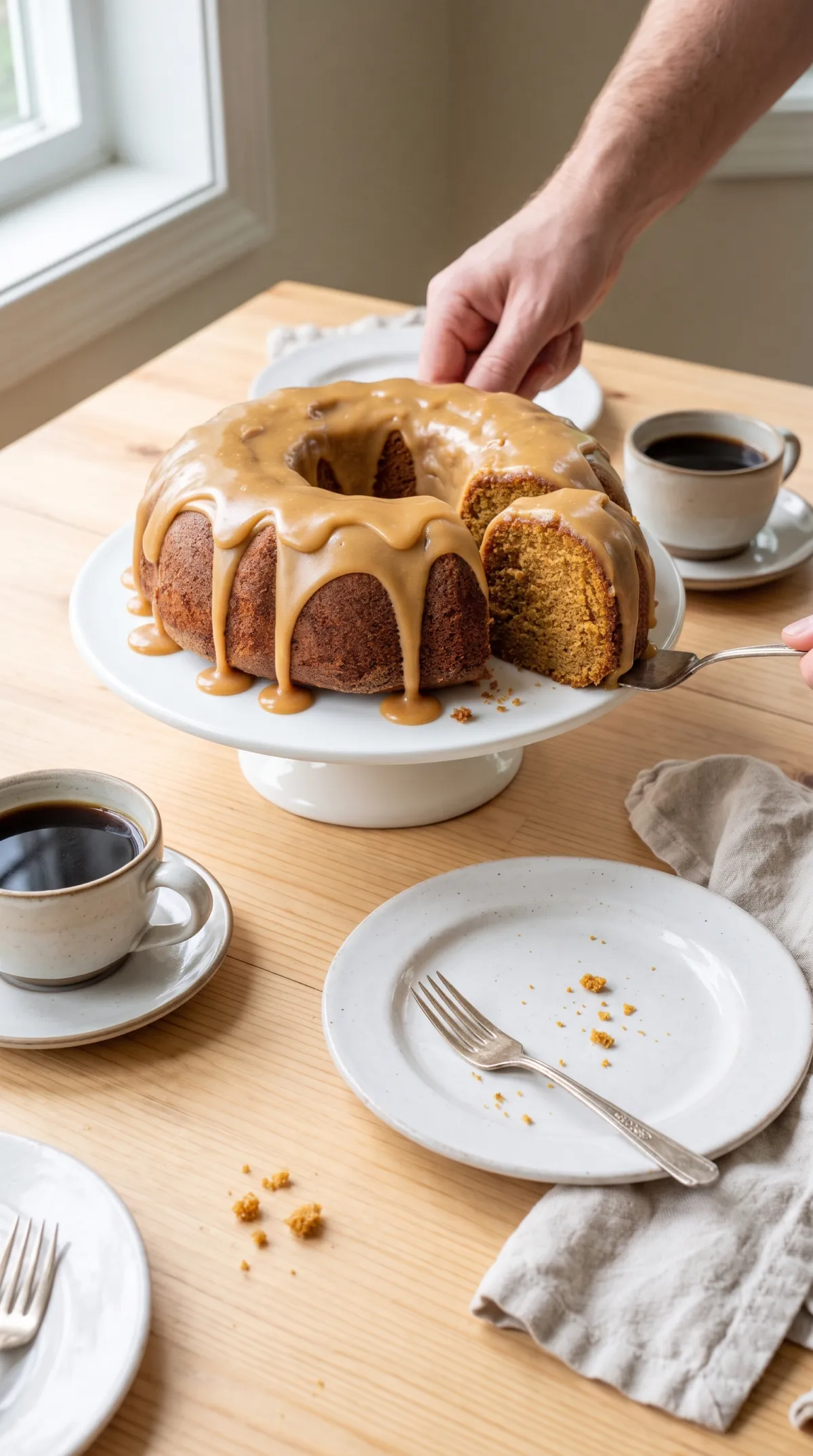
A scoop of vanilla ice cream melts into the warm glaze, and fresh strawberries or raspberries add a tart contrast. Lightly sweetened whipped cream, sliced peaches, hot coffee, black tea or a cold glass of milk all work too. The cake is rich and sweet, so keep whatever goes beside it simple.
Can I skip the glaze?
Yes. The cake is flavorful enough to eat plain with coffee, or you can dust it with powdered sugar through a sieve just before serving. The glaze adds a thin sugary shell and a butterscotch note, but the cake doesn't depend on it. A plain cake keeps the same way, so follow the storage times above.
How many slices does it make?
The mini loaf cuts into 4 thick slices of about 1 inch, which is how this recipe counts a serving. Cut it into 6 thinner slices if you want smaller portions. For a bigger group, make the full bundt version described in the variations, which serves about 12.
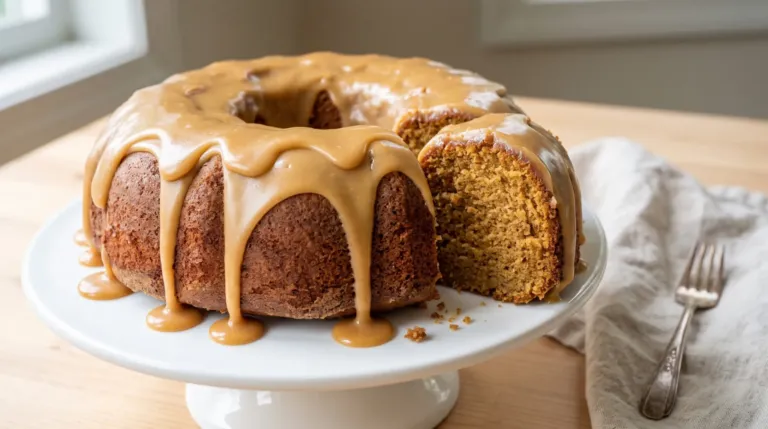
Brown Sugar Pound Cake with a Soft Crumb and Butterscotch Glaze
- Prep 20 min
- Cook 50 min
- Total 1 hr 10 min
Cook mode: your screen stays on and the current step is shown larger.
Ingredients
Steps
- Step 1 of 10
Heat the oven to 325°F (165°C) with a rack in the middle. Grease a 3-cup mini loaf pan, about 6 x 3 inches, with the 1 tbsp softened butter, reaching into every corner. Dust with the 1 tbsp flour and tap out the excess.
- Step 2 of 10
Beat the 6 tbsp butter with the brown sugar and granulated sugar on medium-high speed until pale and fluffy, 2 to 3 minutes, scraping the bowl once.
- Step 3 of 10
Beat in the egg and then the egg yolk, mixing well after each, until the batter looks glossy. Mix in the 1/2 tsp vanilla. A slightly separated look is fine.
- Step 4 of 10
Whisk the 3/4 cup flour, 1/8 tsp salt and baking powder together in a small bowl.
- Step 5 of 10
Mix on low speed, adding the flour mixture in three parts and the 1/4 cup evaporated milk in two, beginning and ending with flour. Stop as soon as the last streak of flour disappears. The batter will be thick.
- Step 6 of 10
Scrape the batter into the pan, smooth the top and tap the pan twice on the counter. Bake for 45 to 55 minutes, until the top is deep golden and a toothpick pushed into the center comes out clean or with a few dry crumbs. Tent loosely with foil if the top browns too fast.
- Step 7 of 10
Cool the cake in the pan for 10 minutes, run a thin knife around the edge and turn it out onto a wire rack. Let it cool for about 15 minutes, until just warm.
- Step 8 of 10
Melt the 2 tbsp glaze butter in a small saucepan over medium heat. Add the 1/4 cup brown sugar, 1 tbsp evaporated milk and the pinch of salt, bring to a boil, and let it bubble for 1 minute, stirring, until smooth and glossy. Take the pan off the heat.
- Step 9 of 10
Stir in the 1/4 tsp vanilla and 1/2 cup powdered sugar until smooth. Add more powdered sugar a tablespoon at a time until the glaze falls from the spoon in a thick ribbon.
- Step 10 of 10
Pour the glaze slowly over the just-warm cake so it runs down the sides. Let it set for 20 to 30 minutes before slicing into 4 thick slices.
Nutrition
- Calories
- 600 kcal
- Protein
- 6 g
- Fat
- 28 g
- Carbohydrates
- 84 g
- Sugar
- 66 g
- Fiber
- 1 g
- Salt
- 0.3 g
Approximate values per serving.
How did it turn out?
Related searches
- Brown Sugar Pound Cake
- brown sugar cake
- brown sugar pound cake recipe
- brown sugar cake recipe
- cake brown sugar
- cake using brown sugar
- recipe brown sugar cake
- brown butter pound cake
- powdered sugar cake
- recipe for brown sugar pound cake
- brown sugar caramel pound cake
- cake with confectioners sugar
- confectioners sugar cake
- bundt cake recipes with sour cream
- cake recipe using brown sugar
- cakes with brown sugar recipe
- dessert recipes using brown sugar
- desserts that use brown sugar
- brown butter pound cake recipe
- cake with powdered sugar
- confectioners sugar pound cake
- pound cake bundt
- brown sugar bundt cake
- confectioners sugar pound cake recipe
- bakes by brown sugar
- cake brown
- cake recipes using brown sugar
- caramel glazed pound cake
- caramel pound cake with caramel glaze
- spice cake pound cake
- spice pound cake
- sugar pound
- brown sugar bundt
- brown sugar vanilla cake
- cake with brown sugar
- spice pound cake recipe
- sugar powder cake
- brown butter glaze for pound cake
- brown sugar cake batter
- brown sugar caramel cake
- brown sugar carmel pound cake
- buttery brown sugar cake squares
- caramel pound cake recipe from scratch
- brown sugar and sour cream
- brown sugar cake recipes
- cake recipe with brown sugar
- frosted pound cake
- loaf pound cake sour cream
- recipe for a sour cream cake