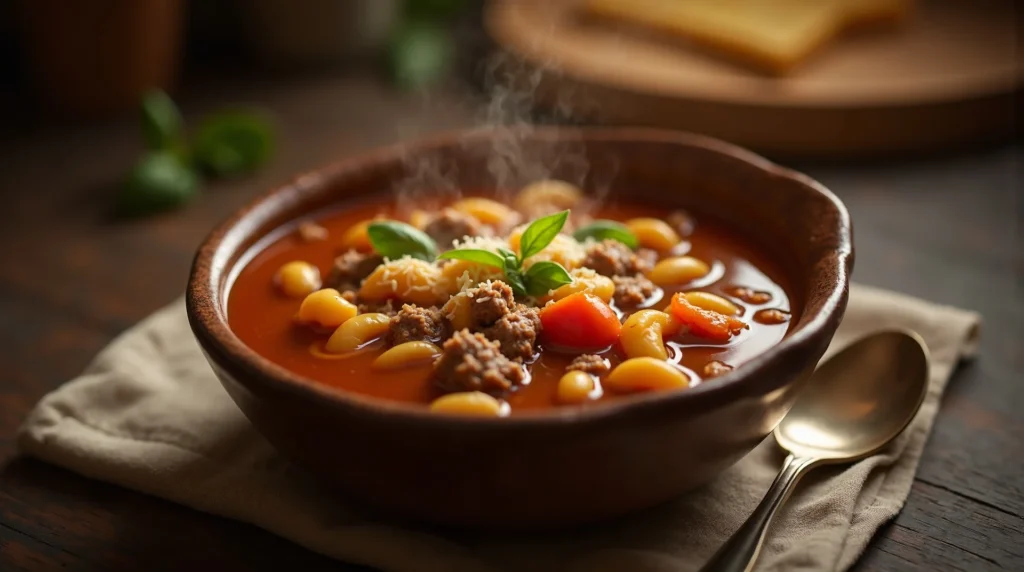
Homemade Beef Macaroni Soup Recipe
This is the ultimate homemade beef macaroni soup, taking humble pantry ingredients and transforming them into a deeply flavorful, satisfying one-pot meal using techniques I learned in professional kitchens.
restaurant_menu Ingredients
Main Ingredients for Beef Macaroni Soup
Broth and Seasoning
hardware Essential Tools
Large, heavy-bottomed Dutch oven or stockpot
Wooden spoon or spatula
Measuring cups and spoons
Ladle
Airtight storage containers
format_list_numbered Preparation
Building the Flavor Base
Place a large, heavy-bottomed pot over medium heat and add the olive oil.
Add the diced onion and cook gently for 5 minutes until soft and translucent, then add the minced garlic and cook for 1 minute more until fragrant.
Add the ground Halal beef, seasoning well with salt and pepper, and cook until deeply browned, breaking it up with a spoon.
Carefully drain off all but 1 tablespoon of the rendered fat.
Push the meat aside, add the dried basil, oregano, and thyme directly to the hot fat for 20 seconds to toast the herbs.
Simmering and Cooking
Pour in the beef broth while scraping the bottom of the pot to release all the browned beef bits (fond).
Stir in the diced tomatoes (undrained), tomato sauce, brown sugar, and Worcestershire sauce, along with the 2 bay leaves.
Bring the entire mixture to a full boil over high heat, then immediately reduce the heat to maintain a gentle simmer.
Allow the soup base to simmer uncovered for 10 minutes to deepen the tomato flavor profile.
Stir in the 2 cups of elbow macaroni and continue simmering, stirring occasionally to prevent sticking, for 8 to 10 minutes, or until the pasta is tender.
Finishing
Remove the pot from the heat and discard the 2 bay leaves.
Taste the beef macaroni soup carefully and adjust salt, pepper, or sugar as needed to achieve perfect balance.
Let the soup rest for 5 minutes off the heat before serving to allow the pasta to finish softening slightly.
favorite You Might Also Love
Browse All arrow_forward
Dolly's 5-Ingredient Casseroles
The Ultimate Homemade Noodles Romanoff Recipe

Mastering Homemade Fried Pickle Spears: A Chef's Guide
Grandma's Cherry Fluff Frozen Salad: A Retro Dessert Delight

Blueberry Buttermilk Breakfast Cake Recipe (Moist & Tender)

Savory Cheddar Cheese Quick Bread Masterpiece
Try These Variations
Cheesy Finish
Stir in 1 cup of shredded mild cheddar cheese during the final resting period until melted and creamy.
Spicy Kick
Add 1/2 teaspoon of red pepper flakes along with the dried herbs for a gentle heat in your beef macaroni soup.
Vegetable Boost
Sauté 1/2 cup diced carrots and 1/2 cup diced celery along with the onions; add 1 cup frozen peas in the last 3 minutes of cooking.
Extra Beefy Flavor
Substitute 1 cup of the beef broth with 1 cup of rich, dark beef stock or bouillon for deeper color.
Chef's Pro Tips
Always use a heavy-bottomed pot; thin pots create hot spots that scorch the tomato solids, leading to off-flavors in your beef macaroni soup.
Toasting dried herbs in oil before adding liquid is a non-negotiable step for unlocking their full aromatic potential.
If you are making this ahead of time, cook the pasta separately and stir it in just before reheating the broth base. This prevents over-swelling.
Taste for seasoning in stages—salt the meat, then taste the broth base, then taste the final soup. Flavor builds complexity as ingredients are added.
Storage Guide
Room Temperature
Do not leave cooked beef macaroni soup out for more than 2 hours due to meat content.
Refrigerator
Store in airtight containers for up to 4 days; add extra broth when reheating.
Freezer
Freeze cooled portions for up to 3 months; expect the pasta to absorb more liquid upon thawing.
Reheating
Gently reheat on the stovetop over medium-low heat, stirring frequently and adding extra broth or water as needed to restore consistency.
Avoid These Mistakes
✕ Failing to properly brown the ground beef, resulting in a pale, grayish, and flavorless foundation for the beef macaroni soup.
✕ Opening the can of diced tomatoes and not using the liquid; that tomato juice is essential for the broth volume and acidity balance.
✕ Forgetting to remove the bay leaves before serving, which can lead to an unpleasant, woody texture if accidentally eaten.
✕ Overcooking the macaroni; it should be slightly firm when you take the pot off the heat, as it will continue cooking in the residual heat.
nutrition Nutrition Facts
Per serving: Approximately 1.5 cups per serving
Sodium content can be significantly reduced by using low-sodium beef broth.
flag Conclusion
This journey into the heart of American comfort cooking has resulted in a truly spectacular beef macaroni soup. It carries the spirit of home cooking—simple, hearty, and deeply satisfying—but executed with the precision of a professional kitchen. I encourage you to make this your own; perhaps add a pinch of smoked paprika next time, or use ground turkey instead of beef. The possibilities are endless once you master this foundational recipe. Enjoy every comforting spoonful!
sell Related Topics
Frequently Asked Questions
Why is my beef macaroni soup too thick? expand_more
This is the most common issue with any pasta-in-broth recipe, including our wonderful beef macaroni soup. Pasta, especially elbow macaroni, acts like a sponge, soaking up the liquid as it cools and sits. The solution is simple: always reheat the soup on the stovetop with added liquid—either beef broth or plain water—until you restore the soup consistency you prefer. Next time, consider slightly undercooking the pasta, or adding the pasta only when you plan to serve it immediately, reserving the broth separately.
Can I make this beef macaroni soup vegetarian? expand_more
Absolutely, although it moves away from the classic name! To create a vegetarian version, you would substitute the ground beef with an equal weight of finely crumbled plant-based ground substitute or finely minced mushrooms (like cremini or portobello) cooked until deeply browned. The most critical substitution is the broth: replace the 3 cups of beef broth with high-quality vegetable broth. You will need to significantly boost the umami with ingredients like a tablespoon of soy sauce (or coconut aminos for gluten-free) and a teaspoon of Marmite or nutritional yeast to replicate that savory depth lost by omitting the beef stock. It will be a delicious variation on the theme of beef macaroni soup.
What is the best way to brown the ground beef without draining too much fat? expand_more
The fat in the beef is flavor, especially in a soup where it emulsifies slightly into the broth. The key is to use a large enough pot so the meat isn't piled too high, allowing it to sear rather than steam. Once the beef is browned, use a large spoon or ladle to carefully scoop out most of the rendered liquid fat, leaving just a thin film coating the bottom of the pot—about 1 tablespoon, as specified in the recipe. This residual fat is perfect for toasting your herbs later, ensuring maximum flavor transfer into your beef macaroni soup.
Can I add vegetables to this beef macaroni soup? expand_more
Yes, and I highly encourage it for added nutrition and texture! The best time to add firmer vegetables is right after you add the broth and before the pasta. Dice carrots and celery (a classic mirepoix base) into very small pieces—about 1/4-inch dice—and sauté them along with the onions in Step 1. They will soften perfectly during the 10-minute initial simmer. Frozen peas or corn are fantastic additions; stir those in during the final 2 minutes of cooking so they stay bright green and tender-crisp in your final beef macaroni soup.
Is it necessary to use brown sugar in this recipe? expand_more
While you could technically substitute it with granulated white sugar, I strongly advise against it for the best result in this specific style of beef macaroni soup. Brown sugar contains a small amount of molasses, which lends a subtle, earthy depth and color that complements the tomato and beef perfectly. White sugar is purely sweet and lacks that complex background note. It's a small ingredient that makes a noticeable difference in rounding out the acidity of the canned tomatoes.
More Recipes You'll Love

Cheesy Tuna Casserole Recipe

Chef’s Secret: The Ultimate Sweet & Salty Pretzel Sticks Recipe

The Ultimate John Wayne Casserole Recipe for American Homes

Easy Air Fryer Boiled Eggs: The Ultimate No-Water Method
Community Kitchen