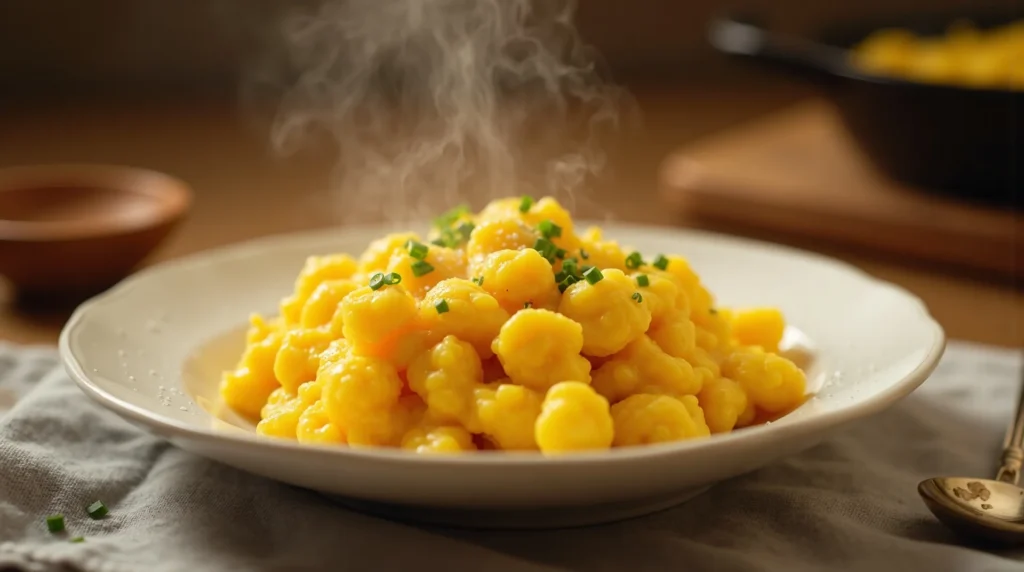
Mastering Fluffy Scrambled Eggs: Chef Secrets Revealed
Discover the professional secrets to achieving restaurant-quality, cloud-like texture when you learn how to make fluffy scrambled eggs that are never dry or rubbery.
restaurant_menu Ingredients
Core Ingredients for Fluffy Scrambled Eggs
Optional Add-ins (Folded in Last)
hardware Essential Tools
Large, deep mixing bowl
Whisk
8-inch nonstick skillet
Heat-resistant rubber spatula
format_list_numbered Preparation
The Aeration Stage
Select a mixing bowl significantly larger than you think you need to allow maximum room for whisking and air incorporation
Crack the 6 large eggs into the bowl and add the measured whole milk or cream
Using a whisk, beat the mixture aggressively for a full 60 seconds until the mixture is pale yellow, homogenous, and slightly foamy on the surface—this traps the air necessary to learn how to make fluffy scrambled eggs
Lightly sprinkle the kosher salt and black pepper over the aerated mixture and give it one final, gentle stir
Cooking and Curd Formation
Place an 8-inch nonstick skillet over medium-low heat—this low temperature is critical for success
Add the unsalted butter and allow it to melt completely until it foams slightly, ensuring the pan is evenly coated but not browned
Pour the entire egg mixture into the warmed pan all at once and let it stand completely still for 60 to 90 seconds until the edges just begin to firm up
With your rubber spatula, gently push the cooked edges toward the center, tilting the pan so the liquid egg flows underneath the forming curds, creating large, soft folds
Continue this slow scraping and folding motion until almost all the liquid has evaporated; the eggs should look moist and glossy, not dry
Finishing Touches
If using cheese or herbs, fold them in right as the eggs reach the desired moist consistency
Immediately turn off the heat, remove the pan from the burner, and gently stir for another 30 seconds to account for carryover cooking
Transfer the eggs instantly to warmed serving plates, as they will continue to cook slightly off the heat
favorite You Might Also Love
Browse All arrow_forward
Elevating Classic Food Gruel: A Modern Take
Vintage Harvest Kitchen: Nostalgic 21 Grocery Store Photos Ap

Old-Fashioned Peanut Butter Candy: A Chef's Recipe
Decadent Pecan Pie Cobbler: A Southern Comfort Dessert
Decadent No-Bake Cheesecake: A Simple Dessert Delight
Mastering No Boil Lasagna in Your Slow Cooker
Try These Variations
French Style
Cook over a double boiler (bain-marie) for incredibly slow, custard-like curds, adding a touch of crème fraîche at the end
Savory Herb Mix
Fold in 1 tablespoon of finely chopped fresh dill and parsley along with the cheese
Spicy Kick
Whisk in 1/2 teaspoon of finely minced jalapeño (seeds removed) with the eggs, and add a dash of your favorite halal hot sauce tableside
Chef's Pro Tips
Always use a nonstick pan for this style of scrambled egg; any sticking will ruin the soft curd formation
For an extra velvety finish, consider straining your whisked egg mixture through a fine-mesh sieve before it hits the pan to remove any remaining chalazae or thick albumen
Pre-warm your serving plates by filling them with hot tap water for a minute before starting the cooking process; this prevents the eggs from cooling too rapidly upon plating
When seasoning, remember that salt added too early can sometimes break down the structure, so seasoning just before pouring is the safest bet for learning how to make fluffy scrambled eggs
Storage Guide
Refrigerator
Store in an airtight, shallow container for up to 3 days, adding a splash of milk when reheating
Freezer
Not recommended, as the texture breaks down significantly upon thawing and reheating
Room Temperature: Consume within 2 hours of preparation for safety and optimal texture
Avoid These Mistakes
✕ Using high heat, which causes rapid protein denaturation resulting in a tough, squeaky texture
✕ Over-whisking the eggs after adding the salt, which can prematurely break down the structure
✕ Overcooking the eggs by leaving them on the heat source until they look ‘done’—remember the carryover cook is powerful
✕ Using too little fat (butter), which causes the eggs to stick to the pan and prevents smooth movement during the curd formation phase
nutrition Nutrition Facts
Per serving: 1 serving (approx. 3 eggs)
Nutritional estimates based on 3 eggs, whole milk, and butter without cheese additions.
flag Conclusion
We have successfully navigated the subtleties required for how to make fluffy scrambled eggs that rival any five-star brunch service. The key takeaway, my friends, is control—control over your whisk, control over your heat, and control over your timing. This technique is transferable to all your egg preparations. When you serve these luminous, tender curds, you’ll feel an immense sense of culinary accomplishment. Go ahead, make this your signature breakfast. This mastery of how to make fluffy scrambled eggs is now yours!
We champion these fundamental skills here at HomeRecipes.com. Don’t just cook; cook with intention! Try this recipe this weekend and let us know how you customized your perfect dish!
sell Related Topics
Frequently Asked Questions
Should I add the salt before or after whisking when learning how to make fluffy scrambled eggs? expand_more
For consistency and ease, I recommend adding the salt right after your initial, vigorous whisking, and just before the eggs go into the pan. While some chefs argue that salting too early can break down the proteins too much, for the home cook aiming for fluffiness, adding it just before cooking ensures even seasoning without compromising the initial aeration. If you are using a very high-quality, high-fat cream, you have a little more leeway.
Why do my eggs look pale even though I used whole milk? expand_more
The pale color is often a result of over-aeration or using too much liquid relative to the egg yolks. To achieve a richer yellow color, you can slightly reduce the milk by one tablespoon per three eggs, or ensure you are using fresh, deep-orange yolks. Remember, we whisked for volume, which lightens the color; if you want deep color, you must sacrifice a tiny bit of fluffiness by whisking less vigorously.
Can I use water instead of milk to learn how to make fluffy scrambled eggs? expand_more
Technically, yes, water can be used as a thinning agent, and some chefs use it because it creates steam pockets, theoretically adding loft. However, water does nothing for richness or mouthfeel. Milk or cream adds necessary fat and protein solids that contribute to a creamy texture. If you use water, you must compensate with extra butter to avoid a thin, watery final product.
What is the best type of pan to use for this method? expand_more
A heavy-bottomed, high-quality nonstick skillet is essential. Because we cook slowly and rely on gentle pushing rather than aggressive stirring, the nonstick surface ensures the delicate curds release cleanly from the pan. Avoid stainless steel unless you are an expert at managing butter temperature, as stainless steel requires more fat and is prone to sticking.
How do I know exactly when to pull the eggs off the heat? expand_more
This is the trickiest part of learning how to make fluffy scrambled eggs! Pull them when they appear about 80% done—meaning they are set into soft curds, but there is still a noticeable, wet sheen across the surface. If you wait until they look perfectly cooked in the pan, they will be overdone on the plate. Trust the carryover heat; it’s your silent cooking partner.
More Recipes You'll Love
4-Ingredient Amish Carrot and Potato Roast Recipe
Restaurant-Quality Egg Roll Soup
Flaky Sopapilla Cheesecake: Layered Dessert Dream
Easy Chicken Biscuit Casserole Recipe
Community Kitchen