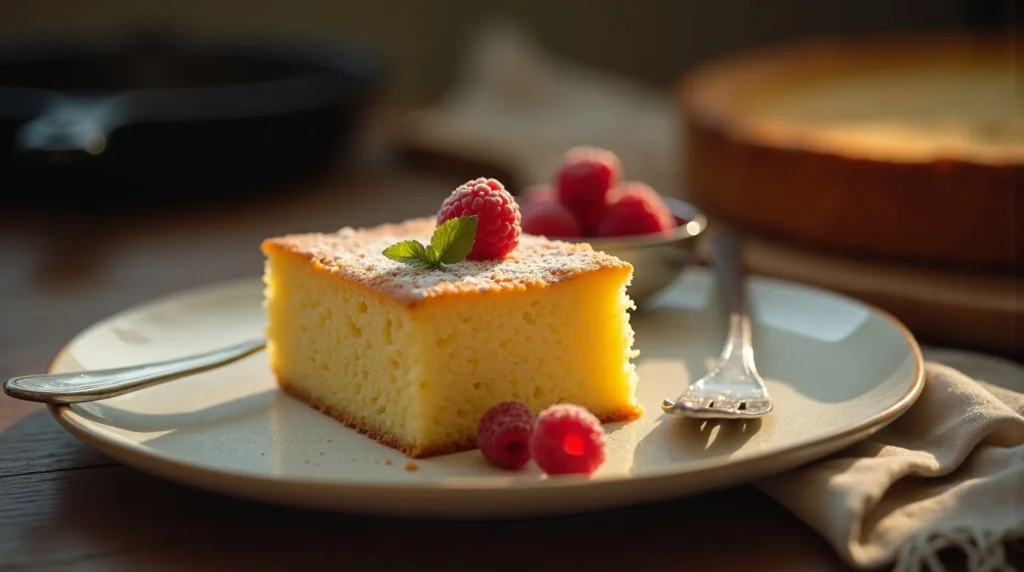
French Butter Cake Recipe
This authentic French Butter Cake recipe delivers an incredibly moist, dense crumb that melts in your mouth, topped with a jewel-like sugary crust. It's pure, unadulterated buttery bliss, perfect for any gathering.
restaurant_menu Ingredients
Main Ingredients for French Butter Cake
Serving Accompaniments (Optional)
hardware Essential Tools
9x9-inch baking dish
Large mixing bowl
Stand mixer or hand mixer
Whisk
Rubber spatula
Parchment paper
Wire cooling rack
format_list_numbered Preparation
Preparation and Batter Assembly
Preheat your oven precisely to 350°F (175°C) and set the rack to the center position
Lightly grease the 9x9-inch baking dish and line the bottom with parchment paper for easy removal
In a large bowl, vigorously whisk together the melted butter and the 1 cup of sugar for one minute until the mixture lightens slightly
Beat in the room-temperature eggs one at a time, ensuring each is fully incorporated before adding the next, followed by the vanilla extract
In a separate bowl, sift together the cake flour, baking powder, and salt until thoroughly combined and aerated
Gently add the dry mixture to the wet ingredients in three additions, mixing only until just barely combined; do not overmix
Use a rubber spatula to gently fold in the 3/4 cup of sour cream until no streaks remain, being careful not to deflate the batter
Transfer the entire batter smoothly into the prepared baking dish and use the spatula to level the surface
Sprinkle the remaining 2 tablespoons of granulated sugar evenly over the top of the batter to form the crust
Baking and Cooling
Bake the french butter cake for 30 to 35 minutes at 350°F (175°C)
Monitor the cake; it is done when the edges are golden brown and a wooden skewer inserted into the center comes out clean or with only a few moist crumbs attached
Remove the french butter cake from the oven and allow it to cool in the pan on a wire rack for 10 minutes
Carefully lift the cake out using the parchment paper sling and allow it to cool completely on the rack before slicing, about 30 minutes
favorite You Might Also Love
Browse All arrow_forward
Cinnamon Raisin Bread Pudding Recipe (Custard-Rich & Cozy)
Copycat Olive Garden Chocolate Lasagna
Tropical Coconut Dream Cake: Southern Summer Indulgence
Cinnamon Roll Frosting Recipe (Creamy & Classic)
Zesty Lemon And Coconut Cake Masterpiece
Strawberry Slab Pie Recipe (Homestyle & Easy)
Try These Variations
Almond Extract Swap
Replace 1 teaspoon of vanilla extract with 1/2 teaspoon of pure almond extract for a deeper flavor profile
Citrus Zest Addition
Add the zest of one large lemon or orange to the creamed butter and sugar mixture for a bright note in your french butter cake
Brown Sugar Variation
Replace 1/4 cup of the granulated sugar in the batter with light brown sugar for a slightly deeper molasses note
Chef's Pro Tips
Always use an oven thermometer; ambient oven temperature fluctuations are the silent killer of perfectly structured cakes like this french butter cake
For the moistest results, ensure your eggs are truly at room temperature; cold eggs shock the melted butter, causing it to seize and resulting in a heavier batter
When sprinkling the topping sugar, do so evenly across the entire surface; patchy sugar leads to uneven crust development on your french butter cake
If you prefer a taller cake, consider using an 8×8 inch pan instead, but increase the baking time by 5-10 minutes, checking frequently
Storage Guide
Room Temperature
Store under a cake dome or tightly covered with plastic wrap for up to 2 days
Refrigerator
Wrap tightly in plastic wrap and refrigerate for up to 5 days; allow slices to temper at room temperature for 20 minutes before eating
Freezer
Wrap individual slices securely in plastic wrap, then foil, and freeze for up to 3 months; reheat gently in a 300°F oven
Avoid These Mistakes
✕ Using margarine or shortening instead of real butter, which drastically alters the flavor and crumb structure of the french butter cake
✕ Forgetting to line the bottom of the pan with parchment paper, leading to sticking and breakage when attempting to remove the cake
✕ Adding the cold sour cream directly to the warm, melted butter mixture, causing the emulsion to break and creating a grainy texture
✕ Cutting the cake while it is still warm, resulting in a messy slice and potential structural collapse
nutrition Nutrition Facts
Per serving: 1 slice
Nutritional information is an estimate based on 12 servings and standard ingredient brands.
flag Conclusion
There you have it—the definitive guide to creating an exquisite, restaurant-quality french butter cake right in your own kitchen. This recipe is a testament to the power of simplicity executed with care. It relies on technique, quality fat, and patience during the mixing process to deliver a dessert that is rich, satisfying, and utterly unforgettable. Take pride in serving this beautiful dessert, knowing you crafted something truly special from basic pantry staples. Head over to HomeRecipes.com for more foundational recipes that build your culinary confidence. Happy baking, and enjoy every buttery bite of your homemade french butter cake!
sell Related Topics
Frequently Asked Questions
Why is my french butter cake dense instead of light? expand_more
A dense texture in a french butter cake almost always points back to overmixing after the flour was added. Once the flour hits the wet ingredients, you must mix only until combined. Overmixing develops the gluten proteins, creating toughness. Additionally, ensure your baking powder is fresh; expired leavener will result in a dense, squat cake because it cannot produce the necessary lift during baking.
Can I use all-purpose flour instead of cake flour in this recipe? expand_more
Yes, you absolutely can, but you must account for the higher protein content. For every cup of all-purpose flour you substitute, remove 2 tablespoons of that flour and replace it with 2 tablespoons of cornstarch. This adjustment lowers the overall protein level, mimicking the tenderness of cake flour and helping you maintain the desired texture for your french butter cake.
My cake sunk slightly in the middle after cooling. What happened? expand_more
This is a classic sign of underbaking. If the center structure hasn't fully set before you remove it from the heat, the cooling process causes the unset center to collapse under its own weight. Always trust the toothpick test, but also look for the visual cues: the edges should look firmly set and slightly pulled away from the sides of the pan. For this french butter cake, aim for a total bake time closer to 35 minutes at 350°F.
What is the purpose of the extra sugar sprinkled on top? expand_more
That final sprinkle of 2 tablespoons of granulated sugar serves a vital textural purpose, transforming your french butter cake from merely moist to texturally complex. As the cake bakes, this sugar melts slightly due to the ambient heat, and as it cools, it sets into a very fine, delicate crust. It adds a slight sugary crackle that contrasts beautifully with the soft, buttery interior, enhancing the overall experience of eating the french butter cake.
Is this recipe truly Halal compliant? expand_more
Absolutely. I take dietary requirements very seriously here at HomeRecipes. This recipe contains no pork products, lard, or alcohol of any kind, including wine or extracts made with alcohol. We use pure vanilla extract, ensuring this delicious french butter cake is suitable for all adhering to Halal dietary laws.
More Recipes You'll Love
Wisconsin Fairy Food Recipe (Sweet Puffed Candy)
The Ultimate Butterfinger Puppy Chow: A Crunchy Masterpiece
Effortless Orange Sherbet: The Ultimate 2 Ingredient Delight
Effortless Autumn: 2 Ingredient Pumpkin Spice Muffins Mastered
Greek Orange Cake Recipe (Moist & Aromatic)
Community Kitchen