Turkey Giblet Gravy Recipe (Rich & Savory)
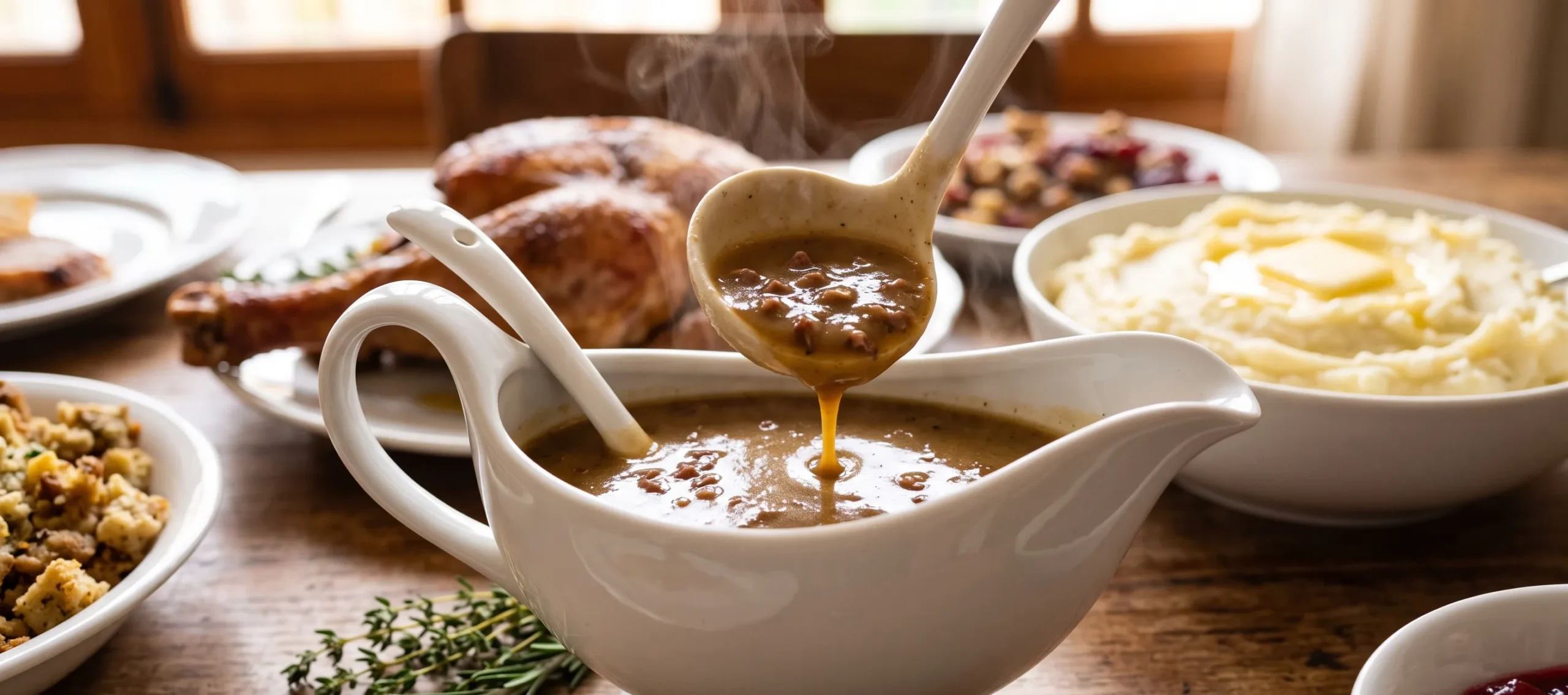
Discover the time-honored secret to the most flavorful Turkey Giblet Gravy. This recipe meticulously guides you on how do you make gravy with giblets, transforming the often-overlooked turkey neck and giblets into a deeply savory, velvety-smooth sauce. Perfect for holiday feasts, it's a testament to extracting maximum flavor from every part of your turkey, ensuring a rich, restaurant-quality accompaniment for your roasted bird and mashed potatoes.
restaurant_menu Ingredients
For the Giblet Stock
For the Gravy
hardware Essential Tools
Large heavy-bottomed saucepan
Fine-mesh sieve
Whisk
Small saucepan
Sharp knife and cutting board
Gravy boat
format_list_numbered Preparation
Prepare the Giblet Stock
In a large saucepan, combine water, turkey or chicken stock, quartered onion, chopped celery, chopped carrot, bay leaf, peppercorns, and the turkey neck and giblets. Bring the mixture to a boil over high heat, then immediately reduce the heat to low, cover, and simmer gently for 1 hour to extract maximum flavor and gelatin.
Carefully strain the stock through a fine-mesh sieve into a clean bowl, discarding the cooked vegetables and bay leaf. Reserve the flavorful liquid and the cooked turkey neck. Allow the neck meat to cool slightly, then pick off any usable meat from the bone, finely chop it, and set aside for later.
Make the Roux
In a separate saucepan, melt 6 tablespoons of turkey fat or unsalted butter over medium heat until shimmering. Add 6 tablespoons of all-purpose flour to the melted fat. Immediately begin whisking constantly and vigorously for about 2 minutes, or until the mixture turns a beautiful golden-brown color and smells nutty. This cooked roux is crucial for a smooth, flavorful gravy.
Finish the Gravy
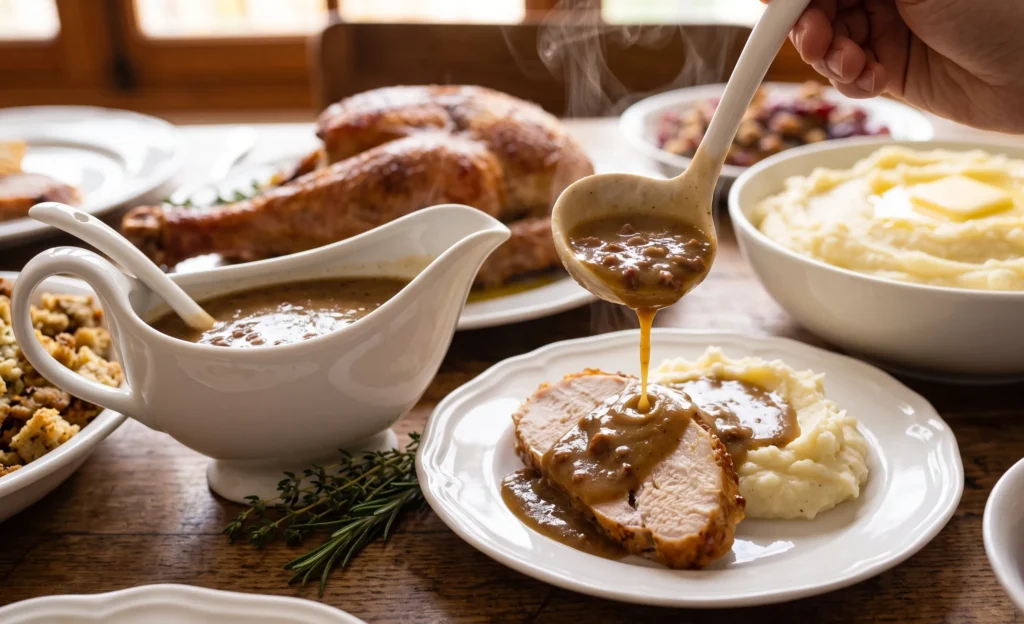
Slowly pour in the skimmed turkey pan drippings, continuously whisking to combine thoroughly and prevent lumps. Gradually add the warmed turkey broth, 1 cup at a time, whisking well after each addition, until your desired gravy thickness is achieved. Bring the gravy to a gentle boil, allowing it to cook for 2-3 minutes to thicken further and cook out any raw flour taste. Stir in the finely chopped turkey neck meat. Season the gravy generously with kosher salt and freshly ground black pepper to taste, adjusting as needed. Serve your rich, savory turkey giblet gravy hot and enjoy!
favorite You Might Also Love
Browse All arrow_forward



Try These Variations
Herbaceous Gravy
Infuse your giblet stock with additional fresh herbs like a few sprigs of rosemary or sage during the simmering process. These woody herbs release wonderful aromas and flavors that complement turkey beautifully. Strain them out with the other aromatics for a fragrant, savory gravy. This adds another layer of complexity to how do you make gravy with giblets.
Mushroom Infusion
For an earthy depth, sauté 4 ounces of finely chopped cremini mushrooms in a separate pan until golden brown. Add these cooked mushrooms to your gravy along with the chopped neck meat, or even simmer them with the giblet stock. The mushrooms add a fantastic umami boost and a pleasant texture.
Creamy Gravy
For an extra luxurious texture, whisk in 1/4 cup of heavy cream or half-and-half at the very end, just before serving. Simmer gently for a minute or two until heated through, but do not boil aggressively after adding cream, as it can curdle. This variation yields a richer, silkier gravy, perfect for a special occasion.
Chef's Pro Tips
Skim Your Drippings and Stock
Before adding your pan drippings or giblet stock to the gravy, always skim off any excess fat from the surface. Too much fat can make your gravy greasy and unappetizing. A simple trick is to chill the drippings, allowing the fat to solidify on top, making it easy to scrape off. This step is critical for a refined, flavorful gravy.
Whisk Continuously
When making your roux and incorporating liquids, continuous and vigorous whisking is paramount. This prevents lumps from forming and ensures a smooth, velvety consistency. If you stop whisking, especially when adding liquid, the flour can clump, leading to an undesirable texture. Think of your whisk as an extension of your arm, always in motion!
Adjusting Consistency
Gravy consistency is a matter of personal preference. If your gravy is too thick, simply whisk in a little more warm turkey broth or water until it reaches your desired pourable texture. If it’s too thin, you can simmer it gently to reduce, or make a small cornstarch slurry (1 tablespoon cornstarch mixed with 1 tablespoon cold water) and whisk it in gradually until thickened. This flexibility is key to how do you make gravy with giblets to your liking.
Seasoning with Care
Always season your gravy at the very end, after all liquids and drippings have been incorporated. Pan drippings can be quite salty, and you don’t want to over-salt your gravy prematurely. Taste, adjust, and taste again. A perfectly seasoned gravy balances savory, rich, and slightly peppery notes.
Storage Guide
Refrigerator
Once your turkey giblet gravy has cooled completely, transfer it to an airtight container. It can be safely stored in the refrigerator for up to 3-4 days. To reheat, gently warm in a saucepan over medium-low heat, stirring frequently. If it’s too thick, whisk in a splash of warm turkey broth or water to achieve the desired consistency. Ensure it reaches an internal temperature of 165°F (74°C) before serving.
Freezer
For longer storage, this gravy freezes beautifully. Pour the cooled gravy into freezer-safe containers or heavy-duty freezer bags, leaving about an inch of headspace to allow for expansion. It can be stored in the freezer for up to 2-3 months without significant loss of quality. Thaw overnight in the refrigerator before reheating. Reheating from frozen directly can cause separation, so slow thawing is best.
Reheating for Best Texture
To maintain the velvety texture, always reheat gravy gently on the stovetop. Avoid high heat, which can cause the emulsion to break or the gravy to become greasy. Whisking continuously during reheating helps prevent lumps and ensures a smooth, consistent gravy. If it appears slightly separated after thawing, a vigorous whisk or a quick pass with an immersion blender can often bring it back together.
Avoid These Mistakes
✕ Under-cooking the Roux
A common mistake is not cooking the flour and fat mixture (roux) long enough. An undercooked roux will leave your gravy with a raw flour taste and a pasty, unappetizing texture. Cook the roux over medium heat, stirring constantly, until it reaches a golden-brown color and has a distinct nutty aroma. This process, the Maillard reaction, develops deep flavor compounds and ensures a smooth, palatable gravy.
✕ Adding Cold Liquid to Hot Roux
Pouring cold stock or drippings into a hot roux will cause the flour to seize and clump, resulting in a lumpy gravy. Always ensure your liquids are warm or hot before gradually whisking them into the hot roux. The temperature differential is what causes the starches to seize up, so matching the temperatures helps them disperse smoothly and evenly, leading to a silky finish.
✕ Not Skimming Fat from Drippings
Failing to skim the excess fat from your turkey pan drippings before adding them to the gravy can result in an oily, greasy gravy that separates. While some fat is desirable for flavor, too much will make the gravy unpleasant and visually unappealing. Use a fat separator or simply spoon off the top layer of fat after the drippings have settled, leaving behind the flavorful fond and juices.
✕ Over-salting
It’s easy to over-salt gravy, especially when using pan drippings that can already be quite salty. Always taste your gravy throughout the process, particularly before adding the final seasoning. Start with a small amount of salt and pepper, then gradually add more until the flavor is perfectly balanced. Remember, you can always add more salt, but you can’t take it away!
nutrition Nutrition Facts
Per serving: 1/2 cup
Nutritional values are estimates and can vary based on specific ingredients and preparation methods.
sell Related Topics
Frequently Asked Questions
What parts of the turkey are considered giblets? expand_more
The term 'giblets' typically refers to the edible offal found inside the cavity of the turkey. This usually includes the heart, liver, and gizzard. The turkey neck is also often included in the giblet bag, though technically separate. Each of these parts contributes unique flavors and textures to the stock and gravy, with the liver offering a richer, slightly metallic note, and the gizzard and heart providing a deeper, meatier essence. Always check your turkey's cavity; they are usually packaged in a small paper bag.
Can I make this gravy ahead of time? expand_more
Absolutely, and I highly recommend it for holiday entertaining! You can prepare the giblet stock and even the entire gravy up to 2-3 days in advance. Store it in an airtight container in the refrigerator. On the day of serving, gently reheat it over low heat, whisking frequently. You might need to thin it out with a little extra turkey broth or water if it has thickened too much in the fridge. Making it ahead of time significantly reduces stress on a busy cooking day, allowing you to focus on other dishes.
What if I don't have enough turkey fat or pan drippings? expand_more
No problem at all! While turkey fat and pan drippings add unparalleled flavor, you can certainly make a delicious gravy without them. For the roux, you can substitute unsalted butter entirely for the turkey fat. If you don't have enough pan drippings, supplement with additional turkey or chicken broth. You might want to add a pinch of poultry seasoning or a dash of soy sauce (halal-certified, of course) to deepen the umami flavor and compensate for the missing drippings. The key is to build flavor layer by layer.
My gravy is too thin, how can I thicken it? expand_more
If your gravy is too thin, you have a couple of options. The easiest method is to create a slurry: mix 1 tablespoon of cornstarch with 1 tablespoon of cold water until smooth. Whisk this slurry gradually into your simmering gravy, allowing it to cook for 1-2 minutes to thicken. Repeat if necessary until you reach your desired consistency. Alternatively, you can make a small additional roux with equal parts butter and flour, cook it until golden, and then whisk it into the gravy. This method adds more richness and flavor compared to a cornstarch slurry.
My gravy is lumpy, how can I fix it? expand_more
Lumpy gravy is a common kitchen woe, but easily remedied! The quickest fix is to pass the gravy through a fine-mesh sieve. This will catch all the lumps, leaving you with a silky-smooth gravy. For a truly professional finish, you can even use an immersion blender directly in the saucepan or carefully transfer the gravy to a regular blender (be cautious with hot liquids – blend in small batches and vent the lid). Blending will break down any stubborn lumps and give your gravy an incredibly smooth, velvety texture. Prevention is better than cure, though: always whisk vigorously when adding liquids to your roux!
More Recipes You'll Love
Savory Stack: Big Mac French Toast Masterpiece

Mayonnaise and Parmesan Chicken

Hearty Amish Yumasetti Casserole: Comfort Redefined

Creamy Baked Poor Man’s Steak: 4-Ingredient Comfort
Effortless 4-Ingredient Amish Ranch Macaroni Bake

Community Kitchen