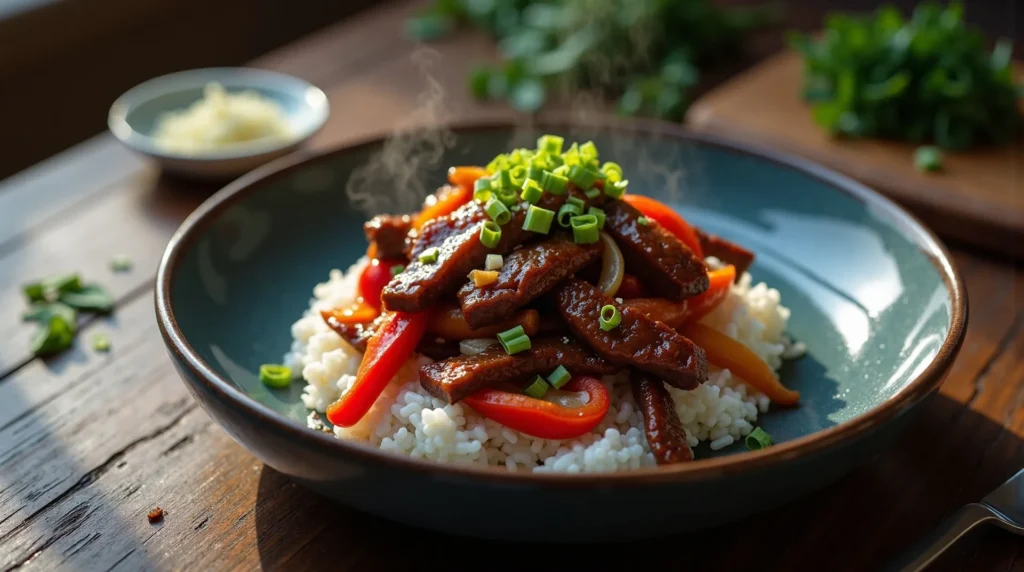
Authentic Quick Beijing Beef: Restaurant Flavor at Home
This is the definitive, fast version of the takeout favorite, Beijing Beef, featuring perfectly seared Halal flank steak enveloped in a thick, addictive sweet and savory glaze.
restaurant_menu Ingredients
For the Beijing Beef Sauce
For the Beef and Vegetables
For Serving
hardware Essential Tools
Large mixing bowl
Whisk
Large cast-iron skillet or wok
Sharp chef's knife
Cutting board
Measuring cups and spoons
Slotted spoon
format_list_numbered Preparation
Sauce Preparation
Measure out 1/3 cup of the cool water and set it aside for the slurry later, leaving the remaining water in the bowl for the initial sauce mix
In the mixing bowl, combine the reserved water, hoisin sauce, brown sugar, ketchup, rice vinegar, red pepper flakes, and minced garlic
Whisk this sauce mixture thoroughly until the sugar is completely dissolved and the ingredients are fully incorporated; set aside
In a separate small bowl, combine the remaining 1/4 cup of cool water with the 1 tablespoon of cornstarch, whisking until a smooth, lump-free slurry forms; set this aside until needed for thickening
Beef and Vegetable Searing
Ensure the flank steak is sliced thinly against the grain for maximum tenderness in your final beijing beef dish
Season the sliced beef strips lightly with the kosher salt and black pepper, tossing gently to coat evenly
Heat your large cast-iron skillet or wok over medium-high heat until it is very hot—a drop of water should sizzle instantly
Add 2 tablespoons of your high smoke-point oil to the hot pan, swirling to coat the surface
Add the seasoned beef strips, ensuring not to overcrowd the pan; work in batches if necessary to achieve a proper sear, cooking for 2 to 3 minutes per side until deeply browned and caramelized
Once the beef is seared, add the chopped bell peppers and sliced onion to the pan, stirring constantly for about 3 minutes until the vegetables are crisp-tender
Glazing and Finishing
Reduce the heat on the skillet to medium, ensuring the sauce won't scorch immediately
Pour the entire pre-mixed sauce base over the beef and vegetables, stirring gently to coat everything
Allow the sauce to simmer for about a minute, stirring constantly
Give your cornstarch slurry a quick final whisk to ensure it hasn't settled, then slowly drizzle it into the simmering sauce while stirring vigorously
Continue stirring for 4 to 5 minutes; the sauce will rapidly transform, becoming thick, glossy, and clinging perfectly to the beef—this is the signature texture of excellent beijing beef
Remove the skillet from the heat immediately once the desired thick consistency is reached to prevent the beef from overcooking
favorite You Might Also Love
Browse All arrow_forward
Old-Fashioned Fried Potatoes and Onions: A Classic Skillet Recipe
Authentic Lorna Doone Shortbread Cookies (Copycat Recipe)

Golden Crispy Cauliflower Bites Recipe (Oven Baked)
Mastering No Boil Lasagna in Your Slow Cooker
The Ultimate Cream Cheese Cranberry Loaf Recipe
Mastering Fluffy Scrambled Eggs: Chef Secrets Revealed
Try These Variations
Spicy Kick
Increase red pepper flakes to 1 full teaspoon or substitute with 1 teaspoon of chili garlic sauce in the sauce mixture for a more pronounced heat in your beijing beef
Citrus Brightness
Add 1 teaspoon of fresh orange zest along with the sauce mixture for a subtle citrus note
Vegetable Boost
Incorporate sliced carrots or broccoli florets during the vegetable cooking stage, ensuring they are added with enough time to soften appropriately
Chef's Pro Tips
When slicing steak for stir-fry, chilling the meat in the freezer for 15 minutes first will make it significantly easier to cut into uniform, thin strips
Always use a very hot pan for the initial beef sear; this creates the Maillard reaction crust that locks in flavor before the sauce goes in
If you prefer a less sweet profile for your beijing beef, reduce the ketchup by 1 tablespoon and substitute that volume with extra rice vinegar
For an extra glossy finish, swirl in 1 teaspoon of toasted sesame oil right after removing the pan from the heat—never cook with sesame oil, only finish with it
Storage Guide
Refrigerator
Store beef and sauce mixture in an airtight container for up to 3 days, separating from rice or noodles
Freezer
Not recommended for best texture, but can be frozen for up to 1 month; thaw overnight in the refrigerator and reheat carefully on the stovetop
Reheating
Stovetop heating with a splash of water over medium heat is preferred (5-7 minutes) for optimal sauce consistency
Avoid These Mistakes
✕ Overcrowding the pan during the initial beef searing, leading to steaming instead of browning, which results in tough meat
✕ Forgetting to whisk the cornstarch slurry just before adding it to the sauce, causing pockets of raw starch or lumps in the finished beijing beef glaze
✕ Not slicing the flank steak properly against the grain, leading to chewy, stringy bites of beef
✕ Cooking the sauce for too long after adding the cornstarch, which can cause the sauce to break down or become gluey
nutrition Nutrition Facts
Per serving: 1 serving
Nutritional values are estimates based on average ingredient data and do not account for specific brands or added oil.
flag Conclusion
There you have it, friends. We have successfully demystified one of the most beloved takeout classics and brought it home with speed, flavor, and uncompromising quality. This beijing beef recipe proves that you do not need hours in the kitchen to achieve that deeply satisfying, perfectly balanced sweet, sour, and savory glaze we all adore. Take pride in serving a dish that tastes like it came from a top-tier establishment, knowing you controlled every high-quality, Halal-compliant ingredient. I encourage you to make this beijing beef your own—adjust the pepper flakes, perhaps add a splash of sesame oil at the very end if you wish. Head over to HomeRecipes.com, save this recipe, and start cooking with the confidence of a seasoned chef tonight!
sell Related Topics
Frequently Asked Questions
What is the best way to ensure my flank steak is tender for this beijing beef? expand_more
The single most critical step for tender flank steak is slicing it correctly. You must identify the direction of the muscle fibers (the grain) and slice perpendicular to them, using thin, deliberate strokes with a very sharp knife. If you slice with the grain, the meat will be tough regardless of how long you cook it. Chilling the steak slightly beforehand also firms up the meat, making those precise, thin cuts much easier to achieve.
Why does my sauce often end up watery instead of thick and glossy like restaurant beijing beef? expand_more
A watery sauce is almost always a cornstarch issue. First, ensure you are using enough cornstarch—it needs to be robust to thicken the volume of liquid. Second, the slurry must be completely smooth before adding it. Third, and most importantly, once the slurry is added to the hot liquid, you must let it simmer for at least one full minute while stirring constantly. This allows the starch molecules to fully hydrate and gelatinize, creating that signature glossy, clinging texture.
Can I prepare the sauce for this beijing beef ahead of time? expand_more
Yes, absolutely! The sauce mixture (hoisin, ketchup, vinegar, sugar, spices) can be whisked together and stored in an airtight container in the refrigerator for up to 5 days. However, do NOT mix in the cornstarch slurry until the very moment you are ready to use it. Keep the slurry separate and whisk it one last time right before you pour it into the hot pan during the final cooking stage.
I can't find flank steak. What is the next best cut for this recipe? expand_more
If flank steak is unavailable, skirt steak is virtually interchangeable as it has a similar grain structure and flavor profile. If you must use a different cut, look for lean cuts that slice thinly, such as top sirloin or even hangar steak. Avoid very thick, rounded cuts like chuck roast, as they are better suited for slow cooking and will become tough when stir-fried quickly for this beijing beef.
How spicy does this dish actually turn out? expand_more
The recipe calls for 1/2 teaspoon of red pepper flakes, which provides a mild baseline warmth—enough to balance the sweetness but generally not overpowering for the average American palate. If you prefer a significant kick that truly makes your mouth water, increase this to 1 full teaspoon or even 1 1/2 teaspoons. Remember, it is always easier to add heat later than to remove it once it’s cooked into the sauce!
More Recipes You'll Love

Overnight Orange Roll Casserole: The Perfect Make-Ahead Breakfast
Mastering Trash Bread: The Ultimate Comfort Food Bake

Ultimate Sheet Pan Taco Pizza: A Weeknight Game Changer
Community Kitchen