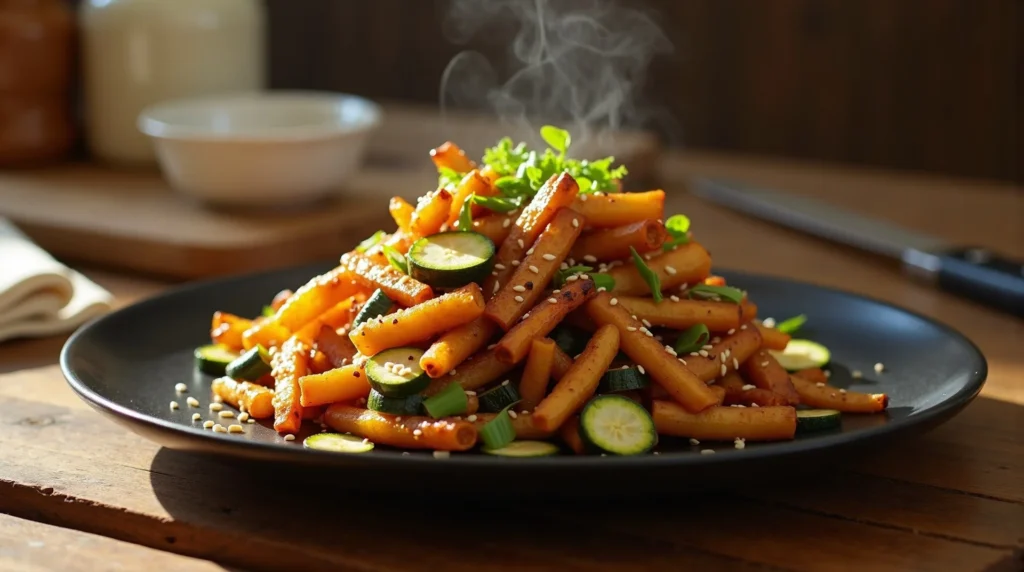
Mastering Homemade Hibachi Vegetables: Restaurant Flavor Now
Transform simple zucchini and onions into restaurant-quality hibachi vegetables using high-heat searing techniques for unparalleled crispness and savory flavor.
restaurant_menu Ingredients
Essential Hibachi Vegetables Ingredients
For an Alternative Searing Oil
hardware Essential Tools
Large, heavy-bottomed skillet (cast iron preferred)
Sharp chef's knife
Cutting board
Tongs or large wooden spoon
Serving platter
format_list_numbered Preparation
Preparation and High-Heat Searing
Ensure your skillet is preheated over medium-high to high heat until it is very hot—a drop of water should sizzle instantly
Add 1 tablespoon of neutral oil to the hot skillet, letting it shimmer for about 30 seconds to reach optimal temperature
Introduce the sliced onions to the pan, spreading them in a single layer, and cook undisturbed for 3 minutes to begin caramelization
Add the zucchini sticks and toss gently with the onions, continuing to cook for an additional 4 to 5 minutes without overcrowding the pan
Allow the vegetables to sit for periods to develop deep brown sear marks before tossing again
Flavor Infusion and Finishing
Create a small space in the center of the pan and reduce the heat slightly to medium
Add the remaining 1 tablespoon of toasted sesame oil, followed immediately by the soy sauce, sesame seeds, salt, and pepper
Toss everything vigorously for 1 to 2 minutes until the liquid has evaporated and all the hibachi vegetables are coated in a glossy glaze
Remove the pan from the heat immediately to halt the cooking process and transfer the vegetables to a warm serving dish
favorite You Might Also Love
Browse All arrow_forward



Try These Variations
Add 1 cup sliced mushrooms along with the zucchini for earthy depth
Introduce 1/2 cup thinly sliced bell peppers (any color) during the final seasoning phase
For a spicier kick, incorporate 1 teaspoon of chili garlic sauce along with the soy sauce at the end of cooking
Chef's Pro Tips
Always use a heavy-bottomed pan like cast iron; its ability to retain high heat is non-negotiable for true searing
If you are cooking for more than four people, always work in two separate batches to avoid dropping the pan temperature
Taste the vegetables right before seasoning; if your soy sauce is very salty, slightly reduce the added kosher salt
Use toasted sesame oil only at the very end to preserve its delicate, nutty aroma; using it early will burn it off
Storage Guide
Refrigerator
Store cooled vegetables in a shallow, airtight glass container for up to 3 days
Freezer: Not recommended, as the texture will become mushy upon thawing and reheating
Reheating: Use a dry, hot skillet over medium-high heat for 2-3 minutes, tossing constantly, to re-crisp the exterior
Avoid These Mistakes
✕ Using low heat, which causes the vegetables to steam slowly instead of searing quickly
Adding salt too early, which draws out moisture and prevents the desirable browning reaction
✕ Stirring the vegetables constantly, which prevents good contact with the hot pan surface
Using too small of a pan, leading to overcrowding and resultant sogginess in the final hibachi vegetables
nutrition Nutrition Facts
Per serving: 1 cup cooked vegetables
Sodium content can be reduced by using low-sodium soy sauce or coconut aminos.
flag Conclusion
This recipe for hibachi vegetables proves that world-class technique can be achieved with humble ingredients. By respecting the heat and timing your seasonings perfectly, you’ve unlocked a flavor profile that rivals any steakhouse. Whether you pair these with a robust hibachi steak recipe or enjoy them solo, you’ve mastered a fundamental skill. Go forth and cook with confidence!
sell Related Topics
Frequently Asked Questions
What is the secret to preventing the vegetables from getting soggy when making hibachi vegetables? expand_more
The secret lies in two critical factors: temperature and timing. First, ensure your skillet is extremely hot—we need aggressive, direct heat to sear the outside immediately. Second, avoid overcrowding the pan. If you put too many vegetables in at once, the temperature plummets, and the moisture released by the vegetables steams them instead of searing them. Cook in smaller batches if necessary. Finally, salt late in the process; premature salting draws out water, guaranteeing sogginess.
Can I add a homemade hibachi sauce to these vegetables? expand_more
While these hibachi vegetables are seasoned perfectly on their own with soy sauce, you certainly can enhance them. If you want a richer coating, prepare a simple hibachi sauce using soy sauce, rice vinegar, a touch of sugar or honey, and a slurry of cornstarch and water. Drizzle this over the vegetables in the final 30 seconds of cooking, tossing constantly until the sauce thickens and glazes the vegetables. This turns them into an even more decadent side dish.
I don't have a cast-iron skillet; what's the next best option for searing my hibachi vegetables? expand_more
If you are missing cast iron, which is excellent for heat retention, your next best choice is a heavy-bottomed stainless steel skillet. Avoid non-stick pans for this high-heat application, as they often cannot handle the required temperature without degrading or losing heat too quickly when cold vegetables are added. The key is mass—a heavy pan holds heat better, which is essential for a proper sear on your hibachi vegetables.
How can I incorporate protein to make this a complete hibachi meal, similar to hibachi chicken recipe preparation? expand_more
To turn this into a complete meal, you need to cook your protein first, utilizing the same high-heat technique. For instance, when making a hibachi chicken recipe, sear your cubed chicken pieces in the hot oil until done. Remove the chicken and set it aside. Then, proceed with the vegetables as directed. In the final minute, return the cooked chicken to the pan along with the vegetables and toss everything together with the soy sauce and seasonings. This ensures neither the chicken nor the vegetables are overcooked while achieving that signature restaurant flavor profile for your entire hibachi recipe.
Are these hibachi vegetables gluten-free? expand_more
Not automatically, because traditional soy sauce contains wheat. To make these hibachi vegetables gluten-free, you must substitute the regular soy sauce with Tamari or a certified gluten-free soy sauce alternative. All other ingredients—sesame oil, vegetables, salt, and pepper—are naturally gluten-free. If you are preparing a larger meal containing hibachi fried rice recipe, ensuring your soy sauce is GF is crucial for the entire spread.
More Recipes You'll Love

Savory Cheddar Cheese Quick Bread Masterpiece
The Ultimate Creamy Chicken Salad with Mandarin Oranges

Overnight Orange Roll Casserole: The Perfect Make-Ahead Breakfast

English Muffin Bread Recipe (Easy No-Knead)

Community Kitchen