How to Reheat Alfredo Sauce Recipe (Creamy & Smooth)
Unlock the secret to flawlessly reheating Alfredo sauce with this comprehensive chef's guide. Discover expert techniques for the stovetop, microwave, and oven that guarantee a creamy, smooth, and delectable sauce every single time. Say goodbye to separated or greasy leftovers and hello to restaurant-quality Alfredo, even the next day. This guide will teach you how to reheat Alfredo sauce like a pro, preserving its rich texture and flavor.
restaurant_menu Ingredients
Leftover Alfredo Sauce
For Reheating
hardware Essential Tools
Heavy-bottomed saucepan or skillet
Whisk or rubber spatula
Microwave-safe bowl (for microwave method)
Oven-safe dish with lid or aluminum foil (for oven method)
format_list_numbered Preparation
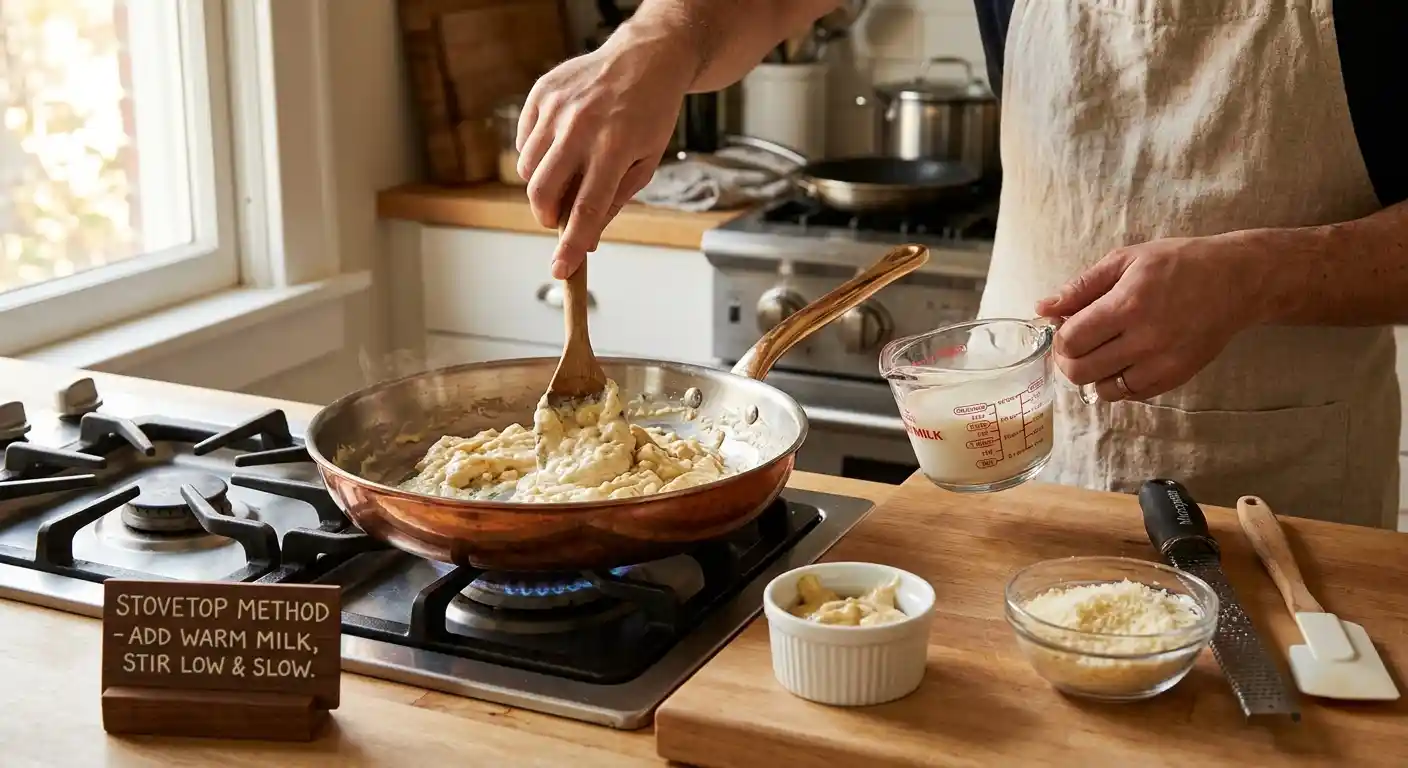
Stovetop Method (Recommended)
Transfer your leftover Alfredo sauce to a heavy-bottomed saucepan.
Place the saucepan over low to medium-low heat.
Begin stirring the sauce gently with a whisk or rubber spatula. As it warms, it will likely appear very thick.
Add the warm milk, half-and-half, or broth, one tablespoon at a time, stirring constantly after each addition until the sauce is smooth and reaches your desired consistency.
Once reheated, remove from heat and stir in freshly grated Parmesan cheese, if desired, for extra richness. Serve immediately.
Microwave Method (Quick)
Place a single serving of Alfredo sauce in a microwave-safe bowl.
Add 1-2 tablespoons of warm milk or broth to the sauce.
Microwave on 50% power for 30-second intervals.
After each interval, remove the bowl and stir the sauce vigorously to redistribute heat and prevent separation.
Continue microwaving and stirring until the sauce is heated through and smooth. Serve immediately.
Oven Method (For Larger Batches or With Pasta)
Preheat your oven to 300°F (150°C).
Place the Alfredo sauce (or pasta mixed with sauce) in an oven-safe dish. Add 1/4 cup of warm milk or broth over the top of the sauce.
Cover the dish tightly with aluminum foil to trap moisture and prevent drying.
Bake for 15-20 minutes, or until heated through. If reheating pasta, you may uncover for the last 5 minutes to create a slight crust.
Carefully remove from the oven, stir well to re-incorporate any separated liquids, and serve immediately.
favorite You Might Also Love
Browse All arrow_forward
Easy 3-Ingredient Sausage Cream Cheese Casserole: A Flaky Delight
Slow Cooker Amish Meatball Stew Recipe (Easy 5-Ingredient)
Mastering Lazy Cake Cookies: The 5-Ingredient Dessert Sensation

Simple Beef with Broccoli at Home

The Ultimate John Wayne Casserole Recipe for American Homes

Authentic Pomodoro Sauce Recipe (Quick & Fresh)
Try These Variations
Herbed Alfredo
To give your reheated Alfredo a fresh twist, stir in 1-2 tablespoons of finely chopped fresh herbs like parsley, chives, or basil at the very end of the reheating process, just before serving. The warmth of the sauce will release their aromatic oils, adding a vibrant layer of flavor and color that makes the sauce feel freshly made.
Spicy Alfredo
For those who enjoy a little heat, add a pinch of red pepper flakes (about 1/4 teaspoon) to the sauce while it’s reheating on the stovetop. The gentle heat will allow the spice to infuse, giving your creamy sauce a subtle, warming kick that’s surprisingly delicious without overpowering the classic flavors.
Garlic Boost
If your sauce tastes a little flat after reheating, you can boost its garlic flavor by sautéing 1-2 cloves of minced garlic in a tiny bit of olive oil in a separate pan for 30 seconds until fragrant, then stirring it into the Alfredo sauce during the last minute of reheating. This provides a fresh, pungent garlic aroma that reawakens the sauce.
Chef's Pro Tips
Always use warm liquid
When adding milk or broth to thin out your reheating Alfredo sauce, ensure the liquid is warm, not cold. Adding cold liquid can shock the delicate emulsion of the sauce, causing the fats to separate and creating a grainy or curdled texture. Warming the liquid gently beforehand helps maintain the sauce’s smooth consistency and prevents thermal shock.
The power of a whisk
A good whisk is your best friend when reheating Alfredo sauce. Its multiple wires help to incorporate air and vigorously re-emulsify any fats that might be trying to separate from the liquids. Continuous, gentle whisking during the reheating process is far more effective than a spoon for achieving a perfectly smooth and uniform texture, especially if the sauce has started to break.
Don’t overcrowd the pan
When reheating a larger quantity of Alfredo sauce, avoid using a pan that is too small. Overcrowding can lead to uneven heating, with the edges burning while the center remains cold. Use a wide, heavy-bottomed saucepan that allows the sauce to spread out, ensuring more even heat distribution and making it easier to stir thoroughly without making a mess.
Storage Guide
Refrigerator (up to 3-4 days)
Once your Alfredo sauce has cooled completely, transfer it to an airtight container. Make sure the lid is sealed tightly to prevent any air from entering, which can cause oxidation and spoilage. Store it on a shelf in the main body of your refrigerator, not in the door, where temperatures fluctuate more. This method maintains the sauce’s quality for a few days, making it perfect for quick weeknight meals.
Freezer (up to 2-3 months)
For longer storage, Alfredo sauce can be frozen, though dairy-based sauces can sometimes experience a slight textural change upon thawing, potentially becoming a bit grainy. To minimize this, use a freezer-safe container or heavy-duty freezer bag, ensuring there’s minimal air exposure. Thaw frozen sauce overnight in the refrigerator before reheating gently on the stovetop with added liquid to restore its creaminess. Do not refreeze once thawed and reheated.
Reheating from refrigerator
Always reheat cold Alfredo sauce gently using the stovetop method. Place the sauce in a heavy-bottomed saucepan over low heat, adding 1-2 tablespoons of warm milk or broth per cup of sauce. Whisk continuously until heated through and smooth, typically taking 5-8 minutes. Avoid high heat to prevent separation. Ensure the internal temperature reaches 165°F (74°C) for food safety.
Avoid These Mistakes
✕ Reheating on high heat
This is the most common mistake and the quickest way to ruin Alfredo sauce. High heat causes the delicate fats and proteins in the cream and cheese to separate rapidly, resulting in a greasy, curdled, or clumpy texture that is very difficult to recover. Always use low to medium-low heat and be patient to allow the sauce to warm gently and evenly.
✕ Not adding enough liquid
As Alfredo sauce cools, it thickens significantly. Attempting to reheat it without adding any additional liquid will result in an overly thick, pasty sauce that won’t coat pasta properly. The lack of moisture also increases the chances of burning or separation. Always have warm milk, broth, or pasta water on hand to gradually thin the sauce back to its desired consistency.
✕ Lack of stirring
Leaving Alfredo sauce unattended on the heat, even low heat, without continuous stirring is a recipe for disaster. Stirring is essential for distributing heat evenly throughout the sauce and for actively re-incorporating any fats that begin to separate. Without it, hot spots can form, leading to burning on the bottom and curdling throughout the rest of the sauce.
✕ Boiling the sauce
While simmering is acceptable, allowing Alfredo sauce to come to a rolling boil is detrimental to its texture and flavor. Boiling will almost certainly break the emulsion, making the sauce oily and grainy. It can also cook out some of the delicate flavors from the cheese and butter, leaving you with a less vibrant taste.
nutrition Nutrition Facts
Per serving: 1 serving
Nutritional values are approximate and may vary based on specific ingredients and portion sizes of the original Alfredo sauce.
flag Conclusion
There you have it, my friends! With these expert tips and techniques, you’ll never again have to wonder how to reheat Alfredo sauce. You now possess the culinary knowledge to transform your leftovers into another delightful meal, maintaining all the creamy, cheesy goodness you love. Here at HomeRecipes, we believe every meal, even a reheated one, should be a source of joy and satisfaction. So go ahead, enjoy that extra serving, and savor the flavors you worked so hard to create. Happy cooking, and bon appétit!
sell Related Topics
Frequently Asked Questions
Can I reheat Alfredo sauce if it has already separated? expand_more
Absolutely, you can! This is a very common issue, and understanding how to reheat Alfredo sauce when it's separated is a key chef skill. The separation means the fat and water have split, often due to too much heat or improper cooling. To fix it, use the stovetop method described above. Start with very low heat, and slowly whisk in a tablespoon of warm milk or broth at a time. The key is patience and gentle, continuous stirring. The added liquid helps to re-emulsify the sauce, bringing the fats and liquids back together. Don't give up on it – with a little care, you can usually salvage it beautifully.
What kind of liquid should I add when reheating Alfredo sauce? expand_more
When you're trying to figure out how to reheat Alfredo sauce and thin it out, the best liquids are those that complement its flavor profile and help maintain its creaminess. My top recommendations are whole milk, half-and-half, or a light chicken broth. If you've cooked pasta with the sauce, a little of the starchy pasta cooking water is also excellent, as the starches help bind the sauce. Avoid plain water, as it can dilute the flavor too much. Always warm the liquid slightly before adding it to prevent shocking the sauce and causing further separation.
How do I reheat Alfredo sauce from a jar? expand_more
Reheating jarred Alfredo sauce is very similar to reheating homemade, though jarred sauces often have stabilizers that make them a bit more forgiving. The stovetop method is still your best bet for how to reheat Alfredo sauce from a jar. Pour the desired amount into a saucepan over low heat. Stir frequently, and if it's too thick, add a splash of milk or broth, just as you would with homemade. Microwave reheating also works well for jarred sauces in short bursts with stirring. The goal is always gentle, even heating to maintain its smooth consistency.
Can I freeze Alfredo sauce, and how do I reheat it after freezing? expand_more
While you can freeze Alfredo sauce, be aware that dairy-based sauces can sometimes undergo a slight textural change upon freezing and thawing, occasionally becoming a little grainy or separating more easily. If you choose to freeze it, ensure it's in an airtight, freezer-safe container for up to 2-3 months. When you're ready to enjoy it, thaw the sauce overnight in the refrigerator. Then, reheat it very gently on the stovetop over low heat, whisking constantly and adding warm milk or broth gradually to restore its original smooth consistency. Patience is paramount here to avoid further separation.
What are common mistakes to avoid when reheating Alfredo sauce? expand_more
The most common mistake when trying to figure out how to reheat Alfredo sauce is using too high heat. This is the quickest way to break the emulsion, leading to a greasy, separated sauce. Another error is not adding enough liquid, or adding cold liquid, which can shock the sauce. Forgetting to stir regularly also contributes to uneven heating and separation. Lastly, trying to boil the sauce will almost certainly ruin its delicate texture. Always remember: low heat, gradual liquid addition, and constant gentle stirring are your best friends for perfectly reheated Alfredo.
More Recipes You'll Love

Southern Potato Salad Recipe (Classic Creamy)
Float Eggs to Check Freshness Recipe (Simple Water Test)
Costco Food Court Menu Favorites (Chef’s Review)

Ultimate Comfort Food: Homemade Italian Stromboli Recipe for Sunday Dinner

Kielbasa Potato Soup Recipe (Hearty & Quick)

Community Kitchen