Perfect Pommes Purée: The Ultimate Buttery Potato Recipe
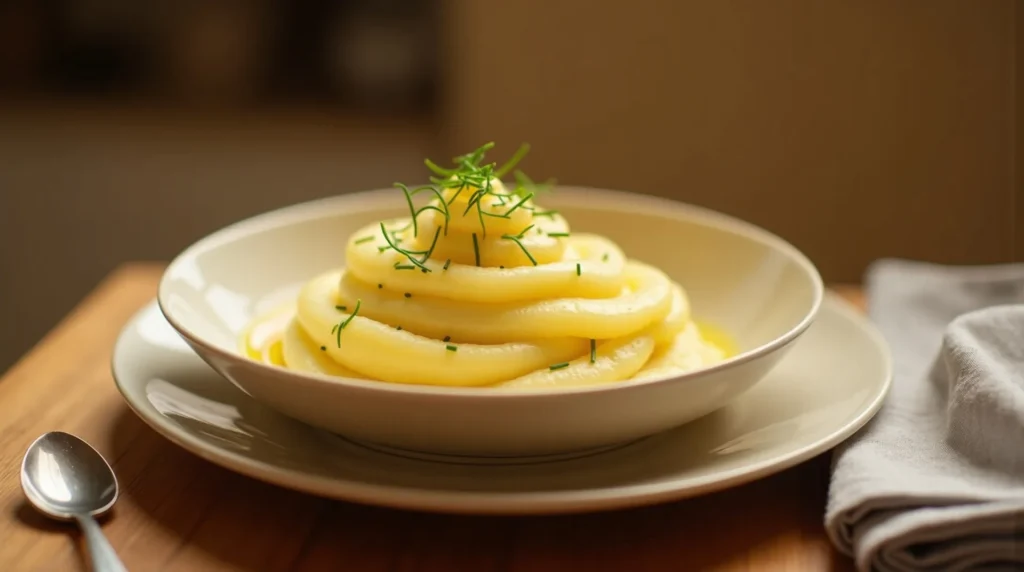
This is the definitive recipe for Pommes Purée, moving beyond simple mashed potatoes to achieve a silky, ethereal texture using professional techniques and copious amounts of high-quality butter.
restaurant_menu Ingredients
Main Components
Aromatics & Seasoning
Garnish
hardware Essential Tools
Large stockpot
Potato ricer or food mill
Colander
Large mixing bowl
Sturdy rubber spatula
Small saucepan
format_list_numbered Preparation
Cooking the Potatoes
Peel and chop the Yukon Gold potatoes into roughly equal 1.5-inch pieces to ensure even cooking
Place the potatoes in a large stockpot and cover them with cold water, leaving two inches of water above the potatoes
Generously salt the water until it tastes pleasantly salty, then add the crushed garlic, thyme sprigs, and bay leaves
Bring the water to a full boil over high heat, then reduce to a steady simmer and cook for 25 to 30 minutes until the potatoes are completely tender when pierced
While potatoes cook, gently warm the half cup of whole milk in a small saucepan until steaming, but do not allow it to boil
Drying and Ricing
Once tender, drain the potatoes completely in a colander and allow them to steam dry for a full five minutes to evaporate excess moisture—this step is vital for a non-watery Pommes Purée
Working quickly while the potatoes are hot, press them through a potato ricer directly into a large, sturdy mixing bowl
Immediately add half of the room-temperature butter cubes to the hot, riced potatoes and gently fold them in with a spatula until fully melted and absorbed
Emulsifying the Pommes Purée
Continue adding the remaining butter in two additional batches, folding gently until each portion is completely melted and incorporated, creating a rich base for the Pommes Purée
Slowly drizzle in the warm milk while continuing to fold gently until the mixture achieves a flowing, silken consistency typical of a fine Pommes Purée
Taste the mixture assertively and adjust seasoning with kosher salt and freshly cracked black pepper until perfectly balanced
Fold in the finely chopped fresh chives just before serving to maintain their bright color and sharp flavor
favorite You Might Also Love
Browse All arrow_forward
Classic Pan-Fried Potatoes and Onions: A Depression-Era Comfort Food Recipe

Cheesy Crispy Hotdog Casserole: The Ultimate Comfort Food
Fire & Cheese Focaccia: Ultimate Jalapeno Cheddar Focaccia

Southern Comfort: Ultimate Baked Cheesy Grits
Nostalgic Savory Onion Pot Roast: 20 Kitchens Ap Classic

Baked Cream Cheese Chicken Recipe
Try These Variations
Truffle Pommes Purée
Fold in 1 tablespoon of high-quality white truffle oil along with the final butter incorporation
Cheese Infusion
Gently melt 1/2 cup of finely grated Gruyère or Parmesan cheese into the warm milk before adding it to the potatoes
Herb Swap
Substitute the thyme with fresh rosemary sprigs during the boiling phase for a deeper, piney aroma
Chef's Pro Tips
Always bring your eggs to room temperature before baking — oh wait, wrong recipe! For this Pommes Purée, always bring your butter to room temperature before incorporating; cold butter cools the potatoes too fast and prevents proper emulsification
For extra richness, replace 1/4 cup of the whole milk with an equal amount of crème fraîche or sour cream
Use a potato ricer that is pre-warmed slightly by running hot water through it before you start pressing the potatoes; this keeps the potatoes hotter longer, aiding the butter melt
Storage Guide
Refrigerator
Store in an airtight container for up to 4 days; cover the surface directly with plastic wrap to prevent drying
Reheating
Gently reheat on the stovetop over very low heat, stirring constantly and adding a splash of warm milk or butter to restore silkiness
Avoid These Mistakes
✕ Using a food processor or immersion blender, which turns the Pommes Purée into a gluey paste by overactivating the starch
✕ Adding cold milk or butter to the hot potatoes, which shocks the starch and results in a stiff, unmanageable texture
✕ Failing to dry the potatoes thoroughly after boiling, leading to a watery and thin Pommes Purée consistency
✕ Under-salting the water, resulting in bland potatoes even after final seasoning
nutrition Nutrition Facts
Per serving: Approximately 1.5 cups per serving
This is a rich dish; portion control is suggested if monitoring fat intake. The high butter content is essential for the texture of authentic Pommes Purée.
flag Conclusion
There you have it—the professional technique to conquer the classic pomme puree. This is more than just a side dish; it’s a testament to how simple ingredients can become extraordinary with dedication and the right tools. Whether you serve this alongside a beautiful roasted chicken or use it as the base for a stunning individual presentation, your guests will taste the difference that true culinary attention makes. Embrace the butter, respect the ricer, and enjoy the pride of serving a truly world-class pomme puree in your own dining room. Happy cooking, from my kitchen to yours!
sell Related Topics
Frequently Asked Questions
Why is my pomme puree gummy or sticky instead of smooth? expand_more
This is the most common pitfall, and it almost always comes down to one of two things: either you used a food processor or an immersion blender, which pulverizes the starch into a sticky paste, or you over-stirred the potatoes after adding the liquid. For a perfect Pommes Purée, you must use a ricer or a food mill to keep the starch granules intact. Gentle folding, not beating, is essential during the final incorporation of butter and milk.
Can I use heavy cream instead of milk, and does it change the texture of the pomme puree? expand_more
Absolutely, you can use heavy cream, and yes, it will dramatically change the texture! If you substitute the half cup of whole milk with heavy cream, you will achieve an even richer, denser, and more decadent Pommes Purée—think truffle-level luxury. However, be aware that you may need slightly less butter, or you might find the final result too heavy for your taste. I usually reserve the cream substitution for holiday meals when maximum decadence is the goal.
How do I keep the pomme puree warm for a long time before serving a crowd? expand_more
If you are preparing this Pommes Purée ahead of time for a large gathering, the best method is the gentle heat bath. Transfer the finished puree to a clean, thick-bottomed stainless steel bowl, cover it tightly with plastic wrap pressed directly onto the surface to prevent a skin from forming, and place that bowl over a saucepan containing about an inch of barely simmering water (a makeshift double boiler). Keep the water warm, never hot. Stir every 15 minutes. This method will keep your Pommes Purée beautifully smooth and warm for up to 90 minutes.
Is it necessary to use fresh thyme and bay leaves, or will dried work for the pomme puree? expand_more
While dried herbs certainly work in a pinch, fresh aromatics provide a clean, vibrant perfume that dried herbs simply cannot match, especially when infusing dairy and water for a delicate dish like Pommes Purée. The fresh thyme sprigs release their essential oils slowly and cleanly during the boil. If you must use dried, use only one sprig of dried thyme and skip the bay leaf, or use half a bay leaf, as dried herbs can sometimes impart a slightly bitter note if overused in long cooking times.
What is the proper way to season the water for boiling the potatoes for pomme puree? expand_more
The seasoning of the boiling water is your first opportunity to season the potato from the inside out. You must salt it assertively. It should taste noticeably salty—think of seasoning pasta water. Potatoes, being starchy vegetables, require significantly more salt than you might think to achieve a baseline flavor. If the water is under-salted, no amount of finishing salt will ever truly rescue the final Pommes Purée.
More Recipes You'll Love

Paris-Brest Recipe (Classic Bicycle Wheel Pastry)

Slow Cooker Amish Pepper Jack Noodle Bake Recipe (Easy)
Cranberry Cheese Dip Recipe (Easy 4-Ingredient Appetizer)
Baked Cream Cheese Chicken Recipe

Community Kitchen