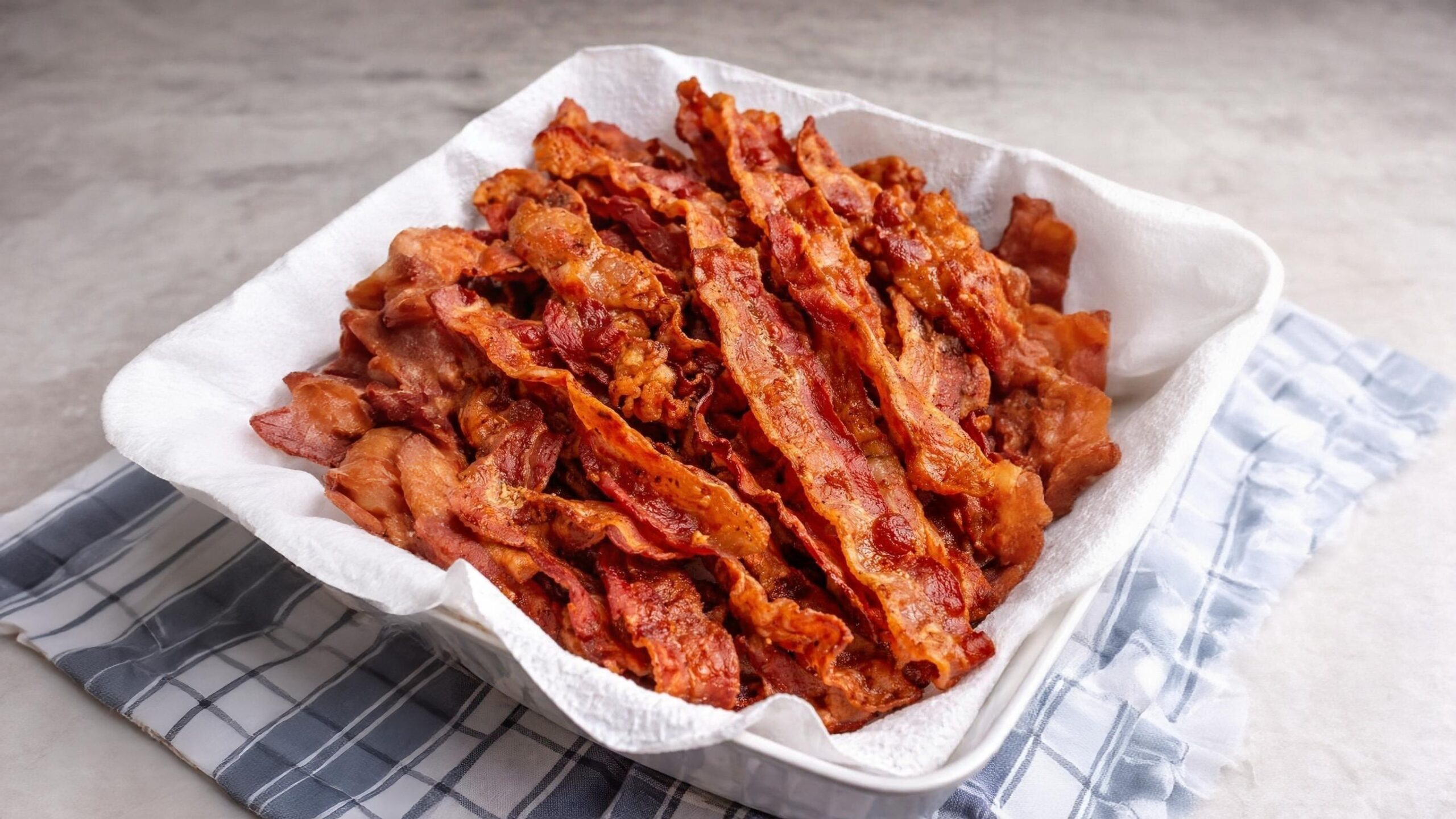
Oven-Baked Bacon: The Ultimate Crispy Method
Transform your breakfast with this foolproof oven-baked bacon recipe! Achieve unparalleled crispiness and flavor without the stovetop mess. This method uses a simple wire rack and your oven to render fat perfectly, resulting in golden-brown, shatteringly crisp bacon strips every single time. It’s the ultimate upgrade for your weekend brunch, BLT sandwiches, or any meal needing that irresistible salty crunch. Say goodbye to greasy pans and unevenly cooked bacon forever!
restaurant_menu Ingredients
Main Ingredients
Optional Seasonings
hardware Essential Tools
Large rimmed baking sheet
Aluminum foil
Wire cooling rack
Paper towels
format_list_numbered Preparation
Preparation
Preheat your oven to 400°F (200°C). Ensure the oven rack is in the center position.
Line a large rimmed baking sheet with heavy-duty aluminum foil for easy cleanup. Place a wire cooling rack on top of the foil-lined baking sheet.
Arrange the bacon strips in a single layer on the wire rack, ensuring no strips overlap. This allows for proper air circulation and even cooking.
If desired, sprinkle the bacon evenly with brown sugar and/or black pepper.
Slide the baking sheet into the preheated oven and bake for 15-20 minutes, depending on the thickness of the bacon and your desired crispness.
Remove the bacon from the oven. Transfer the strips to a plate lined with paper towels to absorb any excess grease.
Allow the bacon to cool for a few minutes before serving; it will continue to crisp up as it cools.
favorite You Might Also Love
Browse All arrow_forward
Canned Chicken Recipe (Comforting Skillet Meal)
Balsamic Brown Sugar Pot Roast: Restaurant Flavor at Home

Spicy Cheddar Corn Dogs: The Ultimate State Fair Crunch

Forgotten Chicken: A Weeknight Wonder
Crusted Parmesan One Pan Chicken Dinner Mastery
Chicken Poke Bowl Recipe (Easy & Flavorful)
Try These Variations
Spicy Kick
For a touch of heat, add a generous pinch of cayenne pepper or red pepper flakes over the bacon strips before baking. You can also brush them with a thin layer of your favorite hot sauce during the last 5 minutes of cooking for an extra kick. This adds a delightful warmth that pairs beautifully with the salty, smoky bacon flavor.
Sweet & Savory Glaze
Elevate your bacon by brushing it with a mixture of maple syrup and Dijon mustard during the last 5-7 minutes of baking. The maple syrup will caramelize beautifully, creating a sticky, sweet glaze, while the Dijon adds a subtle tanginess that cuts through the richness. Ensure you watch closely to prevent burning.
Herb-Infused Bacon
Sprinkle finely chopped fresh herbs like rosemary, thyme, or sage over the bacon before baking. The heat will release their aromatic oils, infusing the bacon with a wonderful herbaceous complexity. This is particularly lovely for holiday meals or a more sophisticated brunch offering. Ensure the herbs are chopped small to prevent burning.
Chef's Pro Tips
The Science of Crispy Fat
Bacon’s magic lies in its fat. For ultimate crispiness, we need that fat to render slowly and evenly, allowing it to liquefy and drip away. The oven’s consistent, dry heat is far superior to the high, often uneven heat of a skillet. The wire rack is crucial because it ensures air can circulate *underneath* the bacon, preventing the rendered fat from pooling and creating soggy spots. This allows the bacon to ‘fry’ in its own rendered fat without becoming greasy, leading to that perfect, brittle crunch.
Managing Smoke
While this method is much cleaner than pan-frying, bacon fat can still smoke at high temperatures. If you notice excessive smoke, your oven might be running hotter than indicated, or your bacon might have a lower smoke point. Ensure your bacon is not overcrowded, as this traps heat and fat. You can also try placing a small oven-safe dish filled with a little water on the bottom rack of the oven to catch any stray drips and slightly raise the humidity, which can help mitigate smoke.
Don’t Discard the Drippings (Carefully!)
Those bacon drippings in the foil are liquid gold! Once cooled, strain them through a fine-mesh sieve into a heatproof jar. Store them in the refrigerator. Bacon fat is incredible for adding flavor to roasted vegetables, frying eggs, cooking potatoes, or even making savory baked goods. Just be sure to let it cool completely before storing to prevent spoilage.
Storage Guide
Refrigerator Storage
Once your oven-baked bacon has cooled completely to room temperature, transfer the strips to an airtight container or wrap them tightly in plastic wrap followed by aluminum foil. This prevents them from drying out and absorbing odors from other foods. Stored properly in the refrigerator, your delicious bacon will maintain its quality and flavor for up to 4 to 5 days. Ensure the container is sealed well to maintain freshness and prevent any potential cross-contamination.
Freezer Storage
For longer preservation, bacon can be frozen. After cooling, arrange the bacon strips in a single layer on a baking sheet lined with parchment paper and freeze until solid (about 1-2 hours). Once frozen, transfer the bacon to a heavy-duty freezer bag or an airtight freezer-safe container. Removing as much air as possible from the bag will help prevent freezer burn. Frozen bacon will remain at its best quality for up to 2 to 3 months. Thaw overnight in the refrigerator before reheating.
Reheating for Optimal Crispness
Reheating is crucial to bring back that delightful crispiness. The best method is in the oven. Spread the cooled bacon on a baking sheet (lined with foil or parchment for easy cleanup) and reheat at 350°F (175°C) for about 5-10 minutes, or until heated through and crisped to your preference. Alternatively, you can use an air fryer at around 350°F (175°C) for 3-5 minutes, watching carefully. Microwaving is the quickest option but tends to make bacon slightly chewier rather than crispy; use short 30-second intervals, checking frequently.
Avoid These Mistakes
✕ Mistake 1
Using the Stovetop and Expecting Perfection. The stovetop is notorious for uneven cooking and splattering. The heat is intense and direct, often leading to burnt edges and undercooked fatty middles. Flipping constantly is a chore, and the grease spatters are a nightmare to clean. The oven, especially with a rack, provides gentle, consistent, all-around heat that renders fat properly and cooks each strip uniformly, eliminating the need for constant vigilance and messy cleanup.
✕ Mistake 2
Overcrowding the Baking Sheet. This is perhaps the most common error when transitioning to oven baking. Bacon needs space! When strips are packed too tightly or overlap, they steam each other. The hot air cannot circulate freely around each piece, preventing the fat from rendering effectively and resulting in limp, greasy, or unevenly cooked bacon. Always give each strip ample room on the wire rack to ensure maximum crispiness.
✕ Mistake 3
Not Using a Wire Rack. While you can bake bacon directly on foil, you are missing out on the key to ultimate crispiness. Without a rack, the rendered fat pools beneath the bacon, essentially boiling it instead of allowing it to crisp. The rack elevates the bacon, letting the fat drip away into the foil below. This separation is what allows the heat to circulate from all sides, achieving that perfect, brittle texture that is the hallmark of expertly cooked bacon. It’s a small addition that makes a monumental difference.
nutrition Nutrition Facts
Per serving: 1 serving (approx. 2-3 strips)
Nutritional values are approximate and can vary based on the type and brand of bacon used.
flag Conclusion
There you have it – the secrets to achieving bacon perfection, every single time. This oven-baked bacon method is more than just a recipe; it’s a culinary revelation that brings simplicity, consistency, and incredible flavor to your table. It’s proof that sometimes, the most profound improvements come from understanding the fundamentals of heat and airflow. I encourage you to try this technique, embrace the ease, and savor the unparalleled crispiness. Make it your own, experiment with seasonings, and enjoy the pride of serving bacon that’s truly restaurant-quality, right from your own kitchen. Happy cooking from all of us here at HomeRecipes!
sell Related Topics
Frequently Asked Questions
What is the best type of bacon for oven baking? expand_more
The beauty of oven-baking is its forgiving nature, making it suitable for most types of bacon. However, for the absolute best results, I highly recommend using thick-cut bacon. This cut has a superior meat-to-fat ratio and a substantial thickness that allows it to render its fat beautifully without becoming overly dry or brittle. The thicker strips hold up better to the higher oven temperature, developing a deep, rich flavor and a satisfyingly chewy-crisp texture that's truly exceptional. Thinner bacon can certainly be used, but you'll need to monitor it very closely as it cooks much faster and can quickly go from perfectly crisp to burnt. If you can find applewood smoked or hickory smoked thick-cut bacon, it will add another wonderful layer of complexity to your final dish.
Why is my oven-baked bacon still soggy? expand_more
Soggy bacon is the bane of many home cooks, and it usually stems from a few common issues that this oven-baked bacon method is designed to prevent. The most likely culprit is insufficient airflow. If your bacon strips are touching or overcrowded on the baking sheet, they will essentially steam instead of crisp. The wire rack is absolutely critical here; it elevates the bacon, allowing hot air to circulate underneath and around each piece. Another possibility is that the oven temperature wasn't quite hot enough, or it dropped significantly when you opened the door. Ensure your oven is fully preheated to 400°F (200°C) and try to minimize opening the oven door during the cooking process. Finally, make sure you're allowing the bacon to cool slightly on paper towels after cooking; this residual heat helps to finish the crisping process.
Can I cook bacon in the oven without a rack? expand_more
While the wire rack is indeed the secret weapon for achieving the ultimate crispy oven-baked bacon, you can achieve good results without one, though it requires a bit more attention. If you don't have a rack, you can lay the bacon strips directly onto a baking sheet lined with heavy-duty aluminum foil (use at least two layers for durability, as the fat can sometimes seep through). You'll need to be more vigilant and likely flip the bacon halfway through the cooking process to ensure even crisping on both sides. You might also find that the bacon is a bit greasier, as the fat doesn't have as easy a path to drip away. For truly superior crispiness and less mess, I strongly advocate for using a rack if at all possible. It makes a world of difference!
How do I prevent bacon from curling up too much? expand_more
The natural tendency for bacon to curl up during cooking is due to the contraction of muscle fibers and the rendering of fat. While a little curl is often part of bacon's charm, excessive curling can lead to uneven thickness and cooking. The best way to combat this is by using a wire rack, as the weight of the bacon itself helps to keep it relatively flat. Additionally, ensuring you don't overcrowd the pan is crucial; more space allows for more even heat exposure. Some chefs recommend gently pressing down on the bacon with a spatula for the first few minutes of cooking, especially if you're cooking it on the stovetop, but this can be tricky and potentially dangerous with hot bacon fat. In the oven with a rack, this is rarely an issue. Simply laying the strips flat and allowing them to cook undisturbed on the rack is usually sufficient to minimize excessive curling.
Can I add seasonings to my oven-baked bacon? expand_more
Absolutely! While perfectly cooked bacon needs no embellishment, seasonings can add another layer of deliciousness. A light sprinkle of brown sugar before baking is a classic choice. The sugar caramelizes beautifully in the oven, creating a slightly sweet, sticky glaze that contrasts wonderfully with the savory pork. Be mindful not to use too much, as it can burn. Freshly cracked black pepper is another fantastic addition, adding a subtle warmth and aromatic spice. For a bit of heat, a pinch of cayenne pepper or smoked paprika works wonders. You can even experiment with garlic powder or onion powder. Apply any dry seasonings evenly over the strips before placing them in the oven. Remember that most bacon is already cured and salty, so adding extra salt is usually unnecessary.
More Recipes You'll Love

Hearty German Cabbage and Dumplings
Classic Cheese Pie Recipe (Savory & Simple)

Artisan Goat Cheese: Old Fashioned Billy Goats

Spicy Chicken Stir-Fry Recipe (Quick & Flavorful)

Community Kitchen