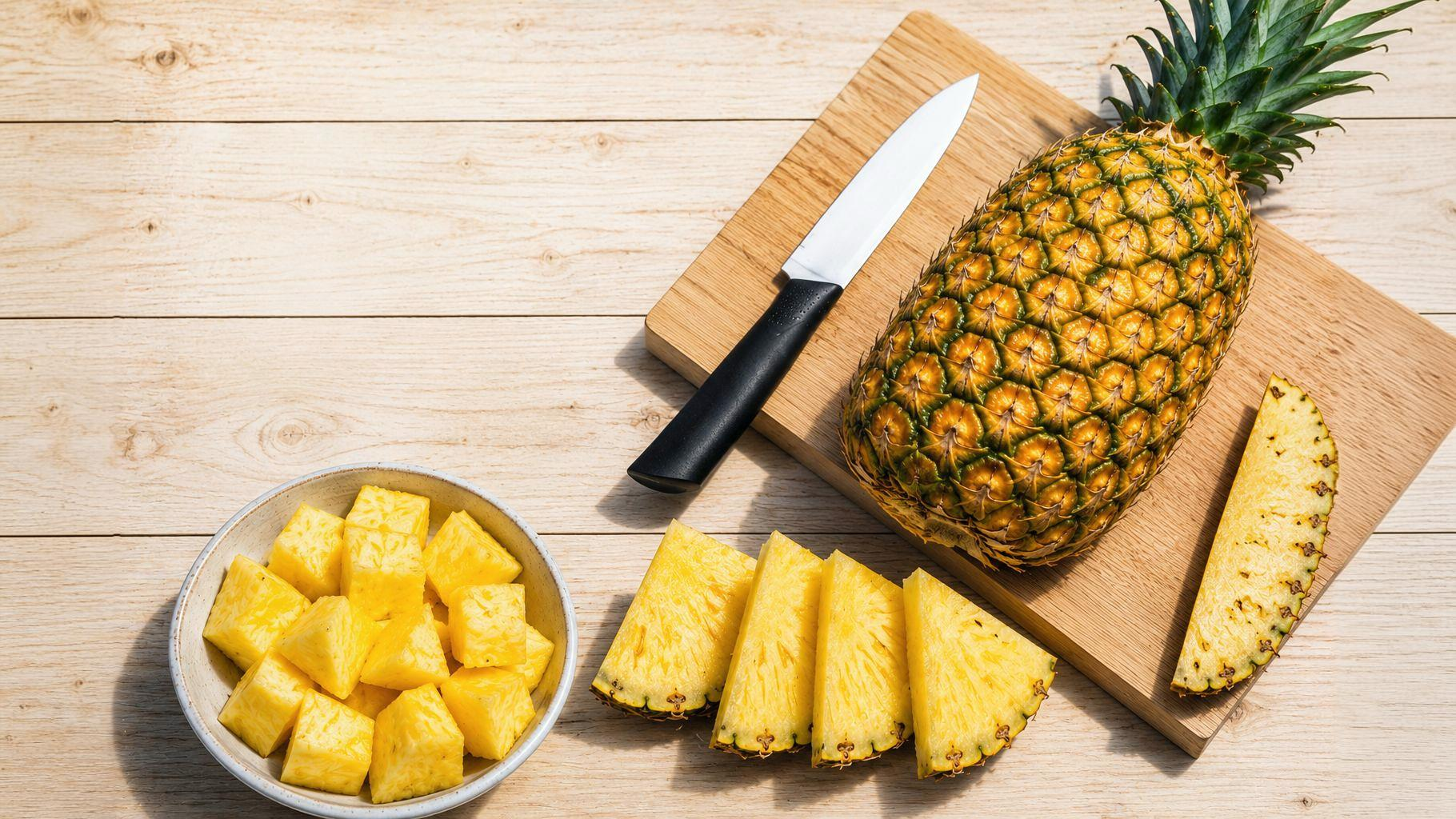
How to Cut a Pineapple Recipe (Effortless & Sweet)
Transform the intimidating pineapple into a juicy, edible delight with this expert guide. Learn how to select the ripest fruit, then follow step-by-step instructions for safely and efficiently removing the tough skin and fibrous core. You'll master the art of dicing and slicing, ensuring every piece of this tropical fruit is perfect for snacking, cooking, or garnishing your favorite dishes, unlocking its full sweet and tangy potential.
restaurant_menu Ingredients
Equipment & Ingredients
hardware Essential Tools
Large, sharp chef's knife
Sturdy cutting board
Large bowl
Pineapple corer (optional)
format_list_numbered Preparation
Preparing the Pineapple
Place your pineapple on its side on a sturdy cutting board. Using a large, sharp chef's knife, carefully slice off the crown (the leafy top) and the base (the bottom stem end), removing about 1/2 to 1 inch from each to create flat, stable surfaces. This ensures the pineapple won't roll while you're cutting.
Stand the pineapple upright on one of its flat ends. Starting from the top, slice downwards along the natural curve of the fruit to remove the tough, spiky skin. Aim to take off just enough skin to expose the yellow flesh, rotating the pineapple as you go until all the outer skin is removed.
Observe the diagonal lines of brown 'eyes' remaining on the pineapple. To remove them efficiently, make a shallow diagonal cut along one line of eyes, then make another diagonal cut along the adjacent line, meeting the first cut to form a V-shape. Lift out the strip of eyes and repeat this process all around the pineapple, creating a spiral groove pattern.
Corning and Slicing
Once the skin and eyes are removed, stand the pineapple upright. Carefully slice the pineapple lengthwise into four equal quarters. This makes the core easily accessible.
From each quarter, carefully slice off the hard, pale, fibrous core. This central part is tough and generally unpleasant to eat. Discard the core.
Lay each cored pineapple quarter flat on your cutting board. Slice them crosswise into desired thickness for triangles or spears. For chunks, stack a few spears and dice them into uniform cubes, ready for snacking or adding to your favorite recipes.
favorite You Might Also Love
Browse All arrow_forwardIs Avocado Oil a Seed Oil? (Chef's Guide)
Cheddar Cheese Recipe (Homemade & Creamy)

Japanese Potato Salad Recipe (Creamy & Savory)
Homemade Ravioli Recipe (Classic Italian)
Yakisoba Noodles Recipe (Classic Japanese Stir-Fry)
Cheesy Ciabatta Bread Recipe (Garlic Parmesan)
Try These Variations
Grilled Pineapple Rings
After slicing the pineapple into 1/2-inch thick rings (removing the core with a round cutter if desired), brush them lightly with a neutral oil like canola or grapeseed. Grill over medium-high heat for 2-3 minutes per side until golden brown and caramelized, with visible grill marks. A touch of cinnamon or a drizzle of maple syrup can be added after grilling for extra flavor. These are fantastic as a side dish, dessert, or addition to a burger.
Spicy Pineapple Salsa
Dice the pineapple into small 1/4-inch cubes. Combine with finely diced red onion, jalapeño (seeds removed for less heat), chopped cilantro, and lime juice. For an extra kick, add a pinch of chili powder or a dash of hot sauce. This vibrant salsa is perfect with grilled fish tacos, chicken, or as a fresh topping for grain bowls. Adjust the spice level to your preference.
Pineapple Skewers with Marinade
Cut pineapple into 1-inch chunks. Thread them onto skewers, alternating with bell peppers, red onion, and cherry tomatoes. Marinate in a mixture of soy sauce (ensure it’s halal), honey, ginger, and a touch of sesame oil for at least 30 minutes. Grill or bake until tender and slightly charred. These skewers make a fantastic side dish or appetizer, offering a balance of sweet, savory, and tangy flavors.
Chef's Pro Tips
Always Use a Very Sharp Knife
This isn’t just about efficiency; it’s about safety. A dull knife requires more force, increasing the chance of slipping and injury. A sharp knife glides through the tough skin and fibrous core with minimal effort, resulting in cleaner cuts and a more pleasant experience. Keep a honing steel handy to maintain your edge during prep.
Don’t Waste the ‘Eyes’ with Excessive Trimming
Many home cooks tend to cut too deep when removing the pineapple skin, trying to get rid of all the ‘eyes’ at once. The V-cut method is a professional technique for a reason: it’s incredibly efficient, minimizes waste, and leaves you with the maximum amount of edible fruit. It takes a little practice but saves significant fruit over time.
Stabilize Your Pineapple at Every Step
The round, uneven shape of a pineapple can make it prone to rolling, which is a major safety hazard when using a sharp knife. By first cutting off the top and bottom to create flat surfaces, you establish a stable base for all subsequent cuts. This simple step makes the entire process much safer and more controlled, allowing for precise cuts.
Consider the Application When Cutting
Think about how you intend to use the pineapple before you start cutting. If you need rings for grilling or an upside-down cake, a pineapple corer can be a worthwhile investment. For fruit salads or snacks, uniform chunks are best. For salsas, finer dice are preferable. Planning your cuts in advance helps ensure you get the perfect shape and size for your recipe.
Storage Guide
Room Temperature (Uncut)
An uncut, ripe pineapple can be stored on the kitchen counter for 1-2 days. If it’s slightly underripe, leaving it at room temperature will help it soften, though its sweetness won’t increase after harvest. Keep it away from direct sunlight to prevent premature spoilage. This method is best for short-term storage when you plan to consume it soon.
Refrigerator (Uncut)
To extend the life of a ripe, whole pineapple, store it in the refrigerator. Place it in the crisper drawer or on a shelf. This will slow down the ripening process considerably, keeping it fresh for up to a week. Do not wrap it tightly in plastic, as this can trap moisture and promote mold growth. Ensure good air circulation.
Refrigerator (Cut)
Once cut, pineapple must be stored in an airtight container in the refrigerator. This prevents it from drying out, oxidizing, and absorbing odors from other foods in the fridge. Properly stored, cut pineapple will remain fresh and delicious for 3 to 5 days. For best flavor and texture, consume within this timeframe.
Freezer (Cut)
For longer storage, freeze cut pineapple. Arrange uniform chunks or pieces in a single layer on a parchment-lined baking sheet and freeze until solid (about 2-3 hours). Once frozen, transfer the pieces to a freezer-safe bag or container, removing as much air as possible to prevent freezer burn. Frozen pineapple can be stored for up to 6 months and is excellent for smoothies, sorbets, or baking.
Avoid These Mistakes
✕ Choosing an Underripe or Overripe Pineapple
An underripe pineapple will be overly tart and fibrous, lacking the desired sweetness and juiciness. An overripe one will be mushy, potentially fermented, and have a less appealing flavor. Always use the smell and feel tests described in the FAQs to ensure you select a perfectly ripe fruit, which is foundational to enjoying fresh pineapple.
✕ Using a Dull Knife
Attempting to cut a pineapple with a dull knife is not only frustrating but also dangerous. A dull knife is more likely to slip, leading to potential cuts. It also tears the fruit rather than cleanly slicing it, resulting in ragged edges and wasted juice. Always ensure your chef’s knife is sharpened and honed before starting this task for safety and efficiency.
✕ Wasting Too Much Fruit When Removing the Skin and Eyes
Many beginners tend to cut too deeply when removing the outer skin and then try to individually hack out each brown ‘eye,’ which results in significant waste. The V-cut method for the eyes is a professional technique designed to maximize yield. By following the natural curve of the fruit and using the V-cut, you preserve much more of the delicious, edible flesh.
✕ Not Stabilizing the Pineapple During Cutting
A round pineapple is inherently unstable. Failing to create flat top and bottom surfaces before attempting to remove the skin or core can lead to the fruit rolling, making it difficult to control your knife and increasing the risk of injury. Always ensure your pineapple is steady on a flat surface before making any major cuts.
nutrition Nutrition Facts
Per serving: 1 cup (165g)
Nutritional values are approximate and may vary based on pineapple size and ripeness.
flag Conclusion
Mastering how to cut a pineapple is a simple skill that opens up a world of culinary possibilities. No longer will you shy away from the spiky exterior of this tropical marvel. With the techniques I’ve shared, you can confidently transform a whole pineapple into perfect, juicy pieces, ready for snacking, cooking, or impressing your guests. Here at HomeRecipes, we believe every home cook deserves to feel like a chef in their own kitchen, and this skill is a delightful step on that journey. So grab a ripe pineapple, sharpen your knife, and get ready to enjoy the sweet rewards of this fantastic fruit. Happy cooking!
sell Related Topics
Frequently Asked Questions
How can I tell if a pineapple is perfectly ripe? expand_more
A perfectly ripe pineapple will have a few key indicators, as I've observed countless times in my culinary career. First, the scent: hold the pineapple to your nose and smell the base. It should have a sweet, tropical aroma. If there's no smell, it's likely underripe; if it smells fermented or alcoholic, it's overripe. Second, the feel: gently squeeze the pineapple. It should give slightly, but still feel firm. Avoid soft spots. Third, the color: while not always a definitive indicator, a mostly golden-yellow skin usually suggests ripeness, though green pineapples can also be ripe. Finally, the leaves: you should be able to easily pull a single leaf from the crown.
What's the best way to store a whole, uncut pineapple? expand_more
For a whole, uncut pineapple, the best storage method depends on its ripeness and when you plan to eat it. If it's underripe, you can leave it on the counter at room temperature for a day or two to encourage ripening, though remember, the sweetness won't increase after harvest, only the texture will soften. Once ripe, or if you bought it ripe, store the whole pineapple in the refrigerator. This will slow down the ripening process and extend its shelf life by several days, typically up to a week. Avoid storing it in a plastic bag, as this can trap moisture and accelerate spoilage. Always keep it in a cool, dry place if not refrigerating immediately.
Can I use the pineapple core for anything, or should I just discard it? expand_more
While the pineapple core is too fibrous and tough to eat raw, it's actually quite flavorful and shouldn't necessarily be discarded! It contains a high concentration of bromelain, the beneficial enzyme found in pineapple. I often use the core to infuse flavor into liquids. You can simmer it in water to make a delicious pineapple-infused water, perfect for hydrating or as a base for smoothies. It can also be added to a slow cooker with chicken or pork (if you were making a non-halal dish) to tenderize the meat and add a subtle sweetness. Some people even blend it into smoothies for an extra nutritional boost, though you'll need a powerful blender to break down the fibers completely.
Why is my pineapple sometimes prickly or irritating to my mouth? expand_more
That prickly sensation you sometimes feel after eating fresh pineapple is due to bromelain, a group of enzymes naturally present in the fruit that break down proteins. While beneficial for digestion, in some people, it can cause a mild, temporary irritation or tingling sensation in the mouth, tongue, or lips. This is more common with underripe pineapples, as they tend to have higher concentrations of bromelain. To minimize this, ensure you choose a ripe pineapple, and if you're particularly sensitive, you can try soaking cut pineapple in a little salt water for 15-30 minutes, then rinsing it thoroughly. The salt helps to neutralize some of the enzymes without significantly altering the flavor, a trick I learned from a chef specializing in tropical fruits.
What are some creative ways to use fresh pineapple in cooking? expand_more
Fresh pineapple is incredibly versatile! Beyond simply eating it raw, there are so many ways to incorporate it into your cooking. For savory dishes, think about grilling pineapple rings to serve alongside grilled fish or chicken, or dicing it to add a sweet and tangy crunch to a homemade salsa for tacos or grain bowls. It's also fantastic in stir-fries, adding a bright, acidic counterpoint to rich sauces. For desserts, blend it into smoothies, make a vibrant pineapple sorbet, or bake it into a classic pineapple upside-down cake. You can even make a fresh pineapple juice or use it to infuse water for a refreshing drink. Its natural acidity also makes it a great tenderizer for marinades, though be mindful not to leave it too long as it can break down proteins too much, making meat mushy.
More Recipes You'll Love
Homemade Ravioli Recipe (Classic Italian)
Is Avocado Oil a Seed Oil? (Chef’s Guide)
Cheddar Cheese Recipe (Homemade & Creamy)
Yakisoba Noodles Recipe (Classic Japanese Stir-Fry)
Community Kitchen