Simple. Tasty. From Our Home to Yours. Browse all recipes

Simple. Tasty. From Our Home to Yours. Browse all recipes
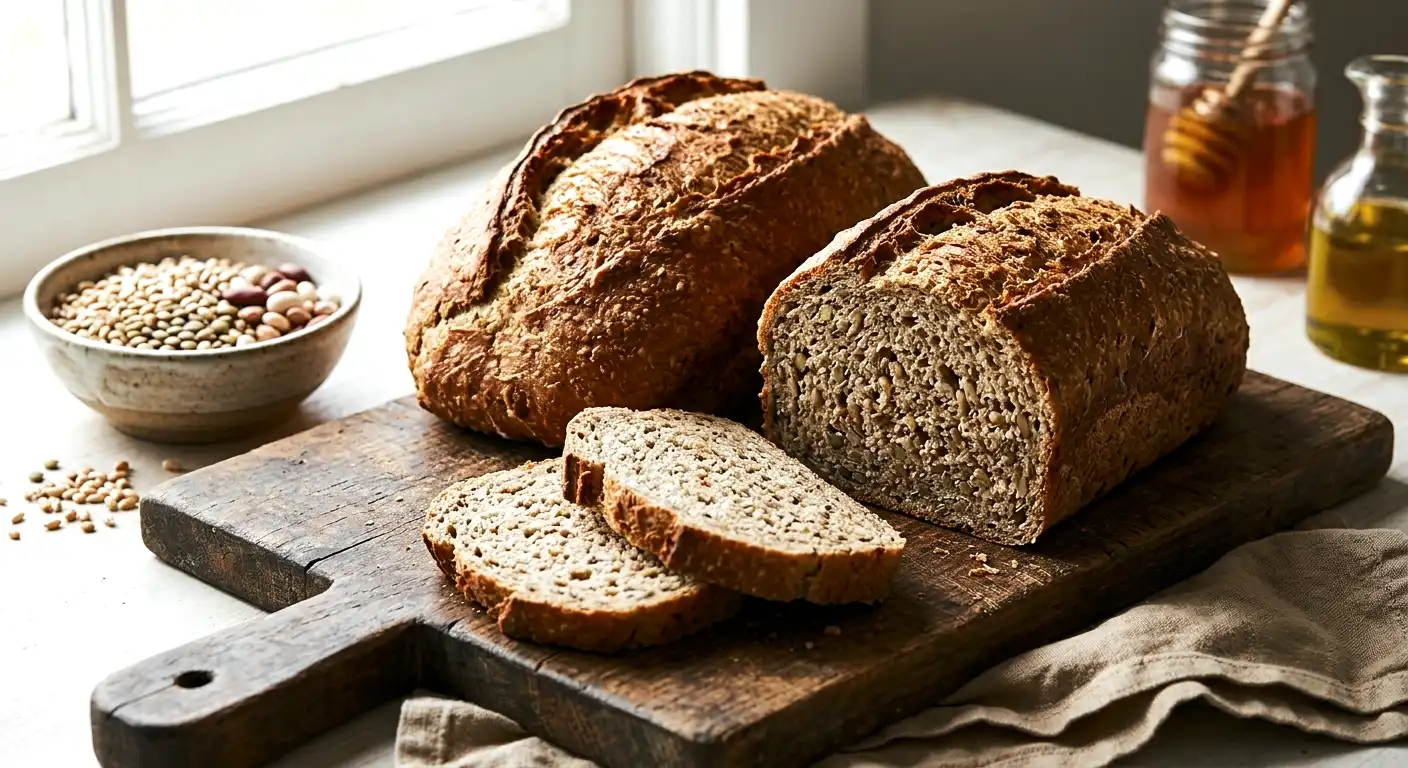
A dense, nutty, naturally sweetened loaf inspired by an ancient biblical bread tradition, this ezekiel bread recipe blends sprouted wheat berries, spelt flour, barley, millet, and a mix of beans and lentils. The result is a hearty, protein-rich bread with a chewy crust and satisfying crumb, perfect for toast, sandwiches, or serving alongside a warm bowl of soup.
High-powered blender or grain mill
Large mixing bowl
Kitchen towel
2 loaf pans
Measuring cups and spoons
Cooling rack
Combine the warm water, honey, and olive oil in a large bowl, then sprinkle the active dry yeast over the top and let it sit for 5-10 minutes until foamy.
While the yeast proofs, grind the wheat berries, barley, millet, green lentils, great Northern beans, kidney beans, and pinto beans into a fine flour using a high-powered blender or grain mill.
Stir the ground grain-and-bean flour, spelt flour, and salt into the yeast mixture until a shaggy dough forms.
Turn the dough out onto a floured surface and knead for 8-10 minutes until smooth and elastic.
Place the dough in a greased bowl, cover, and let rise in a warm spot for about 1 hour, or until doubled.
Punch down the dough, divide into two portions, shape into loaves, and place in greased loaf pans.
Cover and let rise for another 30-45 minutes until puffed.
Bake at 350°F for 30-35 minutes, until deeply golden and hollow-sounding when tapped.
Cool completely on a wire rack before slicing.


Replace a portion of the honey with molasses for a deeper, more robust sweetness and a slightly darker crumb, reminiscent of old-fashioned brown bread. Start by swapping in about a quarter of the honey with molasses, then adjust to taste for your preferred level of sweetness.
Fold in two tablespoons each of sunflower seeds and flaxseeds into the dough before kneading for extra crunch and a nutty, toasted flavor. This variation adds a pleasant textural contrast to the already hearty, dense crumb of the original loaf.
Add a tablespoon of dried rosemary or thyme to the dough for a savory twist that pairs beautifully with soups and stews. This version turns the bread into more of a rustic dinner loaf rather than a breakfast-style bread.
a coarse grind leads to a gritty, crumbly loaf, while a fine, flour-like consistency helps the dough come together smoothly and rise more evenly throughout baking.
water that’s too hot, above 115°F, can kill the yeast before it has a chance to activate, while water that’s too cool will slow the process significantly, so use a thermometer if you have one.
this dense, grain-heavy dough needs the full rising time to develop a lighter, more open crumb, so resist the urge to bake it early even if it looks ready sooner.
Store the bread wrapped tightly in plastic wrap or a bread bag at room temperature for up to three days. Keep it away from direct sunlight or heat sources, which can dry out the crust and cause the bread to stale more quickly.
Refrigeration isn’t recommended for this bread, as the cold temperature can actually accelerate staling and dry out the crumb faster than storing it at room temperature or in the freezer.
Slice the bread before freezing so you can thaw only what you need at a time. Wrap slices individually in plastic wrap, place them in a freezer bag, and store for up to three months, thawing at room temperature or toasting directly from frozen.
cutting into a hot loaf releases excess steam and can leave the crumb gummy and dense in the center. Let the loaves cool completely on a wire rack, ideally for at least 30 minutes, before slicing.
adding too much extra spelt flour during kneading can result in a dry, crumbly loaf rather than a moist, tender one. Add extra flour a tablespoon at a time only as needed to manage stickiness.
baking the loaves immediately after shaping, without letting them puff up again, results in a dense, heavy bread with poor volume. Always allow the full second rise before baking for the best texture.
Per serving: 1 slice (recipe yields 2 loaves, about 24 slices total)
Nutrition values are estimated per slice and will vary based on slice thickness and exact bean and grain brands used.
This ezekiel bread recipe is proof that some of the best recipes are also the oldest ones, built on humble grains and legumes that have nourished people for thousands of years. Whether you bake it for meal prep, a holiday table, or simply the joy of a warm slice fresh from the oven, this loaf rewards your patience with flavor and texture you won’t find on any grocery store shelf.
No, this bread is not gluten-free. While it skips traditional all-purpose flour, the wheat berries, spelt flour, and barley all naturally contain gluten, so it's not suitable for anyone following a gluten-free diet.
The concept comes from a passage in the Book of Ezekiel, where the prophet is instructed to combine wheat, barley, beans, lentils, and other grains into a single bread. This modern version is inspired by that ancient combination, though it's adapted with contemporary techniques like active dry yeast for a more reliable, bakery-style rise.
Yes, this recipe is fairly forgiving when it comes to substitutions. If you're missing one type of bean or lentil, you can replace it with a similar amount of another dried bean or lentil without significantly changing the final texture or flavor.
A grain mill makes quick work of grinding the wheat berries, barley, and millet, but a high-powered blender can also grind them into a fine flour-like consistency. Just be sure to grind in batches so your blender doesn't overheat or stall.
Because whole grains and legume flours absorb moisture differently than all-purpose flour, your dough may feel stickier than a traditional bread dough at first. Add the extra spelt flour a tablespoon at a time during kneading until the dough becomes smooth and manageable.
Yes, molasses works well as a substitute and adds a deeper, more robust sweetness to the finished loaf. Start by replacing a small portion of the honey with molasses, then adjust to taste, since molasses has a stronger, slightly bitter-sweet flavor.
The loaves should be deeply golden brown on top and sound hollow when you tap the bottom of the pan. An instant-read thermometer inserted into the center should read about 190°F when the bread is fully baked through.



No items yet. Click "Add All" or use + buttons!
Community Kitchen