
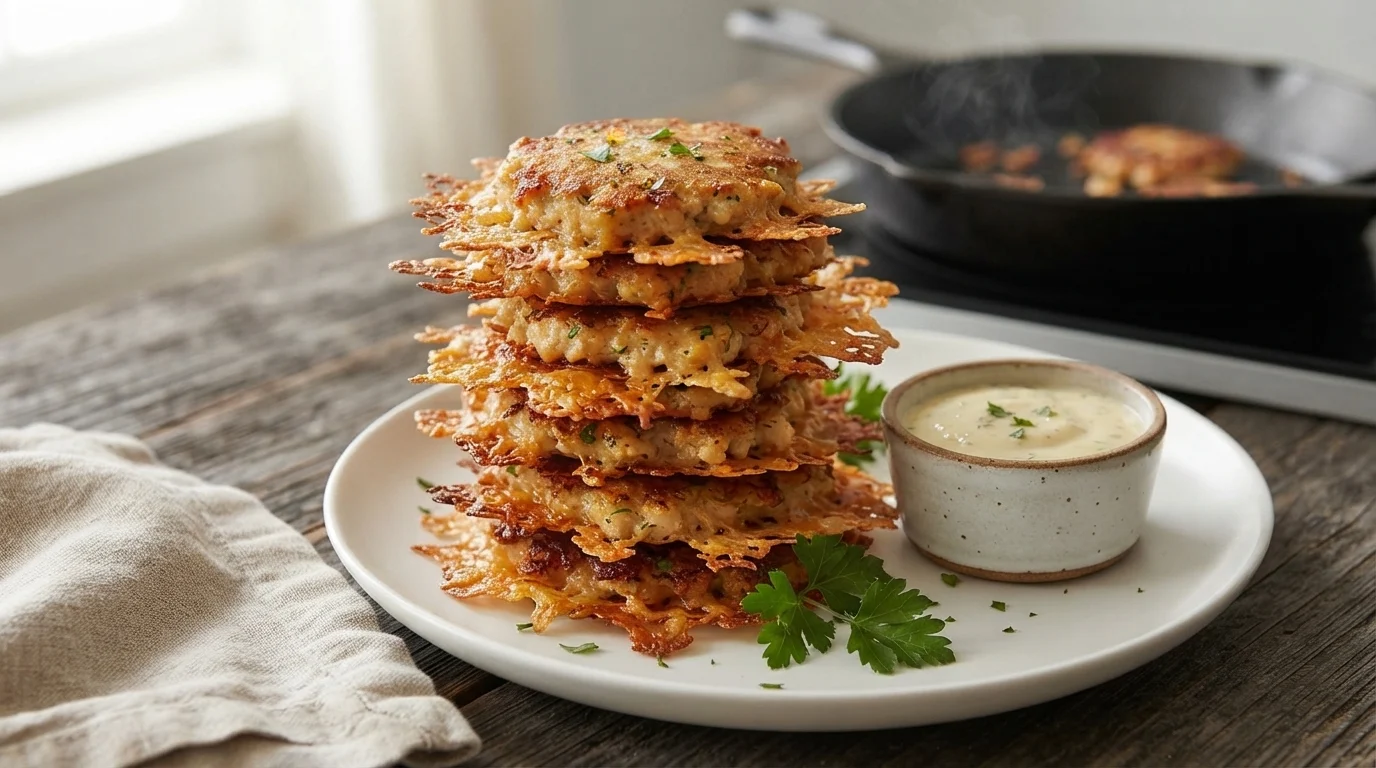
Plan on about 50 minutes for these cheesy chicken fritters, with 20 minutes of chopping and mixing and 30 minutes of frying in batches. One large skillet is the only real equipment, and the recipe makes about 30 small fritters, which is 7 or 8 per person for 4 people as a main dish. It’s an easy cook with one slow job, the knife work, and a mix this cheesy needs a steady medium heat and a little attention at the stove.
Everything goes into one bowl. Chicken breast is chopped small and stirred together with mozzarella, Parmesan, eggs, mayonnaise, flour, garlic powder, onion powder, paprika and parsley. You scoop it by the 2 tablespoons into hot olive oil and cook each fritter 3 to 4 minutes per side, until golden and 165°F (74°C) in the center. Serve them warm with a dipping sauce, tucked into a wrap, or next to a green salad.
The First Fritter Tells You Everything
Cook one fritter before you commit the rest of the bowl. Scoop 2 tablespoons, drop it into the skillet and listen. A steady, gentle sizzle means the oil is ready. Silence means the oil is too cool, so the mound will spread and soak up fat. A hard, spitting crackle means the heat is too high and the cheese will scorch before the chicken cooks through.
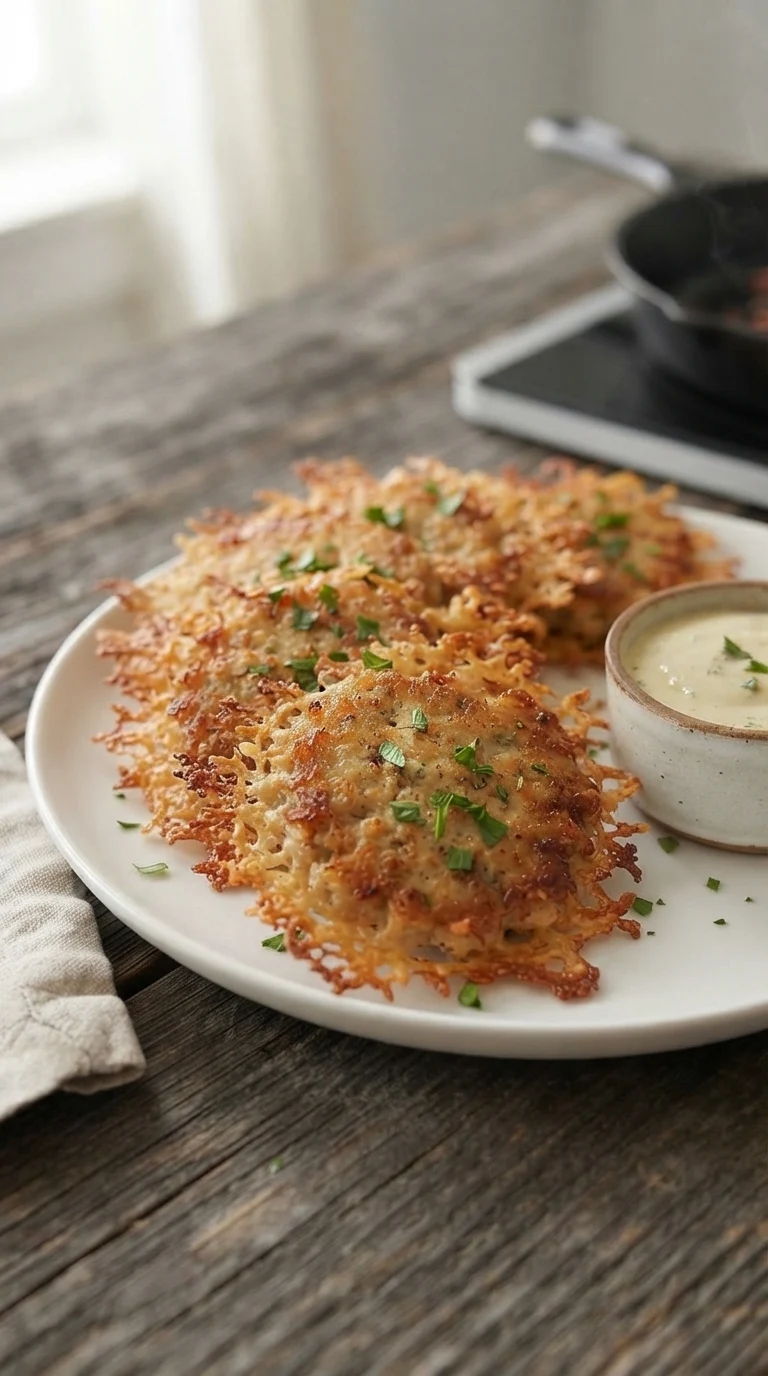
Leave it alone for the first 2 minutes. The edges turn from pink to opaque, then a lacy golden fringe forms where cheese melts out and crisps against the pan. When the underside is deep golden and the spatula slides under without tearing, flip it. If it sticks, give it another 30 seconds, because a set crust releases on its own.
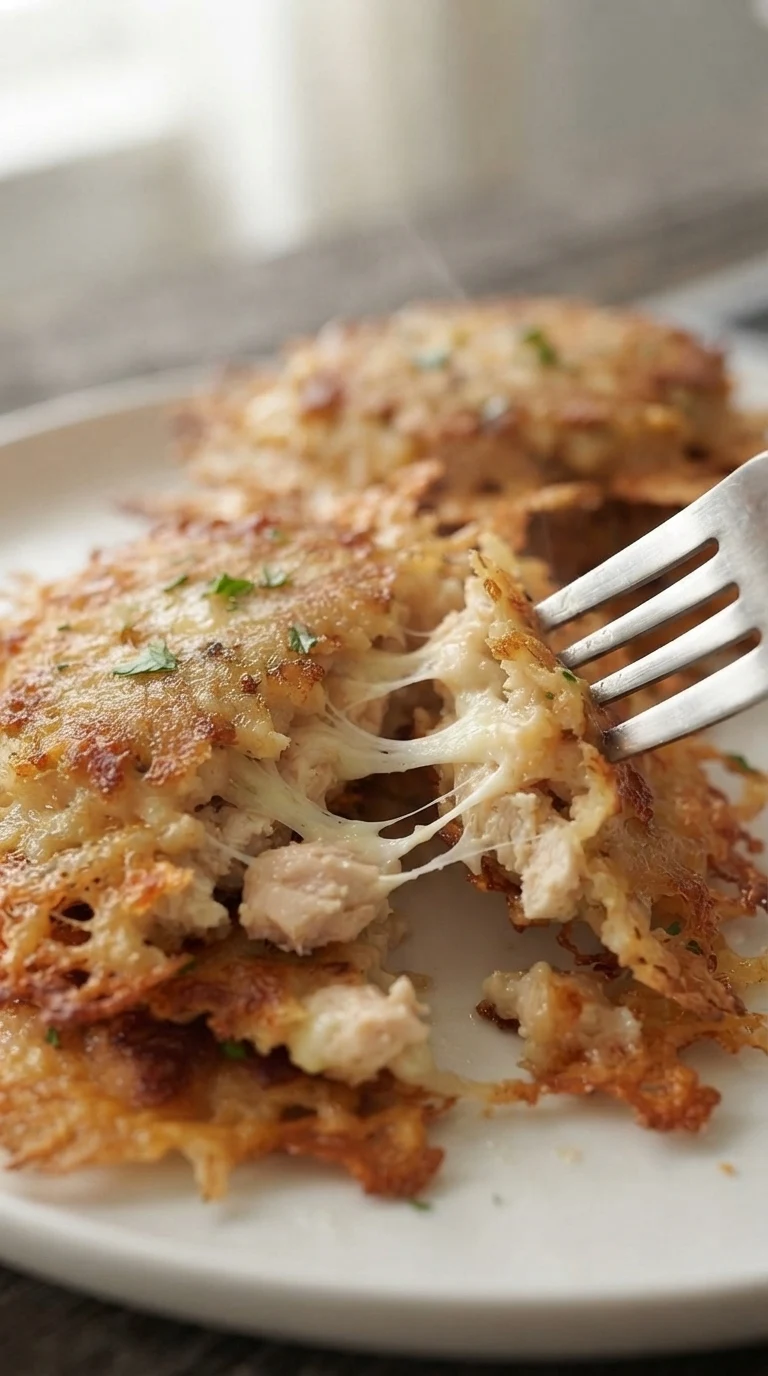
After the second side, check the center with an instant-read thermometer for 165°F (74°C), or cut the fritter open and look for no pink and clear juices. Taste it now. Raw chicken and raw egg mean you can’t taste the bowl, so adjust the salt and pepper in the mix before the next batch. If the first fritter slumps flat, chill the bowl for 15 minutes and try again.
Which Cheese and Chicken Should You Buy?
Buy boneless, skinless chicken breast and trim off any fat or tendon before you chop. Breast is lean, which is why the mix leans on mayonnaise and egg to stay moist. Stick to breast here, since the times and cues in the recipe were written for it.
Shred the mozzarella from a block if you can. Bagged shreds are usually dusted with an anti-caking powder, which is harmless but keeps them from melting as smoothly. Low-moisture mozzarella suits the mix. Fresh mozzarella packed in brine is too wet. Parmesan adds a lot of salt, so go easy on the added salt until you’ve cooked a test fritter.
| Ingredient | Swap | What changes |
|---|---|---|
| Mozzarella | Sharp cheddar, same amount | Sharper flavor, less stretch |
| Chopped chicken | Ground chicken | Softer bite and a looser mix |
| All-purpose flour | 1 to 1 gluten free flour blend | Same amount, so check the label |
The fritters contain egg, milk and wheat. The eggs and mayonnaise can’t be swapped without making a different recipe, so skip this one for anyone with an egg or dairy allergy.
Why Chop the Chicken by Hand?
Chopping leaves you small pieces of real chicken, each still holding its own juice. A food processor tends to turn breast into a paste, and paste fries up dense and springy. Aim for pieces about the size of a pea, roughly 1/4 inch. Even pieces cook at the same pace, and the gaps between them give the cheese room to melt. Cut the chicken straight from the refrigerator, since cold breast is firmer and far easier to dice finely.
The binder is the egg, mayonnaise and flour working together. Egg proteins set as they heat and glue the pieces. Flour soaks up loose moisture so the mound doesn’t spread. Mayonnaise, which is mostly oil and egg yolk, keeps the lean breast from drying out as it cooks.
Medium heat matters because of the cheese. The milk solids in cheese brown quickly, so over high heat the outside darkens before the center reaches 165°F (74°C). At medium heat a fritter needs 3 to 4 minutes per side to turn golden and finish cooking, and the cheese that seeps out crisps into lacy edges. A non-stick skillet helps the crust release without tearing.
Where Do Chicken Fritters Go Wrong?
- The fritters spread flat. The mix is too loose or the oil is too cool. Pat the chicken dry after chopping, level the flour in the cup, and wait until a pinch of mixture sizzles the moment it touches the pan.
- Brown outside, raw in the middle. The heat is too high or the scoops are too thick. Turn the burner down to medium and flatten each mound slightly, then confirm 165°F (74°C) in the center.
- They fall apart when flipped. The crust hasn’t set yet. Wait until the edges look dry and golden and the spatula slides under with no resistance.
- They taste dry or tough. The chicken was chopped too coarsely, or it cooked far past 165°F (74°C). Chop small, and take them off the heat as soon as the center hits that temperature.
- They come out greasy. Too many fritters in the pan drop the oil temperature and the crust soaks up fat. Fry in batches with space around each one, and drain on paper towels.
- The cheese leaks out and burns. Cheese that escapes the mound sticks to the pan and scorches, which turns the oil bitter. Wipe the pan with a paper towel between batches if dark bits build up, and keep the heat at medium.
How Far Ahead Can You Make Them?
You can mix the raw chicken mixture up to a day ahead. Cover the bowl tightly and keep it in the refrigerator until you’re ready to fry. Raw chicken and raw egg are in the bowl, so wash your hands, the board and the knife with hot soapy water after chopping, and don’t taste the mixture.
Refrigerate cooked fritters within 2 hours, in an airtight container, and eat them within 3 days. For longer storage, cool them completely, then freeze them in a freezer-safe container or bag for up to 3 months, with parchment between layers so they don’t stick. Thaw them in the refrigerator overnight.
Reheat in a skillet over medium heat for a few minutes per side, or on a rack in a 375°F (190°C) oven for about 10 minutes, until hot through and crisp again. Leftovers should reach 165°F (74°C), which is the same number the federal food safety guidance gives for poultry. A microwave warms them quickly, but the crust turns soft.
For a party, keep finished fritters on a rack in a 200°F (95°C) oven while you fry the rest.
Can You Change the Cheese or the Seasoning?
- Spicy. Stir 1/4 teaspoon of cayenne pepper or a few dashes of hot sauce into the mixture. Add the hot sauce a dash at a time, since it loosens the mix slightly.
- Cheddar. Replace the mozzarella with the same amount of sharp cheddar. The flavor gets sharper and less stretchy, and the fritters may brown a little faster, so watch the heat.
- Herb. Add 1 tablespoon of chopped fresh thyme or basil along with the parsley. Thyme is the stronger of the two.
- Ground chicken. It works if you can’t chop, though the texture is softer. Chill the bowl for 15 minutes before scooping so the mix holds its shape.
If you’d rather try a different mix, the site’s crispy chicken fritters are another way to cook the same idea. Change one thing at a time, and cook a test fritter after each change so you can judge the result before you fry the whole batch. A seasoning change is easy to judge on one fritter, while a change to the cheese or the chicken also changes how the mix holds together.
What Should You Serve Alongside?
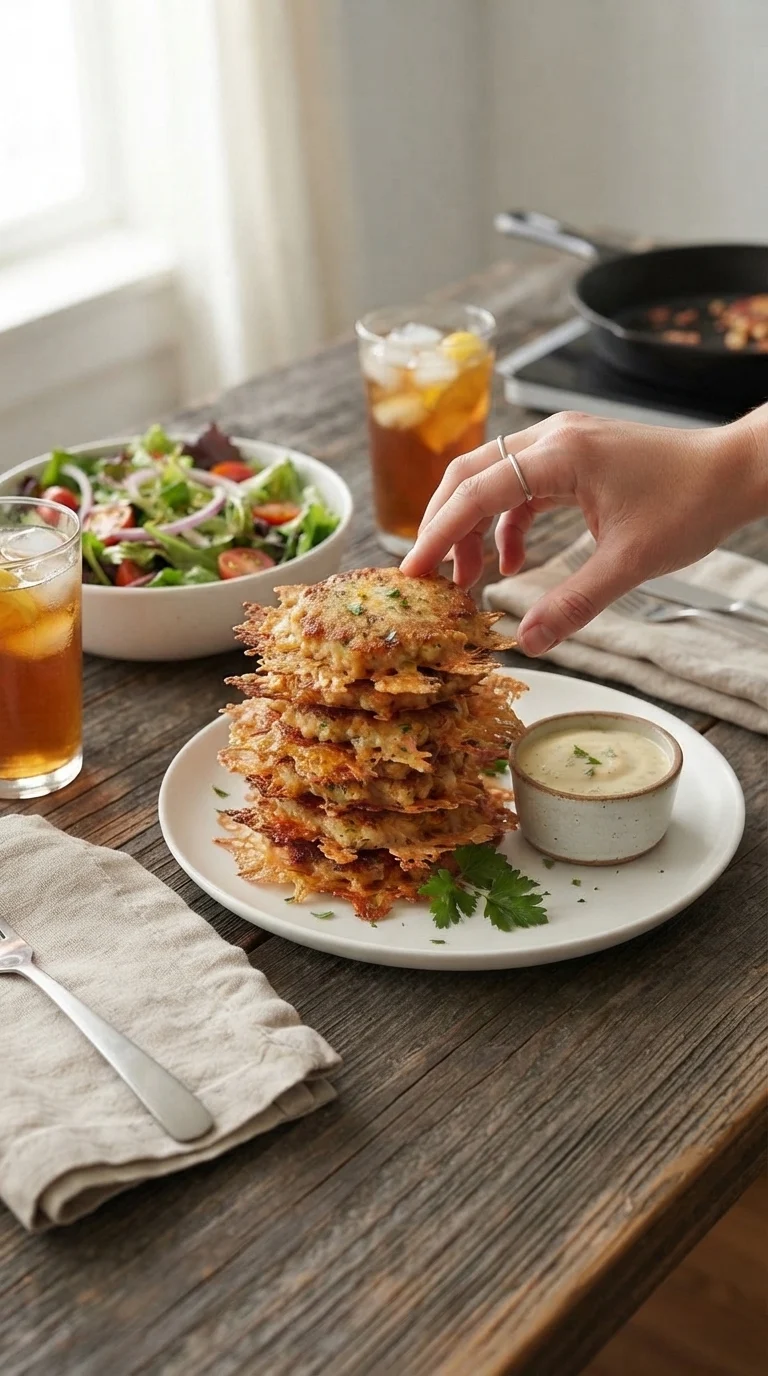
A cold or creamy dipping sauce balances the cheese and the fry. Ranch dressing, garlic aioli and sriracha mayonnaise all work, and a small bowl per person keeps double dipping down. For a lighter plate, serve the fritters with a crisp green salad. They also fold into a flour tortilla with lettuce, tomato and a drizzle of sauce for a quick wrap.
For a fuller dinner, pair them with a baked side. The creamy spinach casserole brings a green vegetable to the table, and the cheesy mashed potato puffs suit anyone who wants a starchy side to go with the crisp edges.
As an appetizer, set the fritters on a platter with toothpicks and two or three sauces. The 2 tablespoon scoop makes bite-size pieces, and the fritters are good warm or at room temperature, but don’t leave them out longer than 2 hours. Put the sauces in small bowls with spoons, so nobody dips a half-eaten fritter into the shared bowl. A little extra chopped parsley scattered over the platter brings back the color the frying took out.
If you’re feeding children or a mixed table, keep the spicy version on its own plate and label it, and set out the plain fritters first. Fritters made with cayenne or hot sauce look identical to the plain ones once they’re cooked.
FAQ
Can I use ground chicken instead of chopped chicken?
Yes, ground chicken works, but finely chopped chicken gives a better texture. Ground chicken makes a softer, looser mixture, so chill the bowl for 15 minutes before scooping and cook the fritters to the same 165°F (74°C) in the center. Don’t skip that check, since softer fritters can look done before they are.
How do I know the fritters are cooked through?
Use an instant-read thermometer and look for 165°F (74°C) in the center. Without one, cut a fritter open. There should be no pink, the juices should run clear, and both sides should be deep golden after 3 to 4 minutes each. Insert the probe from the side so it reaches the middle.
Can I bake or air fry them instead?
This recipe is written for pan frying in a skillet, so I can’t give tested times for baking or air frying. The crust and timing would change. If you try another method, check the center for 165°F (74°C) before serving, and start with a single test fritter before cooking the whole mixture.
Can I taste the mixture to check the salt?
No. The bowl has raw chicken and raw eggs, so don’t taste it. Fry one small test fritter first, taste it once it’s cooked through, then add salt or pepper to the rest of the mixture if it needs more. Parmesan is salty, so go lightly.
Can I make the fritters bigger or smaller?
You can, but the times change. The recipe uses about 2 tablespoons per fritter. Larger ones need a little longer on lower heat so the center reaches 165°F (74°C) before the outside darkens, and smaller ones cook faster, so watch them closely and always test one first.
Can I eat the leftovers cold?
Yes, as long as they were refrigerated within 2 hours and are eaten within 3 days. The texture is firmer and less crisp when cold. If you pack them in a lunch box, add an ice pack and eat them within 2 hours. Reheating to 165°F (74°C) is better still.
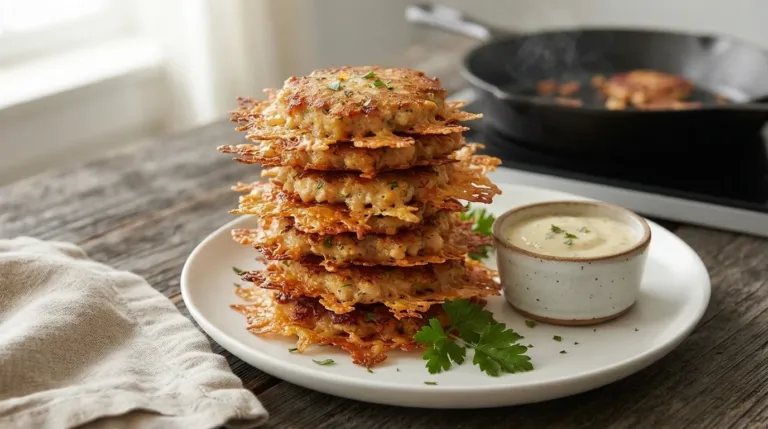
Cheesy Chicken Fritters with Mozzarella and Parmesan
- Prep 20 min
- Cook 30 min
- Total 50 min
Cook mode: your screen stays on and the current step is shown larger.
Ingredients
Steps
- Step 1 of 6
Chop the chicken breast into small, even pieces about 1/4 inch (6 mm) across and put them in a large mixing bowl.
- Step 2 of 6
Add the mozzarella, Parmesan, eggs, mayonnaise, flour, garlic powder, onion powder, paprika, parsley, salt and pepper, and mix until everything is evenly combined and the mixture holds together on a spoon.
- Step 3 of 6
Heat the olive oil in a large skillet over medium heat for about 2 minutes, until it shimmers and a pinch of the mixture sizzles at once.
- Step 4 of 6
Scoop about 2 tablespoons of the mixture, shape it into a fritter and set it in the hot skillet. Repeat with more scoops, cooking in batches with space between the fritters.
- Step 5 of 6
Cook 3 to 4 minutes per side, until deep golden brown and the center reaches 165°F (74°C).
- Step 6 of 6
Lift the fritters onto a paper-towel-lined plate to drain, and serve warm with your favorite dipping sauce.
Nutrition
- Calories
- 480 kcal
- Protein
- 51 g
- Fat
- 27 g
- Carbohydrates
- 8 g
- Sugar
- 1 g
- Fiber
- 0 g
- Salt
- 2 g
Approximate values per serving.
How did it turn out?
Related searches