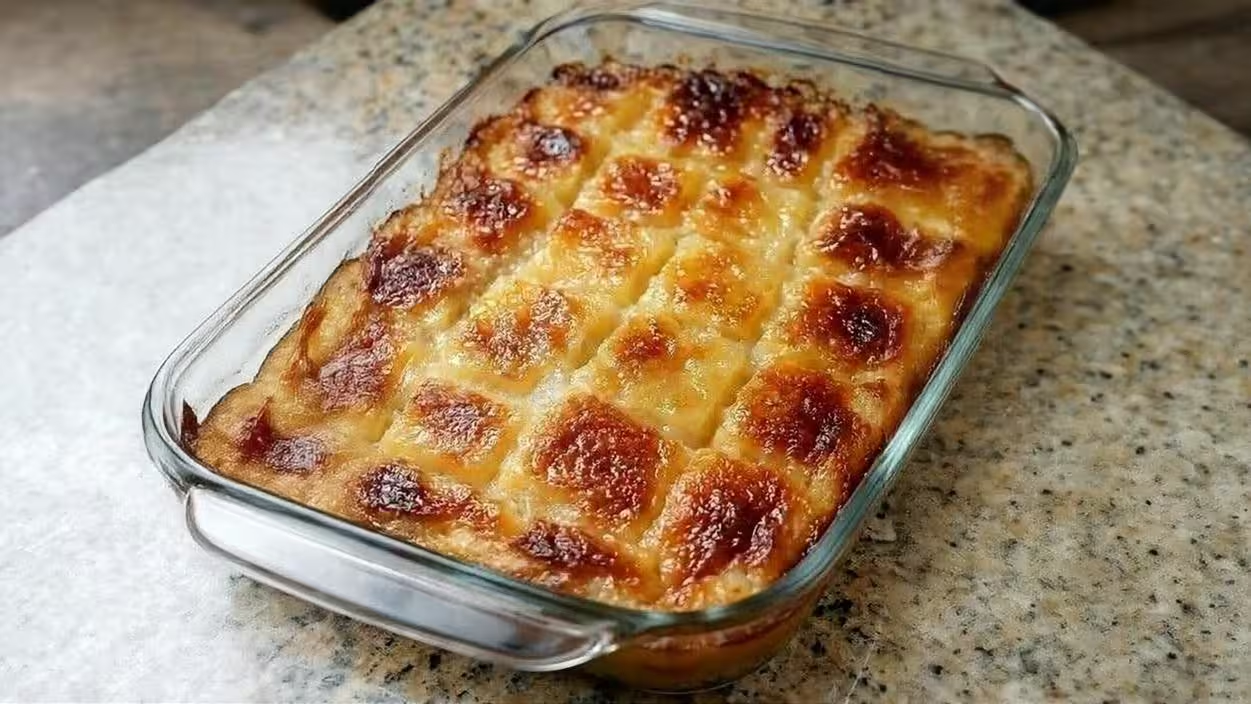
Caramelized Pineapple Ham Bake: Sweet & Savory Dinner
This is not your grandmother's dry ham! My recipe for Pineapple Ham Bake delivers restaurant-quality depth using a simple, slow-caramelized glaze. The marriage of salty, smoky ham with the bright, acidic sweetness of pineapple creates an intensely savory and satisfying main course. It’s the ultimate low-effort, high-reward American comfort dish, perfect for Sunday supper or holiday leftovers reimagined.
restaurant_menu Ingredients
For the Pineapple Ham Bake
Optional Garnish
hardware Essential Tools
9x13 inch ceramic baking dish
Small saucepan
Whisk
Silicone spatula
Instant-read meat thermometer
Basting brush
format_list_numbered Preparation
Glaze Preparation
Preheat your oven to 350°F (175°C) and ensure your oven rack is centered in the middle position.
In a small saucepan over medium-low heat, gently melt the softened butter until just liquid, then whisk in the packed dark brown sugar, Dijon mustard, ground cloves, and black pepper until the mixture is completely smooth and glossy.
Remove the glaze base from the heat immediately and whisk in the reserved 1/4 cup of pineapple juice until the glaze is fully emulsified and holds a velvety texture.
Assembly and Baking
If using a solid ham, score the top deeply in a diamond pattern about 1/2 inch deep; this maximizes glaze penetration for a superior Pineapple Ham Bake.
Place the ham in the center of the prepared 9x13 baking dish and arrange the drained pineapple chunks evenly over the surface and nestled into the scored grooves.
Pour approximately two-thirds of the prepared glaze evenly over the ham and pineapple, using a spatula to ensure good coverage. Place cherries in the pockets if using.
Bake for 1 hour to 1 hour and 15 minutes, or until the internal temperature reaches 140°F (60°C). Baste with the remaining glaze halfway through baking.
favorite You Might Also Love
Browse All arrow_forwardChef John's Stuffed Peppers
Cajun Chicken and Red Potato Wedges Recipe (4-Ingredient Slow Cooker)
Bring LongHorn's Parmesan Crusted Chicken Home Tonight!
5-Ingredient Chicken Parm Casserole Recipe (Simple Weeknight Dinner)
Velveeta Rotel Penne Recipe (3-Ingredient Bake)
Grandma's Western Meal Casserole Recipe (Hearty & Flavorful)
Try These Variations
Spicy Chipotle Pineapple Ham Bake
To introduce a smoky heat that Americans adore, incorporate 1 to 2 teaspoons of finely minced chipotle peppers in adobo sauce directly into your butter-sugar glaze mixture. The smokiness of the chipotle pairs exceptionally well with the ham, providing a pleasant warmth that lingers on the palate without overwhelming the pineapple. You might also swap the ground clove for a pinch of cayenne pepper in your spice blend to enhance the fiery element. This variation transforms the classic comfort dish into something with a vibrant Southwestern kick, perfect for a modern take on the Pineapple Ham Bake.
Maple-Bourbon Glaze (Non-Alcoholic Adaptation)
For a richer, deeper caramel note, substitute half of the brown sugar (about 1/2 cup) with pure Grade A dark robust maple syrup. While traditional bourbon is forbidden here, you can achieve a similar complex, barrel-aged depth by adding 1 teaspoon of high-quality, non-alcoholic vanilla extract and 1/4 teaspoon of liquid smoke (use sparingly!) to the glaze. The maple syrup interacts differently with the fat, creating a slightly chewier, more luxurious coating on your Pineapple Ham Bake, reminiscent of high-end breakfast glazes.
Citrus Herb Crust Variation
Instead of relying solely on the glaze for flavor, create a bright, aromatic crust. Before baking, mix 1/2 cup of Panko breadcrumbs with 2 tablespoons of melted butter, the zest of one large orange, 1 teaspoon of dried rosemary, and 1 teaspoon of fresh thyme leaves. After pouring the initial glaze over the ham, sprinkle this herbed Panko mixture over the top. This creates a dual texture: a sticky, caramelized bottom layer and a crunchy, herbaceous top layer, offering a more complex textural experience when serving your Pineapple Ham Bake.
Low-Sugar Alternative
For those monitoring sugar intake, you can reduce the brown sugar by half and substitute the remainder with a granular zero-calorie sweetener designed for baking (like Erythritol blends). Because these sweeteners don’t caramelize the same way, you must add a teaspoon of molasses and a tablespoon of apple cider vinegar to mimic the depth of flavor lost. Brush this mixture on heavily during the last 20 minutes of baking, watching carefully to ensure the artificial sweetener does not burn, which can happen quickly above 350°F (175°C).
Chef's Pro Tips
Use a meat thermometer set into the thickest part of the ham, avoiding bone. This is the single most important tool for any large roast. The USDA recommends reheating fully cooked ham to 140°F (60°C) for safety and optimal texture. Knowing the exact moment your Pineapple Ham Bake hits this threshold prevents the muscle fibers from seizing up and expelling all their moisture, which is the primary cause of dry ham served at home.
When preparing the glaze, ensure your butter is truly softened, not melted, before combining it with the brown sugar if you are whisking by hand. If the butter is too cold, it will resist incorporating the sugar, leading to lumps. If it’s fully melted, the sugar will dissolve too quickly, and you won’t develop the necessary viscosity needed for that thick, clinging texture on your final Pineapple Ham Bake. Room temperature butter allows for a perfect, creamy emulsion.
Never skip the resting period after the bake. When meat comes out of the oven, the internal temperature is highest, and the muscle proteins are tightly contracted, holding moisture under high pressure. If you slice immediately, all those beautiful juices—the very thing we are trying to preserve with the glaze—will flood out onto your cutting board. Resting allows the proteins to relax, reabsorbing the moisture back into the meat fibers, guaranteeing a juicy slice of Pineapple Ham Bake every single time. Aim for a minimum of 15 minutes, loosely tented with foil.
If you are using a pre-sliced ham, re-glaze strategically. After the initial glaze application, use the first layer to coat the ham and the pineapple pieces. For the second basting midway through baking, use a spoon to scoop up the rendered juices and glaze from the bottom of the pan and drizzle them over the top. This ensures that the exposed meat surfaces get a second dose of flavor and moisture, preventing the edges from drying out while the center remains perfectly tender in your finished Pineapple Ham Bake.
To achieve superior caramelization on the pineapple pieces, try tossing the pineapple lightly in a teaspoon of white sugar before adding them to the ham. This small addition of pure sucrose, distinct from the molasses in the brown sugar glaze, will catch the heat faster and create those desirable dark, slightly burnt-sugar edges that provide a fantastic textural contrast to the soft ham beneath the Pineapple Ham Bake.
Storage Guide
Refrigerator Storage (Short-Term)
Allow the Pineapple Ham Bake leftovers to cool completely on the counter for at least two hours after resting. Once cool, slice the ham and place it into a rigid, airtight glass container, ensuring a good mix of ham, pineapple, and any residual glaze. Avoid overcrowding; if you have a large amount, split it into two smaller containers for faster cooling. This method preserves optimal flavor and moisture for up to 5 days. Always aim to store the glaze separately if possible to prevent the bread-like parts of the crust from becoming overly saturated and soggy.
Freezer Storage (Long-Term Meal Prep)
For freezing, slicing the ham first is crucial for easy portion control later. Wrap individual or small portions of the ham and pineapple tightly first in plastic wrap, pressing out as much air as possible to prevent freezer burn. Then, place these wrapped portions into a heavy-duty freezer bag or a freezer-safe container with a tight seal. Label clearly with the date. When thawing, move the portion to the refrigerator overnight before reheating. This method keeps the Pineapple Ham Bake delicious for up to three months.
Optimal Reheating (Oven Method)
The best way to revive this dish is low and slow in the oven. Place the desired amount of leftover Pineapple Ham Bake in an oven-safe dish. Add 2 tablespoons of water or low-sodium chicken broth to the bottom of the dish—this creates steam, which rehydrates the meat fibers. Cover the dish tightly with aluminum foil, ensuring the edges are crimped well. Reheat at a gentle 325°F (160°C) for approximately 15-20 minutes, or until heated through to 135°F (57°C). Do not reheat the glaze separately unless it has separated; simply spooning the remaining glaze over the top before covering works best.
Avoid These Mistakes
✕ Using a ham that is too lean or not scoring a solid ham deeply enough is a frequent error. Leaner meats have less intramuscular fat to protect them from heat, meaning they dry out quickly when baked for an hour. If you must use a lean ham, compensate by adding an extra 2 tablespoons of butter to your glaze, or place a few thin slices of sweet onion underneath the ham to create a protective, moisture-releasing barrier between the meat and the hot baking dish surface.
✕ Failing to manage the sugar in the glaze is the downfall of many baked ham recipes. Brown sugar is hygroscopic (it loves water) and prone to burning because of the molasses content. If you cook the glaze base too quickly or bake the Pineapple Ham Bake at too high a temperature, the sugar will scorch before the ham is heated through, resulting in a bitter, black, grainy crust rather than a smooth, deep mahogany sheen. Always use medium-low heat for the glaze and maintain that steady 350°F (175°C) for the bake.
✕ Ignoring the internal temperature and relying solely on time is a recipe for disaster, especially with varying ham sizes. A 4-pound ham might be done in 45 minutes, while an 8-pound ham might need 90 minutes at the same temperature. You must invest in an instant-read thermometer. Pulling the Pineapple Ham Bake out at 135°F (57°C) and letting it coast to 140°F (60°C) during the rest guarantees perfection; pulling it out at an arbitrary time often leads to dryness.
✕ Not draining the pineapple sufficiently introduces too much liquid into the baking environment. While we want moisture, excess liquid steams the ham rather than roasting it, preventing the glaze from setting properly. Instead of a sticky, thick coating, you end up with a thin, runny sauce diluted by fruit water. Always drain the pineapple well, reserving only a small, measured amount of juice for the glaze itself.
✕ Serving the Pineapple Ham Bake immediately after it comes out of the oven. This is non-negotiable, even if your guests are starving! The internal pressure within the meat fibers is extremely high; slicing too soon releases all the flavorful, rendered juices onto the platter, leaving the actual meat dry and tough. That 15-minute rest is essential for moisture migration and flavor stabilization.
nutrition Nutrition Facts
Per serving: 1 slice (approx. 3/4 inch thick)
Sodium content is highly dependent on the type and cure of the ham used.
flag Conclusion
There you have it—a show-stopping, deeply flavorful Pineapple Ham Bake that requires minimal fuss but delivers maximum impact. This recipe proves that the greatest cooking is often about respecting simple ingredients and applying precise heat. From the initial sweet aroma to the final, satisfyingly caramelized bite, this dish is pure culinary joy. Now, take this knowledge and make this classic your own. Don’t be afraid to experiment with those spice variations! We at HomeRecipes believe every home cook deserves to serve food that tastes like it came from a five-star kitchen. Enjoy the pride of serving this incredible Pineapple Ham Bake to your loved ones.
Frequently Asked Questions
How do I ensure the glaze gets that signature thick, sticky texture? expand_more
The stickiness comes from two factors: the concentration of sugar and the fat content. We achieve concentration by baking it low and slow, allowing the water content to evaporate slowly while the sugars polymerize. The fat from the butter emulsifies the glaze, creating that glossy sheen. If your glaze seems too thin after baking, you can carefully remove the ham after resting, pour the pan drippings into a small saucepan, and simmer vigorously over medium-high heat for 3-5 minutes until it reduces to a thick syrup consistency. Then, just drizzle this concentrated syrup back over your slices of Pineapple Ham Bake. Never try to thicken it while it’s still in the baking dish, as the large volume of liquid will take forever to reduce.
Can I use fresh pineapple instead of canned for this Pineapple Ham Bake? expand_more
Absolutely, fresh pineapple offers a brighter flavor, but it requires slight adjustments. Fresh pineapple contains significantly more water than canned, which can thin out your glaze and extend the baking time. If using fresh, chop your pineapple into slightly smaller pieces than you would canned chunks, and consider pre-roasting the pineapple pieces on a separate sheet pan at 400°F (200°C) for 10 minutes before adding them to the ham. This pre-roasting step drives off excess moisture, concentrating its flavor and ensuring your Pineapple Ham Bake glaze sets up perfectly without becoming watery.
What type of ham is best for a bake like this? expand_more
For the best flavor and texture in a Pineapple Ham Bake, I strongly recommend a bone-in, fully cooked ham, ideally one that has already been spiral-sliced. The spirals are your best friend because they act as built-in channels for the glaze to seep down deep into the meat, flavoring it from the inside out. If you use a solid, half-ham, you must score the fat cap deeply in a crosshatch pattern before glazing; otherwise, the topping will just sit on the surface, leading to uneven flavor distribution. Avoid overly smoked or heavily cured hams, as their dominant flavor might overpower the delicate sweetness of the pineapple and brown sugar.
I'm worried about making this too sweet. How can I add savory depth? expand_more
That is a fantastic concern, and it’s why professional kitchens always balance sweet glazes with savory anchors. The key is adding umami and sharpness. In the glaze mixture, incorporate 1 teaspoon of Dijon mustard—it melts away invisibly but adds a necessary tang. A small amount, about 1/2 teaspoon, of smoked paprika or a pinch of ground black pepper also deepens the savory notes. Finally, when serving, finish the entire Pineapple Ham Bake with a generous, visible sprinkle of coarse sea salt, like Maldon. The burst of pure saltiness against the caramel will create that sought-after sweet-and-savory equilibrium.
Can I add other fruits or vegetables to the bake? expand_more
This is where you can truly personalize your dish! While we are focused on the classic Pineapple Ham Bake, there’s room for creativity. For fruit additions, thinly sliced Granny Smith apples or dried apricots work beautifully, offering different textures and tartness levels. If you want to sneak in a vegetable, thin slices of red onion placed directly beneath the ham (to protect them from burning) will soften beautifully and add a mellow sweetness to the pan drippings. If you add anything with high water content, remember to slightly increase the baking time or pre-roast those additions separately to manage moisture.
Community Kitchen