
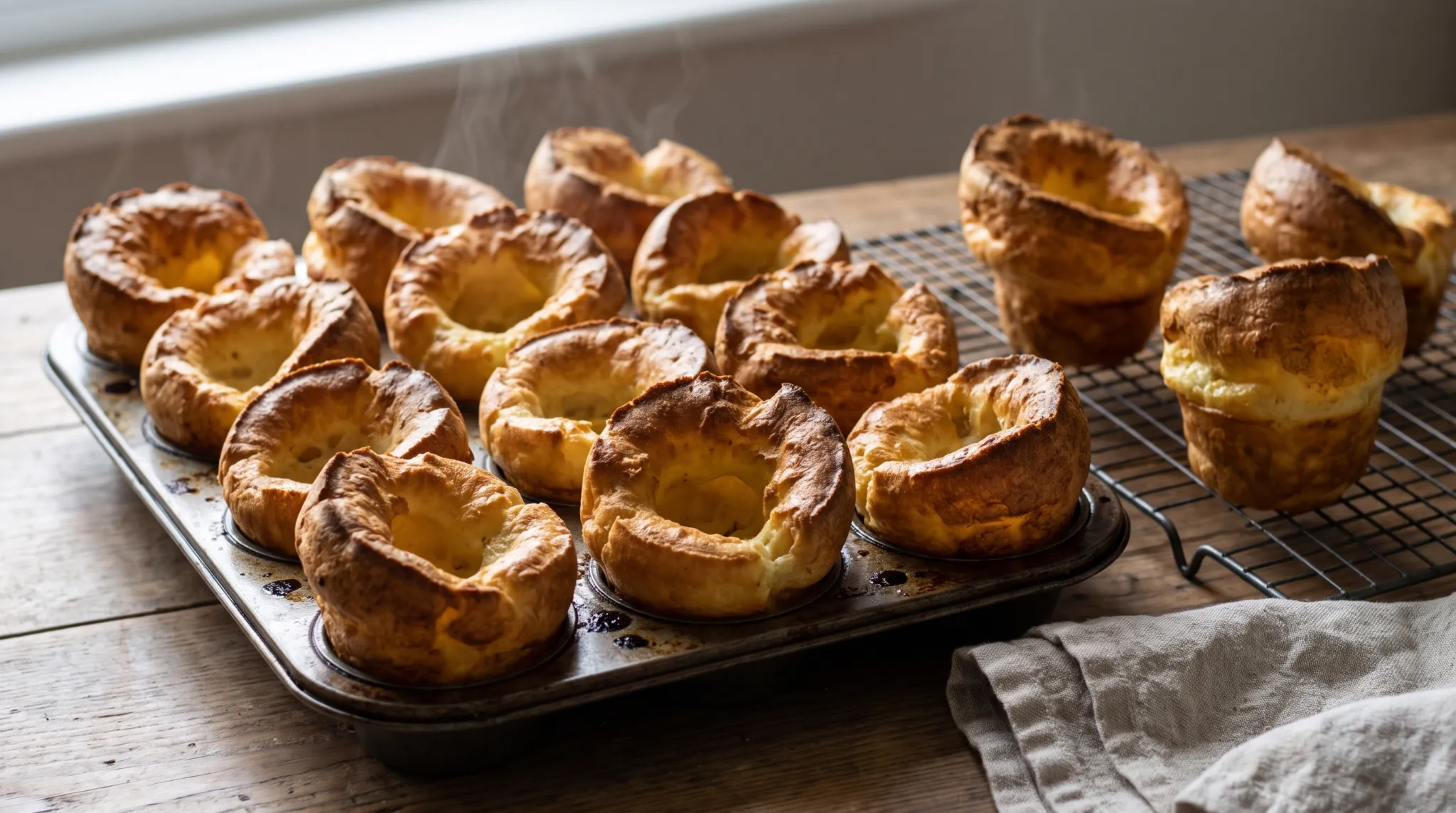
Yorkshire puddings take about an hour from bowl to table, and only 10 minutes of that is hands-on work. You need a 12-cup muffin tin, a bowl or jug with a pour spout, and an oven that holds 425°F (220°C). The rest is waiting, since the batter needs at least 30 minutes in the refrigerator and the tin needs 10 to 12 minutes in the oven before anything goes into it.
The method is simple, but the margin for error is small, so the details count for more than the effort. This batch makes 12, which is three per person for 4 people, and it suits a roast dinner. The only fiddly moment is pulling a smoking-hot tin out of the oven and filling it before it cools, which takes about 30 seconds once the batter is waiting in a jug.
Reading Your Oven and Your Tin
Ovens, tins and eggs all differ, so judge by what you see. A light aluminum muffin tin browns more gently than a dark nonstick one, which can color the rims a few minutes sooner, and an oven that runs 25°F cool needs the tin in for closer to 15 minutes. An oven thermometer settles the question once and for all.
The batter should pour like heavy cream and coat a spoon thinly. If it’s closer to pancake batter, which happens with extra-large eggs or packed flour, whisk in 1 to 2 tablespoons of milk. The fat is ready when it shimmers and sends up a thin wisp of smoke, and the batter should hiss and start to set at the edges the moment it lands. If it goes in silently, put the tin back in the oven for a few minutes.
Watch through the oven window instead of opening the door. At about 10 minutes the puddings should be climbing above the rim, and by 16 they should stand about 2 inches (5 cm) tall with ruffled, deep golden tops, crisp rims and hollow centers. Pale or damp-looking sides mean they need 2 to 4 more minutes.
Hot Fat, Rested Batter
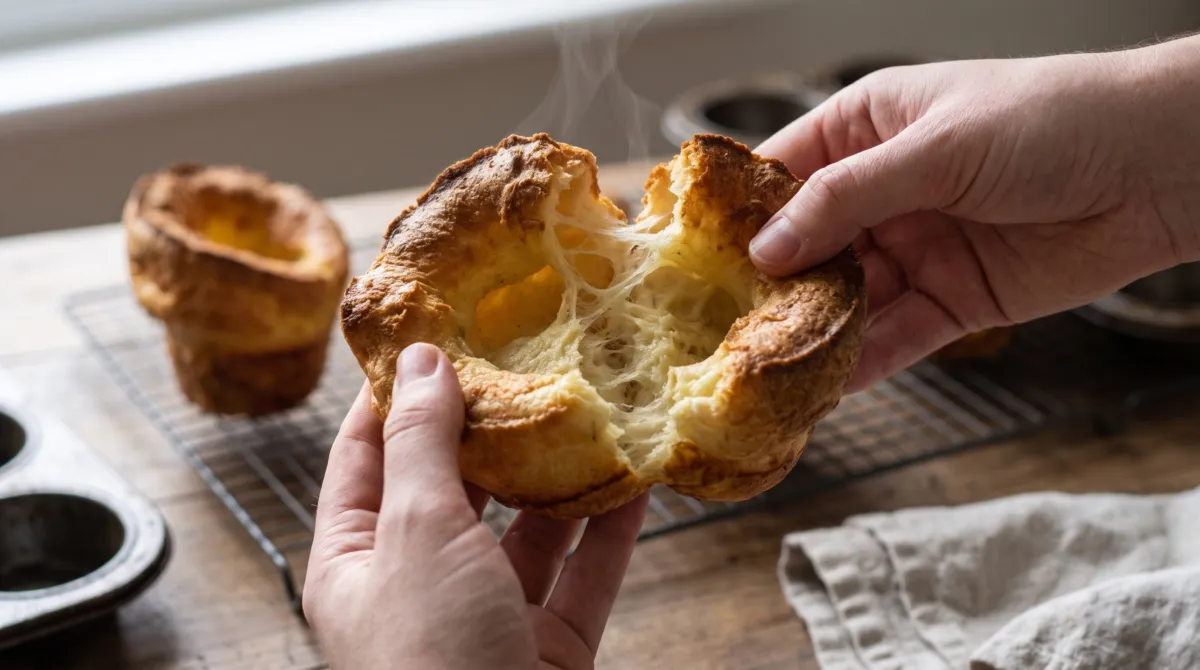
A Yorkshire pudding rises because of steam, not baking powder. The batter is mostly milk and egg, so when it meets fat at around 425°F (220°C), the water turns to steam almost at once and pushes the batter up the walls of the cup. At the same tim,e the egg proteins set, and that hardening turns the rising batter into a shell that stays up. The structure has to set before the steam runs out, which is why the oven door stays shut.
Resting the batter helps in two ways. The flour absorbs the liqu,id and the gluten relaxes, so the puddings come out tender instead of rubbery. Cold batter also hits the hot fat with a bigger temperature gap, which makes that first sizzle more violent. A tin that isn’t hot, or fat that isn’t shimmering, lets the batter spread and steam in a puddle instead of climbing.
The result is a tall, crisp-rimmed Yorkshire pudding, a baked batter with a hollow center and a slightly denser base, traditionally part of a roast dinner.
Flour, Fat and the Right Tin
Plain all-purpose flour is all the batter needs. Self-raising flour isn’t necessary because steam does the lifting, and bread flour makes a chewier pudding. Use large eggs and whole milk, and don’t worry about bringing them to room temperature, since the batter chills anyway. For the fat, a neutral oil with a high smoke point, such as canola, gives crisp rims every time, and strained beef roast drippings add the most flavor. Butter and olive oil burn at this temperature.
| Ingredient | Swap | What changes |
|---|---|---|
| Vegetable oil | Strained beef drippings, same amount | Beefier flavor, with a little more smoke |
| Whole milk | Unsweetened soy or oat milk | Slightly paler and less rich, and results vary by brand |
| All-purpose flour | 1:1 gluten-free flour blend | Denser, shorter puddings, and the batter may need 1 to 2 tbsp more milk |
| Eggs | No reliable swap | Eggs set the structure, so the batter won’t hold its rise without them |
The puddings contain eggs, milk, and wheat. A standard 12-cup muffin tin is the right size here. Cupcake pans have shallower cups and give smaller, flatter puddings, while a dedicated Yorkshire pudding or popover pan makes deeper, taller ones, so use fewer cups with more batter in each and watch the bake time. In any tin, preheat it with the fat already inside.
Giant, Herb and Sweet Versions
- Giant puddings. Divide the fat and batter among 4 large ramekins or jumbo muffin cups, using about 1 teaspoon of fat and 1/2 cup (120 ml) of batter each. Bake at 425°F (220°C) for 25 to 30 minutes, until deeply golden and firm at the sides. Keep the door shut for the first 20 minutes, since larger puddings take longer to set.
- Herb puddings. Whisk 1 tablespoon of chopped fresh thyme or chives into the rested batter. Herbs sprinkled on the surface can scorch, so stir them in.
- Toad in the hole. Brown 1 lb (450 g) of beef or chicken sausages in a 9-inch (23 cm) square dish with 2 tablespoons of fat in the hot oven, pour the full batch of batter over the sausages, and bake for 30 to 40 minutes. The batter should be puffed and set in the middle, and the sausages must reach 160°F (71°C) for beef or 165°F (74°C) for chicken.
- Sweet puddings. Leave out the pepper and serve the baked puddings warm with jam, maple syrup or fruit. The batter isn’t sweetened, so these suit breakfast or dessert more than a roast dinner.
Making Ahead, Freezing and Reheating
The batter is the part to make ahead. Whisk it, cover it and refrigerate it for up to a day, then stir it before pouring because the flour settles. It contains raw egg and raw flour, so keep it cold, wash your hands after handling it, and don’t taste it.
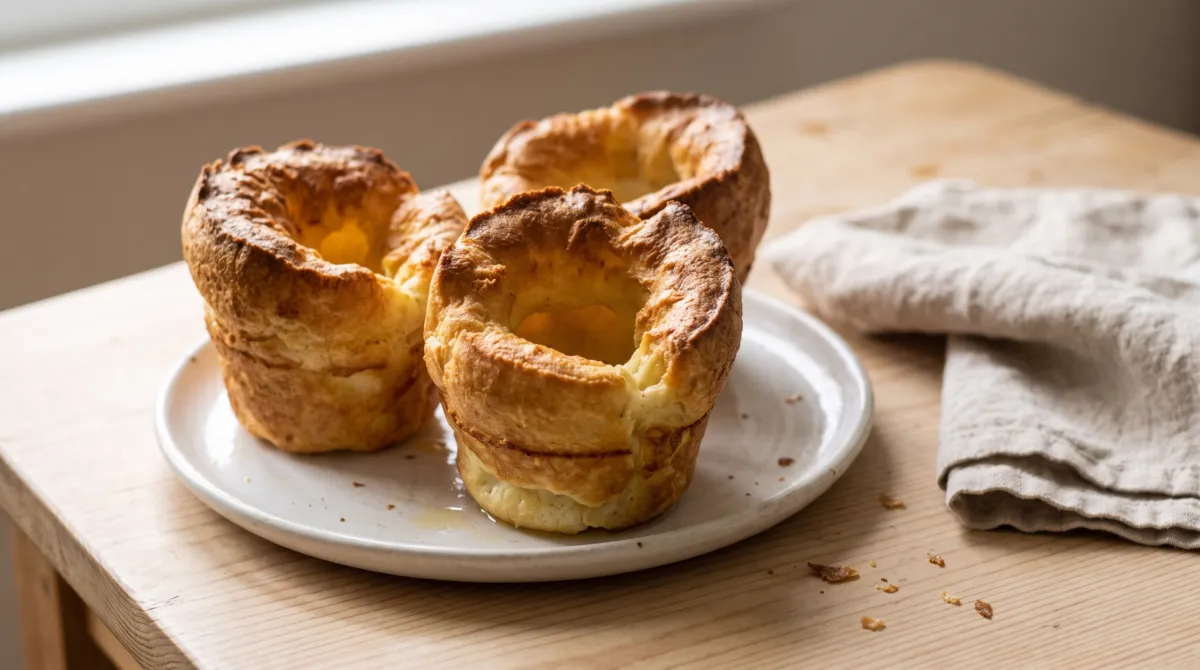
Baked puddings are best within minutes, but they keep. Cool them on a rack, then refrigerate them in an airtight container within 2 hours of baking, where they last 3 to 4 days, or freeze them on a tray and bag them for up to 2 months. The USDA Food Safety and Inspection Service has general guidance on leftovers.
To reheat, skip the microwave, which turns them soft and chewy. Set them on a rack or baking sheet in a 400°F (200°C) oven for 5 to 8 minutes from the refrigerator, or 8 to 10 minutes from frozen, until crisp again and the center reaches 165°F (74°C). They’ll be good but a little less tall than fresh, so for a dinner party make the batter ahead and bake the puddings at the last minute.
Flat, Pale or Soggy Puddings
- The puddings barely rise. The tin or fat wasn’t hot enough, the batter was warm, or the oven was below 425°F (220°C). Heat the tin for the full 10 to 12 minutes until the fat shimmers, and keep the batter cold until the moment you pour.
- They rise, then collapse. The door was opened before the walls set, or they came out underbaked. Keep the door closed for the first 14 minutes and wait until they’re deep golden and firm to a light tap.
- The tops are pale. The oven runs cool, or the tin is light-colored. Add 2 to 4 minutes, and check the real oven temperature with a thermometer next time.
- The bottoms are soggy or greasy. Too much fat pooled in the cups, or the puddings sat in the tin and steamed. Use 1/2 teaspoon per cup and lift them onto a rack straight away.
- They stick to the tin. The fat was too little or not hot. Run a thin knife around each rim to release them.
- They’re dense and rubbery. There was too much flour. Weigh 125 g, or spoon the flour into the cup, level it, and whisk only until smooth.
- The kitchen fills with smoke. A thin wisp is normal, but heavy smoke means the fat is breaking down. Use canola or another neutral oil instead of butter or olive oil, and turn on the fan.
Gravy, Roast Beef and Sides
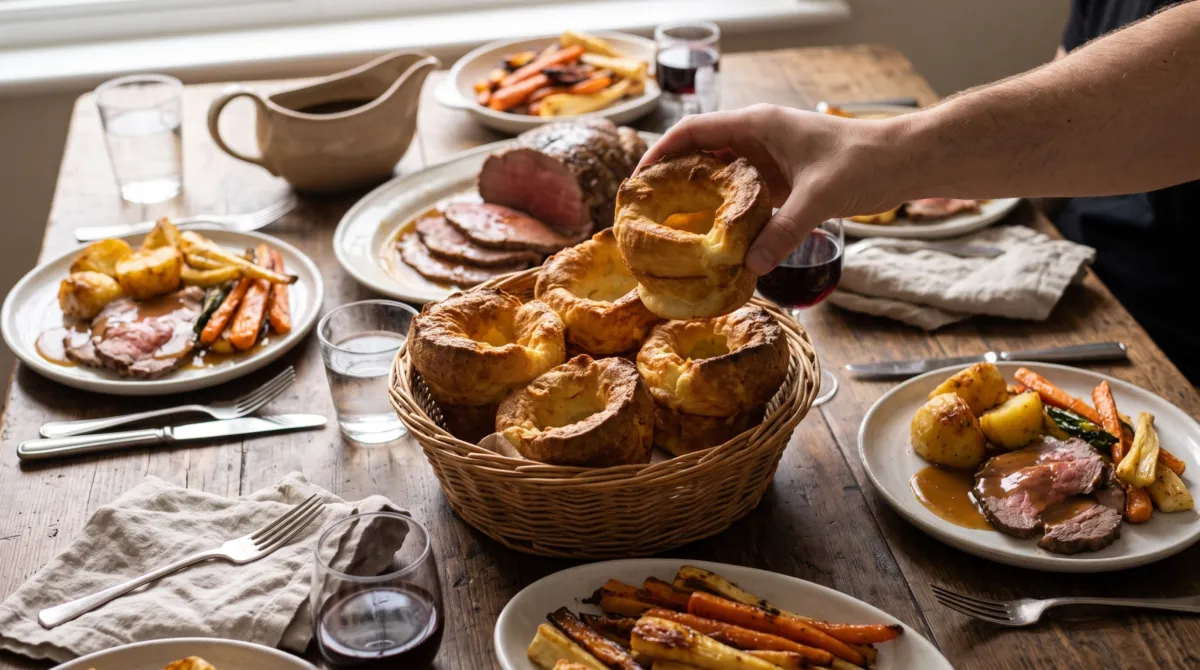
Yorkshire puddings belong with roast beef and gravy, and they’re crispest the moment they leave the tin. A roast needs to rest 15 to 20 minutes before carving, so take it out to rest under foil, turn the oven up to 425°F (220°C) and bake the puddings in that window. Whole cuts of beef are safe at 145°F (63°C) with a 3-minute rest.
Fill the centers with gravy. If you have no roast drippings, the creamy mushroom gravy from baked hamburger steak is a good stand-in to spoon into the hollows.
Roasted vegetables and potatoes are the usual partners, and creamy au gratin potatoes suit a roast dinner as well. A spoonful of horseradish or mustard sharpens the beef. Put the puddings on the plate last, so the gravy doesn’t soften them before the first bite.
Count on three puddings per plate and leave the tin on the table for anyone who wants a fourth while they’re still hot. Pass the gravy in a jug, so each person can fill their own pudding and keep the rim dry and crisp for as long as possible.
FAQ
What’s in Yorkshire pudding?
Flour, eggs, milk, salt and a little hot fat, with no sugar and no raising agent. The batter is poured into a very hot tin, and the water in the eggs and milk turns to steam, puffing it into a hollow, crisp-edged pudding. It’s a savory baked batter served with roast beef and gravy, not a custard.
Is Yorkshire pudding a dessert?
No, it’s a savory side served with the main course, and the batter has no sugar. You can serve leftover puddings sweet with jam or syrup if you like. British rice pudding is a different dish altogether, a dessert of rice cooked in sweetened milk and baked or simmered until creamy.
What’s the difference between a popover and a Yorkshire pudding?
The batter is nearly identical. A popover is the American cousin, usually baked in deep popover cups and served with butter or jam, at breakfast or alongside a meal. A Yorkshire pudding is baked in very hot fat, usually in a shallow cup or tin, and served with roast beef and gravy.
Can I use a blender or a mixer for the batter?
Yes. A blender, hand mixer, or whisk all work, and a blender makes the smoothest batter in about 20 seconds. Blend just until smooth, then rest the batter as usual, because the foam settles and the flour hydrates. Pour it into a jug or a bowl with a spout, since you need to fill the hot tin quickly.
Can I use water instead of milk?
You can swap up to half of the milk for water, which gives a lighter, crisper pudding with a little less richness. All water works but tastes flat. Keep the total liquid at 3/4 cup (180 ml), and rest the batter for the same amount of time, since the flour needs time to absorb it.
How many calories are in a Yorkshire pudding?
The recipe card lists calories for a serving of three puddings. The count shifts with the fat you use and how much of it stays in the tin, so treat any number as an estimate. Using the 1/2 teaspoon per cup in the steps keeps the puddings crisp rather than greasy.
Can I make a half batch?
Yes. Use 2 eggs, 1/2 cup (62 g) of flour, 6 tablespoons (90 ml) of milk, and a pinch of salt, and pour it into a 6-cup tin heated with the fat in the same way. The bake time stays the same, so judge doneness by the golden color and firm sides.
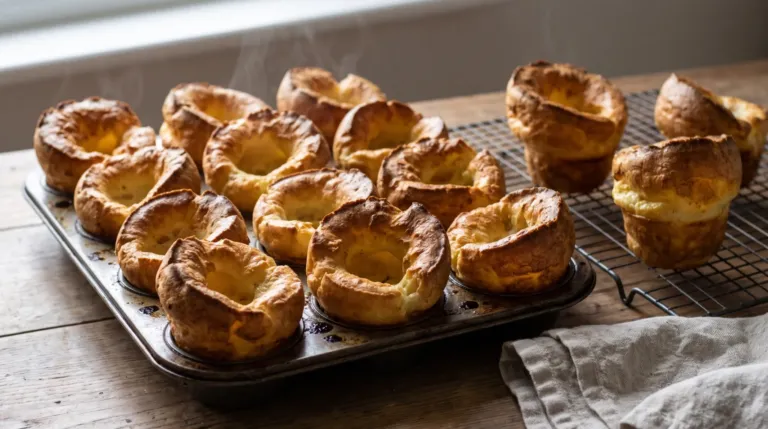
Yorkshire Puddings with Crisp Edges and Soft Centers
- Prep 10 min
- Cook 30 min
- Total 40 min
Cook mode: your screen stays on and the current step is shown larger.
Ingredients
Steps
- Step 1 of 7
Whisk the flour, salt and pepper in a bowl or jug with a pour spout. Crack in the eggs and whisk for about 1 minute, until you have a thick, smooth paste with no dry flour.
- Step 2 of 7
Pour in the milk a little at a time, whisking until the batter is the consistency of heavy cream. A few small lumps are fine. Cover and refrigerate for at least 30 minutes, or up to 24 hours.
- Step 3 of 7
Heat the oven to 425°F (220°C) with a rack in the center, about 15 minutes before the batter has finished resting.
- Step 4 of 7
Add 1/2 teaspoon of oil to each cup of a 12-cup muffin tin, slide the tin onto the rack and heat it for 10 to 12 minutes, until the fat shimmers and gives off a thin wisp of smoke.
- Step 5 of 7
Stir the chilled batter and pour it back into the jug. Working quickly, set the hot tin on a heatproof surface and fill each cup about halfway, roughly 2 1/2 tablespoons (40 ml). The batter should sizzle as it lands.
- Step 6 of 7
Return the tin to the oven at once and bake for 16 to 18 minutes, without opening the door for the first 14 minutes, until the puddings stand tall with deep golden tops, crisp rims and firm sides.
- Step 7 of 7
Run a thin knife around each pudding, lift them out and serve right away.
Nutrition
- Calories
- 260 kcal
- Protein
- 11 g
- Fat
- 12 g
- Carbohydrates
- 26 g
- Sugar
- 3 g
- Fiber
- 1 g
- Salt
- 1 g
Approximate values per serving.
How did it turn out?
Related searches
- Yorkshire Puddings
- yorshire pudding
- ingredients of yorkshire pudding
- yotkshire pudding
- massive yorkshire puddings
- muffin pan yorkshire pudding
- pictures of yorkshire pudding
- what's in yorkshire pudding
- yorkshire pudding in a pan
- yorkshire pudding pan
- recipes with yorkshire pudding
- what to eat with yorkshire pudding
- massive yorkshire pudding
- pan yorkshire pudding
- difference between popover and yorkshire pudding
- foolproof yorkshire pudding recipe
- pan for yorkshire pudding
- jamie oliver yorkshire puddings
- whats yorkshire pudding
- image yorkshire pudding
- yorkshire pudding cupcake pan
- yorkshire pudding mixer
- yorkshire pudding reheat
- yorkshire pudding recipe by jamie oliver
- roast dinner yorkshire pudding
- yorkshire pudding jamie oliver
- yorkshire puddings jamie oliver
- yorkshire pudding roast beef
- york pudding mix
- yorkshire pudding muffin pan
- yorkshire pudding roast
- biggest yorkshire pudding
- recette yorkshire pudding jamie oliver
- muffin tin yorkshire pudding
- dessert yorkshire pudding
- can you make yorkshire pudding ahead of time
- is yorkshire pudding a dessert
- yorkshire pudding roast dinner
- british food recipes
- what is yorkshire pudding served with
- yorkshire pudding calories
- rice pudding british