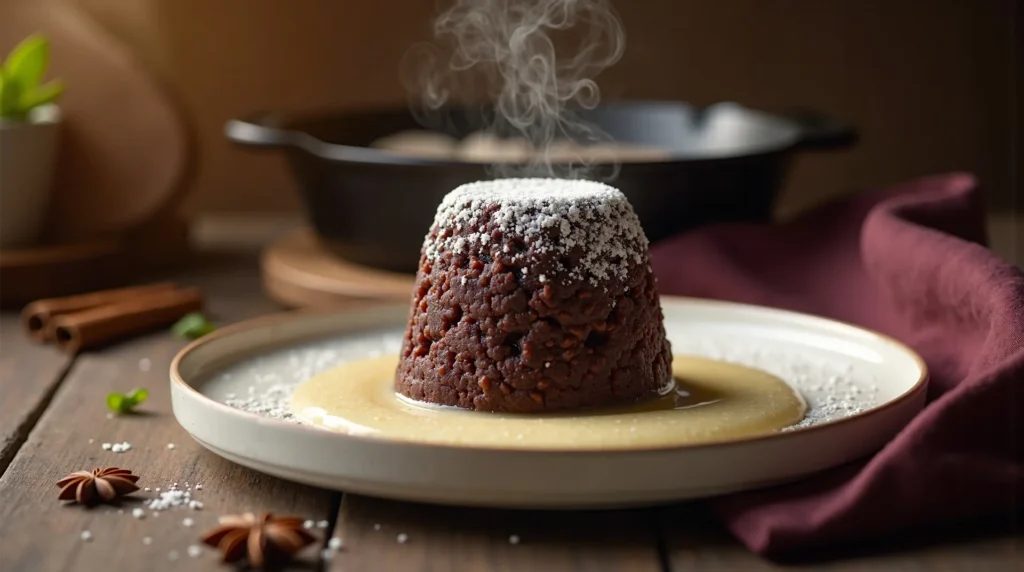
The Definitive Guide: What is Figgy Pudding? (Holiday Classic)
I'm guiding you through making a truly magnificent, traditional steamed pudding that answers the age-old question: what is figgy pudding? It's dense, spiced, and utterly unforgettable.
restaurant_menu Ingredients
Dry Ingredients & Base
Wet & Fruit Components
The Flavor Builders
hardware Essential Tools
2-quart pudding basin or oven-safe bowl
Large mixing bowl
Electric mixer (stand or hand)
Whisk
Dry skillet for toasting
Large roasting pan (for water bath)
Aluminum foil
Wire cooling rack
format_list_numbered Preparation
Baking Setup and Dry Mixing
Preheat your oven to 325°F and position the rack in the center of the oven
Thoroughly grease and flour a 2-quart pudding basin or a sturdy, heat-proof bowl suitable for baking
In a medium bowl, whisk together the flour, baking powder, baking soda, salt, cinnamon, ginger, and nutmeg until completely uniform
Place the walnuts in a dry skillet over medium heat and toast until fragrant, about 3 to 4 minutes, then remove and let them cool completely before roughly chopping them
Creating the Batter
In the bowl of your electric mixer, beat the softened butter until it becomes light and fluffy—this incorporates essential air
With the mixer on medium-low speed, incorporate the eggs one at a time, followed by the dark molasses, mixing until the mixture is smooth and emulsified
Add the chopped figs, toasted walnuts, orange zest, golden raisins, candied orange peel, and buttermilk; mix gently until just incorporated
Finally, slowly add the dry ingredient mixture to the wet ingredients, mixing only until the last streak of flour disappears; stop immediately to avoid overdeveloping the gluten
Steaming and Baking
Carefully transfer the thick batter into your prepared pudding basin and smooth the surface gently
Cover the top of the basin tightly with a layer of heavy-duty aluminum foil to trap steam during cooking
Place the covered basin inside a larger roasting pan
Pour boiling water into the roasting pan until it reaches halfway up the sides of the pudding basin—this creates the essential water bath
Bake at 325°F for 60 minutes, or until a thin tester inserted into the center comes out clean with no wet batter remaining
favorite You Might Also Love
Browse All arrow_forwardUltimate No Bake Chocolate Oat Bars Masterclass
Mastering Homemade Hobnobs: The Ultimate Oat Cookie
Australian Chocolate Slice Recipe (Classic Bake)
Homemade Flamingo Cake Recipe
Velvety Soft Maple Cookies With Maple Icing
Traditional Spotted Dick Recipe: A Classic English Pudding
Try These Variations
Date and Prune Swap
Substitute 1 cup of the figs with finely chopped dates and 1/2 cup of prunes for a slightly different dark fruit profile
Spice Boost
Add 1/4 teaspoon of ground cloves and a pinch of black pepper for a sharper, more complex spice note typical of older recipes
Citrus Zest Addition
Double the orange zest and add 1 teaspoon of lemon zest for a brighter flavor that cuts through the richness
Chef's Pro Tips
Always ensure your water bath water is boiling when you add it to the roasting pan; adding cold water will drop the oven temperature too much, slowing the cook time significantly
If you are making this far in advance, do not dust with powdered sugar until the moment you serve it, as moisture will dissolve it quickly
When unmolding, run a thin offset spatula around the edge of the pudding bowl before inverting to ensure there is no sticking point
Storage Guide
Refrigerator
Once cooled, cover tightly with plastic wrap and store for up to 1 week; flavors intensify beautifully
Freezer
Wrap cooled pudding in two layers of plastic wrap and foil, store for up to 3 months; thaw overnight in the refrigerator before reheating
Reheating
Steam gently for 45 minutes or bake covered at 300°F until warmed through completely
Avoid These Mistakes
✕ Not using enough fat/flour when preparing the basin, leading to a pudding that refuses to release cleanly
✕ Overmixing the final batter after adding the flour, resulting in a tough, rubbery texture instead of a tender crumb
✕ Using light molasses instead of dark, which yields a one-dimensional, overly sweet flavor profile that misses the soul of what is figgy pudding
✕ Not covering the pudding basin tightly with foil, allowing steam to escape and the top surface to dry out during the long bake
nutrition Nutrition Facts
Per serving: 1/10th of pudding
Note: Nutritional information is an estimate and does not include any optional alcohol or serving sauce.
flag Conclusion
There you have it, my friends. We have demystified the question, what is figgy pudding, and transformed it from an intimidating historical artifact into a manageable, deeply rewarding holiday centerpiece. This dessert is a testament to the power of simple ingredients combined with classic technique. It’s rich, it’s warm, and it carries the spirit of the season in every bite. Don’t let the name scare you; embrace the process, follow the steps precisely, and you will serve a dessert that your family will talk about for years to come. Head over to HomeRecipes.com, gather your ingredients, and start stirring up some holiday magic today!
sell Related Topics
Frequently Asked Questions
What exactly is the difference between British pudding and American pudding? expand_more
In the United States, 'pudding' usually means a creamy, custard-like dessert. In classic British cookery, as demonstrated by what is figgy pudding, 'pudding' refers to a dense dessert made with flour and fruit, cooked slowly by steaming or boiling, resulting in a texture closer to a very moist, heavy cake.
Why is my figgy pudding dry or crumbly instead of moist? expand_more
A dry result usually indicates over-baking or skipping the essential water bath. Because this dense mixture relies heavily on moisture from the molasses and fruit, baking it uncovered or too long at a high temperature will dry it out. Always maintain that gentle, steamy environment at 325°F.
Can I make this recipe without the dried fruits? expand_more
While you certainly *can* omit the figs, raisins, and candied peel, you would fundamentally be making spiced molasses cake, not figgy pudding. The fruits are essential; they hold moisture, provide necessary chew, and contribute significantly to the deep, complex sweetness that defines what is figgy pudding.
Is it necessary to toast the walnuts? expand_more
Toasting is not strictly necessary for structure, but it is a crucial flavor step. Raw nuts taste flat. Toasting awakens the natural oils, releasing a richer, warmer flavor that integrates beautifully with the heavy spices like cinnamon and ginger in your what is figgy pudding.
How can I ensure my pudding releases cleanly from the basin? expand_more
Release is all about preparation. Use softened, room-temperature butter to coat every interior surface generously, then dust heavily with flour, tapping out the excess. For absolute insurance, consider using a baking spray that contains both fat and flour before dusting.
More Recipes You'll Love
Muddy Buddies Recipe (Classic Chocolate Peanut Butter)
The Ultimate Halal Cuppa Cuppa Cake Recipe

Pumpkin Muffins Recipe (Spiced & Moist)
Butterscotch Chewies Recipe (Classic Soft & Chewy)
Cloud-Light Whipped Pudding Frosting Masterclass
Community Kitchen