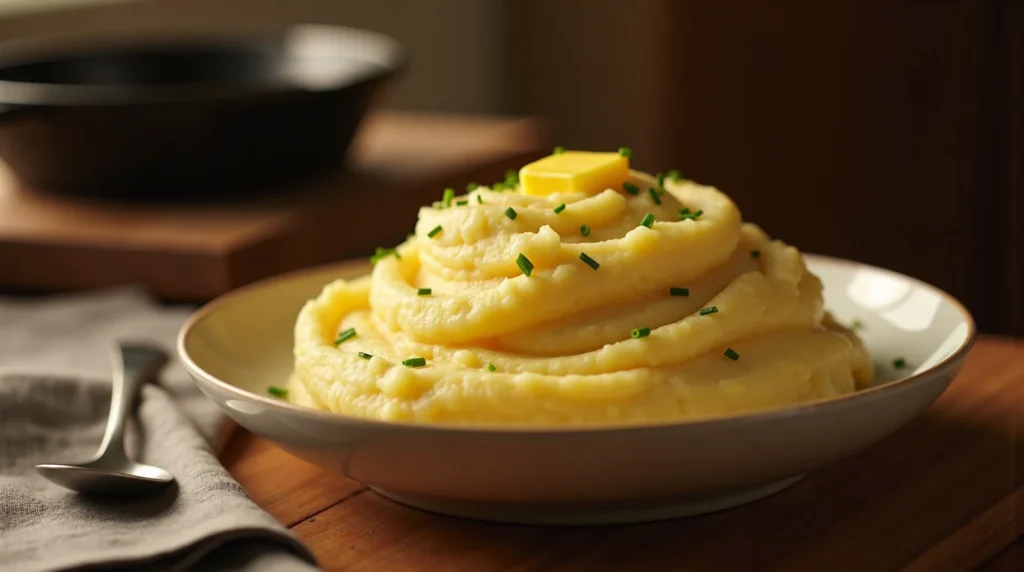
Chef’s Ultimate Baked Potato Mashed Potatoes Recipe
Transform your side dish with this chef-approved method for creamy, flavorful baked potato mashed potatoes, using a blend of Russets and Yukon Golds for perfect texture.
restaurant_menu Ingredients
Core Ingredients for Baked Potato Mashed Potatoes
Optional Finishings
hardware Essential Tools
Sturdy dinner fork
Baking sheet or middle oven rack
Sharp paring knife
Large, sturdy mixing bowl
Potato masher (handheld)
Small saucepan
Metal spoon for scooping
format_list_numbered Preparation
Baking Phase
Preheat your oven to a hot 425°F (220°C) and ensure the middle rack is positioned centrally
Using a robust fork, pierce each potato deeply and thoroughly at least 8 to 10 times all over to allow steam to escape
Place the potatoes directly onto the oven rack—avoiding foil prevents steaming—and bake for 60 to 75 minutes until completely tender
Test for doneness
a knife should slide through the center with zero resistance
Remove the potatoes from the oven and allow them to cool slightly on a wire rack for about 10 minutes, just enough time to handle them safely
Mashing and Finishing
Slice the cooled potatoes in half lengthwise and use a large spoon to scoop all the fluffy interior flesh into your large mixing bowl, discarding the skins
In a small saucepan over medium-low heat, combine the cubed butter and the 1 1/2 cups of half-and-half; warm gently until the butter is fully melted and the mixture is steaming slightly, but do not allow it to boil
Pour half of the warm dairy mixture over the potato flesh and immediately begin mashing vigorously with your hand masher until the mixture is mostly smooth
Add the remaining dairy mixture and continue mashing until a uniform, satiny consistency is achieved for your baked potato mashed potatoes
Season aggressively with kosher salt and freshly ground black pepper, stirring well after each addition and tasting frequently to ensure deep seasoning
Serving Preparation
If the mash seems stiff, warm an additional splash of half-and-half and whip it in until the desired creamy texture is reached
Transfer the baked potato mashed potatoes to a warm serving dish
For an extra luxurious finish, place the chilled cubes of extra butter on top and let them melt into the center, or garnish with minced fresh chives
favorite You Might Also Love
Browse All arrow_forward
Try These Variations
Garlic Herb Infusion
Add 3 cloves of minced garlic and 1 teaspoon of dried thyme to the half-and-half mixture while warming it up
Cheese Lover’s Mash
Stir in 1 cup of finely grated sharp white cheddar or Gruyère after the dairy is incorporated
Smoked Paprika Kick
Whisk 1 teaspoon of sweet smoked paprika into the warm dairy mixture for color and depth, perfect for pairing with grilled meats
Chef's Pro Tips
Always use a potato ricer if you own one, after baking, for the absolute fluffiest texture possible, though a masher works well too
Do not rush the baking time; undercooked potatoes are the nemesis of smooth mash
If your mash chills while you are preparing other components, reheat gently on the stovetop with a splash of warm milk to revive the texture
For a subtle tang, substitute 1/4 cup of the half-and-half with sour cream or crème fraîche
Storage Guide
Room Temperature: Do not leave out for more than 2 hours due to dairy content
Refrigerator: Store in an airtight container with plastic wrap pressed directly onto the surface for up to 4 days
Freezer
While possible, the texture degrades upon thawing; if freezing, add extra liquid upon reheating for up to 2 months
Reheating
Gently warm on the stovetop over low heat, stirring frequently and adding warm milk as needed to restore creaminess
Avoid These Mistakes
✕ Using cold dairy products, which causes the starch to seize and results in a heavy, sticky mash
✕ Over-mashing or using a food processor, which breaks down the starches too much, leading to a gluey texture
✕ Not seasoning aggressively enough; potatoes require much more salt than you think to taste flavorful
✕ Skipping the initial baking step, which results in potatoes saturated with water, leading to a diluted flavor profile
nutrition Nutrition Facts
Per serving: 1 cup
Nutritional values are estimates based on the core ingredients listed and will vary based on the exact type and amount of dairy used.
flag Conclusion
This approach to baked potato mashed potatoes is more than just a recipe; it’s a fundamental shift in how you treat the humble potato. The concentrated flavor and cloud-like texture achieved by baking are undeniable. I guarantee that once you serve these at your next gathering, guests will be asking for the secret behind your magnificent baked potato mashed potatoes. Embrace this technique and make it your own standard for comfort food excellence. Enjoy the applause!
Frequently Asked Questions
What is the best way to keep my baked potato mashed potatoes warm for hours? expand_more
The best method for holding these baked potato mashed potatoes warm is using a slow cooker on the lowest setting, or a double boiler setup. If using a slow cooker, transfer the mash, add a splash of warm milk, and stir every 20 minutes. Do not let the temperature get too high, as high heat will cause the starches to break down and the dairy to separate.
Can I use pre-made mashed potatoes from a box for this technique? expand_more
While you technically could, it defeats the entire purpose of this recipe. Boxed mixes are designed to work with boiling water or milk, and adding warm butter and half-and-half will likely result in an overly salty, chemically flavored mash. For the integrity of these rich baked potato mashed potatoes, please use fresh potatoes.
My potatoes seem dry after baking; what should I do? expand_more
Dryness indicates they baked perfectly! This is precisely why this method works so well. You must compensate by ensuring your dairy mixture is sufficiently warm and generous. If the initial 1 1/2 cups isn't enough to achieve a flowing texture, warm up an extra 1/4 cup of half-and-half and incorporate it slowly until you reach that luxurious, creamy consistency you expect from great baked potato mashed potatoes.
Can I make these mashed potatoes vegan or dairy-free? expand_more
Yes, you can adapt this recipe for dairy-free diets, though the flavor profile will shift slightly from the classic version. Substitute the butter with a high-quality vegan butter stick (ensure it has a good fat content). Replace the half-and-half with unsweetened, full-fat oat milk or cashew cream. The baking technique remains the same, yielding wonderfully fluffy dairy-free baked potato mashed potatoes.
What is the best potato to use if I can only find one variety? expand_more
If you must choose only one, opt for the Russet potato. Its high starch content will give you the fluffiest base, which is the primary goal of the baking method. While you will miss the creamy richness of the Yukon Gold, the Russet provides the best structure for absorbing the butter and dairy you add later to create your baked potato mashed potatoes.
More Recipes You'll Love
Mastering Authentic Ships Biscuits: A Chef’s Guide
Hot Chicken Salad Recipe (Creamy Baked Casserole)
Ultimate Slumgullion: American Comfort Stew
Baked Greek Lemon Chicken at Home

Beef Stuffed Olives Recipe (3-Ingredient Baked)
Community Kitchen