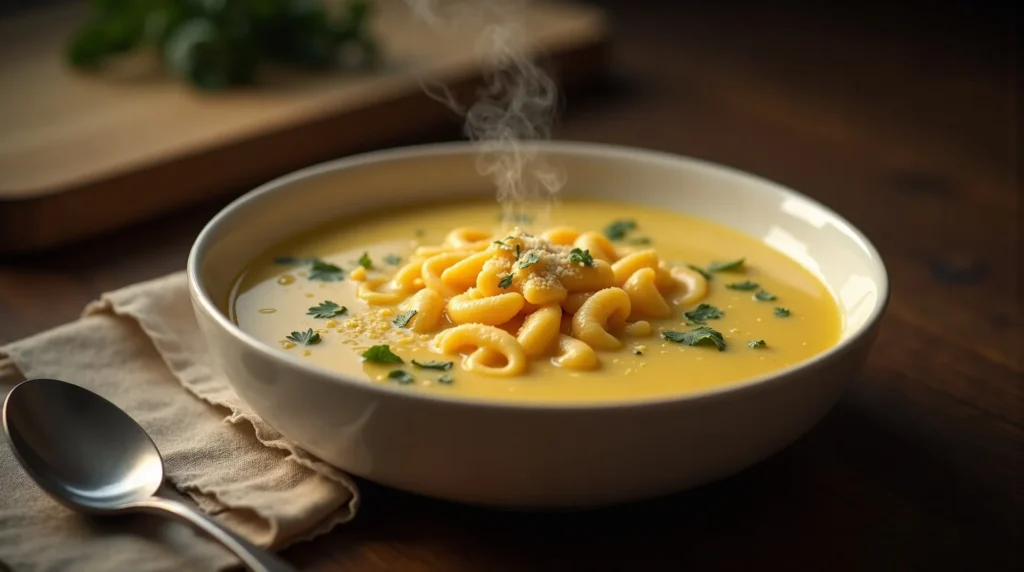
Mastering Creamy Ditalini Pasta Soup in 20 Minutes
This is the ultimate quick comfort food! We transform pantry staples into a rich, creamy, and deeply satisfying bowl of Ditalini Pasta Soup using professional cheese-tempering techniques.
restaurant_menu Ingredients
Core Ingredients for Ditalini Pasta Soup
Seasoning and Garnish
hardware Essential Tools
Large, heavy-bottomed stockpot
Sharp knife for mincing garlic
Wooden spoon or whisk
Measuring cups and spoons
Microplane or fine grater
format_list_numbered Preparation
Aromatic Foundation & Broth Heating
Place your large stockpot over medium heat and allow the butter to melt completely until it is shimmering but not browned
Add the minced fresh garlic to the melted butter and sauté gently, stirring constantly, for approximately 30 seconds until intensely fragrant—do not let it turn brown or it will become bitter
Immediately pour the entire volume of chicken broth into the pot, raising the heat to bring the liquid to a full, rolling boil
Once boiling vigorously, stir in the 1 1/2 cups of ditalini pasta, ensuring no clumps form
Reduce the heat immediately to maintain a gentle, steady simmer
Cooking Pasta and Finishing the Soup
Cook the ditalini pasta according to package directions, typically 8 to 10 minutes, stirring occasionally to prevent sticking to the bottom of the pot
Taste a piece of pasta to ensure it is perfectly al dente—tender but still offering a slight resistance when bitten
Remove the pot completely from the heat source and allow the aggressive boiling to subside for about 60 seconds
Sprinkle the finely grated Parmesan cheese over the surface slowly while whisking or stirring continuously until the cheese fully melts and emulsifies into a smooth, creamy sauce that coats the pasta
Season the finished ditalini pasta soup carefully with kosher salt and freshly ground black pepper until the flavor profile is perfectly balanced
Serving
Ladle the hot, creamy ditalini pasta soup into individual serving bowls
Offer extra grated Parmesan cheese at the table for guests to customize their bowls
Finish each serving with a final sprinkle of fresh, minced parsley for color and brightness
favorite You Might Also Love
Browse All arrow_forward



Try These Variations
Vegetarian Swap: Use a rich, dark vegetable broth instead of chicken broth
Savory Addition: Stir in 1 cup of pre-cooked shredded chicken breast during the final cheese step
Herb Infusion
Add 1 teaspoon of dried Italian seasoning to the broth as it begins to boil for deeper aromatic notes
Chef's Pro Tips
Always bring your broth to a boil before adding the pasta to ensure even cooking and proper starch release for your ditalini pasta soup
Use a microplane grater for your Parmesan; the finer the shred, the smoother the final emulsion will be, leading to superior ditalini pasta soup texture
If the soup becomes too thick upon standing, thin it with a small splash of hot water or broth, never cold liquid
Taste your broth before adding salt; Parmesan is inherently salty, and you might not need much added sodium
Storage Guide
Refrigerator
Store cooled soup in an airtight container for up to 3 days, adding extra liquid upon reheating
Freezer
Not recommended for best texture due to the starch and cheese content, as it often separates upon thawing
Room Temperature: Do not leave leftovers out for more than 2 hours due to dairy content
Avoid These Mistakes
✕ Using pre-shredded, bagged Parmesan cheese, which results in a grainy, separated soup texture instead of a creamy ditalini pasta soup
✕ Adding the cheese while the soup is still actively boiling, causing the cheese to seize and clump
✕ Overcooking the ditalini pasta, which leads to mushy texture after sitting in the hot liquid
✕ Forgetting to bloom the garlic properly, resulting in a flat, uninspired flavor base for the soup
nutrition Nutrition Facts
Per serving: 1 1/2 cups per serving
Sodium content is highly dependent on the broth used; opt for low-sodium options to control salt.
flag Conclusion
There you have it—a masterpiece of efficiency! This ditalini pasta soup is proof that the best meals often stem from the simplest foundations. I encourage you to keep this recipe tucked away for those evenings when time is short but the craving for something deeply satisfying hits hard. Taste the difference that just 20 minutes and a few high-quality ingredients can make. Don’t forget to share your creations made using this lightning-fast ditalini pasta soup method back here at HomeRecipes.com. Happy cooking, my friends!
sell Related Topics
Frequently Asked Questions
How can I make this ditalini pasta soup thicker without adding cream? expand_more
The thickening comes naturally from the starch released by the pasta as it cooks directly in the broth. To enhance this, ensure you stir the soup well as the pasta cooks. If it’s still too thin after removing it from the heat, you can mix 1 teaspoon of cornstarch with 1 tablespoon of cold water (a slurry) and whisk it into the simmering soup just before adding the cheese. This will give you a bit more body.
Is it important that the butter is unsalted? expand_more
Yes, it is very important. Since we are relying on the Parmesan cheese for much of the saltiness, using unsalted butter gives us complete control over the final sodium level in the ditalini pasta soup. Salted butter varies wildly in salinity between brands, which can lead to an unpredictable, overly salty result.
Can I use dried herbs instead of fresh parsley for the garnish? expand_more
You can, but I strongly advise against it for the final garnish. Dried herbs lack the bright, fresh aromatics that cut through the richness of the Parmesan. If you must use dried herbs, add about 1/2 teaspoon of dried Italian seasoning to the broth when it starts to heat up. Save the fresh parsley for that burst of color and lift right at the end.
What is the best way to mince garlic so finely? expand_more
For the best flavor release in a quick recipe like this ditalini pasta soup, use a microplane or the finest side of a box grater after crushing the cloves with the flat of your chef's knife. This creates a near-paste consistency that blooms instantly in the butter, maximizing flavor extraction in seconds.
If I use vegetable broth, will the flavor be too weak? expand_more
It might be, if you use a standard, thin vegetable broth. The key is depth. If using vegetable broth, look for varieties labeled 'robust' or 'roasted vegetable.' Alternatively, you can boost the umami by adding a teaspoon of vegetarian Worcestershire sauce or a very small amount of dried porcini mushroom powder to the broth when it starts to heat up. This adds that savory backbone crucial for a satisfying ditalini pasta soup.
More Recipes You'll Love
Pennsylvania Dutch Montgomery Pie Recipe (Homestyle Molasses)

The Ultimate Creamy Poppy Seed Chicken Casserole Recipe

How to Reheat Alfredo Sauce Recipe (Creamy & Smooth)

Ultimate Hugo Spritz Recipe: Classic Cocktail & Refreshing Mocktail

Baked Greek Lemon Chicken at Home

Community Kitchen