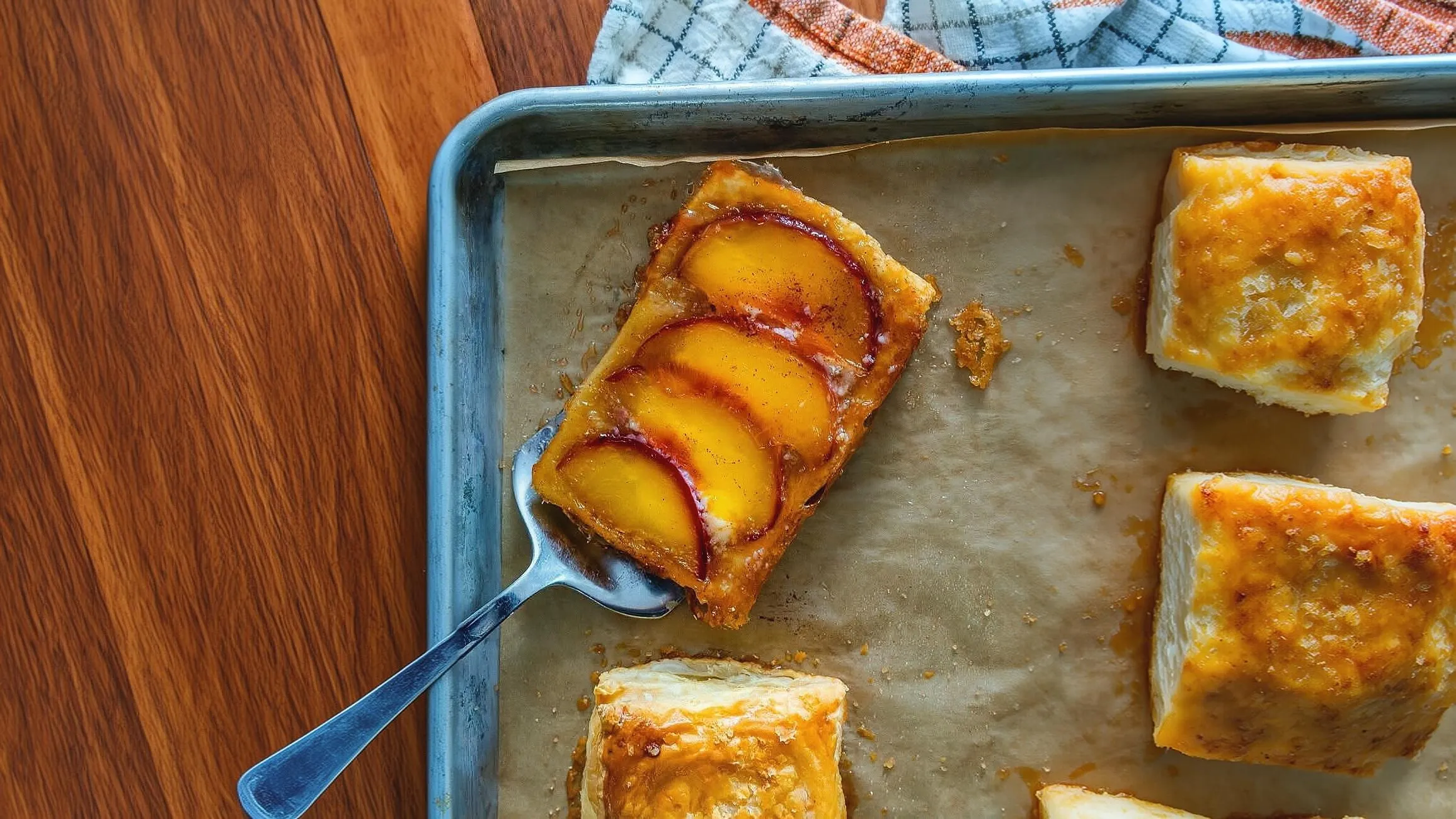
Peaches and Cream Tarts Recipe (Upside-Down)
Golden puff pastry tarts built upside down on a sheet pan, layering caramelized Demerara sugar, ripe peach slices, and cold cream cheese before a quick flip reveals a glossy, bakery-style top. Ready in under 30 minutes, these tarts balance crisp pastry, soft caramelized fruit, and creamy pockets of melted cream cheese in every bite.
restaurant_menu Ingredients
Main Ingredients
hardware Essential Tools
Baking sheet
Parchment paper
Nonstick cooking spray
Sharp knife and cutting board
Pastry brush
Thin flexible spatula
Small mixing bowl
format_list_numbered Preparation
Prep the Pan and Ingredients
Preheat the oven to 400°F, line a baking sheet with parchment paper, and lightly grease the parchment with nonstick spray.
Slice the peaches thinly, peeling them first if you prefer.
Unroll the thawed puff pastry sheet and cut it into six even rectangles.
Build and Bake the Tarts
Sprinkle Demerara sugar into six spots on the baking sheet, each about the size of a pastry rectangle, then dust each with a little cinnamon.
Arrange the peach slices over the sugar in a neat, slightly overlapping layer.
Slice the chilled cream cheese and place a couple of slices over the peaches on each tart.
Lay a puff pastry rectangle over each stack and gently press down to cover the filling.
Beat the egg in a small bowl and brush it evenly over each pastry top.
Bake for about 20 minutes, until the pastry tops are deeply golden brown and puffed.
Cool and Flip
Let the tarts cool for 1 to 2 minutes, just long enough to handle safely.
Slide a thin, flexible spatula fully underneath each tart, then carefully flip it onto a serving plate.
Serve warm, with the caramelized peaches and melted cream cheese on top.
favorite You Might Also Love
Browse All arrow_forwardJalapeno Popper Cheese Bread Recipe (Spicy & Cheesy)
Honey Cream Cheese Biscuits Recipe (Fluffy & Sweet)
Garlic Butter Beef Pasta Recipe (30-Min)
Heavy Cream vs. Whipping Cream: What's the Real Difference?
Golden Crispy Chicken Fritters: A Deliciously Crunchy Recipe
Potato Au Gratin Cups Recipe (Crispy Cheddar)
Try These Variations
Swap the Fruit
Nectarines, plums, or firm apricots can stand in for peaches using the exact same method, adjusting slightly for how much juice each fruit releases during baking. Juicier fruits may need a shorter rest before flipping to avoid a soggy pastry base.
Add a Spice Variation
A pinch of nutmeg or cardamom mixed in alongside the cinnamon adds a slightly different warmth to the caramelized sugar layer. This works particularly well if you’re leaning into a more autumn-inspired flavor even while using summer peaches.
Make It Nuttier
A light sprinkle of chopped pecans or almonds over the peaches before adding the pastry brings in extra crunch that complements the crackly Demerara sugar base. Toast the nuts lightly beforehand for a deeper, more pronounced flavor.
Chef's Pro Tips
Slice your peaches to a consistent thickness. Uneven slices mean some pieces will soften and caramelize faster than others, leading to a mix of textures in the finished tart instead of the even, jammy consistency you’re after.
Don’t overcrowd the pastry rectangles. Piling on too many peach slices or too much cream cheese makes sealing the pastry difficult and can cause filling to leak out during baking, so keep each stack modest and neat.
Brush the egg wash all the way to the edges. This not only deepens the color evenly across the whole pastry top, it also helps seal the edges slightly, keeping more of the caramelized filling contained during baking.
Storage Guide
Room Temperature
These tarts are best eaten within a couple hours of baking while the pastry is still crisp, and shouldn’t be left out much longer since the cream cheese filling is dairy-based.
Refrigerator
Store leftovers covered in the refrigerator for up to 2 days; the pastry will soften somewhat but reheating helps restore some crispness.
Freezer
Baked tarts can be frozen in a single layer, then transferred to a sealed container for up to 1 month. Thaw in the refrigerator overnight and reheat in the oven rather than the microwave to preserve the pastry’s texture.
Avoid These Mistakes
✕ Using room-temperature cream cheese. Soft cream cheese melts too quickly in the hot oven and spreads into a thin, greasy layer instead of staying in distinct pockets. Keep it cold, straight from the refrigerator, right up until you layer it onto the peaches.
✕ Waiting too long to flip the tarts. If the tarts cool too much before flipping, the caramelized sugar hardens and sticks stubbornly to the parchment, making a clean release nearly impossible. Flip within a minute or two of coming out of the oven.
✕ Skipping the nonstick spray on the parchment. Parchment paper alone isn’t always enough to release a sticky caramelized sugar layer cleanly. A light coat of nonstick spray underneath makes a noticeable difference in how easily the tarts come free.
nutrition Nutrition Facts
Per serving: 1 tart
Values are estimates based on 6 tarts and will vary with exact ingredients used.
flag Conclusion
What makes these Peaches and Cream Upside Down Tarts genuinely worth keeping in your summer rotation is how little they demand relative to the payoff. Five ingredients and one sheet pan turn into something that looks composed and intentional, letting ripe peaches do most of the talking while still feeling like a bit of a showstopper.
Frequently Asked Questions
Why do you build these tarts upside down instead of right-side up? expand_more
Building the tarts upside down lets the sugar caramelize directly against the hot parchment underneath the peaches, forming a sticky, crunchy layer that wouldn't develop nearly as effectively if the sugar were simply sprinkled on top of the pastry before baking.
Can I use a different fruit instead of peaches? expand_more
Yes, nectarines, plums, or firm apricots all work well with this same method. Adjust slightly for how much juice each fruit releases during baking, since juicier fruits may need a slightly shorter rest before flipping to keep the pastry from getting soggy.
Why does the cream cheese need to be cold when I layer it? expand_more
Cold cream cheese resists melting too quickly in the hot 400°F oven, giving the puff pastry time to puff and set around it first. This keeps the cream cheese in distinct, creamy pockets throughout the tart instead of spreading into a thin, greasy layer.
What happens if I skip greasing the parchment paper? expand_more
Even with parchment paper, the caramelized Demerara sugar can stick stubbornly once baked, making a clean flip much harder. A light coat of nonstick spray underneath the sugar helps it release smoothly when you turn the tarts over.
How do I get a clean flip without the tart falling apart? expand_more
Let the tarts cool for just a minute or two after baking, long enough to handle safely but not so long that the caramelized sugar hardens. Slide a thin, flexible spatula fully underneath each tart before turning it, which helps keep the pastry and fruit layers intact.
More Recipes You'll Love
Creamy Garlic Smothered Baked Potatoes: The Ultimate Comfort Food Recipe
Creamy Au Gratin Potatoes Recipe – Easy & Delicious Side Dish
Cream of Tomato Soup Recipe (Velvety Smooth)
Classic Raisin Pie Recipe: A Nostalgic Slice of Comfort
Classic Homemade Pesto Recipe: Fresh & Flavorful

Community Kitchen