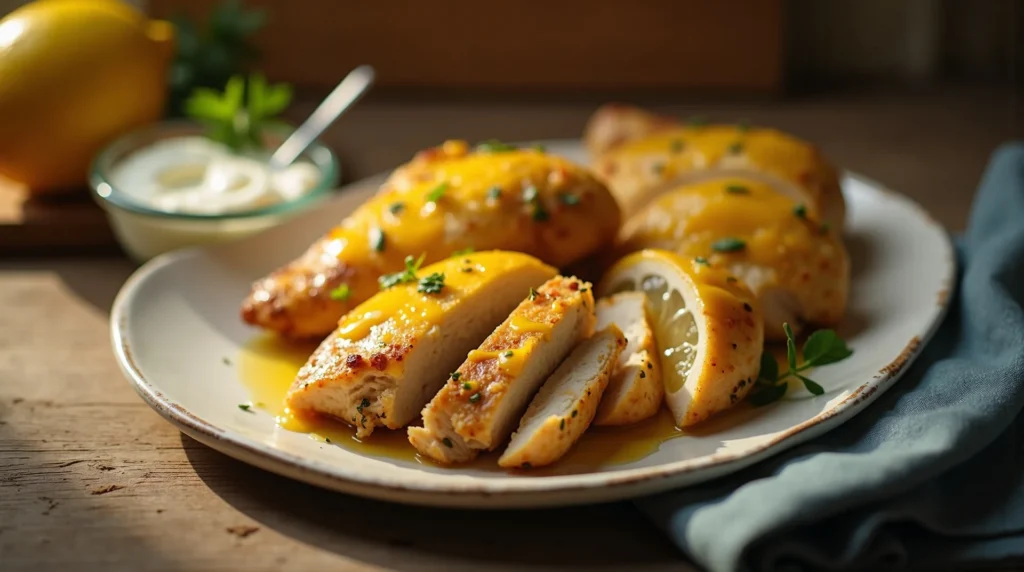
Baked Greek Lemon Chicken at Home
This Baked Greek Lemon Chicken recipe delivers intensely flavorful, tender chicken thighs bathed in a bright marinade of lemon, garlic, and classic Mediterranean herbs. A simple, healthy weeknight star!
restaurant_menu Ingredients
Main Ingredients & Marinade
hardware Essential Tools
Large mixing bowl or zip-top freezer bag
Small bowl for whisking
9x13 inch baking dish
Instant-read thermometer
Whisk
Sharp fork
format_list_numbered Preparation
Marination
Gently pierce the surface of the chicken thighs several times on both sides using a sharp fork to allow the marinade to penetrate deeply
In a separate small bowl, combine the lemon juice, olive oil, minced garlic, Dijon mustard, oregano, thyme, dill, paprika, salt, and pepper, whisking until slightly emulsified
Place the chicken in a large bowl or sealed bag and pour the entire marinade mixture over the meat, ensuring every piece is thoroughly coated
Cover or seal the container and refrigerate for a minimum of 2 hours, ideally 4 to 6 hours, to allow the flavors to fully develop in this baked greek lemon chicken
Remove the chicken from the refrigerator 30 minutes before baking to allow it to temper slightly
Baking and Finishing
Preheat your oven to 350°F (175°C) and position the rack in the center position
Lightly grease a 9x13 inch baking dish; arrange the marinated chicken thighs in a single layer without overcrowding the pan
Pour any residual marinade juices from the bowl or bag evenly over the chicken pieces
Bake for approximately 40 minutes, or until the internal temperature of the chicken reaches 170°F to 175°F when checked with an instant-read thermometer
For a beautiful golden crust, switch the oven to the broiler setting (high) and carefully broil for 2 to 3 minutes, watching constantly to prevent burning
Remove the baked greek lemon chicken from the oven and let it rest in the pan for 5 minutes before plating to allow the juices to settle
favorite You Might Also Love
Browse All arrow_forward
Southern Comfort: Ultimate Baked Cheesy Grits

Homemade Pickle Salsa Recipe

Company Chicken Casserole Recipe (Creamy Baked)
Crispy Pan-Fried Potatoes: A Classic Comfort Food Recipe

Cheesy Baked Ham and Ritz Bites: The Ultimate Party Snack
Mastering Your Kitchen Arsenal: 12 Things Microwave Ap Tips
Try These Variations
Add Root Vegetables
Toss 1 pound of cubed Yukon Gold potatoes and 2 sliced carrots in the marinade alongside the chicken before baking
Spicy Kick
Add 1/2 teaspoon of red pepper flakes to the marinade when preparing your baked greek lemon chicken
Herb Swap
Substitute the dill with a teaspoon of dried marjoram for a slightly earthier profile
Lemon Slices
Place thin slices of fresh lemon directly on top of the chicken thighs before baking for extra moisture and presentation appeal
Chef's Pro Tips
Always use fresh garlic; the flavor difference between fresh minced garlic and jarred is monumental for this dish
When seasoning the salt, remember that the liquid marinade will reduce, concentrating the sodium, so season moderately at first
The broiler is your friend for color, but it is also your enemy—never walk away during those final minutes of cooking your baked greek lemon chicken
If your lemons are very small, you may need to use juice from 3 lemons to achieve the necessary 1/2 cup of acid
Storage Guide
Room Temperature
Do not leave cooked chicken out for more than 2 hours; discard any remaining food after this period
Refrigerator
Store leftovers tightly sealed in glass or BPA-free plastic containers for up to 4 days
Freezer
Wrap individual pieces tightly in plastic wrap, then aluminum foil, and freeze for up to 3 months
Reheating
Warm covered in a 325°F oven for 15 minutes, or microwave for 60-90 seconds until steaming hot
Avoid These Mistakes
✕ Not piercing the chicken thighs before marinating, resulting in a surface-level flavor only
✕ Overcrowding the baking dish, which steams the chicken instead of allowing it to roast and brown properly
✕ Using old, dusty dried herbs, which offer scent but little actual flavor to the marinade
Forgetting to check the internal temperature, leading to either undercooked or tough, dry baked greek lemon chicken
nutrition Nutrition Facts
Per serving: 1 thigh
Nutrition estimates are based on 8 servings and standard chicken thigh size.
flag Conclusion
This simple yet profound Baked Greek Lemon Chicken stands as a testament to the elegance of restraint in cooking. It’s bright, savory, undeniably tender, and proves that you don’t need exotic ingredients to achieve world-class flavor right in your own kitchen. Take pride in mastering this fundamental technique, and let the zesty aroma fill your home. I encourage you to make this Baked Greek Lemon Chicken your signature dish!
sell Related Topics
Frequently Asked Questions
Why does the recipe call for Dijon mustard in a Greek marinade? expand_more
The Dijon mustard serves a critical, non-flavor-dominant role here: emulsification. Oil and lemon juice naturally separate. Dijon mustard contains compounds that help bind the fat (oil) and the water-based liquid (lemon juice) together, creating a cohesive marinade that clings evenly to the chicken thighs. This ensures every bite of your baked greek lemon chicken has a balanced coating of flavor, rather than just pockets of oil and acid.
What is the safest way to check the internal temperature for this baked greek lemon chicken? expand_more
Always use an instant-read digital thermometer. Insert the probe into the thickest part of the largest chicken thigh, ensuring you do not touch any bone, as the bone will give you a falsely high reading. We are aiming for 170°F to 175°F for peak tenderness in thigh meat. If you pull it out much lower, the texture might not be ideal; if you go much higher than 180°F, it risks becoming dry, even with the added fat.
Can I use fresh herbs instead of dried ones for this Mediterranean flavor profile? expand_more
You absolutely can, but you must adjust the quantity significantly! Dried herbs are concentrated. If substituting fresh oregano, thyme, and dill, use roughly three times the amount of fresh herbs as specified for dried. For example, use 9 teaspoons of fresh oregano instead of 3 teaspoons of dried. Add the fresh herbs during the last 10 minutes of the initial 40-minute bake time, or add them to the marinade but be aware fresh herbs can sometimes impart a slightly grassier flavor if marinated for too long.
I don't have thighs or breasts available; can I use chicken wings or drumsticks for this baked greek lemon chicken? expand_more
Yes, drumsticks and wings are excellent substitutes as they are dark meat and very forgiving. Since they have bone and skin, you will need to increase the cooking time significantly. For drumsticks, plan on 50 to 60 minutes at 350°F before checking the temperature. If using wings, you might consider baking them first and then broiling them longer to crisp up the skin, as the marinade will keep the meat moist throughout the longer cooking process.
Is it possible to make this dish ahead of time and bake it later? expand_more
The marination process is perfect for preparing ahead of time! You can marinate the chicken for up to 6 hours, drain off the excess marinade before baking, and store the marinated chicken in the refrigerator for up to 24 hours. When ready to bake, allow it to sit out for 30 minutes and proceed with the 350°F baking instructions. Remember, the longer it marinates, the more intense the flavor of your baked greek lemon chicken will be!
More Recipes You'll Love

Classic Southern Fried Green Tomatoes Recipe (Crispy)
Grandma’s Cherry Fluff Frozen Salad: A Retro Dessert Delight

5-Ingredient Slow Cooker Meatball & Potato Stew Recipe
Seasoning a Cast Iron Skillet Recipe (The Chef’s Guide)

Community Kitchen