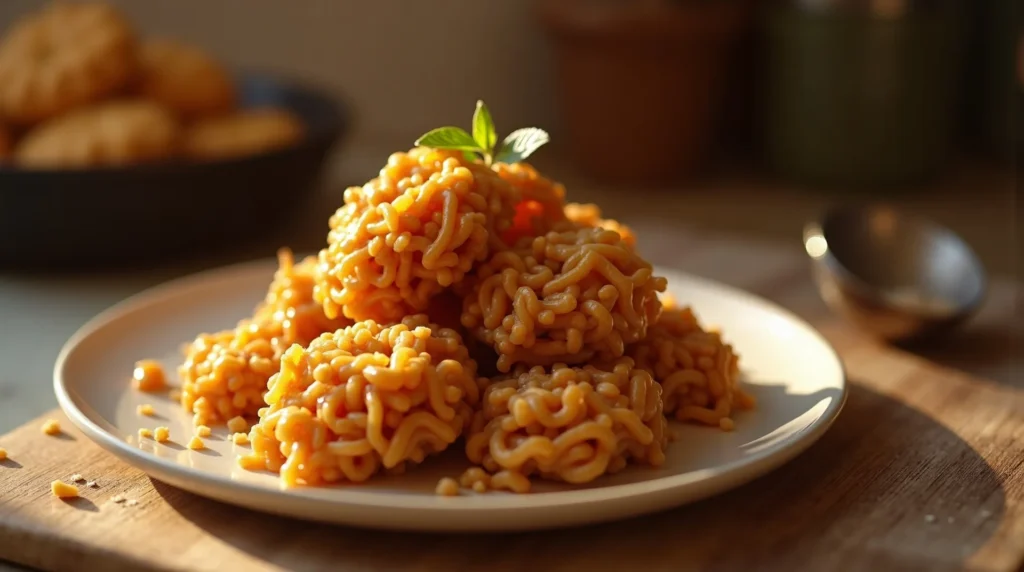
The Best No-Bake Peanut Butter Haystacks Recipe
These No-Bake Peanut Butter Haystacks are the ultimate fast dessert! We use a careful low-heat melting technique to ensure the butterscotch and peanut butter bind perfectly to the crispy noodles for a flawless, crunchy treat every single time.
Ingredients
Core Ingredients for Haystacks
Equipment & Liners
Essential Tools
Large rimmed baking sheet
Wax paper
Heavy-bottomed saucepan
Heat-proof rubber spatula
Measuring tablespoon
Preparation
Melting the Binder
Prepare your workspace by lining a large baking sheet completely with wax paper and setting it nearby
Combine the butterscotch chips and creamy peanut butter in your heavy-bottomed saucepan
Place the saucepan over medium-low heat, stirring constantly with the rubber spatula
Continue stirring until the mixture is completely smooth, glossy, and uniform, resembling a thick, flowing caramel sauce
Immediately remove the saucepan from the heat source once fully melted to prevent scorching
Combining and Forming the Haystacks
Working quickly, pour the entire can of crispy chow mein noodles and the optional chopped salted peanuts into the warm binder mixture
Fold the ingredients together rapidly, ensuring every noodle strand is thoroughly coated before the mixture begins to cool
Using a standard tablespoon measure, scoop uniform mounds of the mixture onto the prepared wax paper
Drop the mounds quickly, maintaining a slight space between each of the forming Peanut Butter Haystacks
Allow the formed haystacks to set completely undisturbed at room temperature for a minimum of 30 minutes until firm
Recipe Variations
Dark Chocolate Haystacks
Substitute the butterscotch chips entirely with high-quality semi-sweet chocolate chips for a richer flavor profile
White Chocolate Cranberry Haystacks
Use white chocolate baking chips instead of butterscotch and substitute the peanuts with dried cranberries for a holiday twist
Almond Crunch Haystacks
Replace the peanuts with slivered or sliced almonds for a different nutty texture and flavor contrast
Chef's Tips
Always use a heavy-bottomed pot when melting chips; thin metal pots conduct heat too quickly and risk scorching the bottom layer
Ensure your peanut butter is at true room temperature (not chilled) to allow it to melt smoothly and quickly with the chips
If the mixture seizes before you finish scooping, gently warm the entire batch over the lowest heat setting for mere seconds, stirring constantly, then remove immediately
For an extra professional look, lightly drizzle melted dark chocolate over the tops of the set Peanut Butter Haystacks before serving
Common Mistakes
Using natural, oil-separated peanut butter which compromises the stability of the candy coating
Overheating the mixture, which causes the butterscotch to separate into an oily, grainy mess that won’t set properly
Letting the mixture cool too long after adding the noodles, resulting in a giant, unmanageable clump instead of individual haystacks
Substituting chow mein noodles with softer alternatives like pretzels or cereal, which lose their structure when coated
Recipe Keywords
Conclusion
We have successfully transformed four humble ingredients into the iconic Peanut Butter Haystacks. This recipe stands as a monument to the efficiency and joy of American home baking. You now possess the insider knowledge to ensure your haystacks are perfectly crisp, perfectly bound, and perfectly delicious every single time. Take pride in this simple, yet universally loved, confection. Don’t just make them once; these will quickly become your go-to solution for any sweet craving or last-minute gathering. Enjoy serving these delightful Peanut Butter Haystacks!
Frequently Asked Questions
Can I make these Peanut Butter Haystacks vegan? expand_more
Achieving a truly vegan version is tricky because the primary binder is standard butterscotch chips, which contain dairy. To attempt this, you would need to source vegan butterscotch chips (which can be difficult to find) and ensure your creamy peanut butter contains no added non-vegan ingredients. The texture may vary significantly from the original.
My chow mein noodles are stale; can I still use them in the haystacks? expand_more
If your noodles are merely stale (lacking crispness), they will result in softer, less satisfying haystacks. If they are slightly stale, you can try to refresh them by spreading them on a baking sheet and baking at 300°F for about 5 minutes until they crisp up again. Let them cool completely before mixing them into the warm binder.
What causes the peanut butter layer to become grainy instead of smooth? expand_more
Graininess is usually a sign of overheating or using the wrong type of peanut butter. When heated too high, the oil separates from the solids in the peanut butter, and if the mixture is cooked too long, the sugar in the butterscotch can recrystallize upon cooling. Keep the heat low and stir only until just melted.
How can I make these haystacks look more festive for Christmas? expand_more
For a festive presentation of your Peanut Butter Haystacks, try adding a tablespoon of festive sprinkles to the noodle mixture right before scooping. You can also use melted dark chocolate or white chocolate to drizzle decorative lines over the tops once they have cooled and set. Red and green sprinkles work beautifully against the golden color.
Can I use crunchy peanut butter instead of creamy for these haystacks? expand_more
While you certainly can, I advise against it for beginners. Crunchy peanut butter contains chunks of nuts that interrupt the smooth melting process of the binder, often leading to a clumpy, uneven coating. Creamy peanut butter melts into a uniform liquid that coats the noodles perfectly, ensuring a better final set for your haystacks.