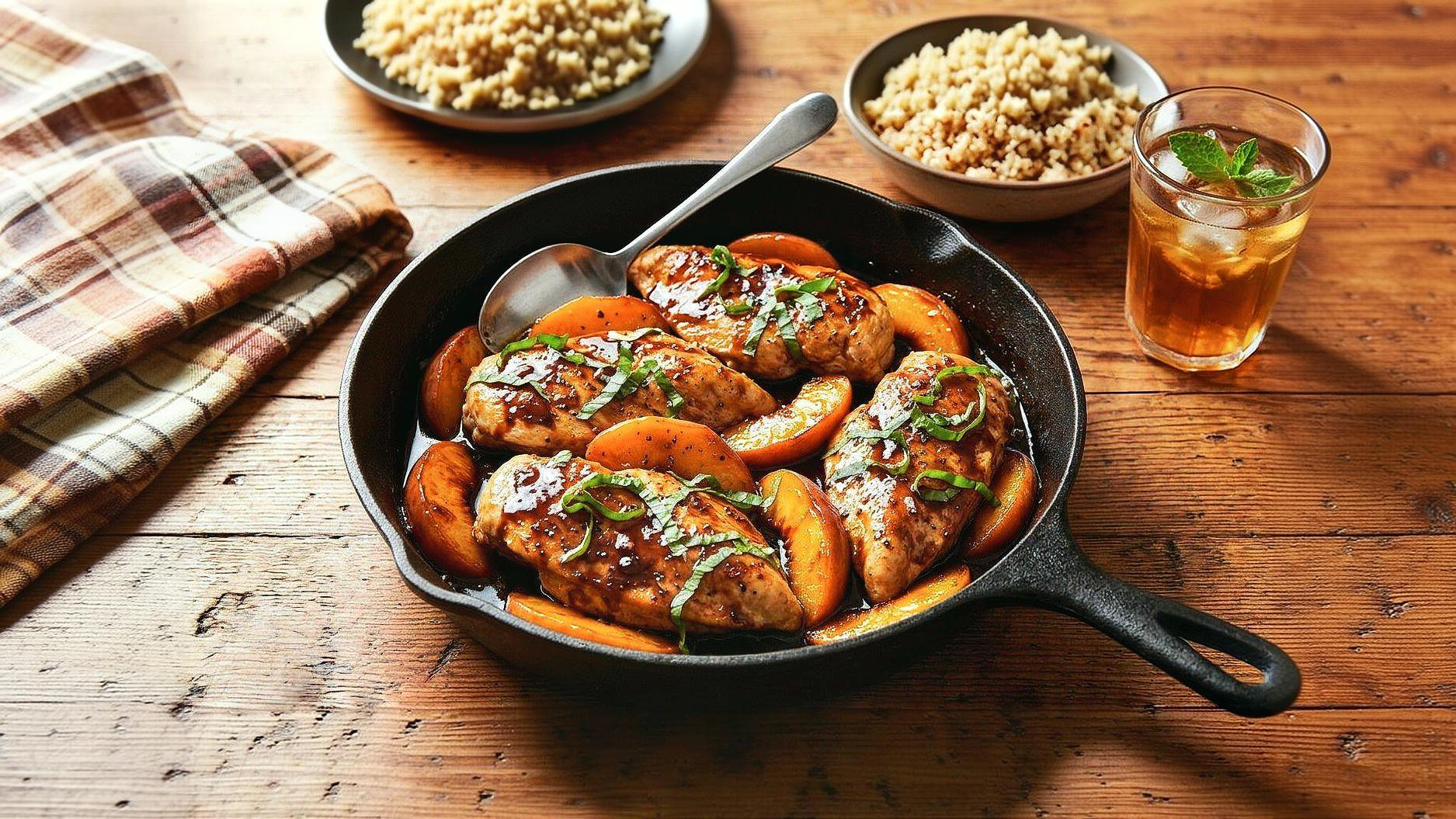
Balsamic Peach Chicken Recipe (Quick Skillet Meal)
This Balsamic Peach Chicken Recipe is a quick, flavorful, and healthy skillet meal perfect for any night of the week. Featuring juicy chicken breasts seared to golden perfection, then simmered with sweet, tender peaches and a rich, tangy balsamic glaze, and finished with aromatic fresh basil. It’s an elegant yet easy dish that marries savory and sweet in a delightful way, bringing a gourmet touch to your home table in under 30 minutes.
restaurant_menu Ingredients
Main Ingredients
hardware Essential Tools
Large skillet (cast iron preferred)
Cutting board
Sharp knife
Measuring spoons
Measuring cups
Wooden spoon or spatula
Instant-read meat thermometer
format_list_numbered Preparation
Getting Started
Gather all your ingredients and prepare them
thinly slice the yellow onion, mince the garlic, and cut the chicken breasts in half lengthwise to create thinner cutlets. If using fresh peaches, slice them; if using frozen, ensure they are slightly thawed and drained of excess liquid. In a large, heavy-bottomed skillet, heat the olive oil over medium-high heat until it shimmers. Add the sliced onion and sauté for about 3 minutes, stirring occasionally, until it begins to soften and turn translucent. Push the softened onions to one side of the skillet, creating an empty space for the chicken.
Searing and Glazing
Season both sides of the chicken breast halves generously with kosher salt and freshly ground black pepper. Place the seasoned chicken into the empty side of the hot skillet and sear for 2-3 minutes per side, until a beautiful golden-brown crust forms. Remove the seared chicken from the skillet and set it aside on a clean plate. Add the minced garlic to the skillet with the onions and sauté for just 1 minute until fragrant. Pour in the balsamic vinegar, using a wooden spoon to scrape up any browned bits from the bottom of the pan, and allow it to simmer and reduce by half, which should take about 1 minute, creating a rich, concentrated glaze.
Simmer and Serve
Add the sliced peaches to the skillet, gently stirring them into the balsamic mixture. Season the peaches lightly with a pinch of salt and pepper. Return the seared chicken breasts to the skillet, nestling them among the peaches and sauce. Cover the skillet with a lid, reduce the heat to medium-low, and simmer for 7-9 minutes, or until the chicken is cooked through and the peaches are tender. The internal temperature of the chicken should reach 165°F (74°C). Remove the skillet from the heat, sprinkle the thinly sliced fresh basil generously over the entire dish, and serve immediately. Enjoy your flavorful Balsamic Peach Chicken!
favorite You Might Also Love
Browse All arrow_forward
Decadent Pecan Pie Cobbler: A Southern Comfort Dessert
Baked Pesto Salmon Recipe (Easy Weeknight Meal)
Savory Stack: Big Mac French Toast Masterpiece
Peruvian Chicken Recipe (One-Pan Baked)
Mastering Ultimate Caesar Chicken With Asparagus Recipe
Golden-Crusted Crispy Chicken Fritters
Try These Variations
Spicy Peach Chicken
For those who love a kick, add 1/2 teaspoon of red pepper flakes along with the garlic, or a finely minced jalapeño (seeds removed for less heat) when sautéing the onions. The heat will beautifully complement the sweetness of the peaches and the tang of the balsamic, creating a dynamic flavor profile that’s both sweet and spicy.
Herb Garden Chicken
Experiment with different fresh herbs. Instead of just basil, try a mix of fresh thyme and rosemary, added during the last 5 minutes of simmering. The earthy notes of these herbs will add a more savory, aromatic dimension to the dish, making it feel more rustic and robust compared to the bright freshness of basil.
Grilled Peach Chicken
For a smoky twist, lightly grill the peach slices and chicken breasts separately before combining them in the skillet with the balsamic reduction. The char marks from the grill will add a fantastic smoky depth that enhances the caramelized notes of the peaches and the savory chicken, creating a more complex and summery flavor.
Chef's Pro Tips
Achieve the Perfect Sear
Your skillet must be hot enough before adding the chicken. A good test is to flick a few drops of water into the pan; if they dance and evaporate quickly, it’s ready. This ensures the Maillard reaction occurs, creating that delicious, deeply flavored crust on your chicken, rather than just steaming it. Don’t overcrowd the pan, as this lowers the temperature and prevents proper searing.
Balsamic Reduction Perfection
When reducing the balsamic vinegar, keep an eye on it. It should thicken to a syrupy consistency that coats the back of a spoon. If it reduces too much, it can become overly tart or even burn. If it’s too thin, it won’t cling to the chicken and peaches. A good quality balsamic will reduce more effectively due to its higher sugar content.
Temperature Check for Chicken
Always use an instant-read thermometer to check the internal temperature of your chicken. For chicken breasts, it should reach 165°F (74°C). This ensures the chicken is safely cooked and prevents overcooking, which can lead to dry, rubbery results. Insert the thermometer into the thickest part of the breast for an accurate reading.
Balance Your Flavors
Taste as you go! This is crucial in any cooking. After the balsamic has reduced and the peaches are added, taste the sauce. If it’s too tart, a tiny pinch of sugar or a splash of chicken broth can balance it. If it’s too sweet, a squeeze of lemon juice can brighten it up. Adjusting seasoning ensures a perfectly harmonious dish.
Storage Guide
Refrigerator
To store leftover Balsamic Peach Chicken, allow it to cool completely to room temperature (within 1-2 hours) to prevent bacterial growth. Transfer the chicken and sauce to an airtight container. It will keep well in the refrigerator for up to 3-4 days. For reheating, gently warm in a skillet over medium-low heat with a splash of chicken broth or water to prevent drying, until heated through to 165°F (74°C). Avoid microwaving if possible, as it can make the chicken rubbery.
Freezer
For longer storage, this dish freezes surprisingly well. Once cooled, place the chicken and sauce in a freezer-safe airtight container or heavy-duty freezer bag, ensuring as much air is removed as possible to prevent freezer burn. It can be stored in the freezer for up to 2-3 months. Thaw overnight in the refrigerator before reheating. Reheat gently in a covered skillet over low heat, adding a little moisture if needed, until piping hot throughout. The texture of the peaches might be slightly softer after freezing and thawing.
Avoid These Mistakes
✕ Overcooking the Chicken
This is the most common pitfall with chicken breasts. Overcooked chicken becomes dry, tough, and unappetizing. To avoid this, cut breasts into thinner cutlets for even cooking, sear quickly to develop color, and then simmer just until an internal temperature of 165°F (74°C) is reached. Using a meat thermometer is your best friend here, pulling the chicken off the heat as soon as it hits the target temperature.
✕ Crowding the Skillet
When you add too much chicken or too many onions to the skillet at once, the temperature of the pan drops significantly. Instead of searing and caramelizing, your ingredients will steam, resulting in pale, limp chicken and onions without that desirable golden-brown color and rich flavor development. Always sear in batches if your skillet isn’t large enough to give everything ample space.
✕ Burning the Garlic
Garlic cooks much faster than onions and can turn bitter if scorched. Always add minced garlic after the onions have softened and cook it for only about 30 seconds to 1 minute, just until it becomes fragrant. If it starts to brown excessively, it’s overcooked and will impart an unpleasant taste to your entire dish, so keep a close eye on it.
✕ Rushing the Balsamic Reduction
The step of reducing the balsamic vinegar isn’t just about thickening; it’s about concentrating its complex flavors. If you don’t allow it to reduce by about half, the sauce will be too thin and overly acidic, lacking the rich, syrupy consistency and balanced tang that makes this dish so special. Give it the minute or two it needs to properly simmer and transform.
nutrition Nutrition Facts
Per serving: 1 serving
Nutritional values are approximate and can vary based on specific ingredient brands and preparation methods.
sell Related Topics
Frequently Asked Questions
How do I ensure my chicken breasts stay tender and don't dry out? expand_more
The key to tender chicken breasts in this peach chicken recipe is proper searing and careful simmering. First, cutting the chicken breasts in half lengthwise creates thinner cutlets that cook more quickly and evenly. When searing, use medium-high heat to get a good golden-brown crust without cooking the interior too much. Finally, during the simmering stage, keep the heat at medium-low and cook just until the internal temperature reaches 165°F (74°C). Using an instant-read thermometer is crucial; pull the chicken off the heat as soon as it hits this mark to prevent overcooking and maintain its juiciness.
Can I use canned peaches for this recipe? expand_more
While fresh peaches are ideal for their texture and vibrant flavor, you can certainly use canned peaches in a pinch for this peach chicken recipe. If using canned, opt for peaches packed in juice rather than heavy syrup, and make sure to drain them thoroughly and perhaps rinse them lightly to remove any excess sweetness. Add them towards the end of the simmering process, as they are already soft and won't require as much cooking time as fresh peaches. Keep an eye on the sweetness level of the overall sauce, as canned peaches can be sweeter.
What can I do if my balsamic sauce isn't thickening enough? expand_more
If your balsamic sauce isn't thickening to a nice glaze during the reduction step, don't worry, there are a few chef's tricks. First, ensure you've allowed enough time for it to simmer uncovered, giving the water content a chance to evaporate. If it's still too thin, remove the chicken and peaches temporarily, then increase the heat slightly under the sauce and let it continue to reduce. You can also mix 1 teaspoon of cornstarch with 1 tablespoon of cold water to create a slurry, then whisk it into the simmering sauce. Let it cook for another minute or two, and it should thicken beautifully. This will help you achieve that perfect coating for your peach chicken recipe.
Can I make this recipe ahead of time for meal prep? expand_more
Yes, this Balsamic Peach Chicken Recipe is a fantastic option for meal prep! You can cook the entire dish and then portion it into individual airtight containers once it has cooled completely. It will keep well in the refrigerator for up to 3-4 days. For reheating, gently warm it in the microwave or in a skillet over low heat. Adding a tablespoon or two of chicken broth or water during reheating can help maintain the chicken's moisture and prevent the sauce from becoming too thick. This makes for a delicious and convenient homemade lunch or dinner throughout the week.
Is there a way to make this recipe spicier or add more depth? expand_more
Absolutely! To add a bit of heat to your peach chicken recipe, you can incorporate 1/2 teaspoon of red pepper flakes along with the garlic, or finely mince a small jalapeño (remove seeds for less heat) and sauté it with the onions. For more depth, consider adding a splash of dry chicken broth or even a teaspoon of soy sauce or Worcestershire sauce (ensure it's halal-certified) to the balsamic reduction. These additions introduce umami notes that can round out the flavors beautifully. You can also try a pinch of smoked paprika for a subtle smoky undertone.
More Recipes You'll Love
Ultimate New Orleans Baked Mac and Cheese

Artisan Goat Cheese: Old Fashioned Billy Goats
Fork-Tender Slow Cooker BBQ Ribs Mastery
Creamy Garlic Alfredo with Tender Cabbage Recipe (Comforting Weeknight Meal)
Community Kitchen