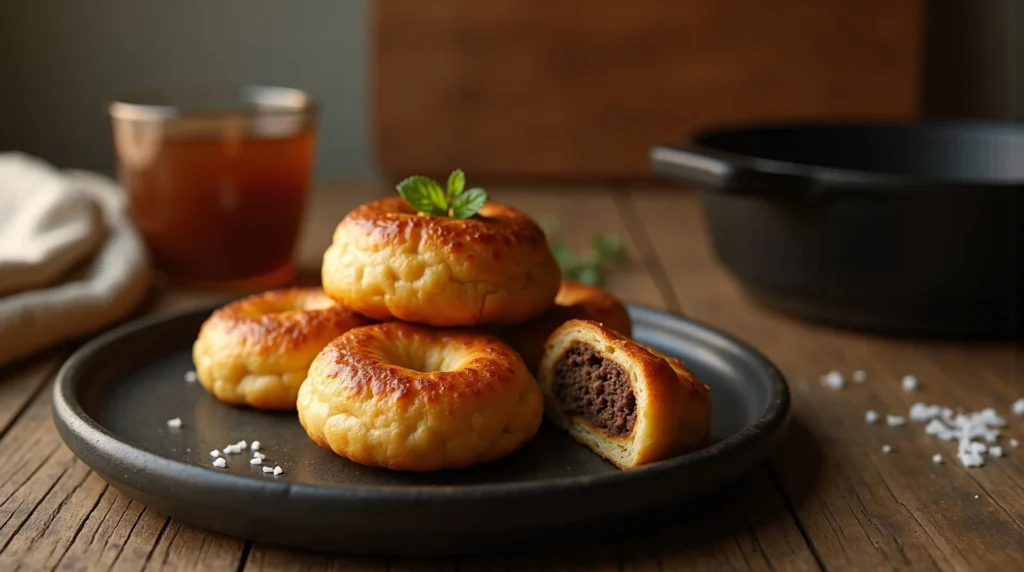
Authentic Haitian Patty Recipe: Mastering the Flaky Crust
This recipe guides you through crafting the iconic Haitian Patty, focusing on a deeply aromatic, savory beef filling sealed within perfectly flaky, golden puff pastry. A true handheld masterpiece.
Ingredients
Savory Beef Filling (La Farce)
Pastry Assembly
Essential Tools
Large, heavy-bottomed skillet
Wooden spoon or spatula
Whisk
Pastry brush
Two large baking sheets
Parchment paper
Sharp knife or pizza cutter
Preparation
Making the Filling
Preheat your oven to 400°F (200°C) and line two large baking sheets with parchment paper
In a large skillet over medium heat, warm the vegetable oil until shimmering
Add the ground beef, breaking it apart, and cook until mostly browned
Stir in the chili flakes, minced garlic, salt, pepper, cloves, and fresh thyme leaves; cook for 1 minute until fragrant
Add the diced peppers and onions, cooking until the onions soften slightly, about 3 minutes
Sprinkle in the beef bouillon and stir until fully incorporated and dissolved
Pour in the fresh lemon juice to deglaze the pan, scraping up the browned bits from the bottom
Remove the skillet from the heat and immediately stir in the fresh parsley and chopped green onion
Transfer the filling to a shallow dish to cool completely—this is critical for pastry success
Assembling the Haitian Patty
Once the filling is cool, gently unroll the two sheets of thawed puff pastry onto a lightly floured surface
Use a sharp knife to cut each sheet into three equal rectangles, yielding six pieces total
Spoon approximately one-sixth of the cooled beef mixture onto one half of each pastry rectangle, leaving a full 1-inch border clear around all edges
Using the pastry brush, lightly coat the clear border area with the prepared egg wash—this acts as the seal
Carefully fold the empty half of the pastry over the filling to meet the opposite edge, forming a sealed shape
Use the tines of a fork to firmly crimp and seal all four edges tightly, ensuring no filling escapes
Place the assembled patties on the prepared baking sheets and brush the tops generously with the remaining egg wash
Cut two or three small, shallow vents on the top surface of each patty to allow steam release
Bake for 20 to 25 minutes, or until the pastry is deeply golden brown and visibly puffed
Recipe Variations
Spicy Kick
Use two jalapeños instead of bell peppers for a significantly hotter haitian patty filling
Poultry Swap
Substitute the ground beef with ground chicken or turkey, adding 1 tsp of Worcestershire sauce (halal-certified) for depth
Cheese Addition
Mix 1/4 cup of shredded Monterey Jack cheese into the cooled filling just before assembly for added richness
Chef's Tips
Always ensure your puff pastry is truly cold when assembling the haitian patty, even if the filling is chilled, to maximize the steam lift during baking
Bloom your spices in the hot fat with the garlic for 60 seconds before adding liquids—this unlocks their full aromatic potential
Use a very sharp knife or pizza cutter when slicing the pastry; a dull blade drags the dough, tearing the delicate butter layers
If your oven tends to run hot, drop the temperature to 375°F after the first 10 minutes of baking to prevent the edges from burning before the center is cooked
Common Mistakes
Overfilling the pastry, which causes the haitian patty to burst open during baking, leading to a soggy bottom crust
Using warm filling, which melts the butter in the puff pastry before it has a chance to steam and laminate
Not sealing the edges thoroughly, resulting in the filling leaking out and creating a greasy baking sheet
Opening the oven door during the first 15 minutes of baking, which causes the rapidly rising pastry to deflate
Recipe Keywords
Conclusion
There you have it—a truly respectable, deeply flavorful haitian patty that rivals the best you can find. This recipe proves that world-class flavor doesn’t require hours of simmering; it requires smart seasoning and respect for pastry technique. Embrace the process, enjoy the aroma filling your kitchen, and take pride in serving this spectacular handheld feast. Happy cooking, and welcome this vibrant taste of the Caribbean into your home!
Frequently Asked Questions
Can I substitute the ground beef in this Haitian Patty recipe? expand_more
Absolutely. While traditional haitian patty uses ground beef, this recipe adapts beautifully to other proteins. Ground turkey or ground chicken works well, but you may need to add a teaspoon of Worcestershire sauce (ensure it is halal-certified) or a touch more bouillon to compensate for the lower natural fat content and richness. For a vegetarian option, use a mixture of finely chopped mushrooms and lentils, ensuring the mixture is very dry before sealing it in the pastry.
Why did my puff pastry melt and become flat instead of flaky? expand_more
This is the most common pitfall when working with puff pastry, whether for a savory haitian patty or a sweet tart. The culprit is almost always temperature. If your filling was warm, or if your pastry thawed too much and became oily and soft before baking, the butter layers melted before the water in the dough could turn to steam and separate them. Always work quickly with cold pastry and ensure your filling is fully chilled.
Can I make the filling ahead of time? expand_more
Yes, and I strongly encourage it! Making the filling for your haitian patty one day in advance is one of my top recommendations. Not only does it save time on the day of assembly, but allowing the spices to meld together overnight in the refrigerator deepens the overall flavor profile significantly. Just ensure it is completely chilled before assembling the pastries.
What is the purpose of the small vents cut into the top of the patty? expand_more
Those small slits are critical for steam release. Puff pastry works by trapping steam between its many thin layers of dough and butter. If that steam has nowhere to go, it builds pressure, forcing the pastry to rupture violently or, worse, causing the layers underneath the crust to steam rather than bake, leading to a soggy bottom. A few strategic vents allow the steam to escape gently, ensuring a beautifully puffed and crisp haitian patty top.
How can I make the pastry dough from scratch instead of using store-bought sheets? expand_more
While store-bought is convenient for a quick haitian patty, making your own all-butter puff pastry is rewarding. The process involves creating a 'beurrage' (a butter block) and performing a series of precise turns (rolling, folding, chilling) to build those hundreds of layers. If you choose this route, ensure your kitchen is slightly cool, as warm butter is the enemy of laminated dough. For a first-time baker attempting a homemade haitian patty, stick to the quality store-bought sheets!