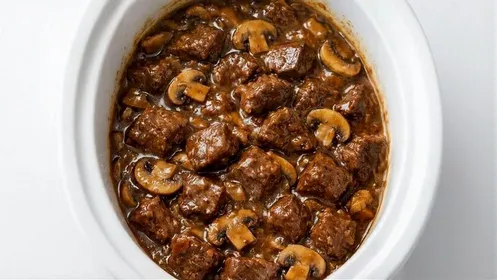
Effortless Comfort: Slow Cooker 3-Ingredient Beef Stew Noodles
Savor the simplicity of our Slow Cooker 3-Ingredient Beef Stew Noodles! This classic comfort food combines tender beef, a luscious savory sauce, and perfectly cooked noodles. It evokes memories of home-cooked meals and family gatherings, offering a hearty, fulfilling experience with minimal effort. The rich flavors and comforting textures make it a perfect dish for any occasion. Enjoy a bowl of pure, unadulterated comfort!
restaurant_menu Ingredients
Main Ingredients
Optional Add-Ins
hardware Essential Tools
Slow cooker
Large skillet (optional, for searing beef)
Cutting board
Knife
Measuring cups and spoons
format_list_numbered Preparation
Preparation
Trim any excess fat from the beef stew meat and cut it into 1-inch cubes. Season with salt and pepper.
If desired, sear the beef in a large skillet over medium-high heat until browned on all sides. This step adds depth of flavor but is optional.
Place the beef in the slow cooker. Pour the condensed cream of mushroom soup over the beef. Add the optional carrots, potatoes, and garlic. Sprinkle with black pepper.
Cover the slow cooker and cook on low for 6-8 hours or on high for 3-4 hours, or until the beef is very tender.
During the last 30 minutes of cooking, add the egg noodles and frozen peas to the slow cooker. Stir to ensure the noodles are submerged in the sauce.
Cook until the noodles are tender, about 20-30 minutes. Stir and serve hot.
favorite You Might Also Love
Browse All arrow_forwardCozy Grandma's Country Club Salad Recipe (Creamy & Classic)
Cheesy Italian Spinach Bake Recipe (Comfort Food)
5 Ingredient Slow Cooker Tater Tot Casserole Recipe (Hearty & Easy)
Mongolian Ground Beef Noodles Recipe (Quick Weeknight Meal)
Slow Cooker Creamy Tortellini Soup Recipe (Comforting & Easy)
Church Supper Chicken Spaghetti Recipe (Creamy Baked)
Try These Variations
Spicy Beef Stew Noodles
Add 1-2 teaspoons of red pepper flakes or a dash of hot sauce to the slow cooker for a spicy kick. You can also use a spicier variety of condensed soup, such as cream of jalapeno. For a richer flavor, add a tablespoon of chili garlic sauce. This variation adds a delightful heat that complements the savory beef and creamy sauce.
Vegetarian Mushroom Noodle Stew
Substitute the beef stew meat with 2 cans (15 ounces each) of drained and rinsed chickpeas or lentils. Use vegetable broth instead of beef broth. Add a variety of vegetables like mushrooms, bell peppers, and zucchini for a hearty vegetarian meal. This variation is perfect for those seeking a plant-based alternative without sacrificing flavor and comfort.
Creamy Tomato Beef Stew Noodles
Use cream of tomato soup instead of cream of mushroom soup for a tangy and slightly sweet flavor. Add a can (14.5 ounces) of diced tomatoes to the slow cooker. Garnish with fresh basil for a burst of freshness. This variation offers a delightful twist on the classic beef stew with a hint of Mediterranean flair.
Beef and Broccoli Noodle Stew
Add 2 cups of broccoli florets during the last 30 minutes of cooking. A splash of soy sauce and a drizzle of sesame oil can enhance the Asian-inspired flavors. This variation is a great way to incorporate more vegetables into your meal while adding a unique flavor profile.
Beef Stew with Dumplings
Instead of egg noodles, top the stew with homemade or store-bought dumplings during the last 30 minutes of cooking. Cook until the dumplings are puffy and cooked through. This variation transforms the stew into an even heartier and more comforting meal, perfect for a cold winter day.
Chef's Pro Tips
Sear the beef for maximum flavor
Searing the beef before adding it to the slow cooker creates a rich, caramelized crust that enhances the overall flavor of the stew. The Maillard reaction, which occurs when the meat is seared at high heat, creates hundreds of flavor compounds that add depth and complexity to the dish. This simple step can elevate your stew from good to extraordinary.
Don’t overcook the noodles
Adding the noodles at the right time is crucial to prevent them from becoming mushy. Wait until the beef is almost done, then add the noodles and cook just until tender. Overcooked noodles can ruin the texture of the stew, so keep a close eye on them and test for doneness frequently.
Adjust the sauce consistency
If you prefer a thicker stew, mix 1 tablespoon of cornstarch with 2 tablespoons of cold water to create a slurry. Add the slurry to the slow cooker during the last 30 minutes of cooking. For a thinner stew, add more beef broth or water. Adjusting the sauce consistency allows you to customize the stew to your personal preference.
Use high-quality beef broth
The quality of the beef broth can significantly impact the flavor of the stew. Opt for a high-quality, low-sodium beef broth for the best results. Homemade beef broth is even better, if you have the time to make it. The rich, savory flavor of a good beef broth will enhance the overall taste of the stew.
Add a splash of acidity
A splash of vinegar or lemon juice can brighten the flavors of the stew and add a touch of acidity. Add it during the last 15 minutes of cooking. The acidity helps to balance the richness of the stew and adds a refreshing element to the dish.
Storage Guide
Room Temperature
Do not leave the stew at room temperature for more than 2 hours. Bacteria can grow rapidly at room temperature, increasing the risk of foodborne illness. Always refrigerate or freeze leftovers promptly to ensure food safety. Discard any stew that has been left at room temperature for more than 2 hours.
Refrigerator
Store leftover stew in an airtight container in the refrigerator for up to 3-4 days. Ensure the stew cools down to room temperature before refrigerating to prevent bacterial growth. Properly stored, refrigerated stew remains safe and flavorful for several days.
Freezer
For longer storage, freeze the stew in freezer-safe containers or bags for up to 2-3 months. Thaw the stew in the refrigerator overnight before reheating. Freezing helps to preserve the stew’s quality and prevents freezer burn. Properly frozen stew can be a convenient option for future meals. When reheating, ensure the stew reaches an internal temperature of 165°F (74°C) to kill any potential bacteria.
Avoid These Mistakes
✕ Not searing the beef
Skipping the searing step can result in a less flavorful stew. Searing the beef creates a rich, caramelized crust that adds depth and complexity to the dish. The Maillard reaction, which occurs when the meat is seared at high heat, creates hundreds of flavor compounds that enhance the overall taste of the stew. Always take the time to sear the beef for the best results.
✕ Overcooking the noodles
Adding the noodles too early or cooking them for too long can result in mushy, unappetizing noodles. Wait until the beef is almost done, then add the noodles and cook just until tender. Overcooked noodles can ruin the texture of the stew, so keep a close eye on them and test for doneness frequently.
✕ Using too much salt
Condensed cream of mushroom soup can be high in sodium, so be careful not to add too much additional salt to the stew. Taste the stew before adding any extra salt and adjust accordingly. Using too much salt can make the stew unpalatable, so it’s always better to err on the side of caution.
✕ Not trimming excess fat from the beef
Leaving too much fat on the beef can result in a greasy stew. Trim any excess fat from the beef before cooking to prevent the stew from becoming overly oily. This will also help to improve the overall texture and flavor of the dish.
✕ Not adding enough liquid
If the stew is too thick, it can burn or stick to the bottom of the slow cooker. Add more beef broth or water as needed to maintain the desired consistency. The liquid helps to keep the stew moist and prevents it from drying out during the long cooking process.
nutrition Nutrition Facts
Per serving: 1 bowl
Nutritional values are approximate and may vary based on specific ingredients and portion sizes.
flag Conclusion
There you have it—a Slow Cooker 3-Ingredient Beef Stew Noodles recipe that’s as easy as it is delicious. This dish is a testament to the fact that you don’t need a long list of ingredients or hours in the kitchen to create a comforting and satisfying meal. Whether you’re a seasoned cook or just starting out, this recipe is sure to become a family favorite. So, grab your slow cooker, gather your ingredients, and get ready to enjoy a taste of home. Happy cooking from all of us here at HomeRecipes!
sell Related Topics
Frequently Asked Questions
Can I use other types of noodles? expand_more
Yes, you can substitute egg noodles with other types of noodles such as wide noodles, rotini, or even gluten-free pasta. The cooking time may need to be adjusted depending on the type of noodle you use. Just be sure to add the noodles during the last 30 minutes of cooking to prevent them from becoming overcooked.
Can I make this in an Instant Pot? expand_more
Yes, you can adapt this recipe for the Instant Pot. Sear the beef using the sauté function. Add the condensed soup, water, and vegetables. Cook on high pressure for 30 minutes, followed by a 10-minute natural pressure release. Add the noodles and cook for an additional 5 minutes on sauté mode until tender.
What can I add to make it more flavorful? expand_more
You can add herbs and spices such as bay leaves, thyme, rosemary, garlic powder, or onion powder to enhance the flavor. A splash of Worcestershire sauce or soy sauce can also add depth and complexity. Experiment with different combinations to find your favorite flavor profile.
Can I use a different kind of soup? expand_more
Yes, you can substitute cream of mushroom soup with other types of condensed cream soups such as cream of celery, cream of chicken (halal certified), or cream of onion. Each type of soup will impart a slightly different flavor to the stew, so choose one that complements your taste preferences.
Is this recipe freezer-friendly? expand_more
Yes, this Slow Cooker 3-Ingredient Beef Stew Noodles is freezer-friendly. Allow the stew to cool completely before transferring it to freezer-safe containers or bags. Freeze for up to 2-3 months. Thaw in the refrigerator overnight before reheating. Be aware that the noodles may become slightly softer after freezing and thawing, but the stew will still be delicious.
More Recipes You'll Love

Community Kitchen